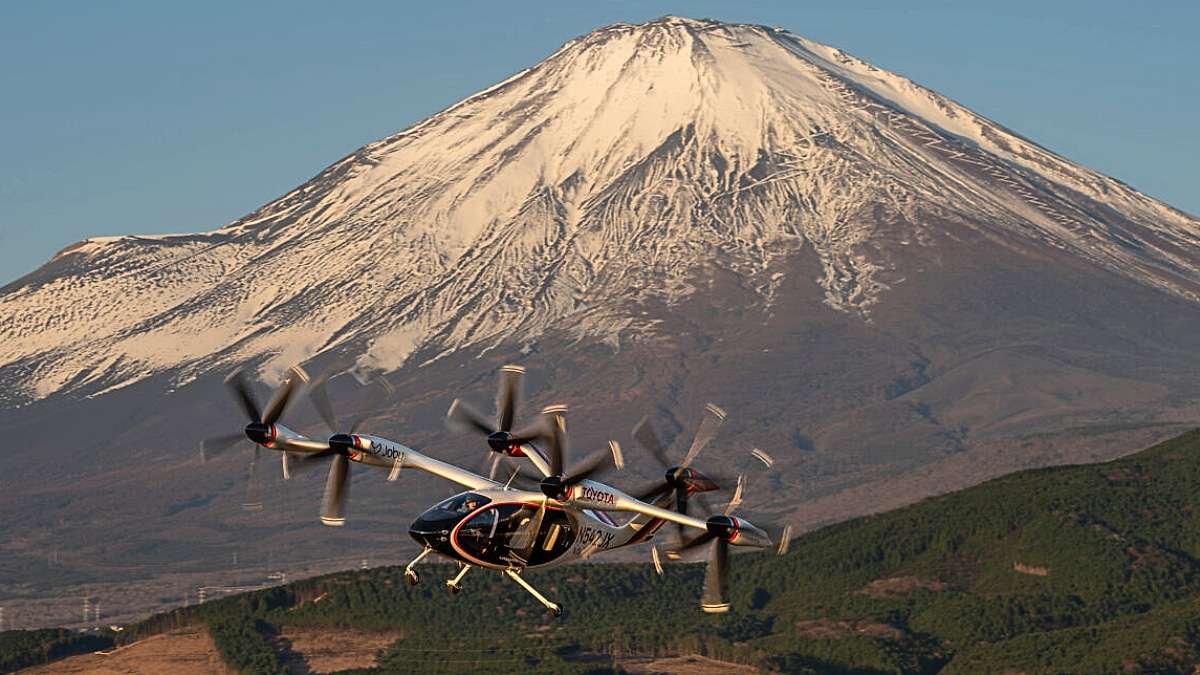

Toyota surprised much of the automotive world this week. The company yesterday announced a new manufacturing joint venture with Joby Aviation, the same air taxi maker it first partnered with six years ago, a relationship Torque News covered when Toyota Partners With Joby Aviation To Build All Electric Air Taxis first broke the news. This deal arrives right after Joby's public flight demonstrations over Manhattan proved consumer trust remains the real hurdle for urban air mobility, so the timing is not an accident.
At first glance it sounds like an automaker wandering into aviation. But read the filing closely and another story appears. Toyota is taking 51 percent ownership of the manufacturing entity, putting itself in control of how these aircraft get built.
Here is a question worth sitting with. When a new transportation technology shows up, does it matter more who invented it first, or who learns to build millions of them reliably? Keep that in mind, then tell us your answer in the comments below.
Most headlines about Toyota and Joby focus on flying taxis. That makes sense, since regulators finally gave the advanced air mobility industry a real roadmap toward 2035, and that news alone grabs attention. But if you only focus on the aircraft, you miss the real story.
Toyota is not buying Joby. Toyota is not becoming an aircraft designer. It is taking majority control of the company responsible for manufacturing these aircraft. That is a very Toyota move.
Why 51 Percent Instead Of Just Investing
One number in the announcement stands out immediately. Fifty one percent. That is the ownership Toyota holds in the new manufacturing venture with Joby.
Toyota could have stayed a supplier. It could have simply invested more money and walked away. Instead it chose majority ownership, and that choice provides something more valuable than financial upside. It gives Toyota operational control over quality, process, and long term scaling, the exact kind of control the automaker has practiced for decades, which is why Toyota's factories in Alabama recently expanded engine and hybrid production even as rivals convert plants for EVs.
Is Toyota Really Entering Aviation
The answer is yes, but maybe not the way people imagine. Toyota is not suddenly competing with Boeing or Airbus. It is exporting something it already does exceptionally well, which is manufacturing.
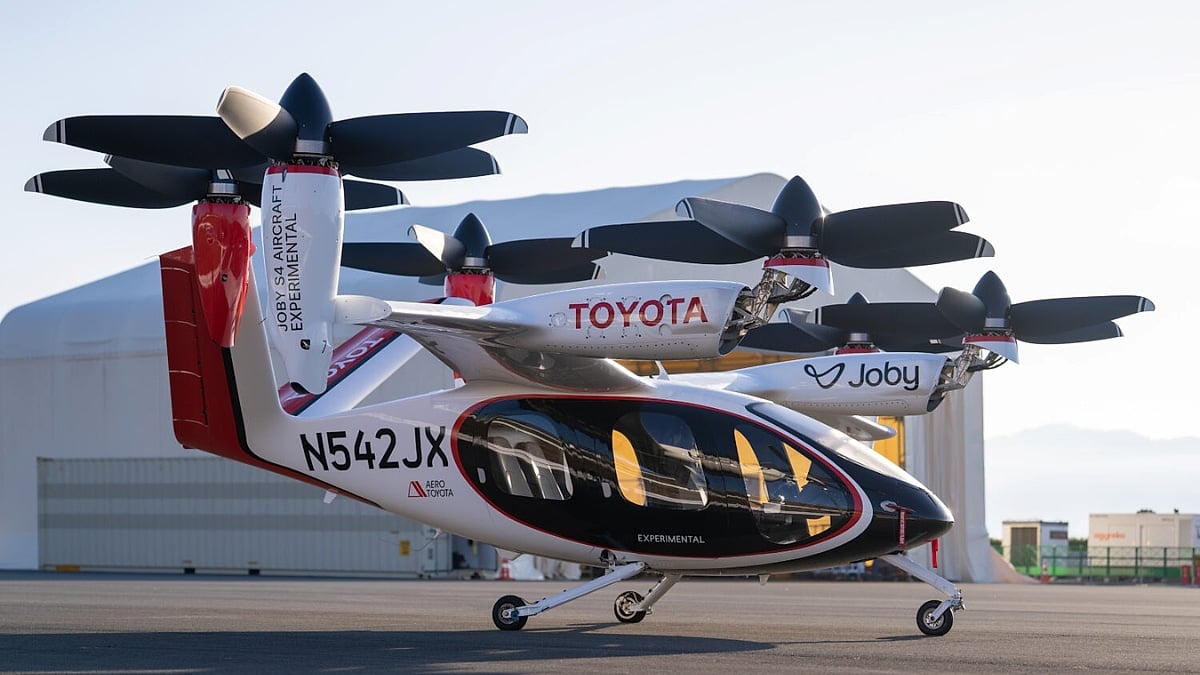
Toyota has repeatedly shown it can take complex products and build them with remarkable consistency. Whether that product has four wheels or six electric rotors may matter less than most people assume.
Why This Feels Familiar To Prius Owners
This is where the hidden story gets interesting. Many people remember the Prius as the car that introduced hybrids to the world, and the ongoing success of the Toyota Prius may come down to one simple business habit Toyota has repeated for decades.
Hybrid technology existed before the Prius. What Toyota actually pulled off was arguably more impressive. It refined an emerging technology, reduced its cost, and manufactured it at a scale few competitors could match, a story worth reading in full in Unraveling The Success Story Of The Toyota Prius.
The Prius did not succeed simply because it was innovative. It succeeded because Toyota made hybrid technology practical for ordinary drivers, the same practical focus you still see in 4 Things That Make The Toyota Prius Plug In Hybrid Worth The Price today.
Is Toyota Repeating The Same Strategy
Reading between the lines, the similarities are striking. With the Prius, Toyota did not simply introduce hybrid technology. It industrialized it. Now look at Joby.
Joby designs the aircraft. Toyota focuses on how those aircraft can eventually be built efficiently and consistently, at scale, without cutting corners. Instead of asking how to invent electric air taxis, Toyota seems to be asking how to build enough of them for regular people to use.
What Toyota Actually Brings To The Table
The announcement reveals Toyota contributes far more than money. Among the key pieces are majority ownership, decades of production system expertise, quality control systems, supplier management experience, and long term production planning.
Notice what is missing from that list. Aircraft design. Toyota is not trying to replace Joby's engineers. It is helping build the system that could eventually produce the aircraft at real volume, the same volume mindset behind Toyota's US operations reviving skilled labor and training the next generation to build again.
Why Would An Automaker Care About Air Taxis
This may be the biggest question of all. The answer goes beyond aviation. For years Toyota executives have described the company as something broader than an automaker. They increasingly use one word, mobility.
That philosophy shows up across Toyota's other bets too, including its ambitious plan to invest 35 billion dollars into battery electric vehicles by 2030 and its parallel push into a solid state battery gamble aimed at leapfrogging the current generation of EVs. Viewed individually these projects seem unrelated. Viewed together they tell one consistent story.
Does This Mean Toyota Doubts Cars
Not at all. Toyota keeps investing heavily in gas engines, hybrids, and manufacturing facilities worldwide. Recent skepticism even produced a viral hoax claiming Toyota would abandon its Alabama investment, a story that turned out to be pure fabrication once you look at how the AI generated Toyota Canada hoax actually spread.
Rather than abandoning cars, Toyota is expanding its definition of transportation. Cars remain central. They are simply no longer the entire picture, and that same layered thinking shows up in how Toyota approaches autonomous driving through small independent updates rather than one giant leap.
Could This Become Another Prius Moment
History rarely repeats exactly, but it often rhymes. When the Prius appeared, many people doubted hybrids would ever go mainstream. Today hybrid technology is accepted across the entire industry.
Nobody knows if electric air taxis will follow the same path. Regulatory hurdles remain, infrastructure still needs building, and public trust takes real time to earn. Yet Toyota's decision suggests it sees enough long term potential to become a true manufacturing partner, not just a financial backer.
The Bigger Lesson Here
This is not simply a story about air taxis. It is a story about how Toyota approaches change. Some companies compete by inventing first. Toyota has often won by building better, refining, scaling, and industrializing what others create.
The Prius proved that approach within the automotive world. The Joby partnership suggests Toyota believes the same discipline can apply to a completely different form of transportation. According to Reuters reporting on the deal, Toyota will hold 51% of JTAMPC, with Joby owning the remaining 49%, confirming the control Toyota wanted from the start.
Whether electric air taxis become common in five years or twenty almost becomes a secondary question. The real question is why Toyota wanted manufacturing control before this market even exists at scale. That patience, more than any single announcement, is the real Toyota lesson here. Betting on preparation instead of prediction has served the company for nearly a century.
What do you think? Is Toyota making the right move by taking 51 percent and focusing on manufacturing instead of aircraft design? And if electric air taxis eventually become common in major cities, could Toyota's manufacturing discipline end up mattering just as much as Joby's technology? Tell us your take in the comments below.
Return tomorrow, or check our Torque News Home Page for more interesting automotive news articles.
Images by Toyota USA Pressroom.
About The Author
Armen Hareyan is the founder and Editor-in-Chief of Torque News and an automotive journalist with over 15 years of experience writing car reviews and industry news. Now based in the Charlotte region (Indian Land, SC, he founded Torque News in 2010, which since then has been publishing expert news and analysis about the automotive industry. He can be reached at Torque News on X, Linkedin, Facebook, and Youtube. Armen holds three Masters Degrees, including an MBA, and has become one of the known voices in the industry, specializing in the landscape of electric vehicles and real-world stories of actual car owners. Armen focuses on providing readers with transparent, data-backed analysis bridging the gap of complex engineering and car buyer practicality. Armen frequently participates in automotive events throughout the United States, national and local car reveals and personally test-drives new vehicles every week. Armen has also been published as an automotive expert in publications like the Transit Tomorrow, discussing how will autonomous vehicles reshape the supply chain, and emerging technologies in vehicle maintenance.
Set Torque News as Preferred Source on Google
Follow us today...