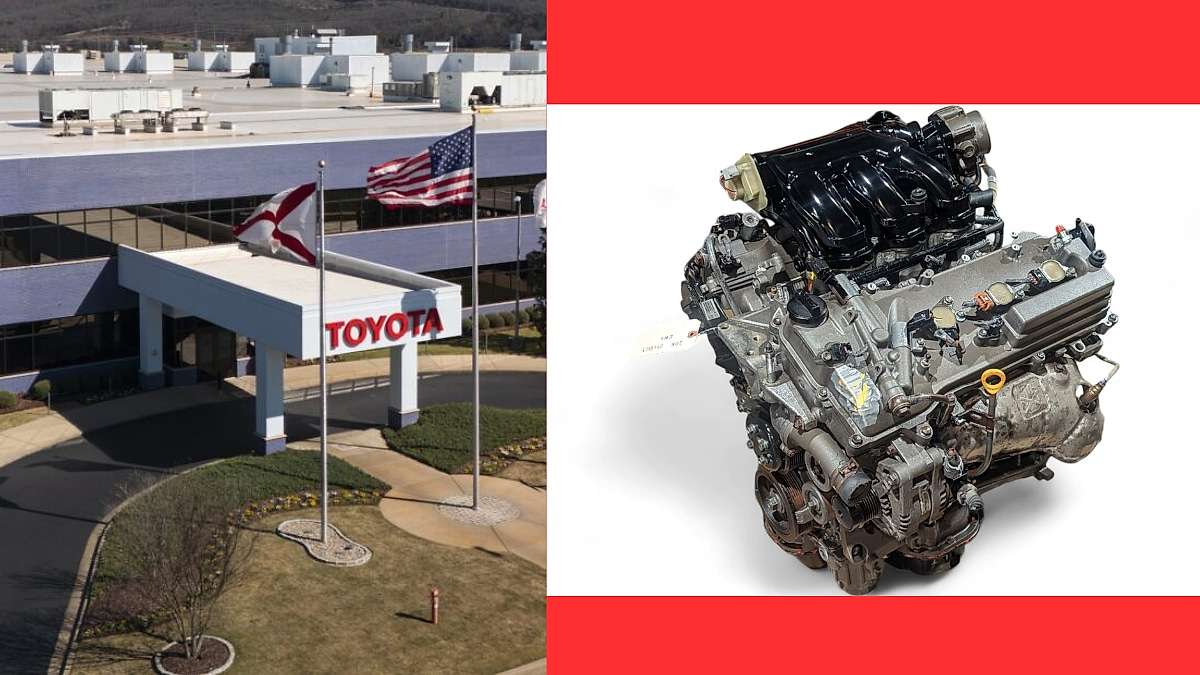

When Toyota recently announced that its Alabama engine plant had built its 10 millionth engine, many readers probably saw a familiar corporate milestone story. The press release celebrated 25 years of production, thousands of jobs, and billions of dollars invested in local manufacturing. But buried beneath the anniversary celebration was a much bigger story — one that may say more about Toyota's future than any single vehicle launch.
At Torque News, we have long tracked how Toyota's hybrid and PHEV strategy represents a calculated move rather than a missed EV bus, and this Alabama milestone is one of the clearest pieces of evidence yet that Toyota is betting on its own long-term roadmap. It is also worth noting that Toyota's U.S. operations are actively reviving skilled labor and busting manufacturing myths in ways that inspire the next generation to build again, and Huntsville, Alabama is right at the center of that story.
Before we get into it, consider this question: If most automakers are spending billions to prepare for an electric future, why is Toyota still investing heavily in engine production? Keep that question in mind as you read and share your thoughts in the comments section below.
According to Toyota, the company has now invested more than $1.7 billion in Toyota Alabama, employing more than 4,000 workers and producing engines for some of the automaker's most important vehicles.
The company also announced that it recently invested another $282 million to expand production capacity for four-cylinder engines and hybrid powertrain components, while also adding differential assembly lines for the Tacoma, Tundra, and Sequoia. This is the kind of deep, sustained investment that we covered when Toyota first began moving hybrid transaxle production to America, signaling even then that the company viewed domestic manufacturing as a long-term pillar of its strategy rather than a short-term budget item.
That investment stands out because of what is happening elsewhere in the auto industry. Over the last several years, many automakers have converted factories for EV production, reduced investments in internal combustion engines, and publicly outlined plans to move away from gasoline-powered vehicles. Factory announcements today often revolve around battery plants, electric drivetrains, and software development. Toyota, however, appears to be taking a different path, rather than abandoning engines, the company is continuing to expand its ability to build them.
Why Toyota Alabama Matters More Than Ever
The Alabama facility is no longer just another engine plant. Today it produces powertrains used in vehicles such as the Toyota Tundra, Toyota Sequoia, Toyota Tacoma, Toyota Land Cruiser, Lexus GX, Lexus LX, and Lexus TX.
In other words, many of Toyota's highest-profile trucks and SUVs depend on engines built there, making Toyota Alabama one of the most strategically important manufacturing facilities in the company's North American operations. Readers who want a deeper picture of how this fits into Toyota's broader U.S. investment patterns should revisit how Toyota has poured resources and jobs into expanding U.S. manufacturing across multiple states over the past decade, with Alabama consistently at the top of that list.
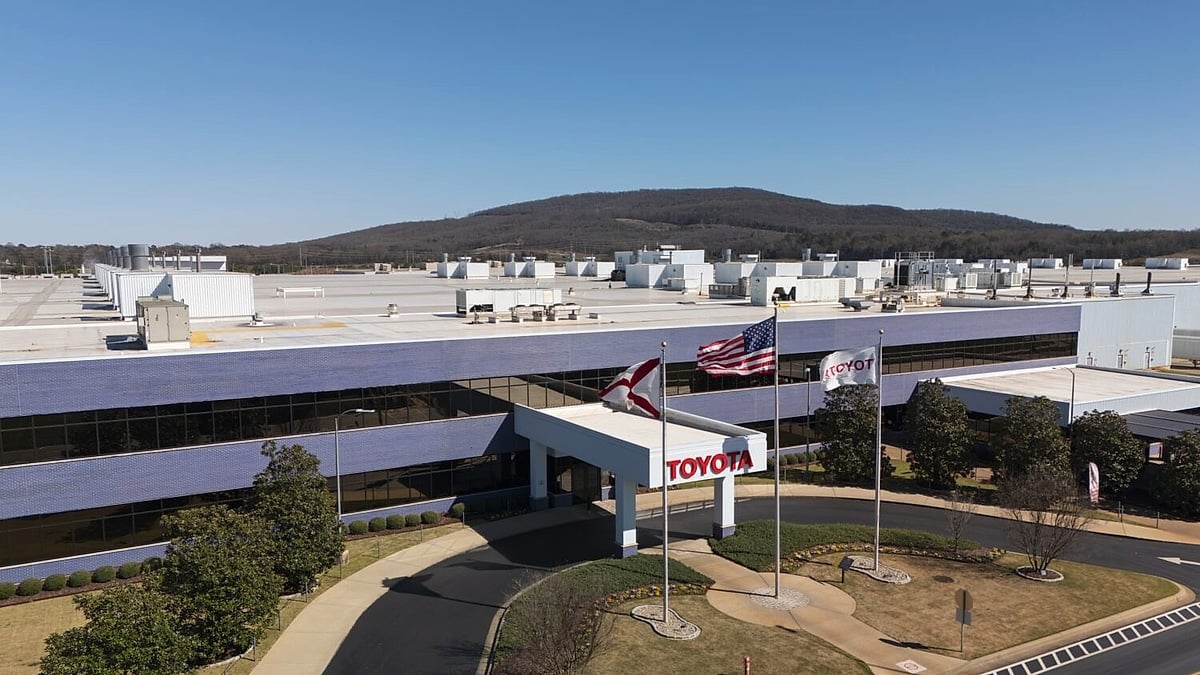
And its role is growing, not shrinking. The plant now produces nearly half of all Toyota engines assembled annually in North America, and with the new differential assembly lines, it has expanded well beyond its original engine-only mission. That shift reflects a company that is deepening its roots in American manufacturing, not pulling them up.
Toyota Is Betting On Hybrids, Not Just Engines
One reason Toyota's strategy often gets misunderstood is because many people frame the future as a simple choice between gasoline vehicles and EVs. Toyota has spent years arguing that the future may be more complicated.
The company's latest Alabama investment is not solely focused on traditional engines. Instead, it also expands production of hybrid powertrain components, reflecting Toyota's long-held belief that hybrids will continue to play a major role in the market for years to come. This connects directly to what we explained when covering how Toyota's i-Force powertrain is leaving some power on the table even as dyno tests reveal surprising performance results - the automaker is clearly refining these hybrid engines rather than phasing them out.
For Toyota, engines and electrification are not competing ideas. They are increasingly working together. The market is backing that view. Sales of electrified Toyota vehicles in the United States accounted for nearly 49 percent of the company's total U.S. volume in 2025, with hybrids driving the vast majority of that number. Autoblog recently reported that Toyota aims to boost hybrid production by roughly 30 percent by 2028, targeting around 6.7 million hybrid and plug-in hybrid units per year, with hybrids potentially making up 60 percent of the company's total global output: a dramatic shift that places Toyota in an entirely different category from rivals chasing a pure-EV future.
The Tundra Recall Creates an Interesting Contrast
Toyota's milestone announcement also arrives at a particularly interesting moment. The company continues to work through a significant recall involving certain Toyota Tundra and Lexus models equipped with the V35A twin-turbocharged V6 engine: an issue rooted in machining debris left in the engine during production that can contaminate oil passages and cause bearing failure. That issue has generated significant attention among truck buyers and raised serious questions about reliability and quality control. As we reported in depth, the Toyota Tundra recall expansion over V35A twin-turbo V6 front bearing failures is forcing some owners to reconsider heavy-duty alternatives entirely, with some loyalty genuinely shaken.
On one hand, Toyota is celebrating the production of more than 10 million engines out of Huntsville. On the other, it is facing one of the most closely watched engine-related challenges in recent company history. The contrast highlights just how important powertrain development remains for Toyota, and the company is not walking away from engines despite the scrutiny. If anything, Toyota appears to be investing even more heavily in refining and producing them, which is either a sign of deep confidence or a very bold gamble depending on your point of view.
A Different Vision of the Future
What makes this story interesting is not the number itself. Ten million engines is certainly impressive. But the bigger takeaway may be what Toyota's continued investment says about how the company views the future of transportation. We have covered this tension for years here at Torque News, including an in-depth look at whether Toyota may not ultimately make the full transition to EVs, and why that is a difficult reality for some in the industry to accept. And we also examined what happened when predictions of Toyota's doom at the hands of EV-only rivals failed to materialize, analyzing whether the dire 2020 EV predictions for Toyota have aged well five years later.
While some competitors are racing toward an all-electric future, Toyota continues to build capacity for engines and hybrid systems alike. That is an unusual direction in 2026, but it is one grounded in a manufacturing philosophy that values proven technology at scale. Toyota recently also celebrated the Mazda Toyota Manufacturing plant in Huntsville beginning production of the Corolla Cross, further cementing North Alabama as one of the most consequential automotive manufacturing hubs in America.
Our readers who follow the Alabama manufacturing ecosystem may recall when Toyota first began building the new Corolla Cross crossover in the new Alabama plant, a moment that signaled just how seriously the company views the region as a long-term home.
Whether history ultimately proves Toyota right remains to be seen. The solid-state battery race is real, the EV market is evolving quickly, and Toyota's cautious multi-pathway strategy could look prescient or it could look like hesitation at the wrong moment. We recently explored that question directly when examining Toyota's solid-state battery gamble and whether it is a genius leapfrog or a desperate catch-up. For now, though, the Alabama engine plant is producing more engines than ever, the hybrid lineup is selling at record levels, and the $1.7 billion invested in Huntsville suggests Toyota intends to be here for the long haul.
What Do You Think?
Do you think Toyota is making the right decision by continuing to invest heavily in engines and hybrid powertrains while many competitors focus on EVs?
And do you believe hybrids will ultimately prove to be a better long-term strategy than an immediate shift to all-electric vehicles? Let us know your thoughts in the comments section below.
Return tomorrow, or check our Torque News Home Page for more interesting automotive news articles.
About The Author
Armen Hareyan is the founder and Editor-in-Chief of Torque News and an automotive journalist with over 15 years of experience writing car reviews and industry news. Now based in the Charlotte region (Indian Land, SC, he founded Torque News in 2010, which since then has been publishing expert news and analysis about the automotive industry. He can be reached at Torque News on X, Linkedin, Facebook, and Youtube. Armen holds three Masters Degrees, including an MBA, and has become one of the known voices in the industry, specializing in the landscape of electric vehicles and real-world stories of actual car owners. Armen focuses on providing readers with transparent, data-backed analysis bridging the gap of complex engineering and car buyer practicality. Armen frequently participates in automotive events throughout the United States, national and local car reveals and personally test-drives new vehicles every week. Armen has also been published as an automotive expert in publications like the Transit Tomorrow, discussing how will autonomous vehicles reshape the supply chain, and emerging technologies in vehicle maintenance.
Set Torque News as Preferred Source on Google
Follow us today...