
What Would You Do?
This automotive investigative report analyzes a growing trend among light-duty truck owners who are migrating to heavy-duty platforms to satisfy severe towing requirements. It documents a real-world case study from Alaska in which an owner retained his half-ton truck while introducing a 6.6L V8 heavy-duty platform into the household fleet.
Our engineering teardown evaluates the distinct mechanical breakdown paths of downsized turbocharged engines versus large-displacement naturally aspirated powerplants under high-load cycles. The technical findings establish clear empirical guidelines for multi-vehicle fleet optimization, component longevity, and localized heavy towing duty cycles.
Technical Investigation: The 13.6-Hour Engine Replacement Blueprint
A microscopic analysis of engine oil filters on the twin-turbocharged 3.4L V35A-FTS V6 engine platform has revealed localized mechanical friction paths long before a dashboard warning illuminates. In our ongoing coverage of Toyota reliability, Senior Reporter Denis Flierl, with 30 years of experience, has uncovered an unresolved dispute over deep-seated manufacturing residues within the block assembly.
According to ongoing Torque News tracking of manufacturing defects, sub-millimeter metal shavings originating from the block-drilling process remain trapped inside internal oil passages. These contaminants bypass the main oil filter screen under cold-start oil bypass pressure cycles, embedding directly into the soft aluminum face of the main crankshaft journal bearings.
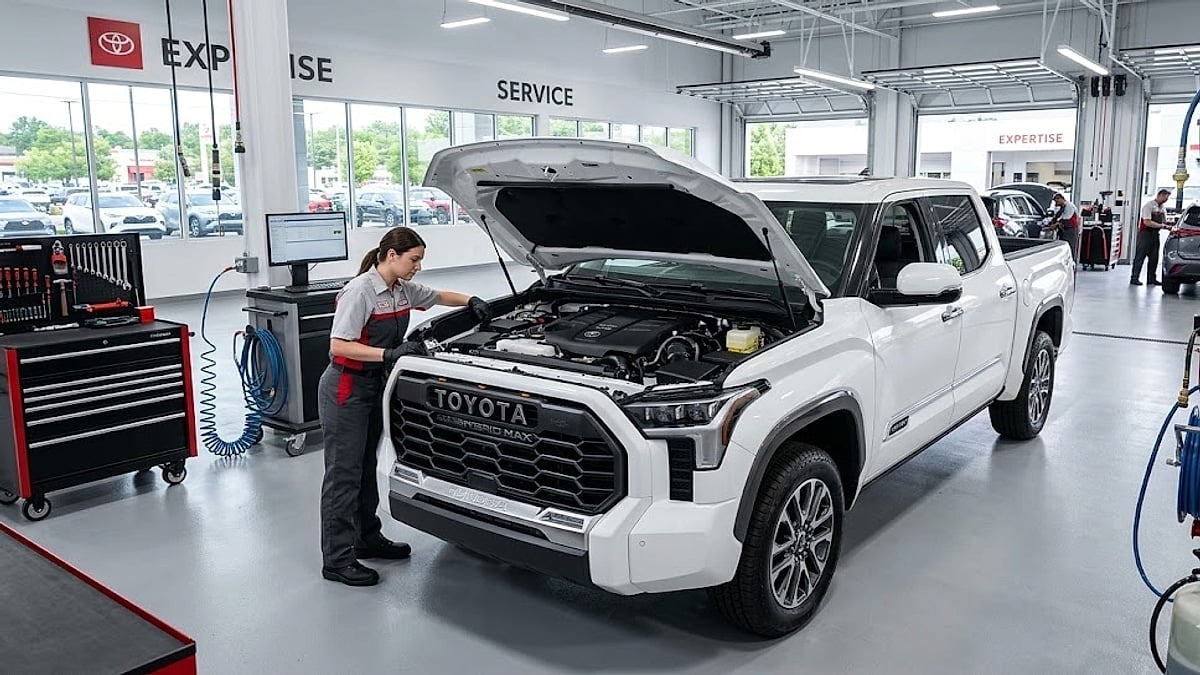
The National Highway Traffic Safety Administration has formalized these specific oiling vulnerabilities, documenting structural power losses in its detailed repository of vehicle defect logs. According to the official federal filing, a loss of motive power while driving at higher speeds can increase the risk of a crash, leading to a massive mechanical intervention strategy. This federal data can be analyzed in depth through the NHTSA Safety Portal, which mandates a massive 13.6-hour, complete block-replacement procedure for affected half-ton light-duty platforms.
The deep-seated engine failure pathway operates on an accelerated timeline under high-altitude towing stresses. High-altitude thermal loads alter structural wastegate duty cycles, forcing twin turbochargers to spin up to 20% faster to maintain standard sea-level target boost pressures.
This phenomenon significantly elevates oil temperatures entering the turbocharger center housing rotating assemblies. The hot oil degrades thin 0W-20 lubrication films, leaving the contaminated crankshaft main bearings highly vulnerable to sudden adhesive wear and eventual crankshaft seizure.
Real-World Case Study: The Alaskan Fleet Tug-of-War
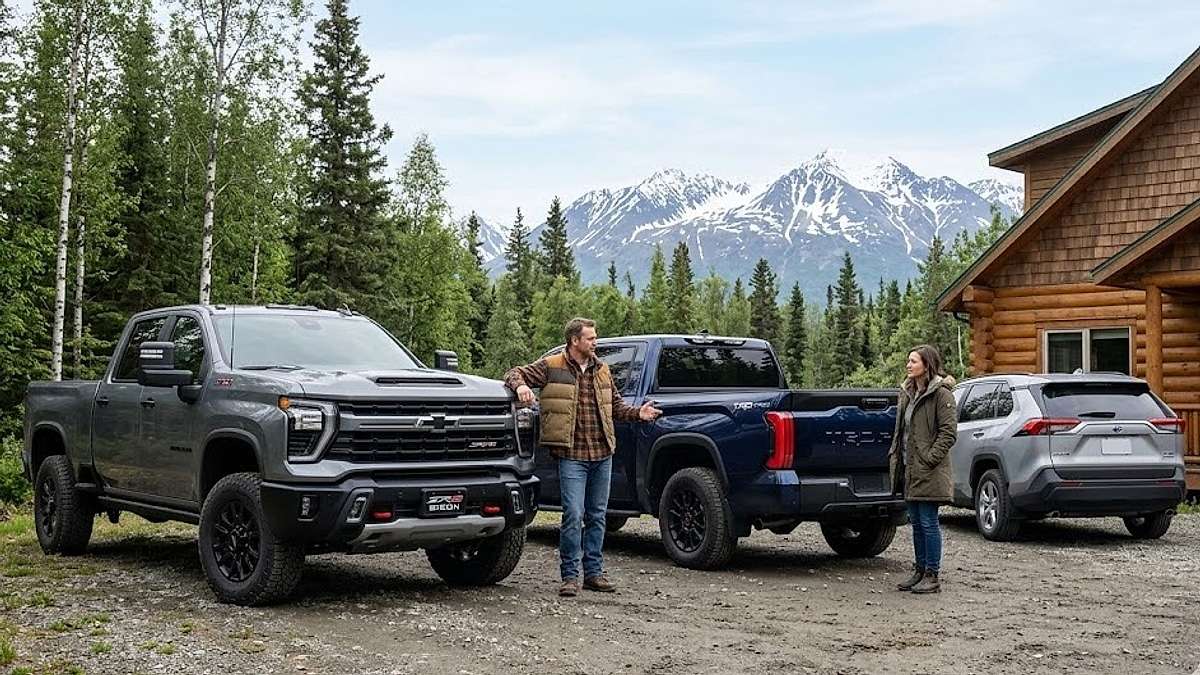
The mechanical limitations of light-duty platforms under extreme load factors forced a definitive structural change for an experienced owner operating in the severe climate of the Pacific Northwest. Isaac Dirol from Alaska, posted to the 2023-2027 Toyota Tundra Owners Facebook page, says, "I’m selling my Toyota Tundra. I just bought a 2025 Chevrolet HD ZR2 Bison 6.6L gas for towing. Now, I’m trying to convince my wife that the Tundra is better than her Toyota RAV4 and that we should keep both trucks and sell the RAV4 Hybrid instead. I want both trucks!"
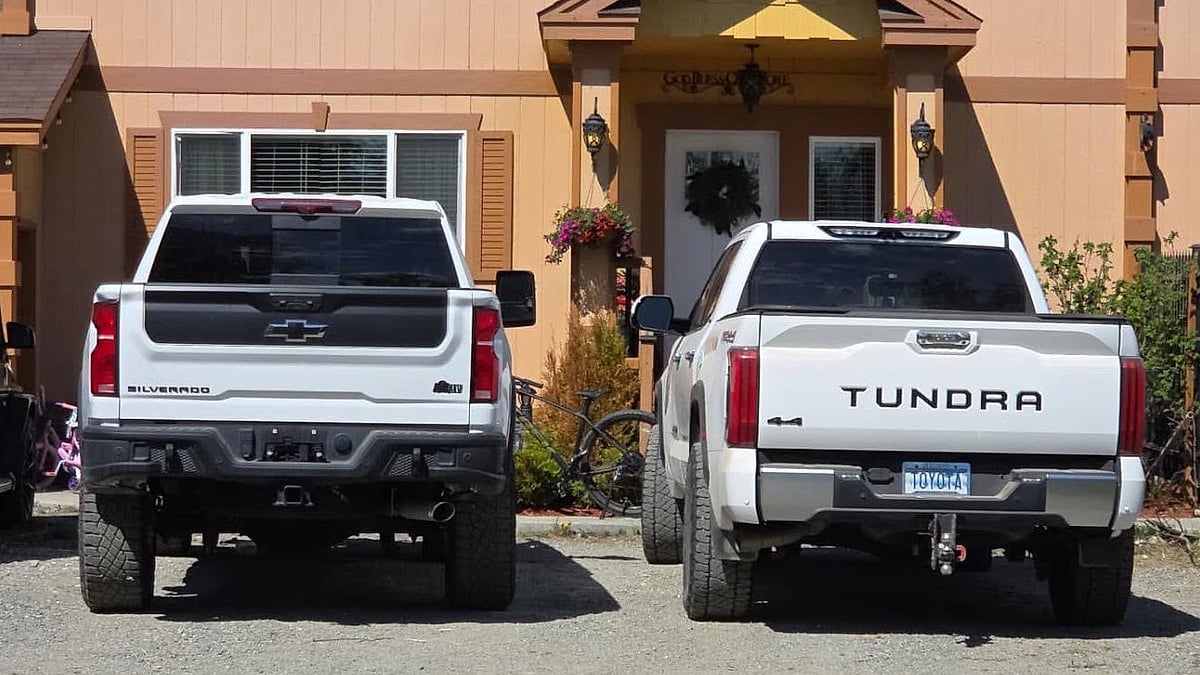
This unique fleet decision demonstrates a calculated pushback against vehicle downsizing, highlighting a deliberate strategy to separate light daily commuting tasks from severe towing duties. The Tundra platform features a sophisticated multi-link rear coil suspension design that excels at passenger comfort and unladen tracking stability. However, this architectural layout exhibits pronounced rear-end squat and significant lateral deflection under high tongue-weight conditions over long mountain passes.
By contrast, the 2025 Chevrolet Silverado HD ZR2 Bison utilizes a heavy-duty leaf-spring rear architecture complemented by custom-valved Multimatic DSSV dampers and a robust cast-iron 6.6L L8T naturally aspirated gas engine. This iron-block heavy-duty platform bypasses the complex plumbing, high-pressure wastegate actuators, and extreme thermal cycling inherent to downsized turbo engines. It delivers predictable, steady-state torque across broad, high-load operational envelopes.
Torque News technical analysis by Denis Flierl identifies a critical gap between factory maintenance schedules and real-world component longevity. When a downsized twin-turbo engine operates under sustained boost conditions, the peak cylinder pressures rise dramatically, exerting immense downward force directly onto the connecting rod and main bearings. If structural machining debris is already present within those oil passages, this elevated pressure forces the hard metal fragments to score the bearing shells, rapidly destroying the hydrodynamic oil film.
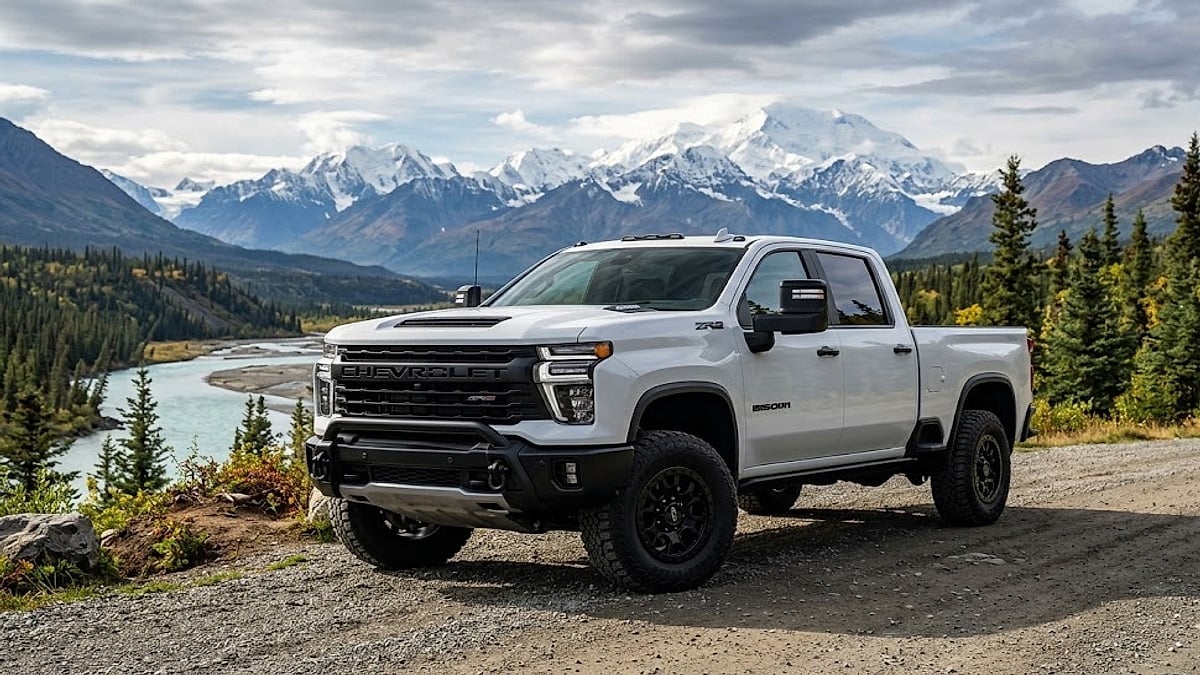
In contrast, the heavy-duty 6.6L L8T pushrod V8 engine relies entirely on large displacement and an unstressed, low-RPM torque curve to move heavy payloads. This layout mitigates peak cylinder pressures but introduces entirely different mechanical stress vectors across the valvetrain assembly.
The primary mechanical vulnerability of the GM heavy-duty powertrain involves the hydraulic valve lifters and their interaction with fluctuating system oil pressures. The National Highway Traffic Safety Administration has logged multiple manufacturer communication updates detailing specific mechanical lifter failures and bent pushrods across GM V8 platforms. The complete technical diagnostic breakdown can be accessed via the NHTSA Manufacturer Communications Database, which details specific lifter-collapse behaviors and structural valvetrain correction protocols.
The heavy-duty gas platform remains highly dependent on consistent oil pressure matching to prevent internal locking pin damage within the lifter bodies. If the engine experiences extended oil change intervals or severe oil aeration from sustained high-RPM operation, the hydraulic lifters can bleed down prematurely. This mechanical lash creates a severe hammering effect within the valvetrain, bending the pushrod and triggering severe cylinder misfires.
Field Observations from Owner Communities
Online enthusiast networks provide an unfiltered look at these divergent powertrain issues, serving as an early-warning system for tracking real-world mechanical wear.
In a recent technical discussion on r/Silverado, several owners noted that the P0606 code often appeared after a low-voltage battery event. Based on my 30 years of experience, this aligns with how sensitive GM's Powertrain Control Modules are to voltage drops during the start cycle, as discussed in the full discussion on the r/Silverado Community Thread.
Another owner highlighted the vulnerability of the new design by detailing the cooling system's underlying architecture. "The radiator on these models has an isolated portion for cooling the automatic transmission fluid... if it's not cooling it, bad things happen," as documented in the broader automotive diagnostics community on r/Silverado Technical Archive.
Regional Impact Analysis: High-Altitude Rocky Mountain Stress Testing
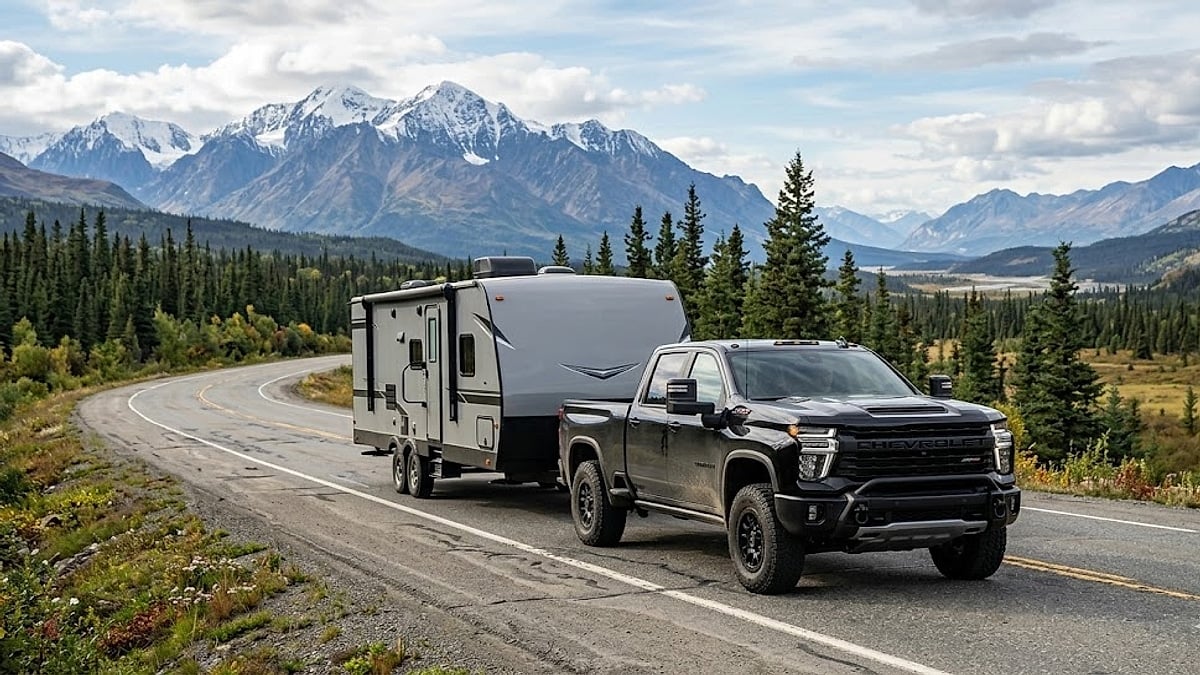
Operating a multi-vehicle fleet in extreme environments like Alaska or the Colorado Rockies fundamentally alters standard automotive component wear patterns. At high elevations, such as Vail Pass or the Eisenhower Tunnel along Interstate 70, air density drops by more than 20%, forcing turbocharged powertrains to run much harder to meet target oxygen intake levels. The resultant heat soak migrates from the exhaust manifolds directly into the main engine block, accelerating engine oil breakdown and straining thin factory cooling systems.
An investigation by Denis Flierl on Torque News' Tundra Critical Maintenance establishes that short oil change intervals are mandatory to protect delicate turbocharger components from premature carbonization. The accelerated thermal cycling observed in mountainous terrain degrades standard lubricants far sooner than the mileage limits posted in corporate manuals.
Furthermore, extensive field evaluations published on Torque News Heavy Duty Capability demonstrate that naturally aspirated heavy-duty gas engines remain far more resilient to mountain heat soak than downsized, highly stressed light-duty options. The massive surface area of a heavy-duty cooling stack dissipates thermal loads more efficiently, preventing severe oxidation of transmission fluid during long, steep climbs.
Key Takeaways
- Prioritize severe-duty maintenance schedules by dropping engine oil changes to 3,000-mile windows when towing over high-altitude mountain passes.
- Inspect oil filter pleats forensically during every service to catch microscopic silver metallic flakes before a catastrophic crankshaft bearing failure occurs.
- Isolate your light-duty hybrid vehicles for low-load commuting tasks while reserving heavy-duty leaf-sprung trucks for high tongue-weight payloads.
- Monitor system battery voltage levels closely on heavy-duty domestic trucks to avoid false-positive engine module diagnostic codes.
The Next Question: What Happens to Fuel Economy Math When Swapping a Hybrid for a Second Truck?
Retaining two large trucks while selling a high-efficiency compact hybrid vehicle can completely transform a household's monthly operating budget. A standard compact hybrid platform consistently achieves over 40 miles per gallon in mixed driving conditions, providing a structural financial buffer against fluctuating fuel costs.
Swapping that efficient footprint for a secondary half-ton truck means the household commuter baseline drops to roughly 16 miles per gallon. Over an average annual driving distance of 15,000 miles, this drop in structural efficiency adds substantial fuel overhead, requiring a clear, unemotional look at whether pure mechanical redundancy justifies the increased daily running costs.
Final Analytical Verdict: The transition from a single downsized light-duty truck to a dedicated multi-vehicle heavy fleet reflects an emerging reality regarding real-world towing limits. Separating daily light commutes from heavy-duty towing cycles preserves delicate mechanical components and ensures maximum operational safety in harsh environments.
It's Your Turn: Would you trade a highly efficient hybrid daily driver to keep two full-size trucks in your garage? Leave a comment in the red Add new comment link below and share your real-world towing setup.
What's Next: Our upcoming companion piece pivots directly into the household financial impact of this decision, offering an in-depth consumer advocacy guide.
This upcoming consumer guide details the total cost-of-ownership math behind large-truck fleet redundancy, evaluating insurance underwriting changes, secondary registration fees, and specialized high-altitude fuel-burn rates.
Come back tomorrow, or check my Torque News Home Page for more of Denis Flierl's interesting automotive news articles.
About The Author
Denis Flierl is a 14-year Senior Reporter at Torque News and a member of the Rocky Mountain Automotive Press (RMAP) with 30+ years of industry experience. Explore his full investigative reporting archives and technical guides at DenisFlierl.com. Based in Parker, Colorado, Denis leverages the Rockies' high-altitude terrain as a rigorous testing ground to provide "boots-on-the-ground" analysis for readers across the Rocky Mountain region, California EV corridors, the Northeast, Texas truck markets, and Midwest agricultural zones. A former professional test driver and consultant for Ford, GM, Ram, Toyota, and Tesla, he delivers data-backed insights on reliability and market shifts. Denis cuts through the noise to provide national audiences with the real-world reporting today’s landscape demands. Connect with Denis: Find him on LinkedIn, X @DenisFlierl, @WorldsCoolestRides, Facebook, and Instagram.
Photo credit: Denis Flierl
Set Torque News as Preferred Source on Google
Follow us today...