
It starts with a soft metallic tick.
Then comes the instrument cluster warning that every modern truck owner dreads.
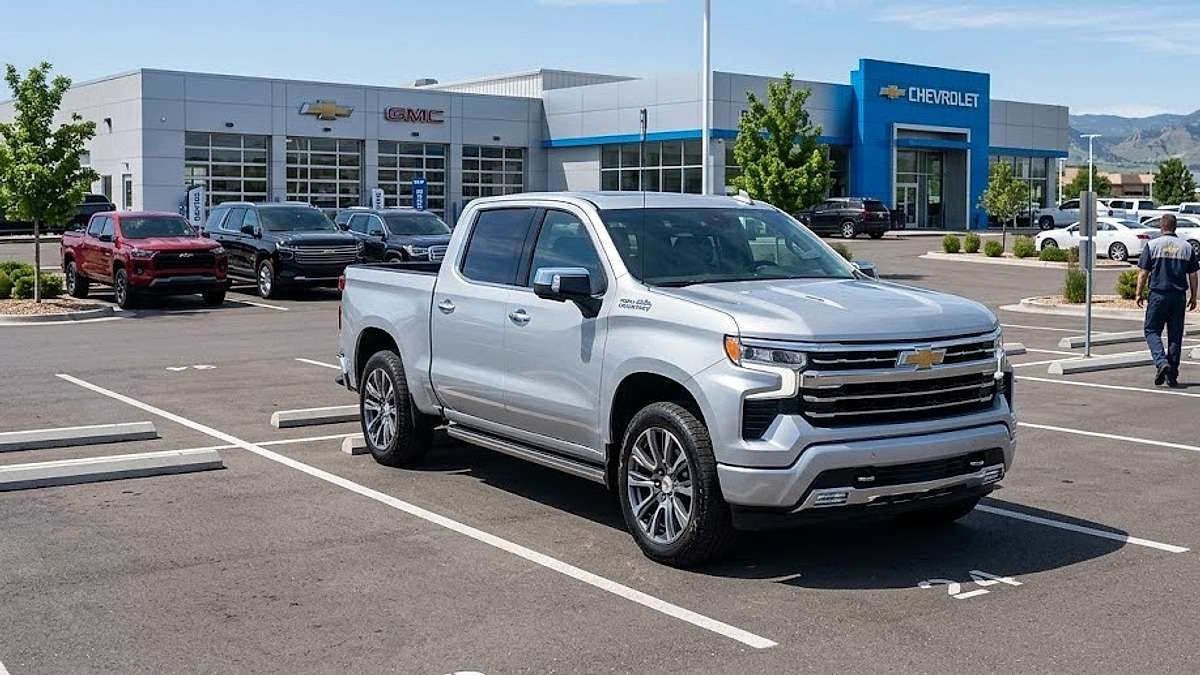
Within miles, a brand-new $65,000 pickup loses oil pressure, stalls, and leaves its driver stranded on the side of the highway.
Truck buyers initially rushed to the 3.0L Duramax LZ0 inline-six diesel as a reliable haven to escape the shadow of premature valvetrain component wear and lifter fatigue that has historically plagued GM small-block V8 powerplants.
Buyers thought they were purchasing bulletproof diesel durability. Instead, early-production 2025 and 2026 Silverado models are suffering lower-end engine failures at under 10,000 miles.
General Motors knows there is a problem. The manufacturer quietly issued Technical Service Bulletin TSB 25-NA-307 to dealership service departments across North America.
However, because GM handles this issue through an internal service bulletin rather than a safety recall, thousands of truck owners are left making $900 monthly payments on dead vehicles parked in service bays with no loaners in sight.
The Mechanical Reality Behind TSB 25-NA-307
Having spent over three decades tracking automotive manufacturing trends, technical service updates, and powertrain failure patterns, I can tell you that lower-end engine destruction in a brand-new diesel is rarely a random fluke. It points directly to quality control lapses on the assembly line.
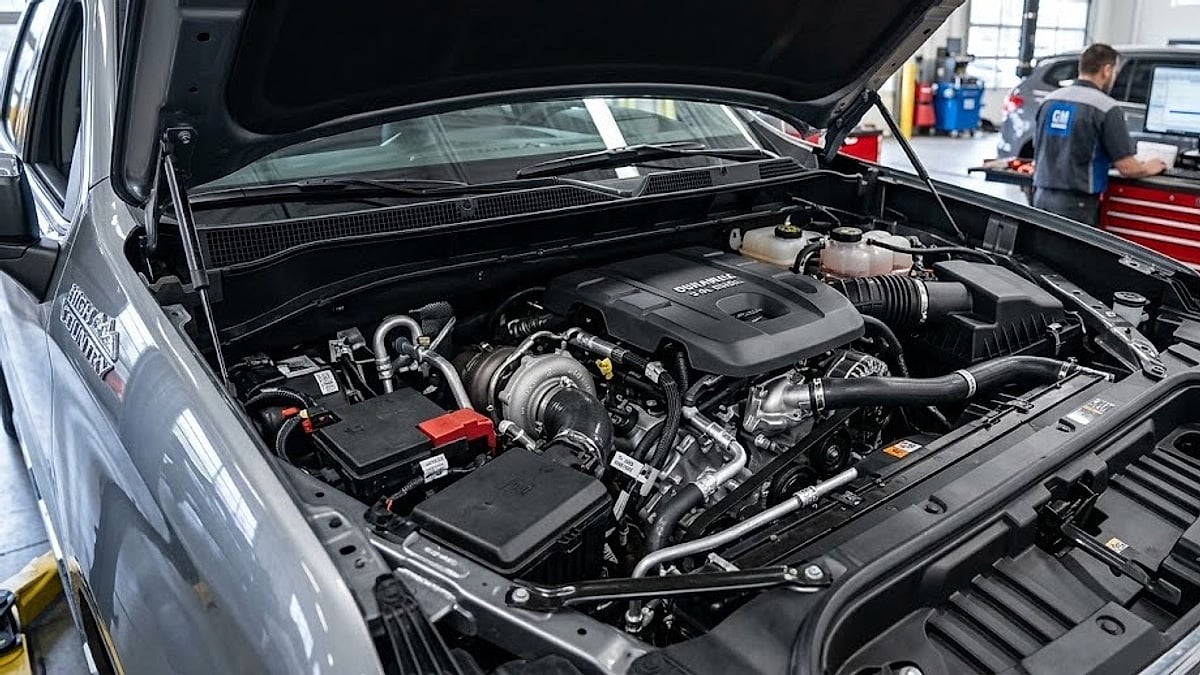
The technical root cause behind TSB 25-NA-307 comes down to micro-tolerances deep inside the lower crankcase assembly. During assembly-line machining of the crankshaft journals, minor surface-finish deviations create excessive friction against the engine's main thrust bearing.
The thrust bearing maintains lateral (fore-and-aft) alignment of the crankshaft. When those surface tolerances fail, the thrust bearing erodes at an alarming rate—a process known as thrust bearing "washout."
As the bearing dissolves, crankshaft end-play expands far past factory specifications. This excessive fore-and-aft slop forces the crankshaft cheeks into direct contact with the aluminum block housing. The resulting metal shavings circulate through the lubrication system, clogging oil passages and triggering Diagnostic Trouble Code P06DD (Oil Pressure Control Valve Stuck Off).
Once DTC P06DD sets, the engine control module cuts power to prevent immediate lockup, but the internal damage is already done. The engine requires a complete replacement long-block.
Why Dealerships Are Trapped In A 16-Week Backlog
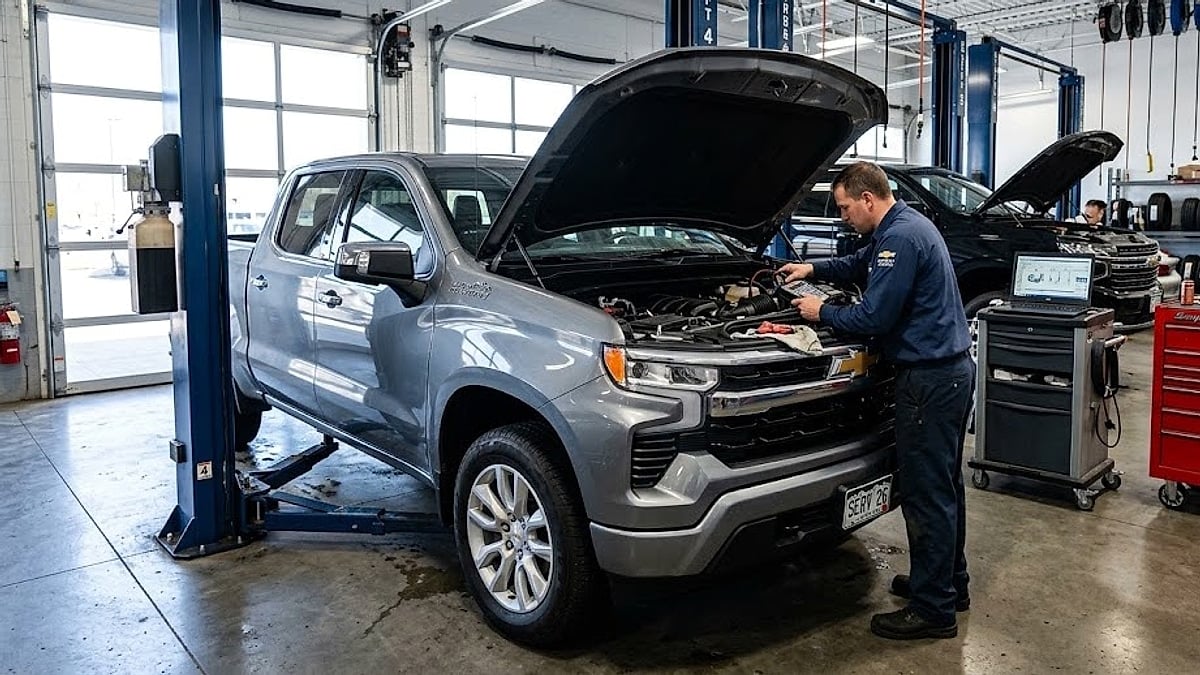
When owners pull into the service drive with a lit-up dashboard, service managers perform the test outlined in TSB 25-NA-307. Technicians mount a dial indicator to the front harmonic balancer, leverage the crankshaft rearward and forward, and measure end-play movement.
If the movement exceeds 0.025 inches, the bulletin instructs the dealer to drop and replace the complete crate engine under warranty. This is where the real nightmare begins for consumers.
Because the LZ0 inline-six relies on specialized internal components, replacement long-blocks are on a nationwide factory backorder lasting 10 to 16 weeks. Independent repair experts note that root contamination is rarely fully flushed from auxiliary cooling lines during partial updates.
Dealerships often refuse to hand out long-term loaner vehicles while awaiting crate engines, leaving owners stranded with ongoing loan payments.
The TSB Loophole: Unlike an official safety recall monitored by federal regulators, a Technical Service Bulletin does not obligate a manufacturer to issue "Do Not Drive" orders or fund rental vehicles. It simply provides a repair roadmap once the vehicle breaks down on the consumer's watch.
This is far from the first time full-size truck buyers have found themselves caught in dealership service traps over complex drivetrain faults.
In my investigative analysis of why 2026 Chevy Silverado owners face sudden transmission service-drive denial traps, I revealed how regional high-altitude atmospheric shifts and thermal stress trigger hidden electronic fault codes that service counters frequently dismiss until major mechanical breakdowns occur.
The pattern remains identical here: frontline service drives are left managing factory engineering oversights while owners shoulder the real-world fallout.
Drivetrain Reliability Across The Silverado Lineup
To understand why this issue is frustrating full-size truck buyers, we have to look at GM's recent warranty trends across the Silverado lineup:
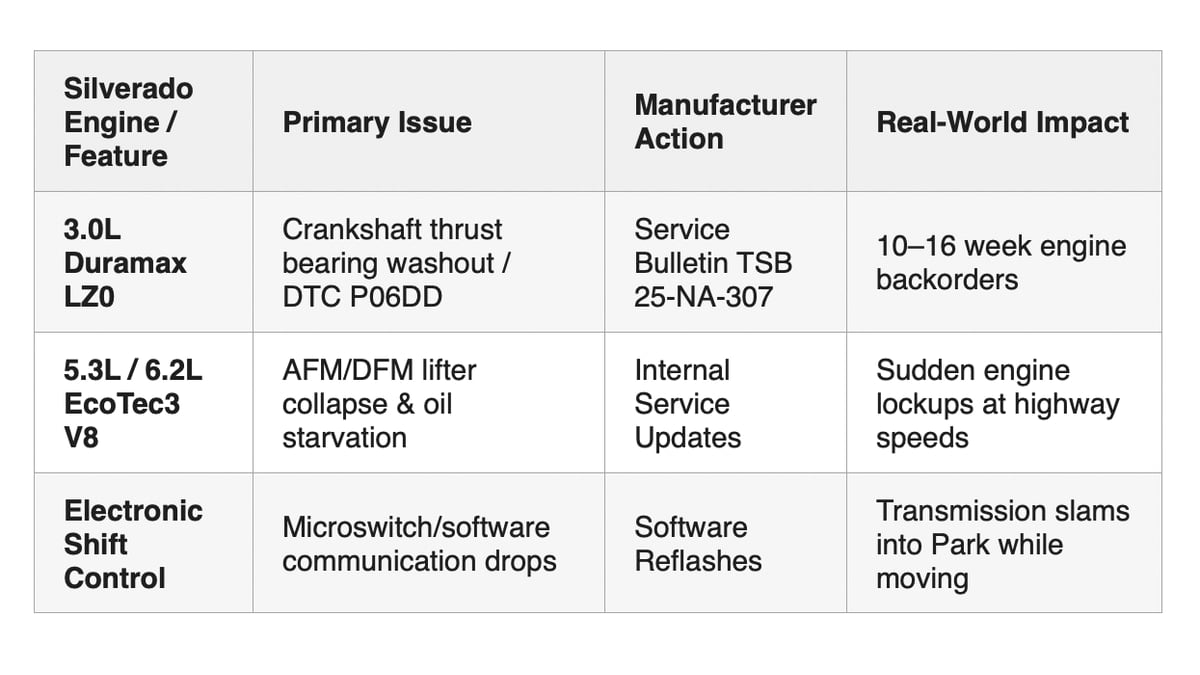
While GM has faced intense scrutiny over lifter failures in its V8 lineup, diesel buyers expected the 3.0L Duramax to avoid these valvetrain vulnerabilities. Finding out that a brand-new diesel pickup carries its own distinct lower-end defect leaves many feeling like they traded one mechanical gamble for another.
This ongoing cycle of hidden software glitches, component shortages, and delayed recalls explains why customer frustration is boiling over at the dealership counter.
As I documented in my report examining a 2026 Chevy Silverado electronic shifter software glitch, modern truck electronics and manufacturing oversights can quickly transform routine drives into dangerous liabilities, proving that troubleshooting unrefined factory defects is infinitely more complex than traditional mechanical maintenance.
What Should Affected Silverado Owners Do Right Now?
If you own a 2025 or 2026 Chevrolet Silverado 1500 equipped with the 3.0L Duramax LZ0 diesel, taking proactive steps can help protect your truck and your wallet:
1. Monitor Early Warning Symptoms: Daily Check.
Pay attention during cold starts. A faint metallic ticking or momentary delays in oil pressure build-up on the digital cluster can indicate early thrust bearing wear before Code P06DD triggers.
2. Request a Dial-Indicator Measurement at the Dealership.
If your truck exhibits hesitation or abnormal engine noise, ask your service advisor to record crankshaft axial end-play using a dial indicator as specified in TSB 25-NA-307. Ensure the precise measurement is documented on your written repair order.
3. Document Service Records & Demand Transportation: Consumer Advocacy.
Keep every written service receipt. Owners facing extended backorders should immediately escalate their case through GM Customer Care to secure loaner vehicle authorization or rental reimbursement while their truck sits idle.
The Path Forward
General Motors built a highly capable platform in the 3.0L Duramax Silverado, delivering impressive low-end torque and impressive fuel economy. However, addressing lower-end machining variances through quiet service bulletins rather than transparent owner notifications risks damaging buyer trust.
If you suspect your truck is affected, do not wait for the oil pressure light to illuminate on the highway. Schedule an inspection with your dealership service manager, request a formal crank end-play check, and ensure your service documentation reflects TSB 25-NA-307.
There’s More Coming Tomorrow… Also check out my Torque News Home Page for more of my informative Chevy Silverado news articles.
About The Author
Denis Flierl is a 14-year Senior Reporter at Torque News and a member of the Rocky Mountain Automotive Press (RMAP) with 30+ years of industry experience. Explore his full investigative reporting archives and technical guides at DenisFlierl.com.
Based in Parker, Colorado, Denis leverages the Rockies' high-altitude terrain as a rigorous testing ground to provide "boots-on-the-ground" analysis for readers across the Rocky Mountain region, California EV corridors, the Northeast, Texas truck markets, and Midwest agricultural zones.
A former professional test driver and consultant for Ford, GM, Ram, Toyota, and Tesla, he delivers data-backed insights on reliability and market shifts. Denis cuts through the noise to provide national audiences with the real-world reporting today’s landscape demands.
Connect with Denis: Find him on LinkedIn, X @DenisFlierl, @WorldsCoolestRides, Facebook, and Instagram.
Photo credit: Denis Flierl
Set Torque News as Preferred Source on Google
Follow us today...