
Every Camaro forum on the internet is running a version of the same argument right now, and almost none of them are asking the right question.
Before you scroll another inch, I want you to hold one question in your head, because we are going to come back to it at the end and I genuinely want your answer. Here it is: if GM handed you the keys to the seventh generation Camaro program tomorrow, with full authority to make one single decision that would decide whether the car lives or dies in the showroom, what would that decision be? Powertrain. Price. Doors. Or something nobody in the forums is even talking about. Hold that thought.
Because when I put a version of that exact question to Torque News automotive reporter Tim Healey this week, framed around Dodge going multi-energy with the Dodge Charger and Ford staying committed to the V8 in the Mustang Dark Horse, his answer stopped me cold. Here it is, in full, exactly as he gave it to me:
"It's not about the powertrain -- what caused slow sales was poor visibility and styling that looked good at first but aged poorly, and an interior that also aged poorly. Get the design right and the car will sell."
Read that again. Tim did not say the sixth-generation Camaro died because it lacked a manual transmission, or because Chevrolet chickened out on horsepower, or because the V6 was underpowered against a Mustang GT. He said the car that ended production in December 2023 was killed by a windshield you could barely see out of and a cabin that felt dated the week it launched. That is a completely different diagnosis than the one running wild on every enthusiast board right now, and it is worth sitting with before we get into the specs.
The Forum War Nobody Can Win: Two Doors or Four
Walk into any thread on GermanCarForum right now and you will find the same civil war playing out in real time. Supplier leaks reported by Automotive News, and echoed across the industry, tie the next Camaro to GM's updated Alpha 2 architecture, the same platform underpinning the next Cadillac CT5 and a brand-new rear-wheel-drive Buick sedan being built at the Lansing Grand River plant. Our own reporting on why the Buick sedan sharing that platform might be the most interesting part of this whole story goes deeper into why GM needs three vehicles, not two, to justify keeping that factory running.
That platform math is exactly why the four-door question will not go away. GM reportedly needs volume out of Lansing Grand River, and a Camaro sedan built on the same bones as the Buick and Cadillac would move a lot more metal than a coupe alone ever could. We covered this directly when GM reportedly greenlit the 2028 Camaro with a manual gearbox but possibly four doors, and the comments section split roughly in half within hours. Coupe purists call a four-door Camaro a betrayal of a nameplate that goes back to 1967. The pragmatists, the ones who actually run the spreadsheets on why cars get cancelled, argue GM has no choice if it wants the badge to survive past a second generation.
Here is what almost nobody in that argument is doing: connecting it to what Tim just told me. A four-door Camaro is not automatically a failure. Dodge already proved a four-door muscle car can move serious volume with the Charger. What kills a car is not the door count. It is whether the thing looks like it belongs in a driveway five years after launch, and whether the interior still feels special the day the new car smell wears off.
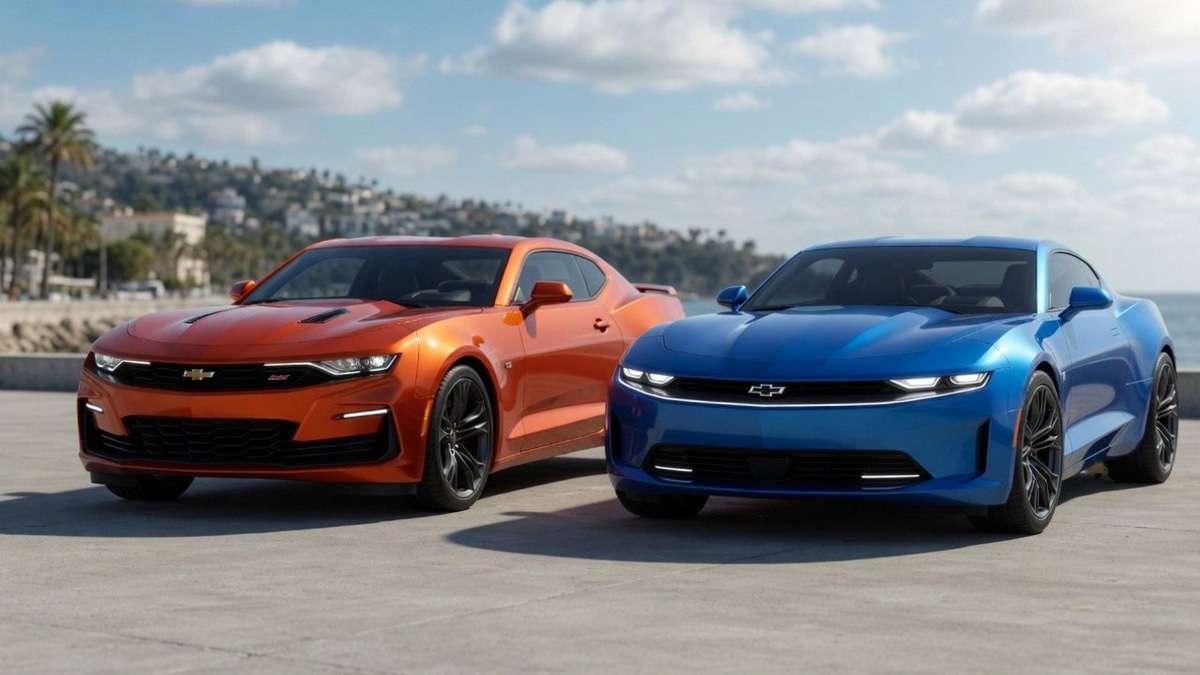
GM's own sixth-generation Camaro had a stunning face and a set of gun-slit windows that made it nearly impossible to see out of, paired with a dashboard that felt like a rental car by year three. That is Tim's argument in a nutshell, and it applies whether the badge ends up on two doors or four.
The V8 Comeback Nobody Predicted a Year Ago
The powertrain pendulum has swung hard in the last few months, and it is worth explaining why, because it changes the entire flavor of this debate.
A year ago, the smart money had the Camaro returning as an electric performance coupe in the mold of the Mustang Mach-E, and we wrote extensively about whether that EV version could defy the crossover trend and preserve the pony car's soul rather than becoming another badge-engineered SUV. Some of our own writers even explored the theory that GM reviving the Camaro nameplate on an EV was really about protecting brand equity the same way Ford protected Mustang equity with the Mach-E, borrowing a legendary name to sell an unrelated vehicle to a new kind of buyer.
That theory has aged fast. The Alpha 2 platform reports changed the conversation completely, because Alpha 2 is a traditional front-engine, rear-wheel-drive combustion architecture, not a dedicated EV skateboard. That single detail pushed the smart money back toward gasoline, and it lines up with Chevrolet's separate decision to grow the Corvette's small-block V8 into the new 6.7-liter LS6, producing 535 horsepower and 520 lb-ft of torque in Stingray form, with an even more aggressive tune already confirmed for the new Corvette Grand Sport.
Forum posters have connected those dots instantly. If GM built a brand-new naturally aspirated V8 family for the Corvette and the Silverado, a detuned or supercharged variant landing in a Camaro SS or ZL1 is not a stretch. It is the obvious next move, and we broke down exactly why GM appears to be doubling down on a traditional performance-car formula rather than chasing the EV crossover trend that so many assumed was inevitable two years ago.
Compare that to Dodge, which has gone all in on a multi-energy strategy for the Charger, selling gas and electric versions side by side under one nameplate, and to Ford, which has planted its flag firmly on V8 power with the 795-horsepower Dark Horse SC. GM now has to decide where the Camaro sits between those two extremes, hedge everything like Dodge, or commit hard to combustion like Ford, and that decision alone will shape the entire personality of the car.
Why the Price Tag Might Matter More Than Any Spec Sheet
Here is where Tim's answer and the forum debates actually meet in the middle, because styling and pricing are cousins. A car that looks special can justify a premium. A car that looks like a rental cannot, no matter what is under the hood.
The sixth-generation Camaro's slow sales were never really about a shortage of horsepower. The ZL1 had 650 horsepower and a supercharged LT4 that could hang with almost anything on the road, and it still could not outsell the Mustang in most years of its production run. What it lacked was the thing Tim pointed to directly, an interior and a driving position that felt worthy of the price, and sightlines so poor that test drivers routinely complained about backing out of a parking spot. GM can build the most powerful engine in Camaro history and still repeat that exact mistake if the cabin and the glass area do not get fixed first.
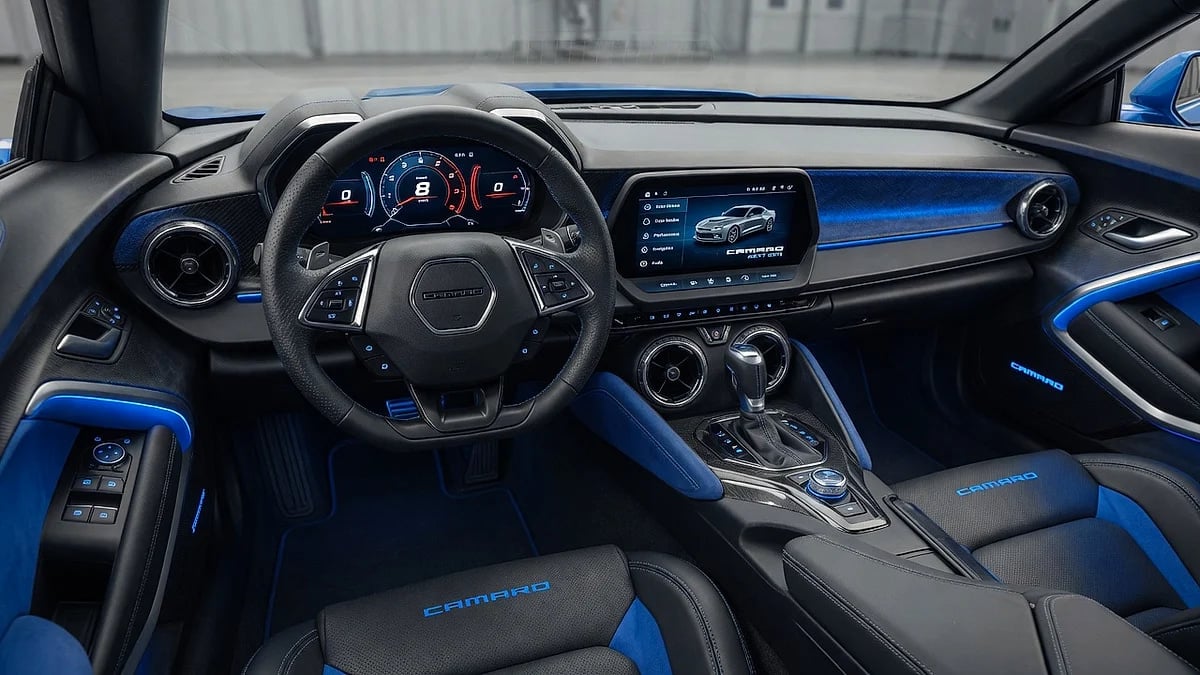
We made a version of this argument back when we wrote that Chevy needs to understand the Camaro's design matters more than a faster quarter-mile time, and it is worth revisiting now that the powertrain rumors have firmed up. A naturally aspirated V8 in the 450 to 500 horsepower range, paired with a six-speed manual, priced competitively against a Mustang GT, would satisfy the overwhelming majority of buyers on paper. But paper specs are not what sold Camaros in 1969 or 2010. Proportion did. Visibility did. A cabin that felt like a special place to sit did.
If GM nails the engineering and repeats the styling and ergonomics mistakes of the outgoing generation, Tim's prediction says the sales chart looks exactly the same as it did the last time around, four-door or not, V8 or not.
The Timeline, and What Comes Next
For what it is worth, the production math looks solid. Multiple outlets, including CarBuzz's reporting on the Lansing Grand River plant, have the Camaro entering production in fall 2027 as a 2028 model, built alongside the next Cadillac CT5 and the new Buick sedan, with combined annual output in the 60,000 to 70,000 unit range for the CT5 and Camaro together. That is a real commitment of factory floor space, not a maybe.
What is not settled is everything that actually determines whether that investment pays off. Two doors or four. V8 or hybrid-assisted six. And, if Tim Healey is right, whether GM's design and interior teams learned anything at all from the last generation's slow, quiet fade into discontinuation.
So here is where I bring it back to you. Earlier I asked you to hold onto one question: if you had full authority over this program, what is the one decision that makes or breaks it?
Now that you have read Tim's take, has your answer changed? Is it really the engine, or is Tim right that GM could put a V8, a manual, and a five-figure discount on the next Camaro and still watch it flop if the design and the interior do not fix what killed the last one? And separately, would you put down a deposit on a four-door Camaro if the styling and the drive were right, or is two doors truly non-negotiable for you? Tell us in the comments. We read every one of them, and the next chapter of this story is going to be written as much by what you tell us as by what GM decides in Lansing.
Return tomorrow, or check our Torque News Home Page for more interesting automotive news articles.
About The Author
Armen Hareyan is the founder and Editor-in-Chief of Torque News and an automotive journalist with over 15 years of experience writing car reviews and industry news. Now based in the Charlotte region (Indian Land, SC, he founded Torque News in 2010, which since then has been publishing expert news and analysis about the automotive industry. He can be reached at Torque News on X, Linkedin, Facebook, and Youtube. Armen holds three Masters Degrees, including an MBA, and has become one of the known voices in the industry, specializing in the landscape of electric vehicles and real-world stories of actual car owners. Armen focuses on providing readers with transparent, data-backed analysis bridging the gap of complex engineering and car buyer practicality. Armen frequently participates in automotive events throughout the United States, national and local car reveals and personally test-drives new vehicles every week. Armen has also been published as an automotive expert in publications like the Transit Tomorrow, discussing how will autonomous vehicles reshape the supply chain, and emerging technologies in vehicle maintenance.
Set Torque News as Preferred Source on Google
Follow us today...