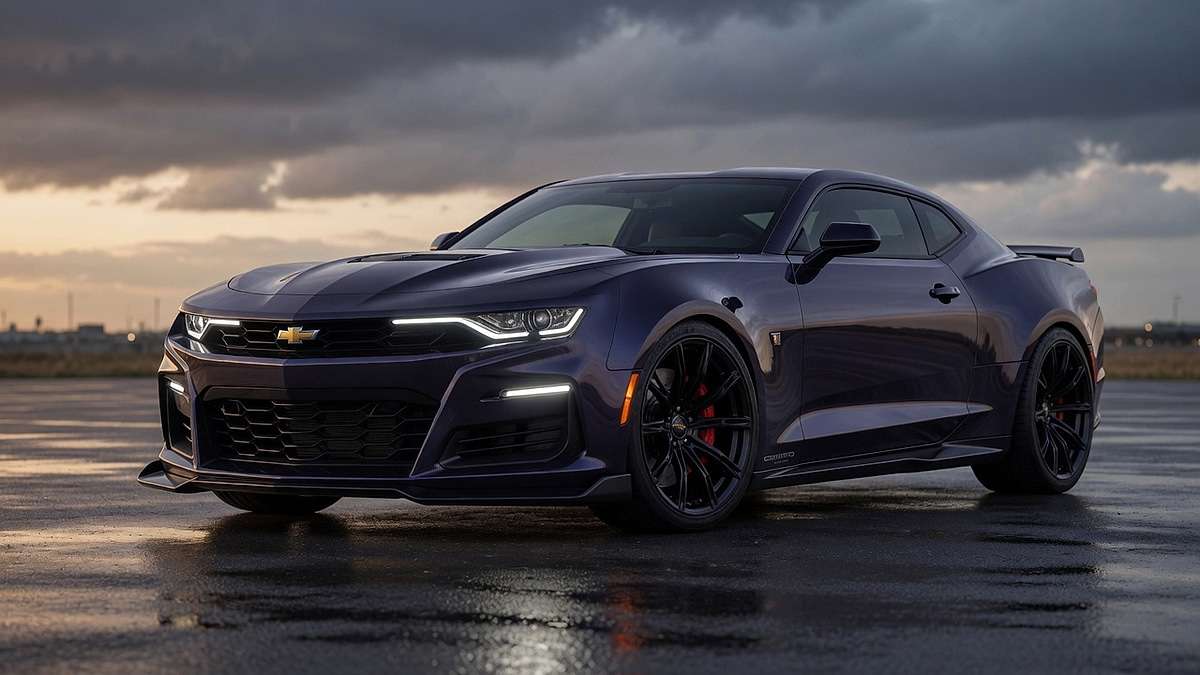

Note: Chevrolet has not yet officially revealed the next-generation Camaro.
The Chevrolet Camaro has been gone for only a short time, yet rumors about its return continue to generate enormous interest among enthusiasts. Now, according to a recent report from GM Authority, sources familiar with the matter say the next-generation Camaro is expected to offer a new high-performance variant, with insiders describing the car as "spicy" and promising enthusiasts will be "very happy." Our own coverage of why GM greenlighting the 2028 Chevy Camaro with a manual transmission is already dividing the enthusiast community shows just how much passion surrounds this comeback. And as we have argued before, the question of whether the returning Camaro should defy the crossover trend to save the pony car soul is one that goes far beyond a single vehicle.
Before we dive into what that could mean, consider this question. If so many automakers are moving toward EVs, SUVs, and automated driving technology, why would GM continue investing in traditional performance cars? Keep that question in mind as you read and share your answer in the comments section below.
At first glance, a high-performance Camaro does not sound particularly surprising. After all, performance versions have been part of the Camaro story for decades. From the Z/28 to the SS and the supercharged ZL1, Chevrolet has always found ways to satisfy enthusiasts looking for more power, sharper handling, and greater track capability. Readers who follow our ongoing history of Chevrolet Camaro engine generations and the low points that shaped its development know that performance has always been the heart of this nameplate.
But that is exactly why this latest report may be pointing to something much bigger.
Why Is GM Still Investing In Performance Cars?
The automotive industry is changing rapidly. Nearly every major automaker is spending billions on electrification. Many companies have reduced investments in traditional passenger cars altogether, choosing instead to focus on crossovers, SUVs, and EVs. Yet the reports surrounding the next-generation Camaro suggest GM may be moving in a different direction. The broader story of how the Chevy Camaro's last ride failed to go out the way we wished it would makes this revival feel even more meaningful to loyal fans who felt shortchanged by the sixth generation's quiet farewell.
According to multiple reports from GM Authority in recent months, the future Camaro is expected to remain focused on enthusiast buyers. Reports have suggested the vehicle could offer multiple transmission options and continue emphasizing driver engagement rather than simply chasing technology trends. That is becoming increasingly unusual in today's automotive market.
Is The Next Camaro Really About Saving The V8 Performance Car?
The high-performance variant itself may not be the most important part of the story. See the details in our new video discussing GM's unusual approach and the bigger story here.
The bigger question is what it says about GM's long-term strategy. Many enthusiasts have spent the last several years wondering whether traditional American performance cars still have a future. The discontinuation of the current Camaro only intensified those concerns. That is why our editorial argument that Chevy must understand that returning Camaro's design matters more than being 0.5 seconds faster in the quarter mile resonated so strongly with readers. Chasing raw numbers without fixing the visual and emotional appeal is exactly what cost the sixth generation its sales.
Yet every new report about the next-generation Camaro seems to tell the opposite story. Instead of abandoning performance cars, GM appears to be reinforcing its commitment to them.
What Engine Will Power The Next-Generation Camaro?
This may be the question enthusiasts are asking most often. GM Authority's report discusses the possibility of a high-performance variant, but many details remain unknown. Naturally, that has sparked significant speculation about what could sit under the hood. The 2027 Corvette's new 6.7-liter LS6 V8 is already making waves, as our coverage of the new C8 2027 Chevrolet Corvette Grand Sport being the Corvette most enthusiasts have been waiting for explained in detail. A supercharged version of that same engine dropped into the Camaro could push output well past 700 horsepower, giving GM a weapon that does not step on the Corvette's toes.
Will Chevrolet continue with a naturally aspirated V8? Could there be a new-generation performance engine inspired by Corvette technology? Might GM develop an entirely new performance powertrain strategy for the next Camaro? At this point, the company has not confirmed any specific engine plans. However, the existence of a dedicated high-performance variant suggests Chevrolet understands that powertrain choices will be central to the car's appeal. For many enthusiasts, the engine matters just as much as the badge.
Motor1 noted in its own analysis that "a hotter, high-performance Camaro is a no-brainer for Chevrolet now that the C8 Corvette has a mid-engine layout and comes exclusively with an automatic transmission," pointing out that Chevy now has real freedom with the Camaro's powertrain formula that it simply did not have before.
The Real Story May Be Bigger Than The Camaro
What makes this development especially interesting is that it may not be solely about one vehicle. When viewed alongside GM's broader product plans, a pattern begins to emerge. As our coverage of why the Buick sedans sharing the same Alpha 2 platform are the most interesting part of the 2027 Chevy Camaro's comeback revealed, the next-generation Camaro is expected to ride on an updated rear-wheel-drive architecture that will also underpin a new Cadillac CT5 and revived Buick sedans. That is a much larger ecosystem than one muscle car.
Cadillac continues investing in performance sedans. Corvette remains one of the industry's most respected sports cars. Reports suggest the Camaro could return with a strong enthusiast focus. Taken together, these moves suggest GM may be quietly preserving something many thought was disappearing: a complete family of rear-wheel-drive performance vehicles built around a shared backbone.
That is a much larger story than the return of a single nameplate. Some of us at TorqueNews have even asked whether the reason Chevy is bringing back the Camaro as an EV is possibly the same reason Ford named its EV the Mustang, pointing to the enormous brand equity these names carry and why legacy automakers cannot afford to let them fade quietly.
Why Enthusiasts Should Pay Attention
For years, many enthusiasts have worried that future performance cars would become increasingly homogenized, relying more on software, artificial sounds, and straight-line acceleration than genuine driver involvement. The reports surrounding the next Camaro suggest GM may see things differently. Early community debates we have tracked, such as whether the Camaro EV's three-motor concept could redefine American muscle on an entirely new platform, show that fans care deeply about the car getting its soul right, not just its horsepower figure.
A performance-focused Camaro indicates there is still room for vehicles designed primarily to deliver driving enjoyment. In an era increasingly defined by screens, automation, and electrification, that alone makes the Camaro story worth watching.
What Happens Next?
At this stage, many questions remain unanswered. Chevrolet has not officially revealed the next-generation Camaro. Final specifications, powertrain options, pricing, and production plans remain unknown. But if the reports from GM Authority prove accurate, one thing is becoming increasingly clear. The next Camaro may represent more than the return of an iconic muscle car. It may represent GM's belief that traditional performance vehicles still have a place in the future automotive landscape. And in 2026, that is a surprisingly bold position to take.
What Do You Think?
Do you think GM is making the right decision by continuing to invest in traditional performance cars like the Camaro while much of the industry focuses on EVs?
And if the next-generation Camaro does return, what would matter most to you: a V8 engine, a manual transmission, or simply preserving the Camaro's performance-car character? Please, share your thoughts in the comments section below.
Return tomorrow, or check our Torque News Home Page for more interesting automotive news articles.
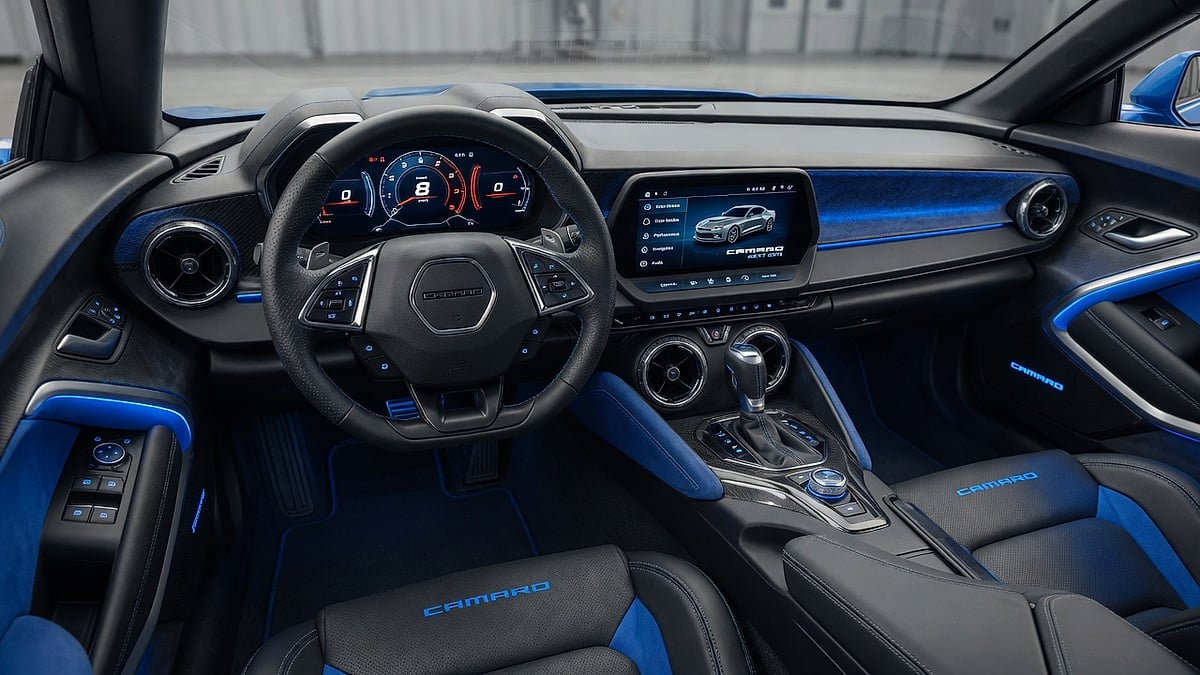
Images are computer-generated renderings of the imagined exterior and interior of the 2027 Chevy Camaro.
About The Author
Armen Hareyan is the founder and Editor-in-Chief of Torque News and an automotive journalist with over 15 years of experience writing car reviews and industry news. Now based in the Charlotte region (Indian Land, SC, he founded Torque News in 2010, which since then has been publishing expert news and analysis about the automotive industry. He can be reached at Torque News on X, Linkedin, Facebook, and Youtube. Armen holds three Masters Degrees, including an MBA, and has become one of the known voices in the industry, specializing in the landscape of electric vehicles and real-world stories of actual car owners. Armen focuses on providing readers with transparent, data-backed analysis bridging the gap of complex engineering and car buyer practicality. Armen frequently participates in automotive events throughout the United States, national and local car reveals and personally test-drives new vehicles every week. Armen has also been published as an automotive expert in publications like the Transit Tomorrow, discussing how will autonomous vehicles reshape the supply chain, and emerging technologies in vehicle maintenance.
Set Torque News as Preferred Source on Google
Follow us today...