
Three Key Points:
- The 2026 Cadillac Escalade IQ is not trying to be an electric version of the old Escalade. It is trying to eliminate the compromises that have defined luxury SUVs for decades.
- Rear-wheel steering gives a nine-thousand pound SUV the turning radius of a much smaller vehicle, which changes how you think about driving something this large.
- BMW and Mercedes have built electric luxury SUVs that feel futuristic and technological. Cadillac built one that feels important. That is a different thing entirely.
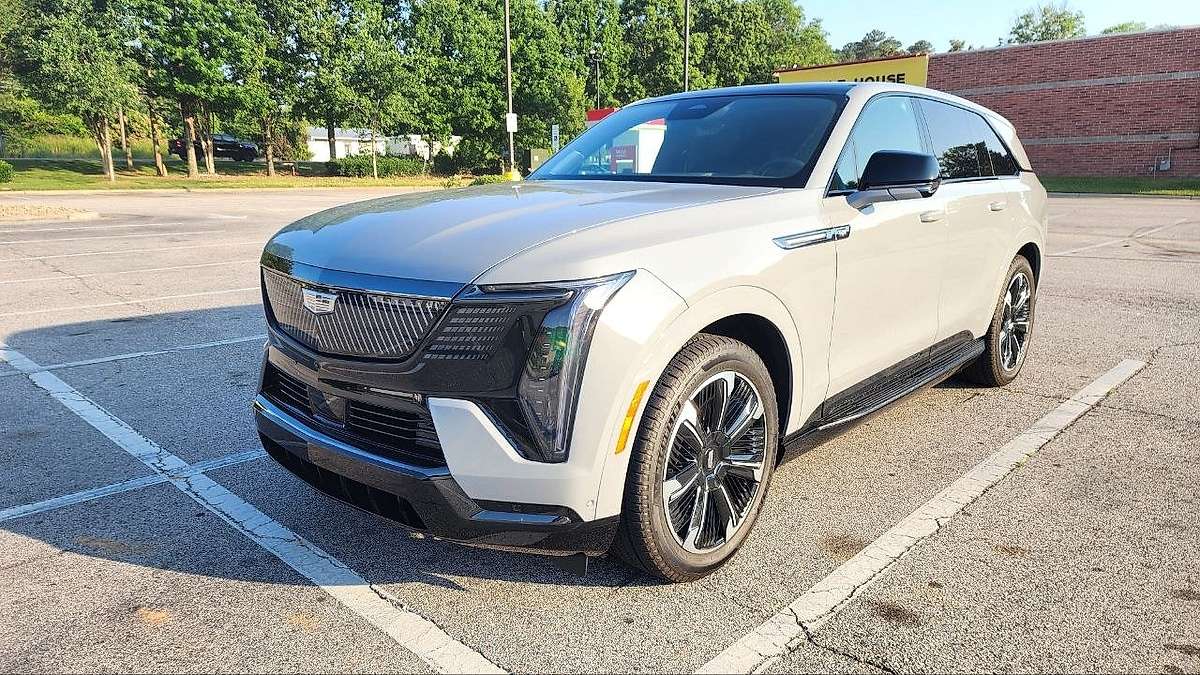
So before I drove the 2026 Cadillac Escalade IQ, I assumed Cadillac's biggest challenge was figuring out how to electrify one of America's most iconic SUVs. After spending a full week behind the wheel of the Premium Sport trim in Luna Metallic, I realized that wasn't the mission at all. The real mission was far more ambitious. Cadillac wasn't trying to build an electric Escalade. It was trying to eliminate the compromises that have defined luxury SUVs for decades.
Two weeks ago I wrote about how the 2026 Cadillac Vistiq solves a problem the Escalade IQ may have created by pricing most families out of full-size electric luxury, and the Vistiq fills that gap beautifully at a lower entry point. But the Escalade IQ is playing a completely different game. It is not filling a gap. It is rewriting what a full-size luxury SUV is supposed to feel like, which is why MotorTrend named it the 2026 SUV of the Year, calling it a moment, a monument, and a milestone.
I Thought the Escalade IQ Was About Electricity. I Was Wrong.
You close the door and the world stops. That is the first thing you notice. Not the 55-inch curved screen stretching from one pillar to the other. Not the 40-speaker AKG studio audio system. Not the massaging seats in the second row. The first thing you notice is silence. The door closes with the thud of a bank vault. Road noise disappears. The cabin does not just reduce outside sound. It erases it. I have driven a lot of luxury vehicles over fifteen years of automotive journalism, and I do not say this lightly: the Escalade IQ has one of the quietest cabins I have ever experienced in any vehicle at any price. The most impressive number in this SUV is not the 750 horsepower in Velocity Max mode. It is the amount of stress the Escalade IQ removes from a drive. That is what separates it from everything else.
The Exterior Communicates Before You Even Open the Door
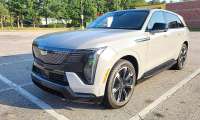
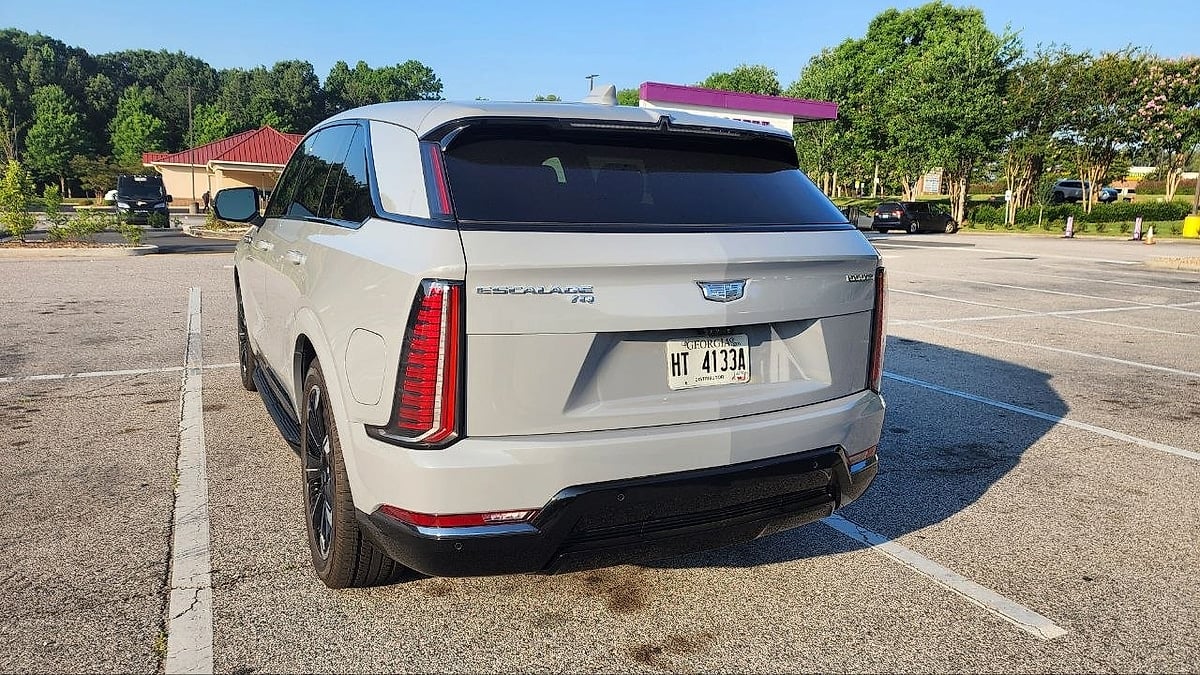
The Luna Metallic finish on my test vehicle does something clever. It reads differently depending on light conditions. In direct sun it is almost white. In shade it pulls toward silver with a faint warmth. The Escalade IQ is unmistakably an Escalade from fifty yards away, but the details have been updated without abandoning the signature silhouette. The vertical light signature at the front is now a full illuminated light bar that runs across the fascia and wraps into the corners. The grille texture is deliberate rather than decorative, with geometric patterning that signals electric intent without looking forced.
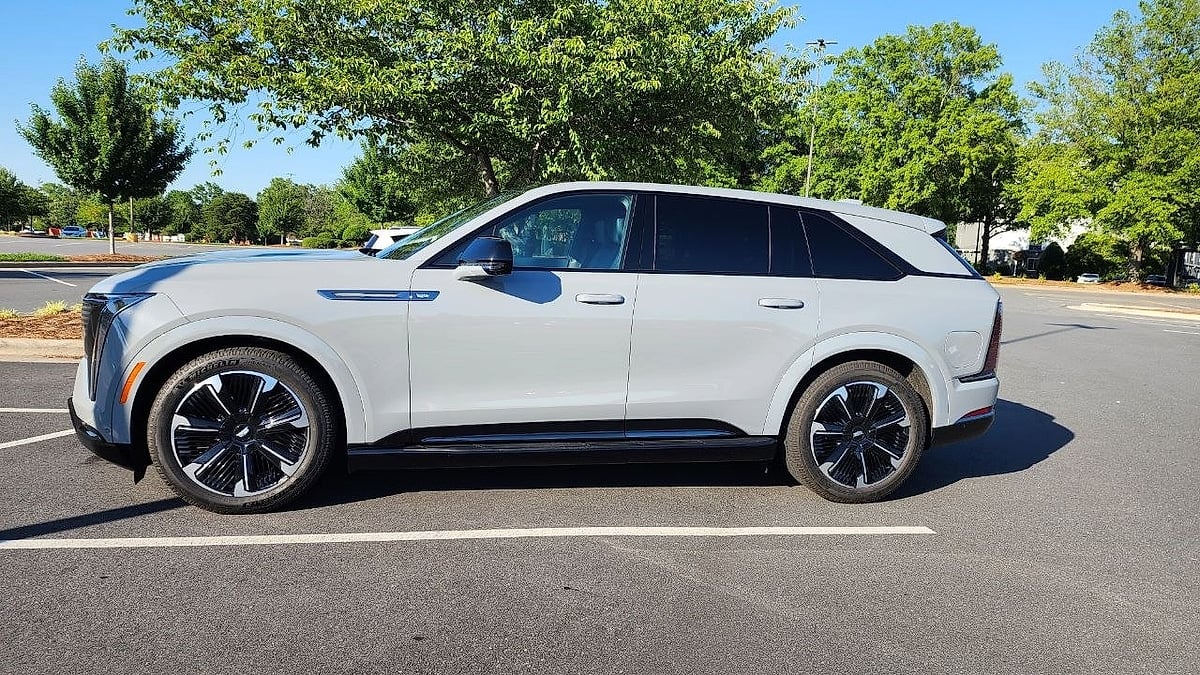
The roofline is slightly sleeker than the traditional Escalade, which is a byproduct of the lower floor the electric platform enables. You lose nothing in the visual presence by going electric. If anything the proportions feel more planted because the battery pack in the floor lowers the center of gravity visually as well as physically.
What If Luxury Buyers Care More About Calm Than Horsepower?
Most luxury SUV reviews start with a performance number. I want to start with how it feels to sit in highway traffic for forty-five minutes and arrive without tension in your shoulders.
The Escalade IQ does something that the 2026 Cadillac Vistiq I tested before it also does well: it separates the act of driving from the experience of stress. The air suspension absorbs what the road throws at it before it reaches you. The electric powertrain delivers thrust without engine vibration. The result is not just a quiet ride. It is a serene one. After three hours on the highway, I stepped out feeling rested rather than drained. That is the metric that matters most to the buyer this vehicle is built for, and it is one that horsepower charts do not capture.
The Biggest Surprise: It Does Not Drive Like a Vehicle This Large
The first time I pulled into a tight parking space at a grocery store, my brain expected a long, slow negotiation with the rear end. What happened instead surprised me completely. The Escalade IQ uses four-wheel rear steering that turns the rear wheels up to 7.2 degrees in the opposite direction from the front wheels at low speeds.
The turning radius of a vehicle that weighs over nine thousand pounds and stretches nearly nineteen feet is dramatically tighter than logic would suggest. I made some turns I would not have attempted in a much smaller truck. Parking, which I expected to dread, became genuinely manageable. The rear-wheel steering system also works in reverse at highway speeds, turning the rear wheels in the same direction as the front to stabilize the vehicle in fast lane changes. The connection this technology shares with GMC Sierra EV owners who praised rear-wheel steering on long cross-country trips for making the large platform feel nimble and controlled is not a coincidence. GM has clearly made rear steering a platform-wide priority across its largest electric vehicles, and the Escalade IQ may be its finest execution yet.
How The 2026 Escalade IQ Handles the Road at Speed
In a parking lot the rear steering is the headline. On a highway on-ramp it is something else entirely. The Escalade IQ accelerates with a directness that full-size gasoline SUVs simply cannot replicate. There is no turbo lag, no transmission hunting for a gear, no hesitation between intent and response. You press the accelerator and the vehicle moves.
At highway speeds the Escalade IQ feels stable in a way that comes from weight and geometry rather than driver aids constantly compensating. Lane changes feel deliberate rather than nervous. Crosswinds that would push a lighter vehicle around are absorbed without drama. The brakes, which blend regenerative and friction stopping, feel natural rather than grabby at normal driving speeds.
The only moment the weight becomes apparent is in very aggressive braking from highway speed, where you feel the mass working against you. That is physics, not a flaw. Under normal conditions this vehicle handles its size better than any full-size SUV I have driven with a combustion engine.
Let Me Ask You a Question
If you had $130,000 to spend on a luxury SUV, would you choose the quietest vehicle possible or the fastest one possible? Keep that answer in mind and share it in the comments after you finish reading, because the Escalade IQ forced me to rethink how luxury should be measured. The question of how much Cadillac's growing EV lineup is worth has real stakes. This is not a niche product. The window sticker on my test vehicle, a Premium Sport with optional rear-seat entertainment, destination, and dealer installations, came to $194,405. That is a serious number. Whether the experience justifies it is the central question of this review.
Cadillac May Have Solved the Biggest Problem With Full-Size SUVs
Traditional full-size luxury SUVs have always made a trade. They give you room, presence, and towing capacity. In return, they ask you to accept a vehicle that feels its size at every moment: in parking lots, on tight streets, on highway ramps, and in the fatigue of long drives. The Escalade IQ attacks all three of those trade-offs at once. The rear steering addresses the maneuverability problem. The electric powertrain and adaptive air suspension address the refinement problem. The 205-kWh battery and 460-mile estimated range address the efficiency problem, though I will note that the vehicle's weight means energy consumption is high per mile. The way GM has built its Ultium platform across its largest electric vehicles to deliver both range and real-world usability shows the strategic ambition behind the Escalade IQ. The battery pack is structural. The motors are mounted to give the vehicle a lower center of gravity. Every compromise traditional SUVs carry was examined and addressed.
The Escalade IQ Is Not Chasing Tesla
Many reviews compare the Escalade IQ to Tesla. I would not. After driving it for a week, I do not think Cadillac's target was Tesla at all.
Tesla focuses on efficiency, software updates, and acceleration times. The Escalade IQ does not care about efficiency benchmarks. It cares about arrival. Tesla has built vehicles that make you feel like you are operating advanced technology. The Escalade IQ makes you feel like you have arrived somewhere. Those are completely different philosophies. Tesla's interior is designed to be minimalist. The Escalade IQ's interior is designed to communicate that expense was not a concern. Every surface is finished. Every control is deliberate. The 40-speaker AKG audio system fills the cabin without distortion at any volume. Even the lighting choreography on arrival, where the grille illuminates and the door handles extend as you approach, is designed to produce an emotional response. The Cadillac Lyriq EV began this interior technology journey for the brand years ago, but the Escalade IQ is the fullest expression of that vision to date.
The Interior Is a Statement in Itself
The Harbor Blue and Backen interior on my test vehicle is not what most people picture when they think of an Escalade interior. It is quieter than black or tan. More composed. The contrast stitching is precise and the leather is soft without feeling synthetic. The 55-inch curved display I mentioned earlier deserves more than a passing reference. It does not feel like a screen grafted onto a dashboard.
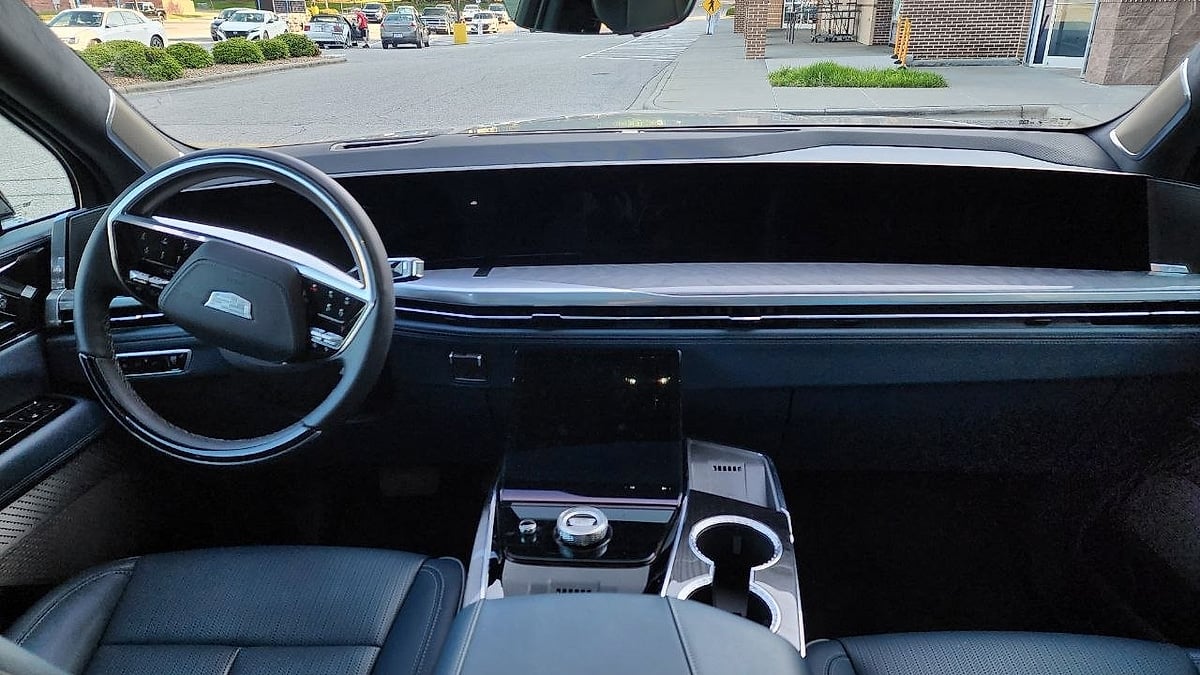
The dashboard was designed around the screen, which changes how natural it feels to use. The climate controls, audio, navigation, and vehicle settings are divided logically across the display without requiring you to dig through menus to do simple things. The physical controls that remain, primarily the volume knob and a few climate shortcuts, are placed where your hand already rests. The overall material quality across every surface you touch, the door pulls, the center console lid, the overhead controls, is consistent. Nothing feels like it was sourced at a lower grade than its neighbors.
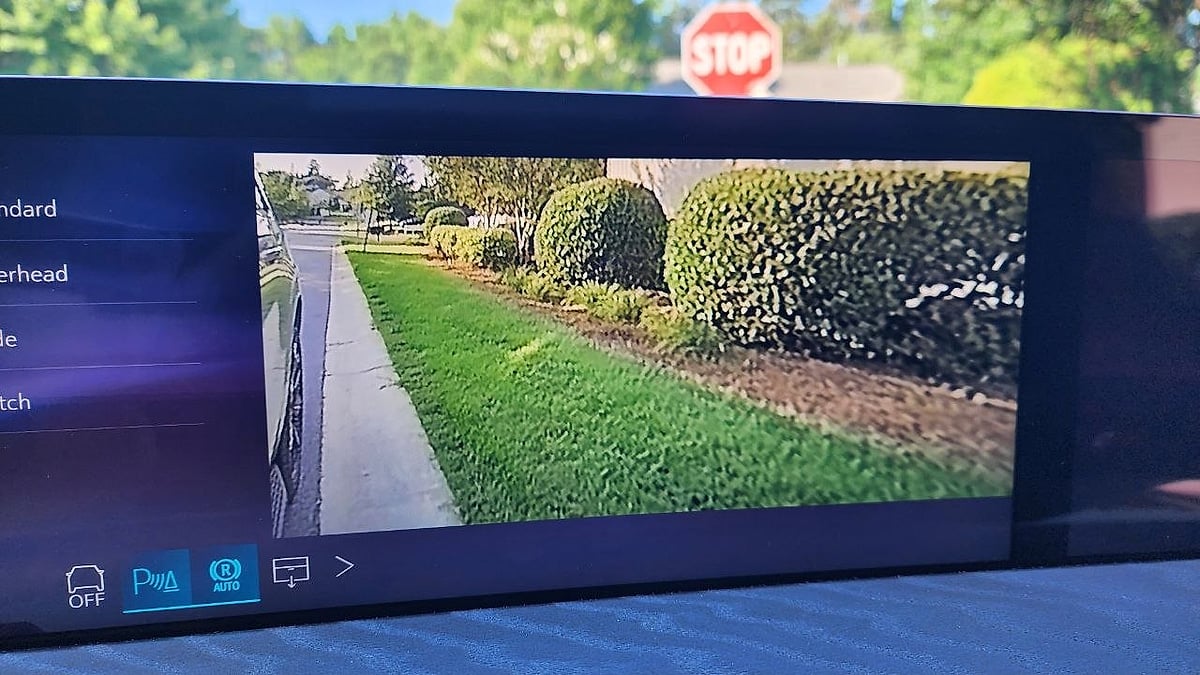
The only one area that I would like Cadillac to improve is the image quality on the screen when you enable the turning signal to make a left or right turn. I have seen higher quality imaging in Hyundai vehicles, and would expect the same from a $155,000 SUV. Some may consider it good enough. I think so too, it's just I think it can be much better. Here, see it yourself.
The Second Row Is Where This Vehicle Makes Its Strongest Case
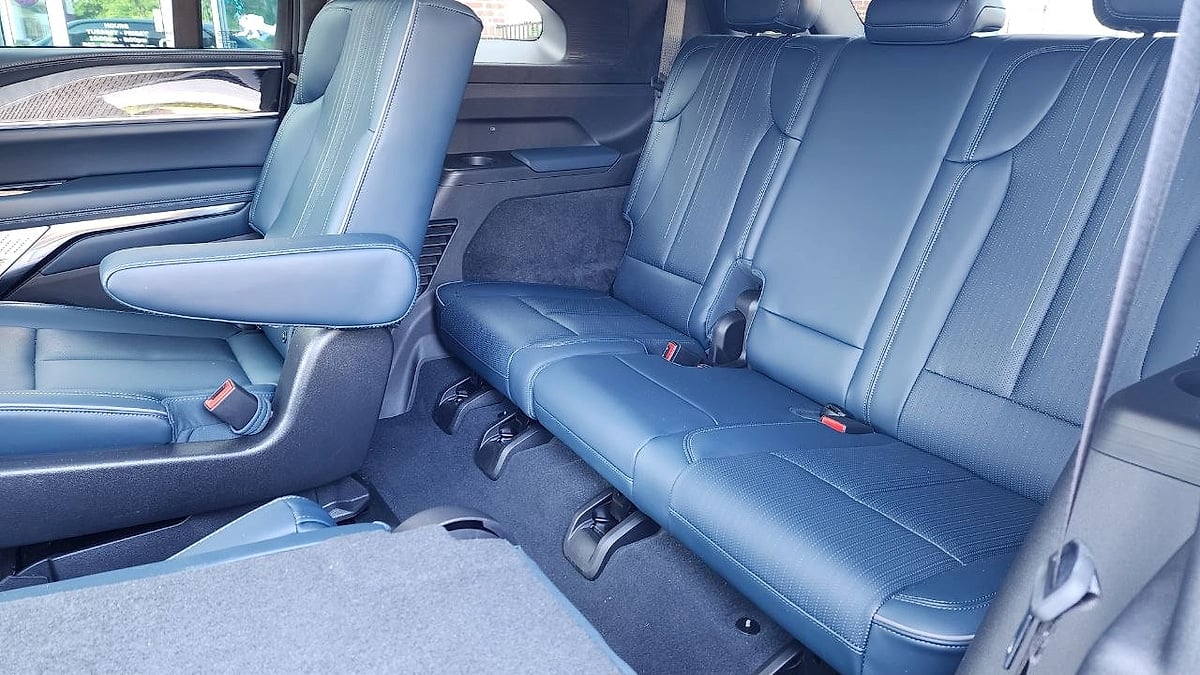
I had passengers in the second row on multiple occasions during the week. The reaction was consistent. People stopped talking when they got in. Not because they were unimpressed. Because they needed a moment to take it in. The available executive seating configuration replaces the traditional bench with two individual captain chairs that recline deeply, include footrests, and offer their own climate and audio controls.
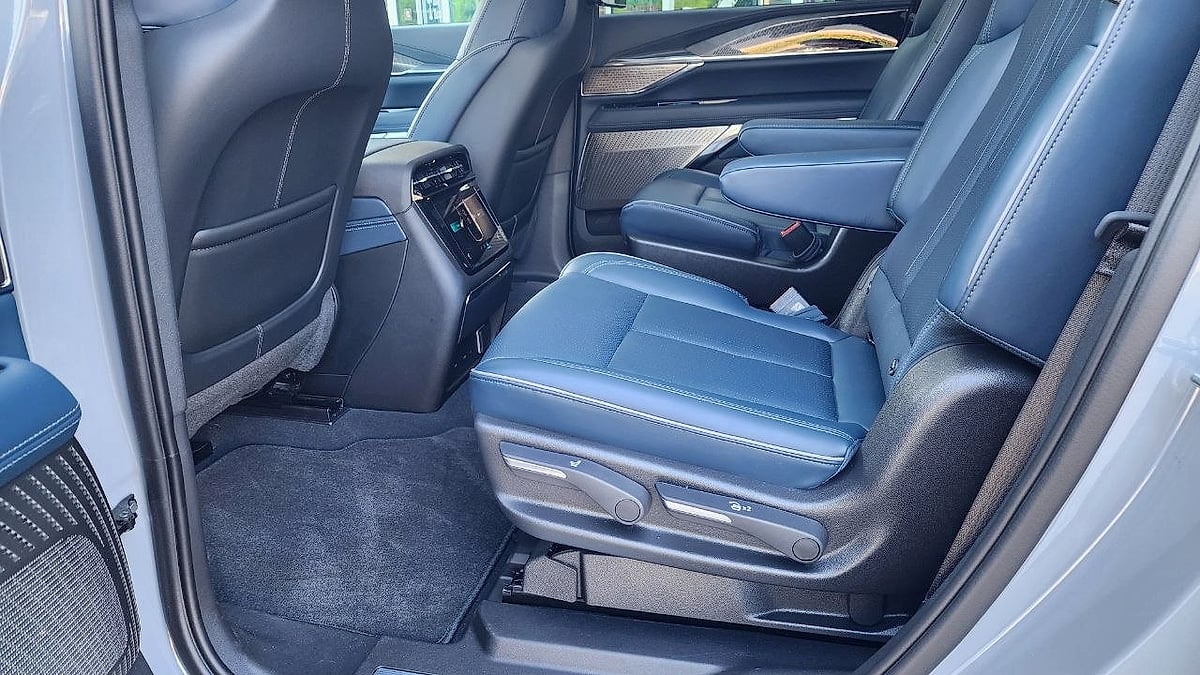
The floor is completely flat because there is no driveshaft tunnel. Legroom is exceptional. The reclining angle available in second row goes further than most business-class airline seats. On one longer drive I had my wife in the second row and she fell asleep within twenty minutes, which is not something that happens in most vehicles regardless of price. The Rear Command Center between the two seats gives second-row passengers control over the sunroof shade, audio zones, temperature, and the rear entertainment system. This is not a vehicle where the second row is tolerated. It is a vehicle where the second row is the best seat in the house.
What BMW, Mercedes, and Range Rover Have Not Fully Figured Out Yet
Here is where the title of this review pays off. The BMW iX is a genuinely excellent electric SUV. It feels futuristic. The interior is minimalist and precise. It rewards drivers who want a vehicle that feels advanced. The Mercedes EQS SUV feels technological. The Hyperscreen is impressive. The range is competitive. But both of these vehicles have a problem. They feel like electric cars that happen to be luxury.
The Escalade IQ feels like luxury that happens to be electric. That distinction is massive. When I test-drove the Mercedes EQE 350+ SUV, I noted the exceptional cabin quietness it delivered, and it was genuinely impressive for a German luxury EV. But in direct comparison, the Escalade IQ delivers that same quietness while wrapping it in an emotional package that carries a meaning the German vehicles have not matched.
I think people do not buy Escalades because they calculated that it was the rational choice. They buy them because an Escalade makes a statement. Cadillac figured out how to keep that emotional power in an EV. BMW and Mercedes have not done that yet. Edmunds noted in their review on Edmunds that the Escalade IQ's in-your-face presence is undeniable and communicates how expensive it is. That is not a criticism. For this buyer, that presence is the entire point.
Living With the Escalade IQ for Seven Days
Day one, I was impressed by the interior. Day two, I started understanding the technology. By day four, I stopped thinking about the vehicle at all and started just living with it. That transition is the real test of a luxury vehicle. Charging at home on a 240-volt Level 2 connection should return around 36 miles per hour with the available 19.2-kW onboard charger. Over seven days, I never once felt range anxiety. The 465-mile estimated range is not just a number. It changes behavior. I stopped thinking about charging the way I think about it in most EVs and started thinking about it the way I think about filling a gas tank.
On highway trips, the Escalade IQ is a genuinely comfortable long-distance vehicle. The SuperCruise hands-free system is available on this trim, and a GMC Sierra EV owner's 5,300-mile cross-country experience using SuperCruise across 90 percent of the drive illustrates exactly what GM's driver assistance technology is capable of at its best.
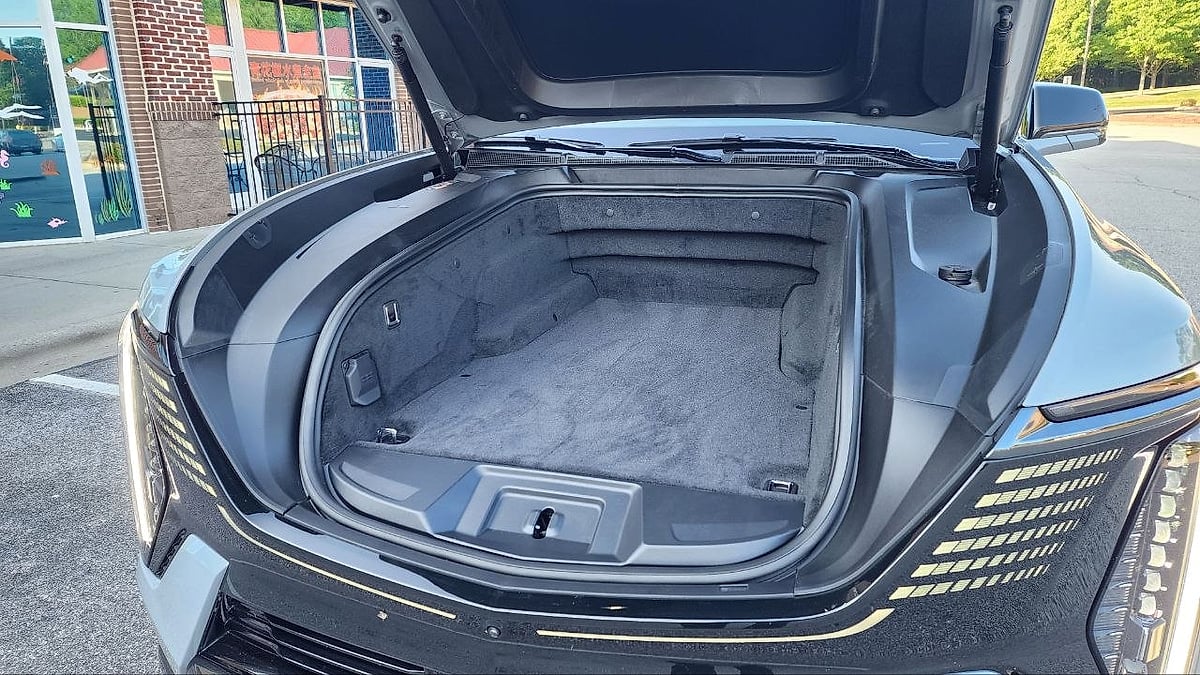
The Escalade IQ's cargo space is substantial. The frunk under the hood adds usable storage.
Passengers in the second row, particularly in the available executive seating configuration with individual seats, footrests, and tray tables, are not riding in an SUV. They are riding in a private lounge.
Is the Escalade IQ too big? For some roads and parking lots, yes. Is it worth the money? That depends entirely on whether the experience matches your definition of luxury. Is it comfortable on long trips? It is one of the best long-distance vehicles I have driven at any price point. Is charging difficult? No. The 350-kW DC fast charging capability and NACS adapter for Tesla Supercharger access make public charging straightforward. Does the range feel real? Yes. It is the first EV I have driven where the rated range did not feel like an optimistic estimate.
The One Thing That Surprised Me Most
I expected to be impressed by the technology. The 55-inch curved screen is extraordinary. The surround-view cameras and the parking automation are genuinely useful. But none of that was the biggest surprise. The biggest surprise was the ride quality. On broken pavement, in construction zones, over expansion joints at highway speed, the Escalade IQ floats. Not in a disconnected, vague way. In a way that communicates that the road surface simply does not matter. The adaptive air suspension reads the road and adjusts before you feel the imperfection. I have been in S-Class sedans that did not isolate this well. For a vehicle that weighs over nine thousand pounds riding on 22-inch wheels, this level of ride refinement represents a genuine engineering achievement. The announcement that this Escalade IQ became a game-changer for GM's entire electric strategy was bold when it was made. After seven days behind the wheel, I understand why.
GM Did Not Build an Electric Escalade
After a week with the Escalade IQ, I do not think Cadillac's goal was to electrify an icon. I think the goal was to create a luxury SUV that no longer behaves like a traditional SUV at all. That is a much more ambitious project. The electric powertrain was the tool. The real work was rethinking what full-size luxury should feel like when you remove the engine noise, the fuel stops, and the compromises that have been accepted for decades because there was no alternative. There is now an alternative. And it weighs nine thousand pounds and drives smaller than many three-row crossovers.
The lesson here extends beyond cars. When a legacy institution decides to reinvent itself, it faces a choice. It can add new technology to the old formula. Or it can ask what the old formula was actually trying to accomplish and build toward that goal with completely new tools. Cadillac chose the second path. The result is one of the most impressive vehicles I have driven in fifteen years of covering this industry.
If you were spending luxury SUV money today, would you choose the Escalade IQ over a Mercedes EQS SUV, BMW iX, or Range Rover? Why or why not?
Do you think the future of luxury is more horsepower and technology, or more comfort, quietness, and less stress behind the wheel? Share your thoughts in the comments below.
Return tomorrow, or check our Torque News Home Page for more interesting automotive news articles.
Images by Armen Hareyan.
About The Author
Armen Hareyan is the founder and Editor-in-Chief of Torque News and an automotive journalist with over 15 years of experience writing car reviews and industry news. Now based in the Charlotte region (Indian Land, SC, he founded Torque News in 2010, which since then has been publishing expert news and analysis about the automotive industry. He can be reached at Torque News on X, Linkedin, Facebook, and Youtube. Armen holds three Masters Degrees, including an MBA, and has become one of the known voices in the industry, specializing in the landscape of electric vehicles and real-world stories of actual car owners. Armen focuses on providing readers with transparent, data-backed analysis bridging the gap of complex engineering and car buyer practicality. Armen frequently participates in automotive events throughout the United States, national and local car reveals and personally test-drives new vehicles every week. Armen has also been published as an automotive expert in publications like the Transit Tomorrow, discussing how will autonomous vehicles reshape the supply chain, and emerging technologies in vehicle maintenance.
Set Torque News as Preferred Source on Google
Follow us today...