
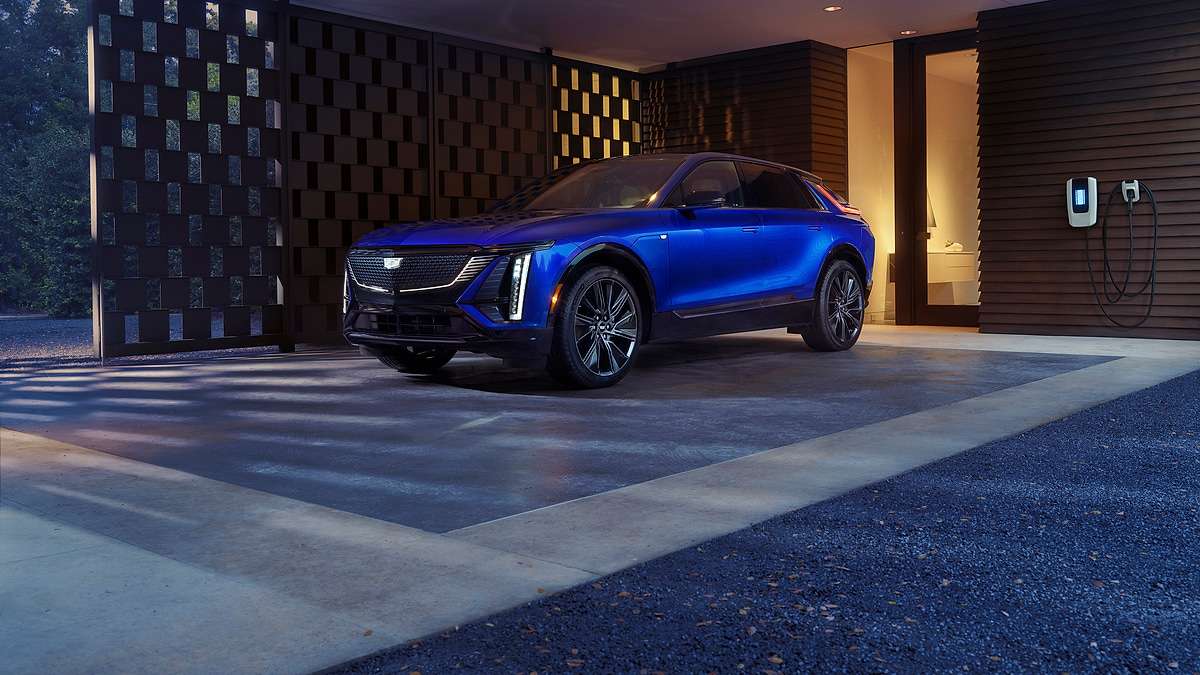

I checked the Cadillac Lyriq against the used EV supply signals Cox Automotive publishes every month, and the disconnect is still stark with one important caveat: Cox's March 2026 data is brand-level listing data, not a VIN-level Lyriq resale audit. Used EV days' supply fell to 31 days in March 2026, a 31.7 percent drop month over month and 28.3 percent below year-earlier levels. Tight supply usually supports prices, yet Cadillac used EV listing prices fell 4.5 percent month over month, the steepest decline Cox called out among high-volume brands. While the new EV average transaction price held at $54,508, Cadillac's luxury badge did not insulate its used listings from discount pressure. The market is pricing in risk that the first owner absorbs through depreciation and the second owner may face through repairs, insurance, and warranty timing. That split defines the Lyriq ownership story.
Cadillac Used EV Prices Fell 4.5 Percent While Used EV Supply Tightened
The Cox Automotive EV Market Monitor for March 2026 shows a used EV market in transition. Used EV inventory tightened, with days' supply dropping to 31 from 45 days in February and landing 28.3 percent below year-earlier levels. In a normal market, that compression props up asking prices. Cadillac broke that broader pattern at the brand level. Its used EV listing prices dropped 4.5 percent month over month, while Ford rose, and Audi also fell.
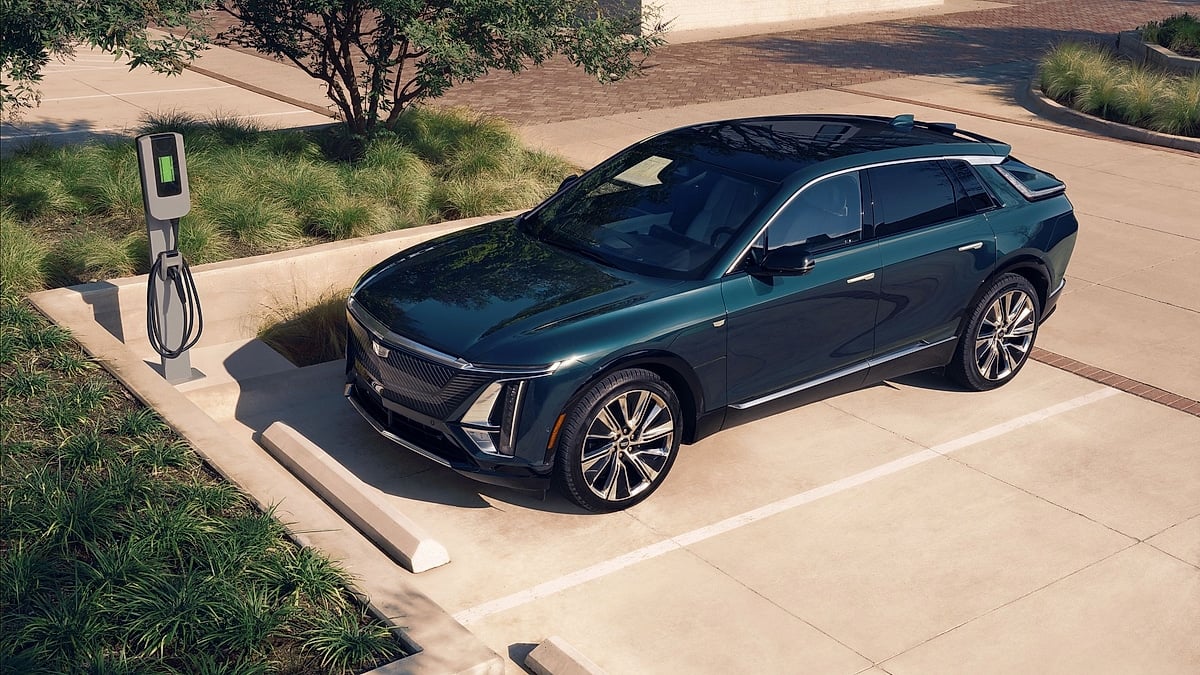
This is not proof that every Lyriq transaction moved by the same amount, but it is a clear market signal around Cadillac EV resale confidence. The useful question is not whether the Lyriq is cheap. It is why a luxury EV can get cheaper while the used EV shelf is getting emptier.
The 2023 Lyriq Has Already Lost About Half Its Value
Kelley Blue Book says the 2023 Lyriq has depreciated $32,790, or 52 percent, over the last three years, with a current resale value of around $30,200. iSeeCars estimates the Cadillac Lyriq depreciates 69.6 percent after five years, leaving a projected resale value of around $17,985. Kelley Blue Book's 2025 Lyriq cost-to-own pages also point to heavy five-year depreciation, though the exact dollar figure changes by model year, trim, and date. The consensus is ugly enough without rounding it into something it is not: this is one of the faster-depreciating luxury EVs on the market. A buyer who paid roughly $63,000 for a 2023 Lyriq is now looking at resale values near the low-$30,000 range. The first owner took that hit. The second owner steps into a car that has already shed more value in three years than many vehicles lose in five. The hardware underneath has to justify even the reduced price.
Reliability Data Raises the Second-Owner Risk
The most alarming reliability number attached to the Lyriq is the Consumer Reports-linked 5 out of 100 score that TorqueNews covered when the vehicle scored 5 out of 100 for reliability. Reported problem areas include electronics, electronic accessories, EV battery malfunctions, and complete battery failure. A score that low is not a minor teething issue warning. It points to a vehicle whose electrical architecture and software experience still matter as much as its leather, screen, and quiet ride. For a second owner, this is not an abstract score. It is a preview of possible service visits after the bumper-to-bumper warranty expires but before the EV battery warranty does. GM covers the Lyriq's propulsion battery for 8 years or 100,000 miles, but many infotainment, trim, and accessory problems live under shorter coverage. A used Lyriq bought in its third or fourth year sits in that gap.
Battery Repair Estimates Vary Widely Outside Warranty
GM's Ultium battery warranty gives the Lyriq an 8-year, 100,000-mile protection window, and that matters. Once that coverage expires, the owner faces the hidden costs of electric cars that early lease customers often never confront. Lyriq-specific replacement estimates are not settled retail facts because most failures are still inside warranty, but 2026 planning guides put a dealer-installed OEM pack roughly in the $20,500 to $28,000 range, a remanufactured pack roughly in the $15,500 to $22,000 range, and module-level repairs roughly around $2,000 to $6,500.
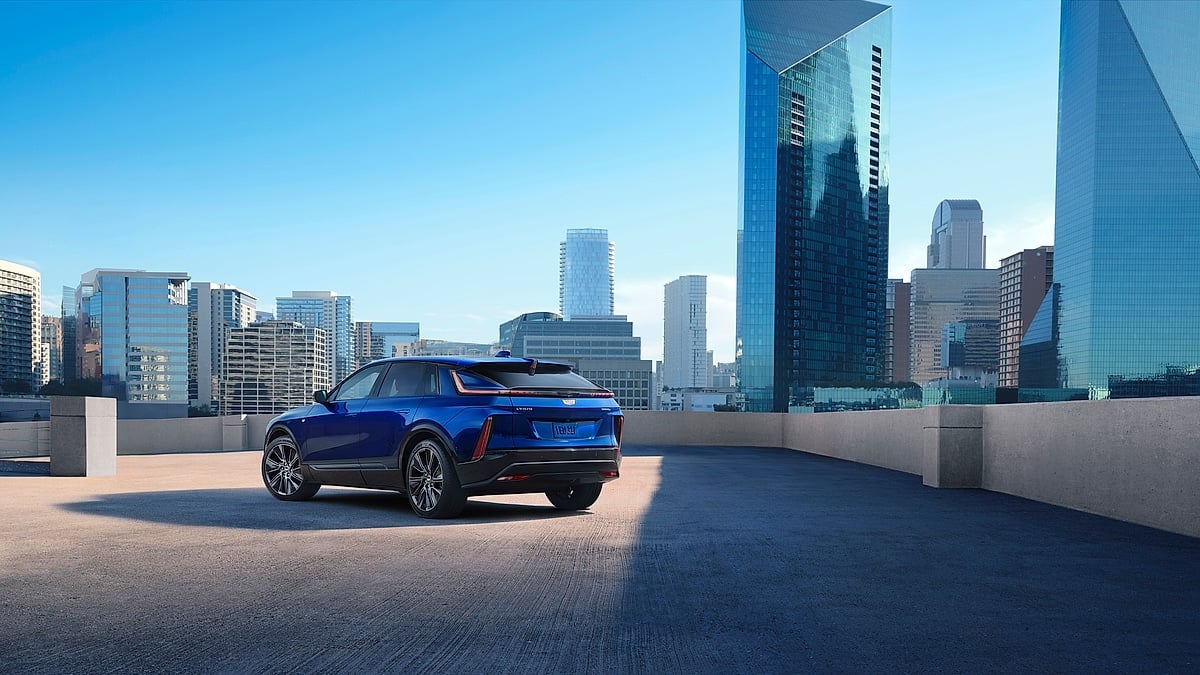
Those are estimates, not quotes. The second owner who buys a five-year-old Lyriq with 80,000 miles is not automatically facing a five-figure repair, but the exposure is real enough to price into the deal. The warranty clock starts at the original in-service date, not the used purchase date. A 2023 model reaches its eighth birthday around 2031, depending on the sale date. A second owner in 2027 is buying into a narrowing protection window.
Insurance Estimates Run High, and the GPS Glitch Persists
Third-party insurance estimates put full-coverage Lyriq insurance roughly around $2,800 to $3,200 annually for many clean-record drivers, with common estimates clustering near $2,900 to $3,000. That premium is baked into ownership, whether the car is new or used. Then there are the operational headaches. One frustrated Cadillac Lyriq owner documented an OnStar multi-step fix for a wrong-location GPS glitch that failed to persist across ignition cycles. Forum reports also describe Google Maps, OnStar, cellular data, and location services issues after software updates. These owner reports do not prove every Lyriq has a permanent defect, but they matter because the Lyriq's luxury pitch depends on the software feeling finished. For a second owner paying luxury-insurance money on a used vehicle, a navigation system that forgets where it is can feel less like a quirk and more like a warning.
The Second Owner Inherits the Range Uncertainty, the First Owner Documented
Real-world range remains a buyer-screening issue. TorqueNews covered one owner driving his Lyriq 129 miles from Palm Beach to Naples and using 64 percent of the battery, far more than a simple reading of the EPA number would suggest. Highway speeds, air conditioning, headwinds, charging availability, and route planning all carve into the advertised range. The first owner learns those limits and sees them reflected in depreciation. The second owner inherits a vehicle with an unknown battery history, a partially used warranty, and a used market that is already pricing in some risk. That does not mean every used Lyriq is a trap. It means the discount is not free money. A 2023 Lyriq with heavy depreciation, uneven reliability signals, and expensive components transfers uncertainty from the first owner to the second. The discount is the warning label.
The second owner gets the depreciation, the repair uncertainty, the insurance bill, and the battery warranty clock. That is the real luxury test. GM built a vehicle that looks expensive on the showroom floor and can become expensive again when factory coverage narrows. The used market sees some of that risk coming. Cadillac used EV prices fell in a month when the supply tightened. I checked the numbers, and the second owner needs to check them twice.
About The Author
Noah Washington is an automotive journalist based in Atlanta, Georgia, covering sports cars, luxury vehicles, and performance culture. His reporting focuses on explaining the engineering, design philosophy, and real-world ownership experience behind modern vehicles.
Noah has been immersed in the automotive world since his early teens, attending industry events and following the enthusiast communities that shape how cars are built and driven today. His work blends industry insight with enthusiastic storytelling, helping readers understand not just what a car is, but why it matters.
Noah is also a member of the Southeast Automotive Media Association (SAMA), a professional organization for automotive journalists and industry media in the Southeast.
His coverage regularly explores sports cars, luxury vehicles, and performance-driven segments of the automotive industry, including the evolving culture surrounding Formula Drift and enthusiast builds.
Read more of Noah's work on his author profile page.
You can also follow Noah here:
Set Torque News as Preferred Source on Google
Follow us today...





Comments
One of the many symptoms…
Permalink
One of the many symptoms flowing from hundreds of billions in capital destruction
1. Residual Value Collapse
One of the most direct forms of capital destruction for consumers has been the rapid depreciation of used EVs.
• Price Wars: Aggressive price cuts by major manufacturers (like Tesla) to maintain market share have wiped out billions in equity for existing owners overnight.
• Technological Obsolescence: As battery range and charging speeds improve rapidly, older models become "technologically totaled," leading to resale values that are significantly lower than their ICE counterparts. In some markets, used EV prices have dropped as much as 30% to 40% in a single year.
To an extent.
Permalink
In reply to One of the many symptoms… by Mike Lieberth (not verified)
To an extent.