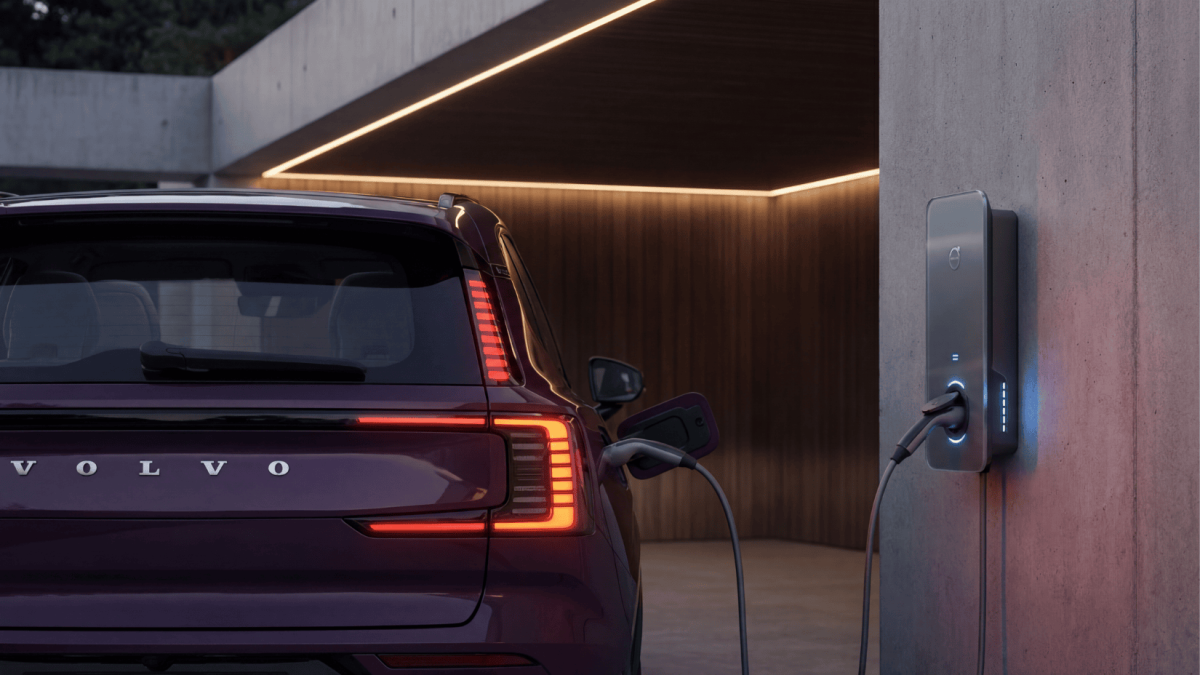

It is impossible to discuss the current EV landscape without acknowledging the absolute chaos happening at the fuel pump. For those of us tracking the market, we just saw fuel price hikes in California hit $6 per gallon, driving a 15% spike in EV insurance quotes. That tells me people are panicking. It isn't a theoretical pivot to "going green"; it's a frantic, immediate rush to escape the oppressive dependency on oil. When families are suddenly looking at an extra $200 a month just to commute, the economic math of an electric vehicle doesn't just look "favorable"—it looks like financial salvation.
But right at this moment, we are seeing the big automakers—specifically Ford, GM, and now Honda—aggressively retreat. We just watched Honda officially cancel the development of three major EV models, citing "lower-than-expected adoption." They are screaming "slowing demand" to justify writing off billions in investments, but this is fundamentally a demand problem that they created. They built expensive, heavy trucks that their loyal buyers didn't want, and now they are scratching their heads when those trucks sit on lots. Their failure isn’t indicative of a broad "EV fatigue."
And that is what makes the explosive success of the Volvo EX60 so critical. The market isn't rejecting EVs; the market is rejecting bad EVs that don't meet their needs.
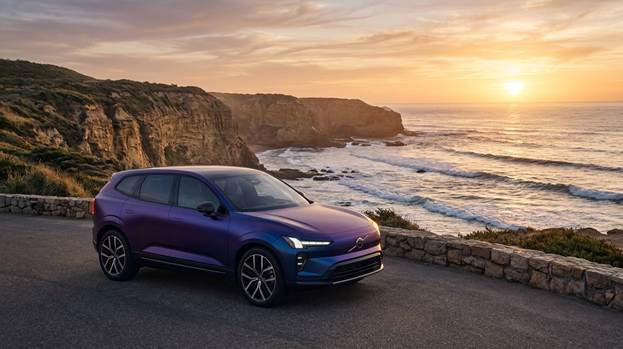
The Volvo EX60: A Masterclass in Reading the Room
If the XC60 has historically been Volvo's "sweet spot" (and it has), the all-electric EX60 is about to redefine that concept. We just learned that the demand for this car in Europe is so "explosive" that Volvo is officially in negotiations with labor unions to keep the Torslanda factory open for an extra week during the summer—the first time in company history. This demand has already surpassed the initial launch of the much cheaper EX30.
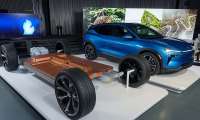
Why? It’s simple: The EX60 is the EV the market has been begging for. This isn't just an electrified XC60; it’s the debut vehicle for Volvo's advanced SPA3 architecture. This isn't just about weight reduction; it’s about efficiency. This car uses "cell-to-body" battery integration and, critically, native NACS compatibility, meaning it uses the Tesla port without adapters. It is built for a 400-mile range on its top-tier P12 variant and uses the HuginCore system (running built-in Google Gemini) to provide AI assistant performance that legacy manufacturers can't even dream of.
When you pair that kind of spec with Volvo's traditional approach to safety and interior logic, you don't get a "niche luxury vehicle." You get the definitive, multi-purpose family utility EV that bridges the gap between early adopters and the mass market.
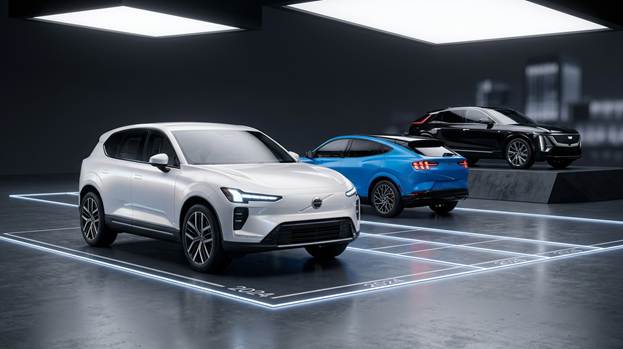
Facing the Legacy Giants: Mustang Mach-E vs. Cadillac Lyriq
To understand why the EX60 is such a potential disruptor, you must look at how it stack ups to the current dominant players.
The Mustang Mach-E has been the standard in this segment for years. It's a great car, and recent comparisons show it remains a safety and efficiency leader for Ford. But let’s be honest: the Mustang badge is a liability in a utility market. It prioritizes a sporty driving dynamic over maximum interior utility. It’s also built on an older architecture that simply cannot compete with the upcoming EX60’s SPA3 in terms of structural rigidity and integrated AI. The Mustang is a fantastic 2024 EV, but the EX60 is a 2027 EV.
Then you have the Cadillac Lyriq (and its upcoming high-performance V-Series variant). I really like what GM is doing here. The Lyriq is GM's real move into the premium SUV space, and the specs—like 326 miles of range and 190 kW charging—are competitive. But GM’s current software struggles and recent, massive production rollbacks make any timeline for future variants suspect. The EX60, with its imminent 2026 U.S. launch, has the absolute timing advantage.
Stacking Up Against the Coming Competition: A Dangerous Field
But it’s not just about current EVs. The mid-size utility segment is about to get incredibly crowded. Here is how the coming wave of competitors will stack up:
- Rivian R2: This is the elephant in the room. The R2, targeting a $45,000 price point, captures that same "adventurous" utility spirit that Volvo buyers love. The R2 is going to be incredibly compelling, perhaps more so for off-roaders than the EX60. The advantage for Volvo? It has a tighter connection to Chinese EV battery technology giving it far more expected range than the R2.
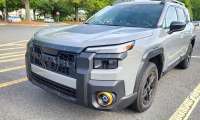
- Subaru Trailseeker: Subaru is finally moving toward a dedicated electric successor to the Outback. However, Subaru (and Toyota) are fundamentally 2–3 years behind Volvo on advanced EV architecture and software-defined vehicle implementation. If you want cutting-edge tech and a NACS port from Day 1, the EX60 wins.
- BMW iX3 (Next-Gen): The details for the 2027 BMW iX3 show a car that is a near-identical specs match to the EX60: 400 miles of range and native NACS compatibility. The difference will be philosophical. The BMW will prioritize a stiffer, sportier ride. The Volvo will prioritize absolute comfort and safety.
The U.S. Launch: How to Get in Line (Early)
This explosive European demand has a dark side for U.S. buyers: it means you are likely looking at very tight supply. If this car is selling out in Sweden, you can imagine how difficult it will be to secure an early model year unit in the U.S.
We know that U.S. pre-ordering will officially open late this spring, likely around late April or early May 2026. This is the official window for configurable, "binding" orders. The actual launch is slated for late summer 2026, targeting initial deliveries for the first P6 and P10 variants.
If you are a serious buyer, you cannot wait for the official "late spring" order opening. By that time, the first few months of allocations will be spoken for. Here is what you must do now:
- Use the Volvo Updates Portal: Go to the official EX60 page and sign up for updates immediately. This puts you on the national list.
- Go to the Dealership: This is the key step. Your relationship is with a dealer, not the manufacturer. Contact your preferred dealer (in my case, here in Bend, Oregon) and explicitly ask to be put on their internal "priority list." While this is not an "official reservation," it means the moment their dealership portal opens in late spring, they will enter your order first.
- Confirm the Port: While all EX60s for the U.S. are confirmed to use the NACS port, make sure your dealer rep understands this is a non-negotiable part of your specification.
Wrapping Up
The current EV headlines are bleak, defined by regulatory retreats from legacy auto and a panicked rush away from historic oil prices. But this chaos is not indicative of an "EV failure"; it is indicative of a market that is aggressively correcting. The market is rejecting the overpriced, compromise-heavy EVs that manufacturers built for reasons unrelated to customer demand.
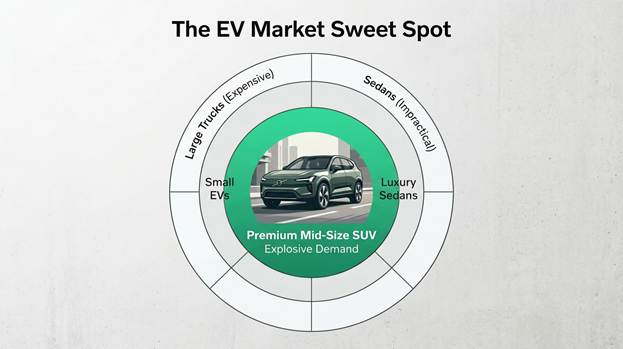
The explosive success of the Volvo EX60 is the validation of the other side of this story. Volvo didn't try to build an electric muscle truck; they built an electrified XC60—the definitive mid-size SUV—on a brand-new architecture with a native NACS port and integrated Google Gemini AI. It is the perfect car at the perfect size.
The European demand shows that when you build the right EV, customers will break the system to buy it. If you want this car in the U.S., you need to move now. Contact your dealer this week.
Disclosure: Images rendered by Artlist.io
Rob Enderle is a technology analyst at Torque News who covers automotive technology and battery developments. You can learn more about Rob on Wikipedia and follow his articles on TechNewsWord, TGDaily, and TechSpective.
Set Torque News as Preferred Source on Google
Follow us today...