
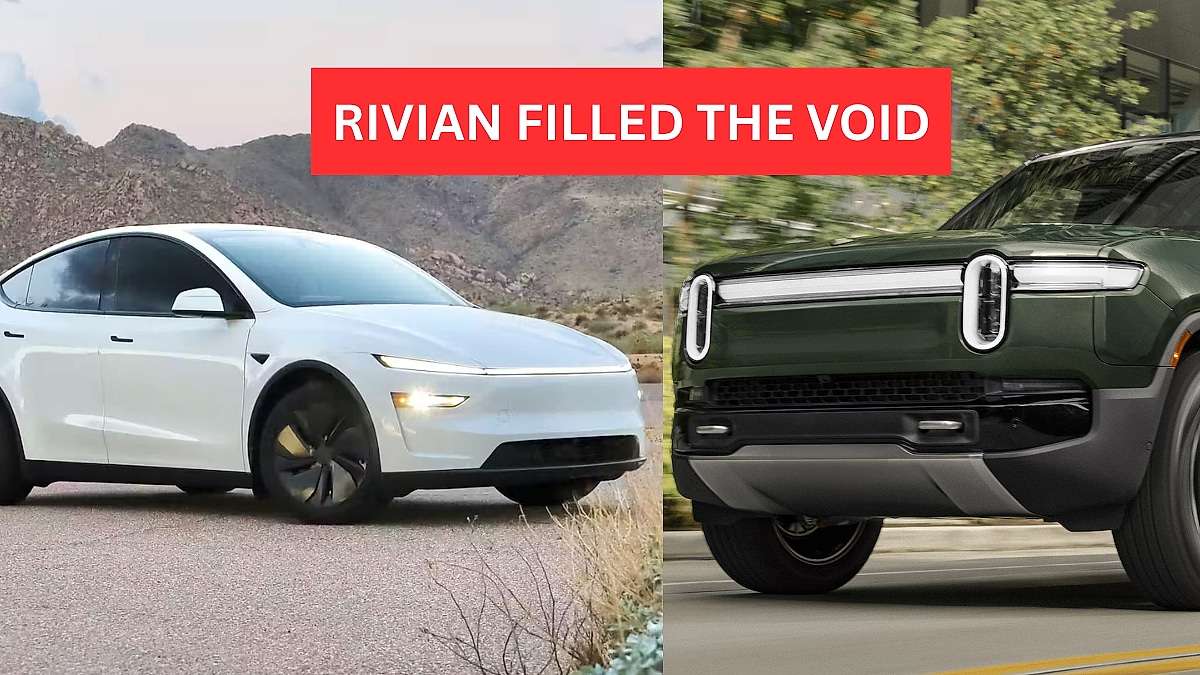

Every once in a while, a reader comment stops you cold. Not because it's controversial, not because it's angry, but because it's so plainly, obviously, undeniably true that you find yourself nodding your head and wondering why the whole industry hasn't been talking about it louder. This morning, after we published our article on Tesla's glaring SUV lineup problem and how the Model Y L spotted at Giga Texas might be the only real fix, one of our longtime Torque News readers on Facebook said something that I genuinely could not stop thinking about. His name is Ron Levitz, and he left a comment that, in my opinion, is one of the most honest and useful pieces of reader insight we have received all year. And after 15 years of covering the automotive industry, I've learned to listen when a real car owner cuts right through the noise. We also reported just days earlier on the mysterious elongated Model Y frame spotted inside Giga Texas, and Ron's comment connects directly to why that discovery matters so much.
Here is what Ron Levitz said, in full:
"Tesla would have put Rivian out of business if it had a true SUV like vehicle like the R1S. Cybertruck is just not what a typical SUV owner is looking for. Every other car on the road is a typical SUV which Tesla could win over market share. I currently drive a Rivian because they filled a void in the electric SUV market that Tesla couldn't compete with. Now looking at the Y but wish Tesla had a better option."
Read that again slowly. Because Ron is not an anti-Tesla guy. He is not a Rivian fanboy on a mission. He is a real buyer, probably the most important kind of person in any conversation about this industry, who looked at the entire electric vehicle market, wanted a proper SUV, and chose Rivian because Tesla simply did not have what he needed. That is not a small thing. That is a market failure with a name on it, and Rivian had the courage to step into that gap and build something.
Why Tesla Had No Answer for the SUV Buyer Who Needed More Than a Model Y
Let's start with the uncomfortable truth. The Tesla Model Y is a genuinely wonderful vehicle. Our coverage of why real owners chose the Tesla Model Y over the Model 3 when it comes to everyday space and family practicality makes very clear that the Model Y earns its praise. It is efficient, connected, and backed by the best charging network in North America. But here is the thing that nobody at Tesla seemed to want to address for years: the Model Y is a compact crossover. A large one, yes. A roomy one, yes. But it is not, and has never been, a proper full-size SUV.
When a family outgrows the Model Y, where does Tesla tell them to go? The Model X. A vehicle that starts at nearly $90,000, comes with theatrical Falcon Wing doors, and whose third-row seating has always been more of a courtesy gesture than a legitimate adult space. The Model X offers a max driving range of 352 miles and can tow up to 5,000 pounds, but its all-terrain capability effectively ends at the trailhead, and its higher starting price widens the gap considerably when buyers compare it to newer alternatives.
That gap, the space between a $50,000 compact crossover and a $90,000 luxury SUV, was massive, obvious, and sitting there for years. Rivian walked right into it.
What Rivian Got Right That Tesla Missed Completely
Rivian did something interesting when it launched the R1S. It did not try to out-Tesla Tesla. It did not build a minimalist, screen-heavy, software-first SUV and call it a family hauler. Instead, Rivian built something that felt viscerally, unmistakably like a proper SUV. Big proportions. Real ground clearance. Genuine off-road capability. A frunk, a tunnel, and cargo configurations that made actual sense for families hauling actual things across actual terrain.
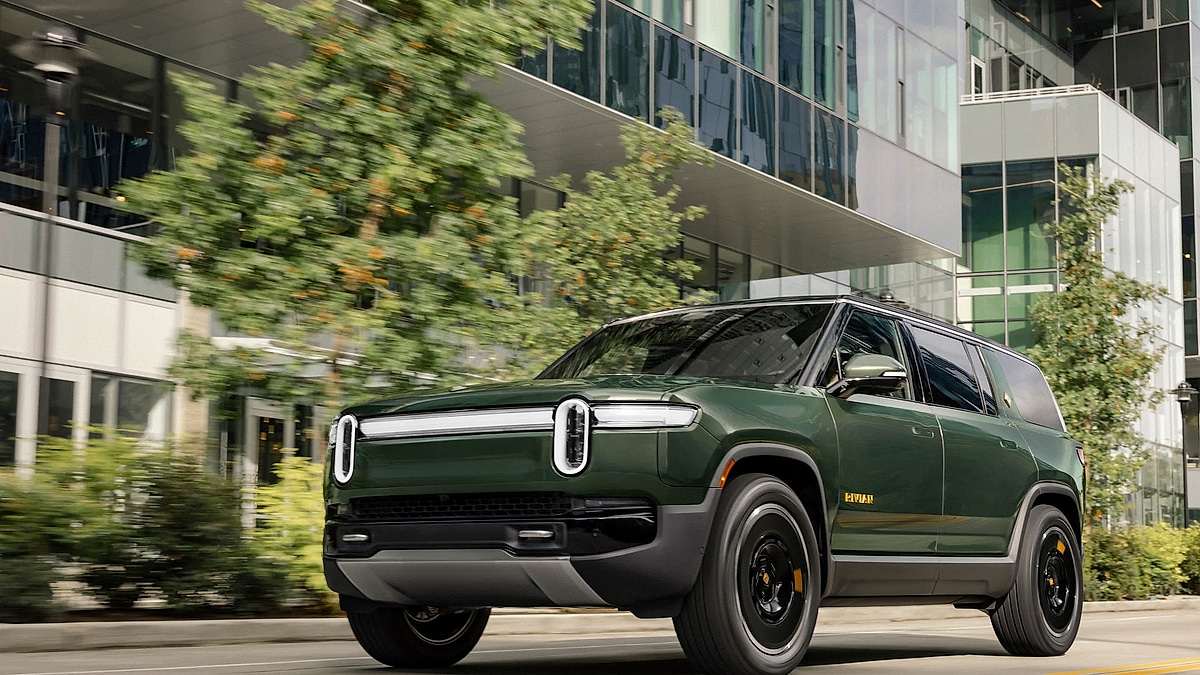
The Rivian R1S boasts 104 cubic feet of total cargo space compared to the Model Y's 76 cubic feet, and the R1S features a sizable frunk, under-floor storage, and a tailgate that makes loading and unloading gear significantly easier for families with a lot to carry. That is not a marginal difference. That is the difference between packing for a camping trip with ease and doing a frustrating 20-minute Tetris routine in a parking lot.
In many ways, it was the R1S that dethroned the Model X as the quintessential electric three-row SUV, and Rivian built something that meaningfully outpaced it in towing capacity, all-terrain capability, and the kind of rugged utility that adventure-oriented families had been looking for from an EV.
Real owners noticed immediately. One long-time Tesla owner who switched from a 2020 Model X to a 2025 Rivian R1S after five years and three high-voltage battery replacements summarized the experience bluntly: Tesla's software still leads, but Rivian's hardware build quality and usable size made it the better daily driver for a family with three growing kids. His words, not mine. And that owner's experience lines up almost perfectly with what Ron Levitz told us in his comment. Tesla's software ecosystem is genuinely impressive. But when you need an honest-to-goodness large SUV, the R1S delivers in ways the Model X never quite did, and the Model Y simply cannot.
Our deep dive comparing whether the Tesla Model Y or the Rivian R1S is the ultimate adventure SUV for a growing family surfaced this tension clearly. Family after family in those discussions said the same thing in different words: the Model Y is enough until it isn't. And the moment a family adds a third child, a large dog, a camping habit, or a set of ski gear, it stops being enough almost overnight.
The Pressing Problem: Tesla Is Now One Model X Discontinuation Away From No Full-Size EV SUV at All
Here is where things get genuinely serious, and I want you to pay close attention to this because it matters enormously for anyone shopping in the next 12 to 24 months. Tesla is discontinuing the Model X. Production is winding down this year. That means the company that pioneered the electric vehicle revolution is about to have exactly one SUV in its lineup, a compact crossover, and nothing else for families who need more space.
Rivian has successfully positioned itself as the natural destination for buyers who love the EV lifestyle and the charging convenience but want a vehicle that feels more grounded and purpose-built for family and adventure use, effectively harvesting a segment that Tesla left unaddressed. Ron Levitz is not alone. The number of buyers making exactly this calculation, wanting an electric SUV that is bigger and more capable than the Model Y, and finding Rivian rather than Tesla as the answer, is growing. And with the Model X gone, Tesla's answer to that buyer is effectively: wait for the Model Y L, maybe, possibly, sometime in late 2026 if Elon decides to proceed.
That is not a strategy. That is a gap. And gaps in the automotive market do not sit empty for long.
The solution to this pressing problem is straightforward in concept, though clearly complicated in execution for Tesla. The Model Y L, whose elongated frame was spotted recently at Giga Texas, needs to arrive in the United States, priced competitively, and positioned as a genuine full-size family SUV alternative to both the Rivian R1S and the gas-powered three-row segment. Not as a premium product. Not as a niche offering. As the mainstream, attainable, everyday Tesla for families who have outgrown the standard Model Y. We have been making this exact case in our coverage, and Ron Levitz's comment from Facebook confirms that real buyers feel this void acutely right now.
Why the Rivian R1S Success Story Should Scare Tesla More Than Any Chinese EV Brand
I've been saying for years that the most dangerous competitor to Tesla is not BYD, not Hyundai, and not GM. It is any company that builds a genuinely excellent EV in a segment Tesla has ignored or underserved. Because Tesla buyers are loyal to the ecosystem, to the Supercharger network, to FSD, and to the over-the-air update experience. But that loyalty is not infinite. Push them far enough outside their comfort zone with price or force them into a vehicle that doesn't fit their actual life, and they will go find an alternative. Rivian proved that.
Rivian is quietly borrowing Tesla's most powerful weapon, the Supercharger network, by building NACS access into its new vehicles, which removes the single biggest barrier that had been keeping some EV buyers tethered to Tesla even when they wanted something bigger and more capable. Think about what that means. The charging network argument, which was always Tesla's trump card in any lineup comparison, is now less decisive than it used to be. A Rivian R1S buyer today can access Tesla Superchargers. The gap between the two ecosystems just got significantly narrower, and that is a development that Tesla's product team cannot afford to ignore.
The R1S proves to be a compelling option for those who prioritize adventure, luxury, and advanced technology, even for buyers who had previously considered themselves loyal Tesla customers with no intention of ever switching brands. We documented exactly this kind of conversion story in our coverage of what it's really like for Tesla Model 3 owners who traded up to the Rivian R1S and never looked back. The pattern is consistent: buyers love the Tesla they have, until their life expands past what that Tesla can handle. Then Rivian is sitting there with a bigger, more capable vehicle and a very convincing value proposition.
And now, with the Rivian R2 approaching production and targeting a starting price around $45,000 to $48,000, Rivian is no longer content to compete only at the premium end of the market. The R2 brings Rivian's adventure-oriented DNA into a price bracket that puts it in direct competition with the Model Y, not just the Model X. That is the electric migration Ron Levitz saw coming when he bought his R1S. Rivian is not just filling the void Tesla left at the top. It is now coming for the middle of the market too.
Several reviewers have noted that the Rivian of today feels reminiscent of where Tesla was six or seven years ago, bringing fresh ideas and excellent vehicles to a market where the dominant brand was beginning to feel slightly dated and overexposed. Torque News That comparison should give every Tesla executive a restless night. History in this industry has a habit of rhyming.
We have also tracked the broader competitive picture in our coverage of how Tesla, Rivian, and Lucid are each making calculated bets that are reshaping the EV market faster than most analysts predicted, and the conclusion is clear: no brand in the electric vehicle space has the luxury of standing still. The market is moving, buyers are moving, and the company that stays in the same product lane while families outgrow it will lose customers to whoever shows up with the right vehicle at the right moment.
U.S. News and World Report, in a comprehensive head-to-head comparison of the Rivian R1S and Tesla Model X, noted that the R1S consistently outperforms the Model X in towing capacity, off-road capability, and overall value at its price point, and that the Model X has not received the meaningful development in recent years that the R1S has benefited from. That assessment, from one of the most respected automotive comparison resources in the country, captures exactly the competitive dynamic Ron Levitz experienced as a real buyer.
The pattern here also connects to what we found when comparing three premium American EVs from the perspective of a real owner who lived with all three for extended periods: Tesla leads in software integration and charging convenience, Rivian leads in build quality and genuine SUV utility, and the right choice depends entirely on which of those priorities your actual daily life demands. For buyers like Ron Levitz, whose daily life demanded a proper SUV, Rivian won without a fight because Tesla never even showed up to compete in that specific segment.
And that brings us back to the Model Y L and whether it can finally change this picture. If Tesla gets the pricing right, the positioning right, and the timing right, the Model Y L could recapture a meaningful portion of the buyers who have been quietly drifting toward Rivian for the past three years. But it has to be priced as a family workhorse, not a premium Tesla upgrade. It has to feel like the right answer for a family trading in a Toyota Highlander or a Jeep Grand Cherokee, not just a stretched version of what they could have bought from Tesla anyway for less money.
The moral of Ron Levitz's story, and I want to sit with this for a moment because it applies well beyond car buying, is that no company, no matter how innovative or dominant, can afford to assume that its existing customers have nowhere else to go. The best brands in any industry earn loyalty every single day, not just on the day of the original purchase. When Tesla left a giant, obvious gap in its SUV lineup and told buyers, essentially, that the Model X was their only option at $90,000 or above, it created an opportunity. Rivian grabbed that opportunity with both hands. The lesson for all of us as consumers, and as human beings making decisions in our own lives, is to pay attention to whether the people or companies we rely on are actually serving our current needs, not the needs we had three or four years ago. Loyalty is meaningful and worth something. But it should flow both ways.
Ron Levitz is still looking at the Model Y, still hoping Tesla builds something better. That speaks to the resilience of the Tesla brand even after all of this. But it also tells you something important: when a loyal customer has to go to a competitor to get what they need, and then sits there hoping the original brand will eventually catch up, the original brand has already lost something that will be very hard to win back completely.
Now I want to hear from you directly, and please share your real experience in the comments section below:
If you are currently driving a Rivian R1S or have seriously considered one, what specific gap in Tesla's SUV lineup drove you in that direction, and would the arrival of a properly priced Tesla Model Y L bring you back to the Tesla brand for your next purchase?
And for those of you who have stayed with Tesla despite wishing the lineup offered a larger, more capable SUV option, what has been the single biggest compromise you've had to make in your daily life by driving a Model Y or Model X instead of a proper full-size electric SUV like the R1S?
Drop your answer in the comments below. Your real-world experience is exactly what helps other readers make better, more informed decisions.
Images by Torque News collage and Rivian.
About The Author
Armen Hareyan is the founder and Editor-in-Chief of Torque News and an automotive journalist with over 15 years of experience writing car reviews and industry news. Now based in the Charlotte region (Indian Land, SC, he founded Torque News in 2010, which since then has been publishing expert news and analysis about the automotive industry. He can be reached at Torque News on X, Linkedin, Facebook, and Youtube. Armen holds three Masters Degrees, including an MBA, and has become one of the known voices in the industry, specializing in the landscape of electric vehicles and real-world stories of actual car owners. Armen focuses on providing readers with transparent, data-backed analysis bridging the gap of complex engineering and car buyer practicality. Armen frequently participates in automotive events throughout the United States, national and local car reveals and personally test-drives new vehicles every week. Armen has also been published as an automotive expert in publications like the Transit Tomorrow, discussing how will autonomous vehicles reshape the supply chain, and emerging technologies in vehicle maintenance.
Set Torque News as Preferred Source on Google
Follow us today...


Comments
And now we just need Rivian…
Permalink
And now we just need Rivian to move into the right hand drive market. Australia, Britain, South Africa, etc!
We were saying this 5 - 6…
Permalink
We were saying this 5 - 6 years ago with our R1S preorders in place.
So many Tesla folks laughed at us then and chided our choice for many reasons. Now they are coming over in droves.
Rivian found the white space in those of us who like body on frame and actual utility (outdoor, hauling etc) vs hatchbacks/sedans.
Thankfully there is room in the market for both.
And in my own case Chevy…
Permalink
And in my own case Chevy filled the market gap in EV pickups with the Silverado EV that I bought last year. Vs. the Cybertruck the Silverado EV has longer range (400 mi) per charge, the midgate allowing me to get long 8 foot loads home in the rain under the tonneau with the tailgate up, has a more useful two-piece multifunction tailgate, has operator-to-machine interfaces I’ve grown accustomed to for the many decades I’ve been driving, has an interior that doesn’t look like the inside of an eggshell, and has an exterior that looks like a conventional truck and not like it was supposed to mimic an ancient 50 year-old 1975 Lotus Esprit 1, and generally makes me feel like all of the designs were done for me the consumer and not for the manufacturer (e.g., the massive single screen that I can see is cheap to build but complicates that operator-machine user interface I mentioned above.)
And no, I’m not wondering what Tesla is making that can replace it, because I’m happy with what I got.