
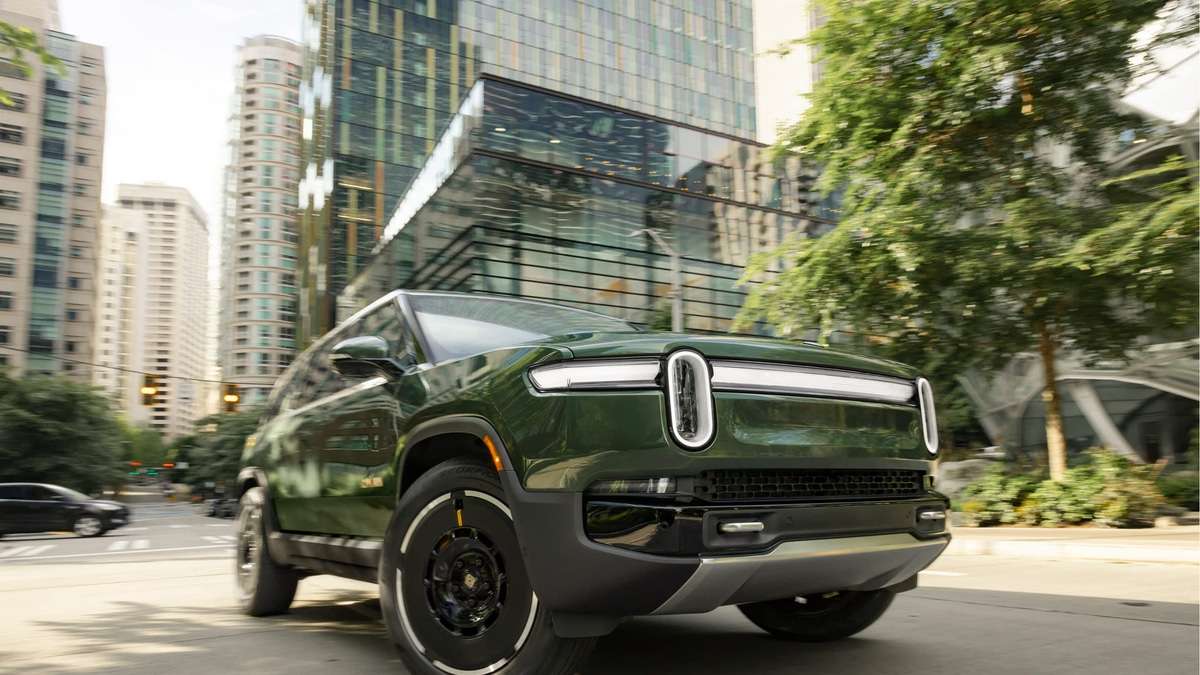

A Rivian R1S owner, posting under the handle fatfirenewbie, recently reported a dramatic improvement in ride quality and noise levels after replacing the factory 22-inch Pirelli Scorpion Zero All-Season tires at 25,000 miles. The new Hankook iON HT tires, a relatively new offering, were not only "noticeably quieter and smoother" but also came in at half the price of the OEM options. Family members, unaware of the tire change, even inquired if the vehicle was a newer R1S with updated suspension, indicating the change went beyond personal preference.
OEM tire choices are a persistent issue, particularly in the EV segment, where manufacturers often prioritize minimizing rolling resistance for range figures over the nuanced interaction with the road. This often results in a tire compound and construction that compromises the vehicle's primary damping and its ability to absorb road imperfections, leading to a harsher ride quality and an increase in transmitted road noise.
Owners are frequently left to navigate this compromise, often discovering superior aftermarket alternatives that restore a more compliant ride and better chassis communication, without the premium price tag of a factory-approved option
Here’s what the owner had to say:
“After 25K miles (on Rivian R1S), finally replaced the Scorpion OEM all-season tires on my 22 sport wheels. Shopped around, read a bunch of the Reddit and forum posts, and ultimately picked the Hankook Ion HTs, which came out last year. Not only were they half the price of the OEM options (Pirelli Scorpions and Michelin), but they are noticeably quieter and smoother both around town and on the highway. I thought maybe it was just a placebo effect from reading all of the reviews and impressions, but I had some family members get in recently, and the first thing they asked was if this was the newer R1S with the updated suspension.
So far, very happy. Saved $1400 vs OEM options and got an 80K warranty as well!
P.S. Efficiency seems to be roughly the same (based on the first 1500 miles of driving). I’m getting roughly 2.1-2.3 mi/kwh vs 2.2-2.4ish before.”
The owner's report of a $1400 savings and an 80,000-mile warranty on the Hankook iON HTs directly challenges the value proposition of Rivian's OEM tire choices. Factory tires, while often optimized for specific performance metrics like range or cornering, frequently come with a significant price premium and shorter treadwear warranties. This isn't unique to Rivian; manufacturers across the board often leverage their supply chain agreements to push proprietary or co-developed tires that benefit their bottom line more than the owner's long-term cost of ownership. The suggestion that the ride improvement was so profound it led to questions about a "newer R1S with the updated suspension" is a strong indictment of the original equipment.
Rivian R1S: OEM Tire Choices Under Scrutiny
- The Rivian R1S, a three-row electric SUV, is offered with various wheel and tire combinations, including 22-inch sport wheels often fitted with Pirelli Scorpion Zero All-Season tires. These OEM tires are typically selected for a balance of performance, range, and brand partnership.
- The Hankook iON HT is a new generation of tires specifically engineered for electric vehicles, focusing on reduced road noise, enhanced comfort, and optimized rolling resistance to preserve EV range. They often feature specialized compounds and tread patterns for these characteristics.
- Fatfirenewbie reported a $1,400 savings by choosing Hankook iON HTs over OEM options, along with an 80,000-mile warranty, significantly longer than typical OEM tire warranties. This cost difference shows the premium attached to factory-installed components.
- The reported efficiency drop from 2.2-2.4 mi/kWh to 2.1-2.3 mi/kWh is minimal, suggesting that the Hankook iON HT maintains strong energy efficiency despite offering substantial improvements in ride quality and noise reduction. This indicates a well-engineered aftermarket alternative.
This is where the direct experience of owners often contradicts the manufacturer's carefully curated specifications.

Reddit user Sharerosier9, an R1T owner and a Top 1% Commenter, offered a perspective, stating:
A new tire being quieter than a worn-out tire is to be expected.
I'm definitely interested in how these perform and last, though.
Sharerosier9's point about new tires being quieter than worn ones is valid, but it doesn't fully account for the magnitude of improvement fatfirenewbie described. While worn tires certainly contribute to noise, the "noticeably quieter and smoother" experience, coupled with the family members' comments about the updated suspension, suggests a fundamental difference in tire characteristics beyond simple wear. The Hankook iON HT is specifically designed for electric vehicles, focusing on low rolling resistance, reduced noise, and high torque capability. This specialization often results in a better-tailored product for EVs than a general-purpose all-season tire, even if it's OEM.
The efficiency numbers reported by fatfirenewbie, 2.1-2.3 mi/kWh with the Hankooks versus 2.2-2.4 mi/kWh with the Scorpions, are particularly telling. A marginal 0.1-0.2 mi/kWh drop, if accurate over 1,500 miles, is a small price to pay for a significantly improved ride, lower cost, and extended warranty. This small difference indicates that the Hankook iON HT, despite its comfort advantages, maintains a competitive rolling resistance, a critical factor for EV range. It suggests that the OEM Pirelli Scorpions may not have been the optimal choice for owner satisfaction, even if they provided a fractional edge in range.

Rivian, like many manufacturers, faces a constant balancing act between performance, cost, and perceived value in its OEM component selection. In this instance, the choice of Pirelli Scorpion Zero All-Season tires for the 22-inch R1S wheels appears to have sacrificed owner comfort and long-term cost for what was likely a marginal gain in a single metric, possibly range. The aftermarket, specifically with EV-focused tires like the Hankook iON HT, is demonstrating that these compromises are not always necessary. Owners should not accept a suboptimal ride or excessive replacement costs when superior, more affordable options exist that also deliver comparable efficiency.
Image Sources: Rivian Media Center
About The Author
Noah Washington is an automotive journalist based in Atlanta, Georgia, covering sports cars, luxury vehicles, and performance culture. His reporting focuses on explaining the engineering, design philosophy, and real-world ownership experience behind modern vehicles.
Noah has been immersed in the automotive world since his early teens, attending industry events and following the enthusiast communities that shape how cars are built and driven today. His work blends industry insight with enthusiastic storytelling, helping readers understand not just what a car is, but why it matters.
His coverage regularly explores sports cars, luxury vehicles, and performance-driven segments of the automotive industry, including the evolving culture surrounding Formula Drift and enthusiast builds.
Read more of Noah's work on his author profile page.
You can also follow Noah here:
Set Torque News as Preferred Source on Google
Follow us today...



Comments
Bought a set of Hankooks for…
Permalink
Bought a set of Hankooks for the wife’s Odyssey. 3 of 4 suffered belt separation that was found right before a road trip. No more Hankooks on my cars!
I have two Rivians. My R1T…
Permalink
I have two Rivians. My R1T is on its 5th set of tires at 45k miles. I’ve tired 22” road and now on 20” ATs.
My R1S is on its 2nd set at 11k miles.