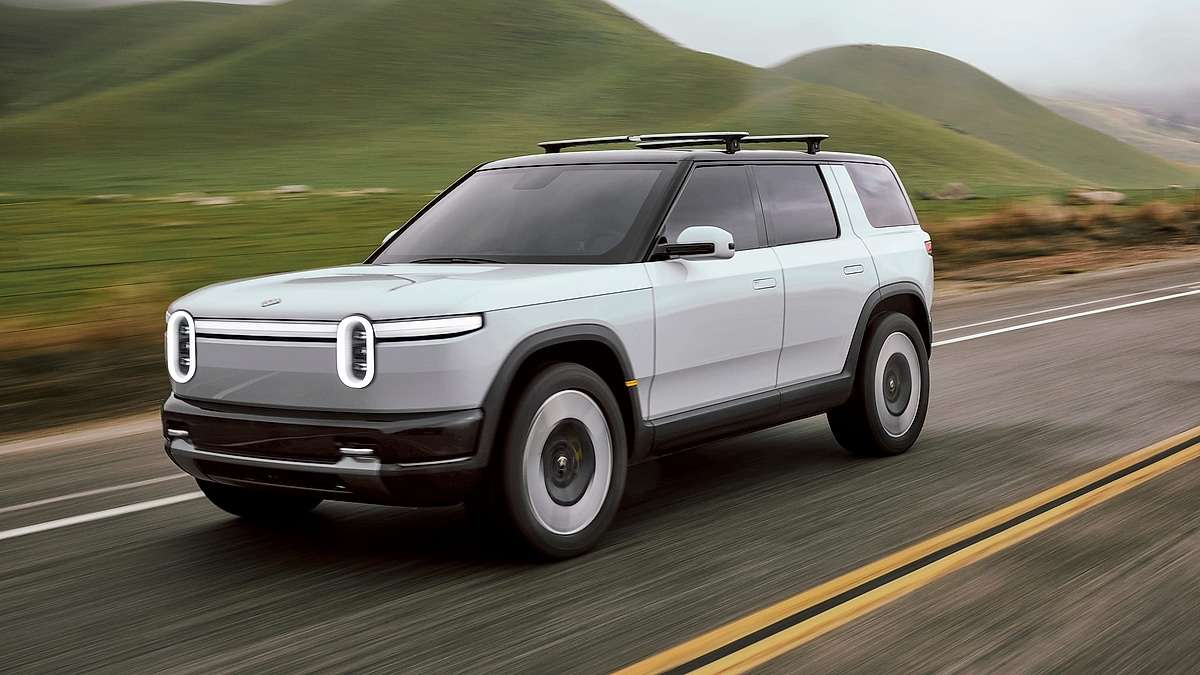

Rivian's newly issued animal-interaction patent is easy to undersell as a pet gimmick, and that would be a mistake. Torque News checked the USPTO Official Gazette, the patent text, Rivian's existing Pet Comfort feature, and Rivian's recent R2 software comments. The useful finding is this: Rivian patented a vehicle that can identify an animal, infer what is happening, and change vehicle behavior around that animal.
That is a much bigger idea than Dog Mode.
U.S. Patent No. 12,589,762 B2, titled "Animal interaction-based vehicle configuration," was assigned to Rivian IP Holdings, LLC and issued March 31, 2026.
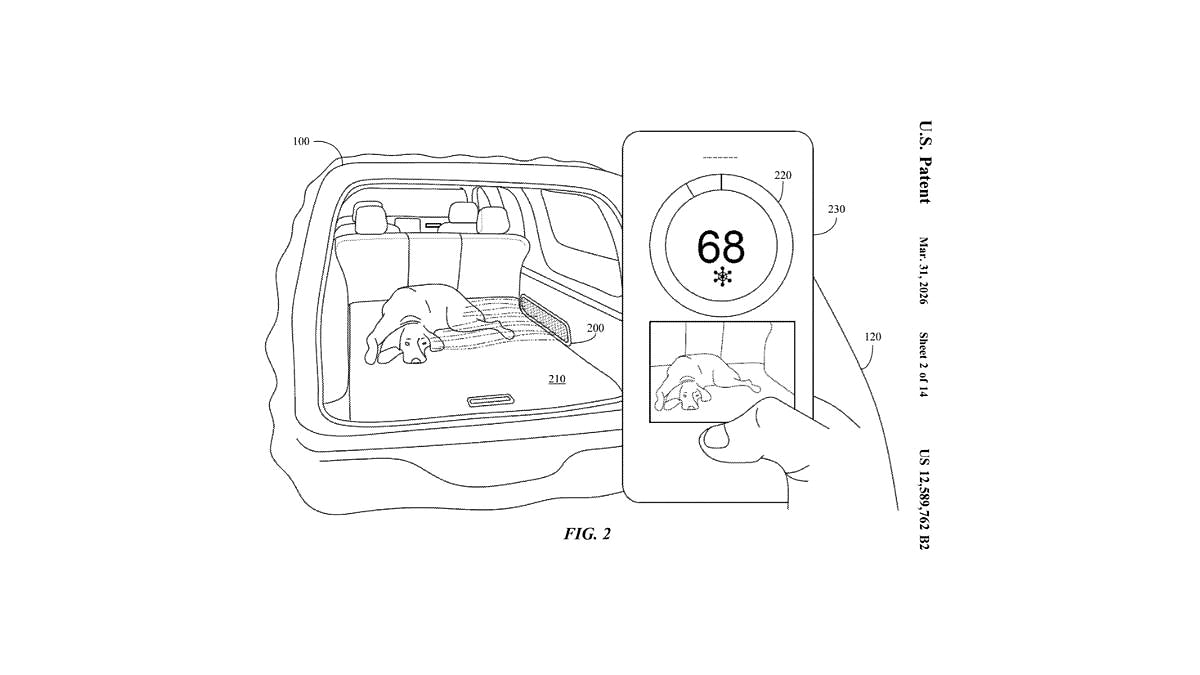
The patent's core claim is fairly simple: associate a digital tag with a vehicle, receive signals from that tag, infer information about a driver-profile user and an animal bearing the tag, determine the tag's velocity or acceleration through vehicle sensors, and modify a setting associated with the tag.
That sounds dry because patent language is where lively prose goes to sit in a waiting room.
But the actual idea is not dry. Rivian is describing a vehicle that can treat an animal's location and movement as inputs into the vehicle's software stack. The patent points toward climate zones, assisted entry, safety settings, occupancy alerts, collision warnings, digital fencing, pet-related points of interest, and communication back to the animal.
What Torque News Checked
- Patent record: USPTO Official Gazette entry for US 12,589,762 B2, plus Google Patents text for the granted patent and the prior publication.
- Current Rivian baseline: Rivian's existing Pet Comfort feature for R1T/R1S, including range threshold, cabin temperature range, app status, alerts, and on-screen message.
- Production-context check: Rivian's May 22, 2026, R2 software AMA materials, including RivianOS 2.0, privacy, 12V/sleep-power clues, and the user-supplied screenshot noting R2 Pet Mode and Pet Cam, while treating the patent as protected IP rather than a confirmed product roadmap.
The Patent Moves Pet Mode From Climate to Context
Rivian already has Pet Comfort. In its current R1T and R1S form, Rivian says owners can activate it from the climate screen when the vehicle has more than 50 miles of range and is in Park. The vehicle can hold a selected cabin temperature between 68 and 74 degrees Fahrenheit, or default to 72 degrees.
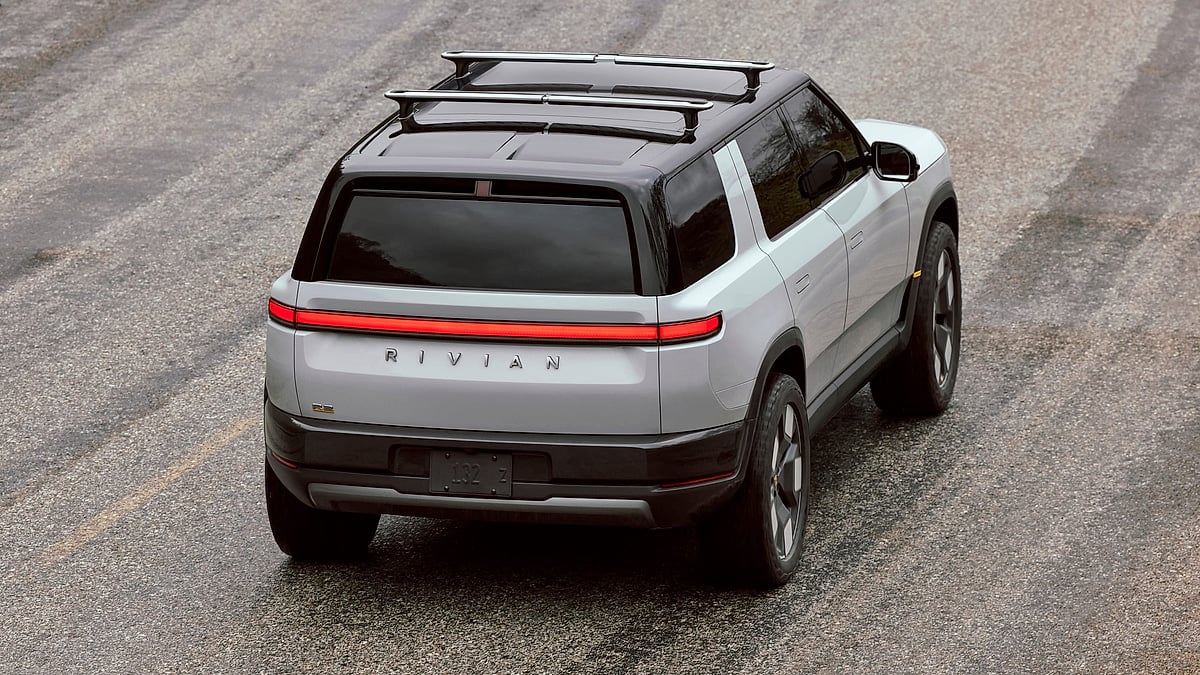
It shows a message on the center display so passersby know the pet is safe and comfortable, disables the cabin movement sensor, temporarily blocks OTA software updates, and lets owners monitor status from the Rivian app.
That is the baseline.
The patent goes much further. It describes a digital tag that could be built into a collar, harness, head halter, or even clothing. The vehicle may use that tag, plus sensors such as cameras, microphones, seat sensors, ultrasonic sensors, and other vehicle systems, to understand where the animal is and what the owner likely intends.
Rivian is describing a vehicle that may infer whether the driver intends for the animal to enter or occupy the vehicle, then change the vehicle's setup around that prediction. The examples include suspension height, assisted entry through a door, step, ladder, ramp, or lift, and climate settings based on the zone where the animal is located.
If you have ever watched an older dog hesitate before jumping into the back of an SUV, the suspension and assisted-entry angle clicks immediately. It is not a gimmick. It is accessibility.
And yes, it is also a very Rivian idea.
The Smartest Part Is Zone-Based Climate
The most practical part of the patent is not the digital fence or the pet points-of-interest screen. It is the idea that the vehicle may know which climate zone the animal occupies.
Today's pet modes typically heat or cool the cabin as one big space. Rivian's patent describes detecting whether the animal is in a specified zone, then directing climate control to that zone. The patent also says temperature could be based on inside and outside conditions, weather forecast, humidity, direct sunshine, animal information, or even vital signs in some embodiments.
EV owners already understand that climate control is energy management. Cooling an entire cabin when the animal is in one rear seat or cargo area works, but it is not elegant. If a vehicle can safely cool the correct zone and monitor that zone more precisely, Pet Comfort could become more efficient and more reassuring. That would matter at trailheads, chargers, campgrounds, grocery stops, and every "I'll be right back" moment that becomes ten minutes longer than planned.
Of course, that assumes the sensing is accurate.
If the system misidentifies the occupied zone, fails to see a small animal, or relies too heavily on a collar battery, the feature becomes less trustworthy. That is why I would not want the user interface to hide the system's confidence. A smart pet system should show the owner what it thinks it sees: animal detected, zone detected, cabin temperature, battery margin, and camera view if hardware allows.
Tesla made "Dog Mode" famous by making the promise visible. Rivian's advantage could be making the promise more precise.
R2 Pet Cam Makes This Patent Feel Less Abstract
The timing is interesting because Rivian's software conversation around R2 is already moving toward richer cabin awareness.
In Rivian's May 22, 2026, R2 software AMA recap, Chief Software Officer Wassym Bensaid said the R2's edge-compute story is not being talked about enough, citing about 200 sparse TOPS for the infotainment chip and the ability to run local AI models on the vehicle.

In the Reddit AMA I reviewed, Bensaid also said RivianOS 2.0 will launch on R2, that Rivian is trying to reduce sleep power draw and 12V cycling, and that Rivian Assistant memory is protected by PIN/profile authentication and stored inside Rivian's ecosystem. In a separate user-supplied screenshot from the same AMA, Bensaid answered a Pet Mode question by saying R2 will have Pet Mode and Pet Cam thanks to a new RGB in-cabin camera.
That does not mean this patent equals an R2 launch feature.
It does mean the pieces are beginning to line up: in-cabin camera hardware, local compute, assistant software, Pet Mode, lower sleep-power ambition, privacy architecture, and a patent around animal-aware vehicle configuration. This is exactly how software-defined vehicles leave the showroom-feature checklist behind. The vehicle starts using sensors to understand the cabin, then changes behavior based on context.
My first thought reading the patent was not "cute." It was "Rivian is trying to turn the pet into a recognized occupant class."
The Digital Fence Is Useful, But It Needs Restraint
The patent also describes a digital fence tied to the vehicle or a mobile device. If the animal moves beyond a threshold distance, the system could notify the person. The patent describes outputs from the digital tag, including auditory, visual, haptic, and, in one claim, electrical output.
It would be easy to write "Rivian patents shock collar for dogs" and watch the comments light on fire. It would also be cheap. Patents often claim broad technical territory, and a claimed electrical output does not tell us Rivian plans to sell a correction collar. It does, however, raise the trust question that matters: if automakers start integrating pet wearables with vehicles, owners will want clear controls, opt-ins, limits, and explanations.
I would want the default system to be notification-first, not correction-first.
A vehicle can warn the owner that a dog is walking away from the campsite. It can show direction and distance. It can turn on lights. It can use a phone notification. It can maybe play a familiar sound if the owner chooses. But the closer the system gets to changing a tag's output based on movement, speed, or distance, the more careful Rivian needs to be with consent, animal welfare, and transparency.
Pet owners are protective. Rightfully so.
The Advertisement and POI Ideas Are the Trust Test
One of the stranger details in the patent is that Rivian describes an animal-related advertisement interface. Another part describes animal-related points of interest, such as dog-friendly parks.
The POI idea makes immediate sense. If the vehicle knows you travel with a dog, showing nearby parks, pet-friendly stops, and animal-friendly destinations could be genuinely useful. Rivian buyers already lean into road trips, camping, hiking, and outdoor use. A pet-aware navigation layer fits the brand.
I do not want my vehicle to see a dog collar and decide I need a coupon. That is the kind of thing that can make an otherwise smart feature feel gross. Rivian has built a brand around adventure, trust, and an owner community. Pet Mode is emotional because owners use it when they are responsible for a living passenger that cannot speak for itself. That is not the moment to make the cabin feel like a retail funnel.
There is a better path: make pet POIs useful, keep advertising off by default, and let owners choose whether any pet profile data can personalize anything beyond the vehicle's own safety and convenience functions.
Rivian should overcommunicate here.
Why The Next Fight Will Be Trust
The next fight over cabin technology will center on trust as much as screen size, voice assistants, or autonomous-driving subscriptions. Vehicles are starting to understand more about who is inside, what they are doing, and what they might need next. Rivian's animal-interaction patent shows how that could help a pet climb in, stay comfortable, avoid an airbag zone, trigger an alert, or get tracked near a campsite.
That is good technology when it feels like care.
It is bad technology when it feels like surveillance, overreach, or monetization. The line is not the sensor. The line is the owner's control over what the sensor does.
What Owners Should Be Thinking
If you own or are shopping for a Rivian because of Pet Comfort, treat this patent as a window into Rivian's thinking, not a feature list. The real near-term question is whether Rivian’s Pet Cam and in-cabin camera make pet monitoring more useful than today's app status and cabin-temperature readout. The longer-term question is whether Rivian can turn pet-aware sensing into safety and accessibility without making owners feel watched or marketed to.
My advice is simple: get excited about zone climate, pet camera access, better alerts, and easier entry. Be skeptical of any feature that uses animal data for ads or tag outputs unless Rivian gives owners plain-language controls. A smarter Pet Mode should make owners more confident, not more anxious.
If Rivian offered a pet collar or tag that connected to your vehicle, what would you actually trust it to do: show location, turn on Pet Mode, adjust climate zones, open a Pet Cam, or warn you if your pet left a campsite boundary?
Let us know if you would trust it in the comments below.
About The Author
Noah Washington is an automotive journalist based in Atlanta, Georgia, covering sports cars, luxury vehicles, and performance culture. His reporting focuses on explaining the engineering, design philosophy, and real-world ownership experience behind modern vehicles.
Noah has been immersed in the automotive world since his early teens, attending industry events and following the enthusiast communities that shape how cars are built and driven today. His work blends industry insight with enthusiastic storytelling, helping readers understand not just what a car is, but why it matters.
Noah is also a member of the Southeast Automotive Media Association (SAMA), a professional organization for automotive journalists and industry media in the Southeast.
His coverage regularly explores sports cars, luxury vehicles, and performance-driven segments of the automotive industry, including the evolving culture surrounding Formula Drift and enthusiast builds.
Read more of Noah's work on his author profile page.
You can also follow Noah here:
Set Torque News as Preferred Source on Google
Follow us today...