
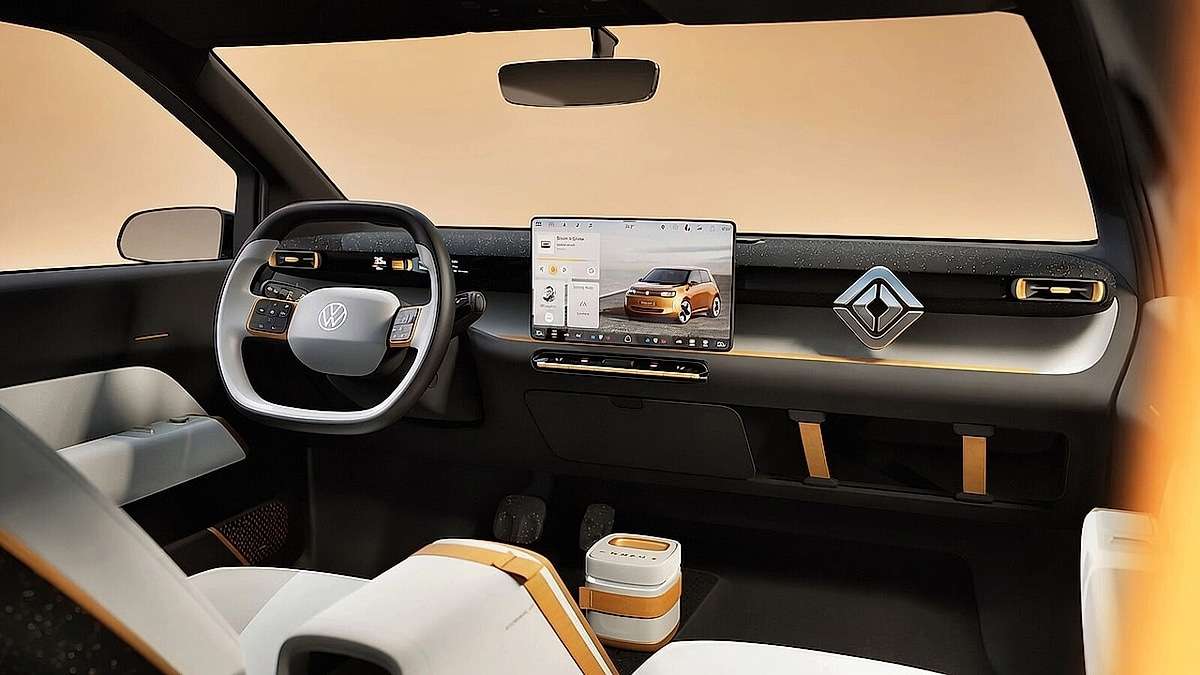

When most people think about Rivian's future, they picture the R1T pickup, the R1S SUV, or the upcoming R2 and R3 models. But after listening to recent comments from Rivian's chief software officer and co-CEO of the Rivian-Volkswagen joint venture, Wassym Bensaid, a different conclusion stands out. Rivian may have found a way to dramatically expand its influence without selling millions of Rivian-branded vehicles at all. The VW-Qualcomm-Rivian alliance, which Torque News has called the most formidable anti-Tesla coalition ever assembled in the Western market, now appears to be only the beginning of a much larger technology licensing story, and the Rivian R2's imminent arrival signals a massive shift in how we should be thinking about this company altogether.
Before you continue reading, here is a question worth thinking about and answering in the comments below. Would you be willing to buy a Volkswagen, Honda, Toyota, or another vehicle if it used Rivian's software and technology, even if it was not a Rivian?
Because that question may become increasingly important over the next few years.
Rivian's Most Important Product May Not Be A Vehicle
During a recent interview on The Verge's Decoder podcast, Bensaid discussed the growing partnership between Rivian and Volkswagen and revealed something many people may have overlooked. According to Bensaid, one of the first products being developed through the joint venture is Volkswagen's upcoming ID.1, an affordable EV expected to sell for less than $25,000. The Volkswagen ID.3 Neo, which we covered at Torque News as VW's "Electric Golf Moment," showed how much Volkswagen needed a software partner to stay competitive in Europe's most critical EV segment, and the ID.1 takes that need to an entirely new level of urgency.
That is significant for a few reasons.
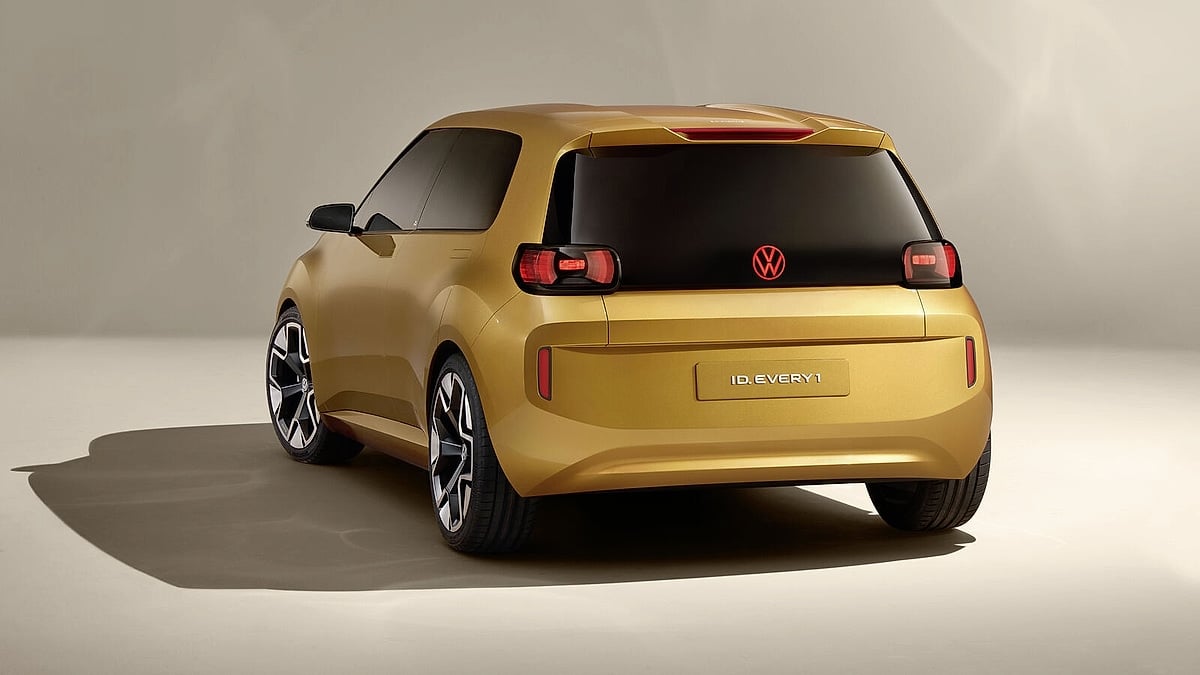
But the biggest reason is not the vehicle itself. It is what the vehicle represents. For years, Rivian's technology lived almost exclusively inside Rivian vehicles. Now it is beginning to spread beyond them.
Step One: Rivian Is Moving Beyond Premium Vehicles
Until now, most Rivian buyers have been shopping at the premium end of the market. The R1T and R1S are impressive vehicles, but they are not budget transportation. One owner who drove a 2022 Rivian R1T for 83,000 miles across 9 cities proved just how capable and durable that premium technology really is, which is exactly why Volkswagen wanted access to it.
The Volkswagen ID.1 changes that equation. Instead of serving buyers spending $70,000, $80,000, or more, Rivian's technology will soon appear in a vehicle aimed at a much larger audience. That alone could dramatically expand Rivian's reach into households that would never consider a vehicle at R1-series prices.
Step Two: Rivian Is Moving Into The Sub-$25,000 Market
This may be the most important development of all. Affordable vehicles sell in much greater numbers than premium vehicles. That is simply how the automotive market works. A technology platform that reaches buyers in a sub-$25,000 vehicle suddenly becomes relevant to millions more consumers. By the way, Torque News has covered the persistent challenge of the $25,000 EV myth in the United States and the constraints holding back truly affordable electric vehicles here at home, which makes Rivian's ability to bring its architecture to that price point through Volkswagen's global manufacturing scale genuinely remarkable.
For Rivian, this is a very different growth strategy than simply increasing production of its own vehicles. Instead of building every vehicle itself, the company can leverage Volkswagen's scale. That is potentially a much faster path to widespread adoption than any factory expansion Rivian could build on its own.
Step Three: Rivian Is Going Global
Another detail hidden inside Bensaid's comments deserves attention. He explained that the partnership opens Rivian's technology and feature set to many more consumers around the world. That matters enormously because Volkswagen operates on a global scale. As Torque News reported, the Scout Motors construction site in South Carolina, backed by Volkswagen Group, shows the scale of investment VW is making across the North American market alone, which is only one piece of a worldwide manufacturing footprint that Rivian's software will now ride into.
While Rivian remains largely concentrated in North America today, Volkswagen sells vehicles across Europe, Asia, South America, and numerous other markets. Every new Volkswagen model that adopts Rivian's technology has the potential to introduce the Rivian experience to customers who may never visit a Rivian showroom. The implications are enormous. CleanTechnica reported that Bensaid himself told journalists at an event in Palo Alto that the joint venture is solving a problem for the larger automotive industry and that the technology stack "could become an opportunity" for other automakers as well, noting that the earning potential from licensing the technology is a very different ballgame and a very different margin profile from a business standpoint than making cars.
Step Four: Rivian Is Leaving The Door Open To Hybrids And Gas Vehicles
This may be the most overlooked part of the entire discussion. When asked whether Rivian's technology could eventually be used in hybrids and internal combustion vehicles, Bensaid gave a straightforward answer. Yes. For now, the joint venture's priority remains electric vehicles, but the technology itself is not limited to EVs. As we have noted earlier, the software-defined vehicle revolution is rapidly becoming the most important differentiator in the modern ownership experience, with your car's Wi-Fi connection now mattering as much to customer satisfaction as horsepower, which means every automaker with any powertrain type needs this kind of architecture.
Think about that for a moment. Most people still view Rivian as an electric vehicle manufacturer. But Rivian increasingly appears to view itself as a technology company whose software can work across multiple vehicle types. If that happens, Rivian's potential market becomes dramatically larger than the EV market alone.
The Hidden Story Is Bigger Than Volkswagen
Most headlines about this partnership focus on Volkswagen, and understandably so. Volkswagen is one of the world's largest automakers. But the more interesting story is what Rivian is becoming. The fact that the Volkswagen ID Buzz failed to become the hit it was supposed to be is directly tied to VW's years of software failures before it turned to Rivian, which is a cautionary tale that makes the current partnership look less like a business deal and more like a rescue mission with enormous long-term upside for both sides.
Traditionally, automakers generate revenue by selling vehicles. Tesla sells Teslas. Ford sells Fords. Toyota sells Toyotas. Rivian may be creating a second path. It can sell vehicles, but it can also distribute technology. The Scalable Systems Platform developed through the Rivian-VW partnership is expected to be deployed on up to 30 million vehicles across the group's brands, which is a number that dwarfs anything Rivian could manufacture under its own roof.
The more you examine Bensaid's comments, the more this partnership resembles something we have seen in other industries. Many consumers have never owned a Google phone, yet billions use Android. Many consumers have never purchased software directly from Microsoft, yet Microsoft's technology powers countless products. Rivian cut the cord from Nvidia to develop its own custom autonomy processor, a move that signals the company sees its technology stack as a core competitive asset worth controlling and protecting, which is exactly what a company pursuing a platform licensing model needs to do.
Why This Could Matter To Everyday Car Buyers
For consumers, this could eventually mean better software, more connected features, faster updates, and more modern vehicle architectures appearing across multiple brands. Rivian owners who have struggled with software performance issues on the R1S, from infotainment glitches to missing features, have lived firsthand through what happens when software falls short of the hardware's promise, which is why getting the software right at scale matters so much for Rivian's platform ambitions.
Software is increasingly becoming one of the most important differentiators in modern vehicles. Horsepower still matters. Range still matters. Design still matters. But software increasingly shapes the ownership experience every single day. The Rivian R2, launching on June 9th as one of the most important EVs of 2026, will be the first Rivian vehicle to run the new zonal architecture that VW and other automakers are adopting, making it both a consumer product and a live demonstration of the technology platform Rivian is selling to the world.
If Rivian succeeds, millions of drivers could end up interacting with Rivian-developed technology without ever realizing it. And here is the moral lesson that matters most in this story. The companies that shape the underlying technology of an era rarely do so by being the biggest seller of finished goods. They do so by being indispensable to everyone else. Rivian is quietly pursuing that path.
And that is why the Volkswagen partnership represents something much larger than a collaboration on a single affordable EV. It is potentially the beginning of Rivian's transformation from an automaker into a technology platform, and that could ultimately prove more important than any individual vehicle the company builds.
Do you think Rivian's biggest opportunity is still selling its own vehicles, or could licensing and expanding its technology eventually become an even larger business? And would you be more likely to buy a Volkswagen or another brand if you knew it used Rivian's software architecture and technology? Share your thoughts in the comments below.
Come back tomorrow, or check our Torque News Home Page for more interesting automotive news articles.
About The Author
Armen Hareyan is the founder and Editor-in-Chief of Torque News and an automotive journalist with over 15 years of experience writing car reviews and industry news. Now based in the Charlotte region (Indian Land, SC, he founded Torque News in 2010, which since then has been publishing expert news and analysis about the automotive industry. He can be reached at Torque News on X, Linkedin, Facebook, and Youtube. Armen holds three Masters Degrees, including an MBA, and has become one of the known voices in the industry, specializing in the landscape of electric vehicles and real-world stories of actual car owners. Armen focuses on providing readers with transparent, data-backed analysis bridging the gap of complex engineering and car buyer practicality. Armen frequently participates in automotive events throughout the United States, national and local car reveals and personally test-drives new vehicles every week. Armen has also been published as an automotive expert in publications like the Transit Tomorrow, discussing how will autonomous vehicles reshape the supply chain, and emerging technologies in vehicle maintenance.
Set Torque News as Preferred Source on Google
Follow us today...


Comments
The recipe for success is to…
Permalink
The recipe for success is to sell cheaper vehicles without the technology nobody wants instead of spreading the software disease to other brands. Can I buy a Rivian without a Rivian technology (no touchscreen, no FSD hardware, no motorized everything) at some significant discount?
Given how long it takes VW…
Permalink
Given how long it takes VW to bring a new EV to market it probably won't be here before 2035!
The Volkswagen ID.1 is…
Permalink
In reply to Given how long it takes VW… by Robert McSorley (not verified)
The Volkswagen ID.1 is officially expected to launch in 2027, with production scheduled to begin in mid-to-late 2027 at VW's Palmela factory in Portugal. Previewed by the ID. Every1 concept, it will serve as VW's entry-level electric vehicle with an estimated starting price of around €20,000.
For those old heads who’ve…
Permalink
For those old heads who’ve been around tech for a long time it’s similar to the approach alphabet/google took with AndroidOS vs Apple iOS. Google choose not only its own make/model/OS but proliferation across tons of OEM handsets providers who’s core business (meaning HW focus for them) was “not” mobile software development. While Apple chose a HW + SW “walled garden” insulated & proprietary development approach. While both approaches have become very successful (while taking out many legacy mobile OS OG software who split market share such as Palm, windows mobile, Symbian, Blackberry). It’ll be interesting to see if Rivian’s (plus VW) long term strategic approach takes hold of the auto market as they’d like (in contrast to legacy auto makers like GM, Ford, Toyota, Honda, etc who have been hoping their approach bc of scale wins out instead with their fleet). While it’s a smart approach from Rivian everyone really knows the key to Android and iOS was gaining mindshare and market share was through the “App Store DEVELOPER Ecosystem”. Without that (and these auto partnerships deals) I still think it’s any “self proclaimed” software defined automakers games, which 5-7yrs from now might not be Rivian but rather some “unknown” company that was able to crack the auto SW + app dev store code.
We own a first generation…
Permalink
We own a first generation RS1, and we love it. I KNOW we'll love a slightly smaller, and MUCH less expensive R2. I have faith in the company and the leadership.