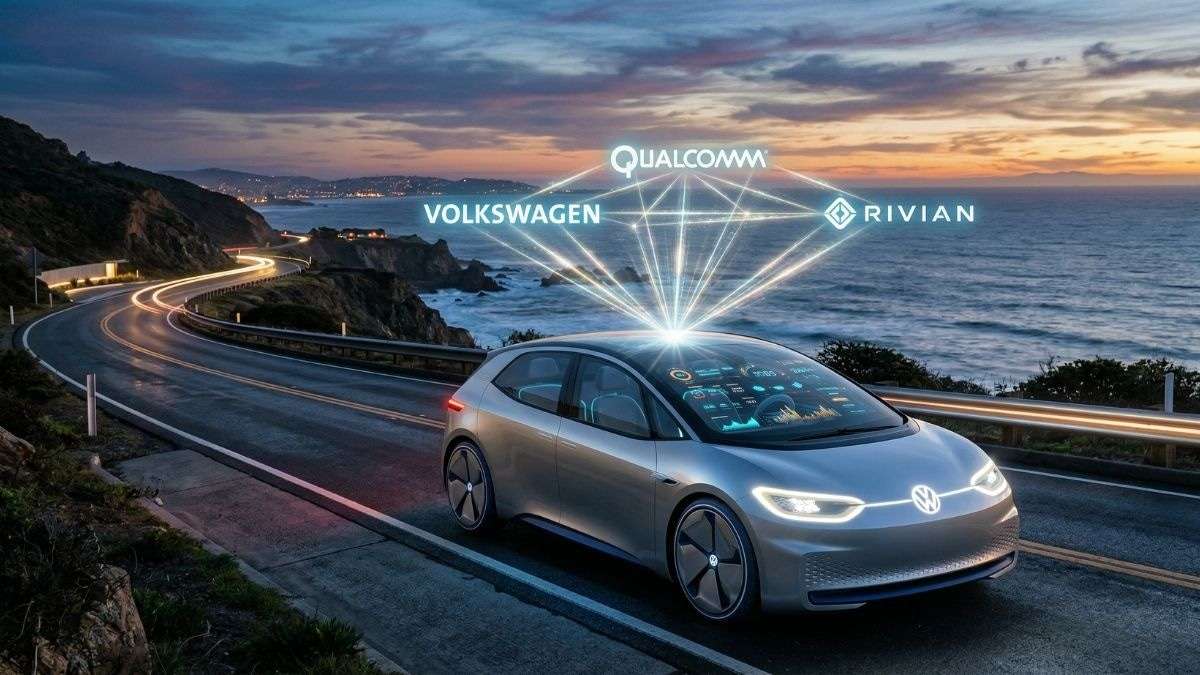

The automotive industry is currently navigating its most significant pivot since the invention of the assembly line. We are moving away from "hardware-first" machines with bolted-on software toward the Software-Defined Vehicle (SDV). In a move that cements this transition for the Western market, Volkswagen Group and California-based Qualcomm Technologies, Inc. have signed a Letter of Intent (LOI) to develop a next-generation zonal SDV architecture.
Leveraging the technical foundation of the newly minted VW-Rivian joint venture, this partnership aims to solve the "software problem" that has plagued legacy automakers for a decade. This isn't just a supply deal; it is a fundamental restructuring of how a car is thought, built, and updated.
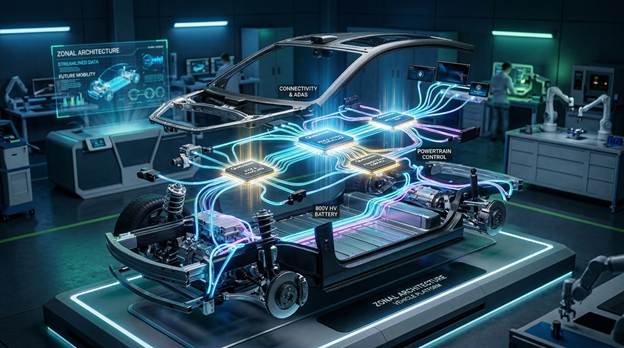
The Architecture of Change: What the LOI Entails
The core of the announcement, initially detailed by Volkswagen Group, focuses on utilizing Qualcomm’s Snapdragon Digital Chassis. Specifically, the partnership targets a "zonal architecture."
In traditional vehicles, dozens of Electronic Control Units (ECUs) are scattered throughout the chassis, each dedicated to a single task (e.g., power windows, braking, climate control). This creates a "spaghetti" of wiring and fragmented software. A zonal architecture replaces these dozens of units with a few high-performance central computers that manage "zones" of the car.
By integrating Qualcomm’s high-performance computing power with the software stack developed by the VW-Rivian JV, Volkswagen is effectively adopting Rivian’s highly praised electrical architecture, a system designed from the ground up to be lean, updateable, and efficient. This collaboration will focus on Western markets, ensuring that the specific demands of North American and European consumers for privacy, high-speed connectivity, and advanced driver assistance systems (ADAS) are met with localized precision.
The Critical Nature of Cross-Industry Partnerships
For decades, the relationship between automakers and tech suppliers was "tier-based" and transactional. An OEM (Original Equipment Manufacturer) would ask for a specific part, and the supplier would provide it. That model is dead.
For automotive manufacturers like VW, partnerships like this are a matter of survival. VW’s internal software unit, Cariad, has faced well-documented delays that postponed the launch of critical models like the Porsche Macan EV. By partnering with Qualcomm - a master of silicon - and Rivian (a master of modern EV architecture), VW is admitting that it cannot "go it alone" in the digital space.
For technology suppliers like Qualcomm, these partnerships provide a massive, stable platform to scale their automotive chips. While Qualcomm dominates the smartphone market, the automotive sector represents the next great frontier for high-margin, long-lifecycle semiconductors. By embedding themselves into the VW-Rivian ecosystem, Qualcomm ensures its Snapdragon Digital Chassis becomes the "brain" of millions of vehicles worldwide.
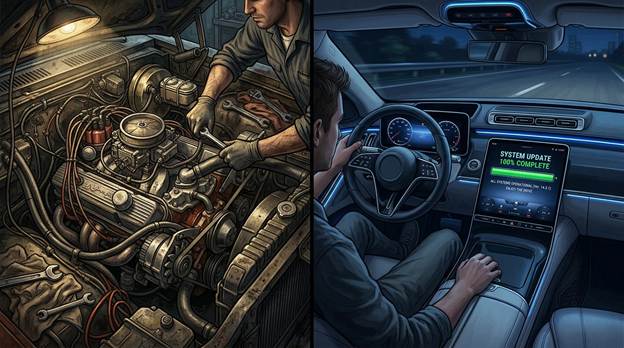
The Road to Success: What Needs to Happen Next
Signing an LOI is the easy part; execution is where the rubber meets the road. For this joint effort to be successful, several hurdles must be cleared:
- Cultural Integration: You have a German industrial giant (VW), a Silicon Valley-style EV startup (Rivian), and a San Diego semiconductor powerhouse (Qualcomm). Merging the slow, safety-critical cycles of German engineering with the "move fast and break things" ethos of tech is a monumental task.
- Standardization: The architecture must be scalable across VW’s massive portfolio, from affordable Skodas to high-performance Lamborghinis. If the architecture is too expensive for mass-market cars, the partnership loses its primary advantage.
- Over-the-Air (OTA) Reliability: The hardware is only as good as the delivery system. VW must prove it can handle seamless, iPhone-like software updates without bricking vehicles, a feat Rivian has mastered but VW has struggled with.
Market Comparisons: Tesla, NIO, and the Rest
VW and Qualcomm are not operating in a vacuum. This move is a direct response to the "Tesla Model." Tesla’s vertical integration, where they design their own chips and software, set the gold standard for SDVs.
In China, companies like NIO and XPeng are already utilizing similar zonal architectures, often powered by NVIDIA or Qualcomm chips, to deliver rapid feature iterations. However, in the Western market, VW’s primary competitors are General Motors and Ford. GM has moved toward its "Ultifi" platform, while Ford has divided its business to focus specifically on "Model e" software.
The VW-Qualcomm-Rivian trio is unique because it combines Rivian’s "clean sheet" architecture with VW’s global manufacturing scale and Qualcomm’s silicon dominance. It is arguably the most formidable "anti-Tesla" alliance ever formed in the West.

Brand Image and Individual Responsibilities
This partnership is a PR masterstroke for both companies, but it comes with heavy expectations.
For Volkswagen Group: This helps shed the image of a legacy behemoth struggling to understand the digital age. It signals to investors that VW is willing to be pragmatic rather than proud. To succeed, VW needs to let go. They must allow the Rivian-led software culture to influence their internal processes rather than stifling the JV with bureaucracy.
For Qualcomm: This elevates Qualcomm from a "component maker" to a "strategic architect." It proves that their Snapdragon platform is more than just an infotainment chip; it is the central nervous system of the modern car. To succeed, Qualcomm must ensure their hardware roadmap stays ahead of the rapid advancements in AI and autonomous driving, providing VW with enough "headroom" for future updates.
The Competitive Edge in Western Markets
Focusing this architecture specifically on Western markets is a calculated move. China has a completely different digital ecosystem (dominated by Baidu, Alibaba, and Tencent). By focusing on the West, VW and Qualcomm can optimize for Google/Apple integration, Western cybersecurity standards, and the specific regulatory environments of the EU and North America. This focus ensures that the user experience feels native to the driver, whether they are in Berlin or Boston.
This video explains the details of the VW-Rivian deal, providing the necessary context to understand why this alliance is a significant shift for the automotive industry.
Wrapping Up
The LOI between Volkswagen Group and Qualcomm is more than a press release; it is a declaration of interdependence. By leaning on the agility of the Rivian joint venture and the processing power of Qualcomm, VW is finally positioning itself to compete in the software-driven future.
The success of this venture will depend on whether these three distinct corporate cultures can speak the same language. If they succeed, the result will be a generation of vehicles that are safer, smarter, and, most importantly, constantly improving long after they leave the dealership. The "Western SDV" finally has a champion that combines the scale of the old world with the innovation of the new.
Disclosure: Images rendered by Artlist.io
About The Author
Rob Enderle is a highly recognized technology analyst and automotive journalist with decades of experience providing deep-dive insights into the intersection of personal technology, artificial intelligence, and the future of transportation. Based in Bend, Oregon, Rob has spent his career dissecting complex industry trends for both enterprise and consumer audiences. He is a frequent presence at major global events like CES, where he evaluates the latest breakthroughs from industry giants such as Lenovo, Intel, HP, and AMD. You can learn more about Rob on Wikipedia and follow his articles on TechNewsWord, as well as Rob Enderle on X.
Set Torque News as Preferred Source on Google
Follow us today...