
Nearly twenty years ago, General Motors developed what seemed like a magic combination. A battery-electric powertrain that had a small on-board gas engine that could add range in situations where the battery was not enough, or not practical. Road trips, adventures to places with poor charging infrastructure (and that was all places at that time), and maybe just for folks who didn’t have easy access to a home charger of their own. The Volt was a hit in the context of EVs. It was the top-selling EV (sort of) for quite a while, and it had two generations before being killed by GM due to its huge popularity.
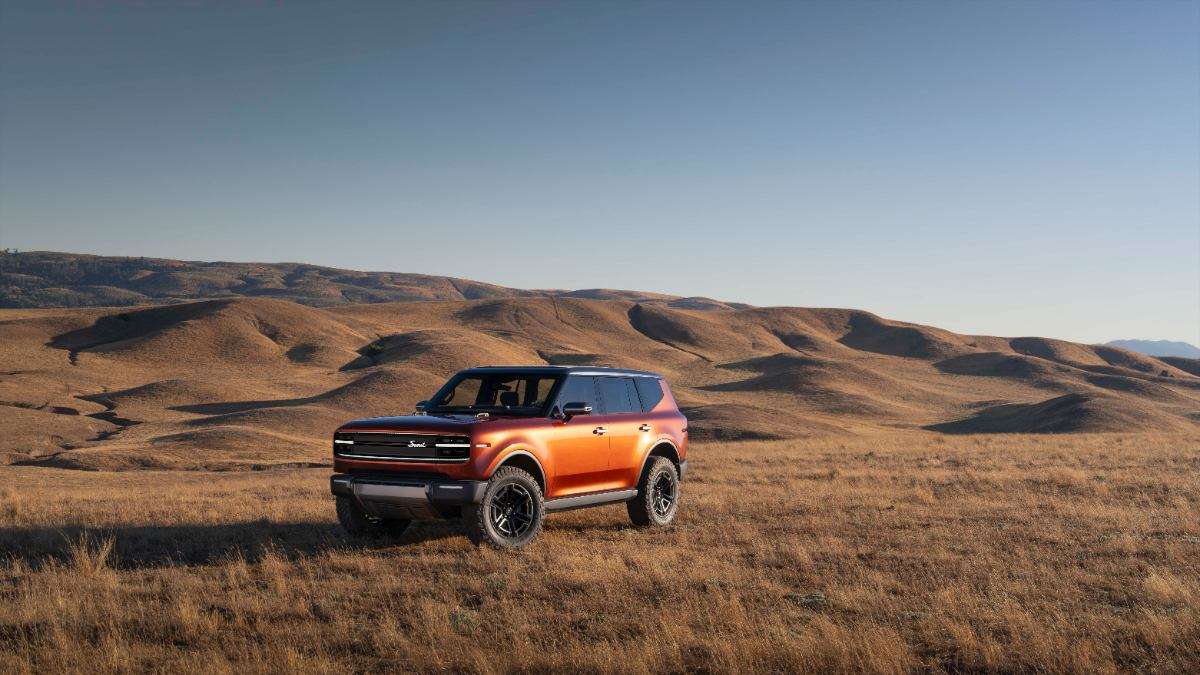
Heading into 2030, Scout Motors aims to leverage the advantages of an extended-range electric vehicle (EREV) while leveraging the allure of off-road capability. Fans are going crazy for the idea. Scout's CEO revealed in an interview recently that Scout Motors’ reservation holders - and there are more than 100,000 of them- went for the EREV option over the battery-only version by a whopping 4 to 1 ratio. Only 20% of those reserving a Scout Terra truck or Traveler SUV opted for the battery-only powertrain.
Under a story here at Torque News this week, one such reservation holder explained precisely why he is reserving the EREV. Here’s what Andy told us:
Advertising
I currently have a V6 Bronco Sasquatch, and offroad with it. I have a reservation for a Scout EREV, and I would not consider this vehicle with a gas primary engine. What the EREV brings is something special. I get all the benefits of the EV (acceleration, efficiency, quietness, very low maintenance), but with an extendable range. Additionally, the new Scout gives me the off-road capability that I want, namely lockers, disconnecting sway bar, etc.
Andy very succinctly and very clearly tells us that the BEV (Battery-electric vehicle) version is of no interest to him. He wants the flexibility that a gas engine affords its owner. Unlimited range. Particularly in places where charging may be a pain in the neck. We get it. I’m a fellow Ford off-road SUV owner who often has an EV available for driving. More often than not, when I go to the wild places, I leave the EV behind and take my Bronco Sport Badlands because it is much easier to refuel.
Andy has also explained why he wants a Scout Motors vehicle in the first place. He’s an off-road enthusiast. The Bronco Sasquatch is a beast! To even consider a lesser off-roader once you have one is silly. Andy wants something as capable, or more capable, that will be greener and offer the upsides of an EV.
What do you think of Andy’s viewpoint? Do you think it makes sense to pair a gas engine with a battery-electric powertrain to derive the best of both worlds? Tell us your thoughts in the comments below.
John Goreham is the Vice President of the New England Motor Press Association and an expert vehicle tester. John completed an engineering program with a focus on electric vehicles, followed by two decades of work in high-tech, biopharma, and the automotive supply chain before becoming a news contributor. He is a member of the Society of Automotive Engineers (SAE int). In addition to his fourteen years of work at Torque News, John has published thousands of articles and reviews at American news outlets. He is known for offering unfiltered opinions on vehicle topics. You can connect with John on LinkedIn and follow his work on his personal X channel or on our X channel. John employs grammar and punctuation software when proofreading, and he sometimes uses image generation tools.
Set Torque News as Preferred Source on Google
Follow us today...