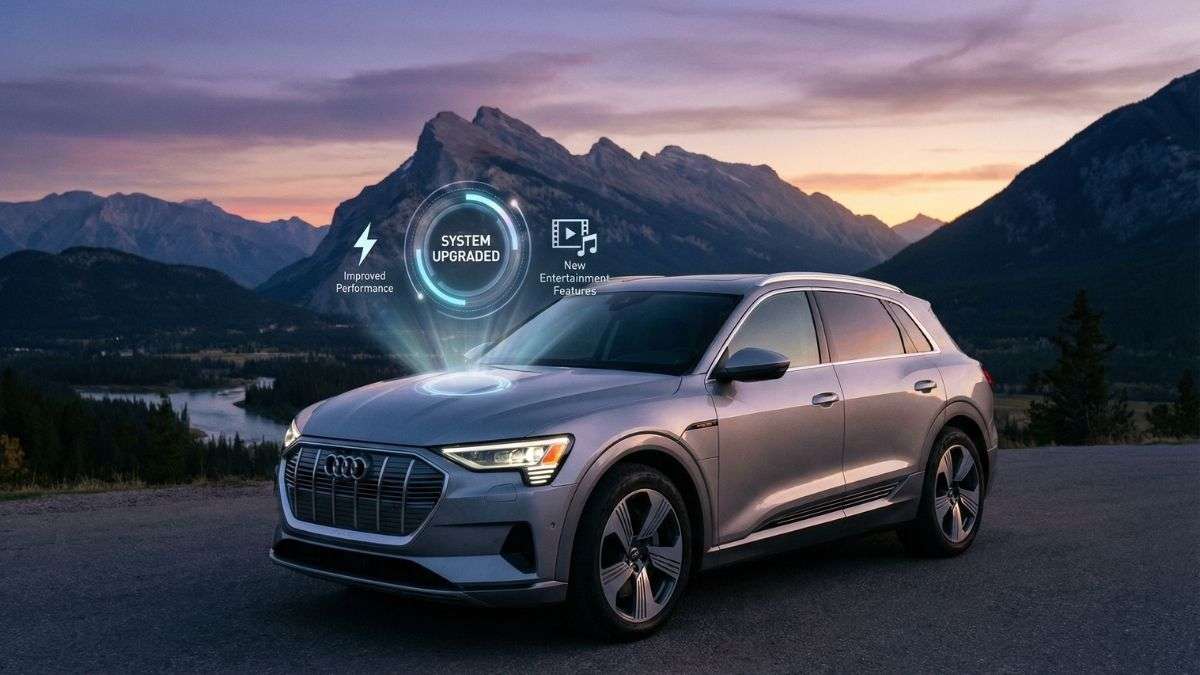

There was a time when buying a car was a static event. You signed the papers, drove off the lot, and that vehicle was, for better or worse, the best it was ever going to be. But we have entered the era of the Software-Defined Vehicle (SDV), where the "new car smell" can be refreshed by a download while you sleep.
According to the J.D. Power 2026 U.S. Vehicle Dependability Study (VDS), this shift is fundamentally altering how we value our rides. For the first time, owner satisfaction is becoming inextricably tied to the performance—and the emotional payoff—of over-the-air (OTA) updates. However, the report also carries a warning: as updates become routine, they are increasingly becoming a source of friction. The study found that vehicle problems have increased to an industry average of 204 problems per 100 vehicles (PP100), with infotainment remaining the most problematic category at a staggering 56.7 PP100.
The Driver’s Experience: From Maintenance to Magic
Why has the OTA update moved from a techy gimmick to a core pillar of owner satisfaction? It comes down to the psychological shift in ownership. When a driver receives a notification that their car has gained five miles of range or a more intuitive navigation interface, the "honeymoon phase" of ownership is artificially extended.
The 2026 VDS highlights a growing frustration: while 40% of owners received a software update in the past year, only 27% say it actually improved their vehicle. For the modern driver, an update transforms the vehicle from a depreciating asset into a living companion. When it works, it feels like a gift. When it fails—or offers no visible benefit—it feels like a broken promise.
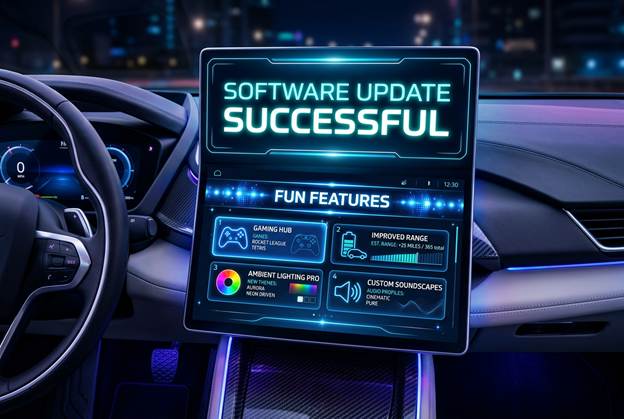
The Tesla Factor: Why We Love the "Fart Mode"
Tesla remains the benchmark for the "delight" factor. While legacy automakers used software primarily to patch bugs, Tesla understood that bundling critical safety patches with "Easter eggs"—such as the infamous Emissions Testing Mode, Grok AI integration, or Holiday Light Shows—turns a technical necessity into a brand-building event.
Owners don't just tolerate Tesla updates; they look forward to them. This "fun" layer masks the mundanity of software maintenance, creating a culture of constant innovation. This is the gold standard of engagement: making the user want the update, rather than fearing it might "brick" their infotainment screen.
The Leaders, the Laggards, and the Looming Decline
The 2026 data suggests a widening chasm between those who master the digital relationship and those struggling to survive it. To see a visual breakdown of how these rankings have shifted this year, watch this detailed analysis of the 2026 results.
- The Leaders: Lexus, Rivian, and Tesla. Lexus continues to dominate the rankings, holding the top spot overall with 151 PP100 by keeping their software stable and reliable. Rivian, despite some mechanical growing pains, ranks first in owner satisfaction surveys because their software is seamless and user-centric. Tesla has shown significant improvement, with its Model Y now rated as one of the most reliable electric vehicles.
- The Middle Ground: Ford, Chevrolet, and Cadillac. Cadillac (175 PP100) and Chevrolet (178 PP100) are performing well above the industry average, benefiting from GM’s aggressive software integration. Ford (228 PP100) has made strides with "Power-Up" updates but still sits below the industry average due to versioning confusion and hardware complexity.
- The Laggards: Volkswagen, Volvo, and Land Rover. These firms are currently struggling. Volkswagen (301 PP100) and Volvo (296 PP100) sit at the bottom of the 2026 rankings, plagued by infotainment glitches and "worst in usability" ratings. Land Rover (274 PP100) also continues to battle software-driven reliability issues.
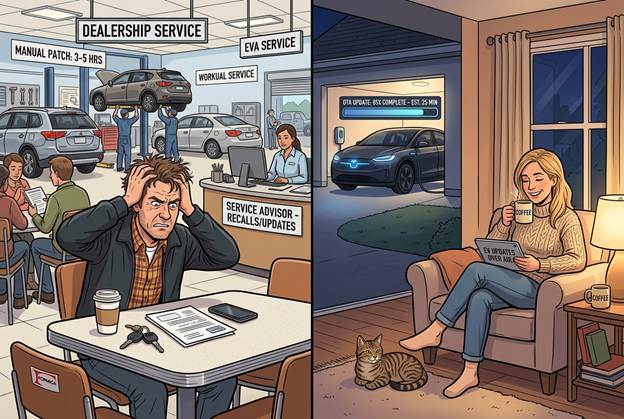
What Needs to Be Done: Moving Beyond the "Wrench" Icon
To ensure OTA updates improve satisfaction, automakers must move toward "Radical Transparency." With only 27% of owners perceiving a benefit from updates, manufacturers must prioritize:
- Clear Communication: Release notes should be written for humans, not engineers. Tell the driver exactly what the software is doing.
- Stability First: An update that resets radio presets or seat positions is a failure.
- Background Execution: The ideal update happens without the driver ever seeing a loading bar.
The Vision: The Ideal Future EV Software Experience
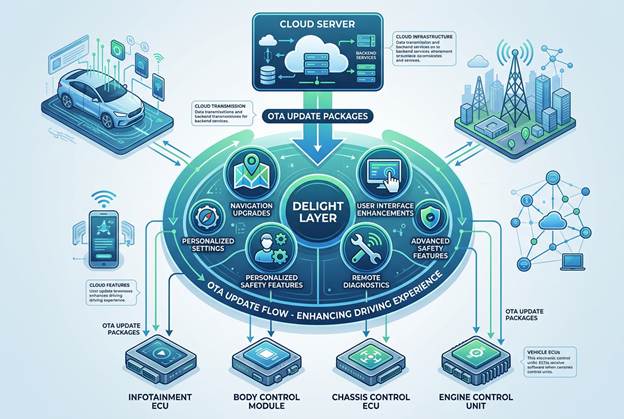
Imagine an EV that arrives home and proactively downloads a thermal management patch to optimize your planned trip for tomorrow. When you enter, the ambient lighting pulses green, and the HUD says: "Optimized for your trip: +4% charging speed." This is the "Software-Defined Smile"—technology serving the driver’s needs before they even have to ask.
Wrapping Up
The shift toward OTA-driven satisfaction is a double-edged sword. While it allows for continuous improvement and "fun" engagement, it also introduces a new vector for frustration. The 2026 J.D. Power report is clear: the novelty of "remote fixes" is wearing off. To win the next decade, car companies must stop treating software as a secondary component and start treating it as the primary brand experience. Those that deliver magic without the glitches will see their reputations soar; those that fail will be left in the analog past.
Disclosure: Images rendered by Artlist.io
Rob Enderle is a technology analyst at Torque News who covers automotive technology and battery developments. You can learn more about Rob on Wikipedia and follow his articles on TechNewsWord, TGDaily, and TechSpective.
Set Torque News as Preferred Source on Google
Follow us today...