
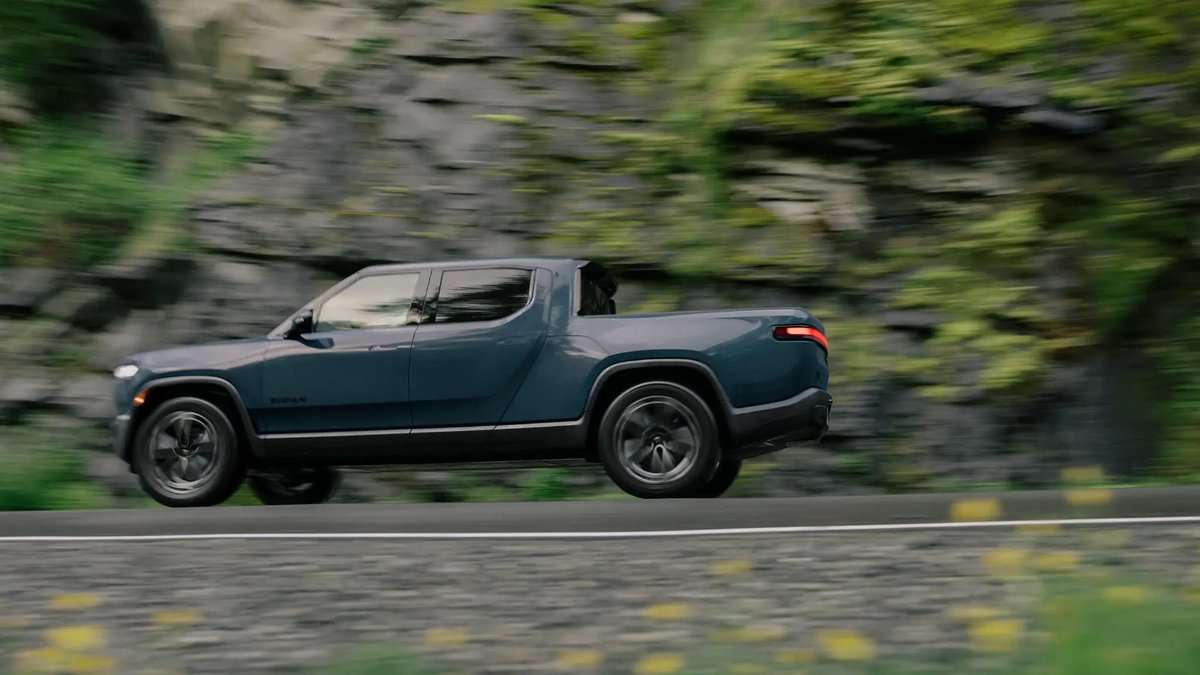

Air suspension has always been sold as a luxury feature, the kind of technology that promises a smooth carpet ride quality and on-the-fly adaptability. But for one Rivian R1T owner, that promise ended abruptly at 60,000 miles, just after the warranty clock ran out. In a post that quickly gained traction in the Rivian community, the owner described a sudden and total collapse of the front suspension that left the truck undrivable and the repair bill sitting at a sobering $7,500.
According to the owner, the failure was not gradual or subtle. The front end simply gave way, traced back to a leak in the air suspension system. Once the truck was towed to the service center, the diagnosis escalated quickly. The entire front air suspension system needed replacement, and the compressor had to go as well, having overheated and burned itself out while trying to compensate for the leak. The timing could not have been worse. The truck had just crossed the 60,000-mile warranty threshold, putting the entire repair squarely on the owner.
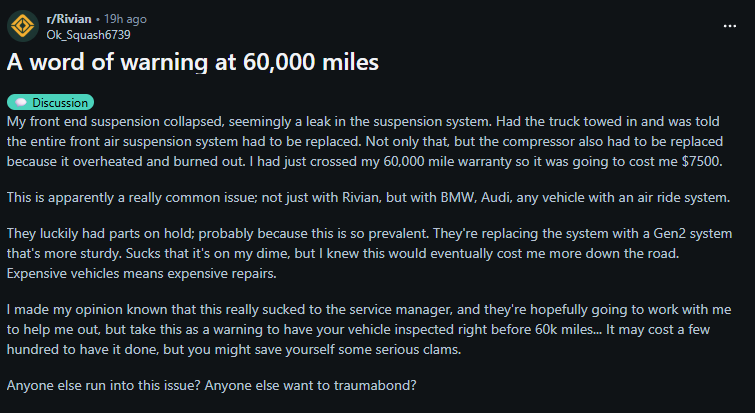
“My Rivian R1T's front-end suspension collapsed, seemingly due to a leak in the suspension system. Had the truck towed in and was told the entire front air suspension system had to be replaced. Not only that, but the compressor also had to be replaced because it overheated and burned out. I had just crossed my 60,000-mile warranty, so it was going to cost me $7500.
This is apparently a really common issue, not just with Rivian, but with BMW, Audi, and any vehicle with an air ride system.
They luckily had parts on hold; probably because this is so prevalent. They're replacing the system with a Gen2 system that's more sturdy. Sucks that it's on my dime, but I knew this would eventually cost me more down the road. Expensive vehicles mean expensive repairs.
I made my opinion known that this really sucked to the service manager, and they're hopefully going to work with me to help me out, but take this as a warning to have your vehicle inspected right before 60k miles... It may cost a few hundred to have it done, but you might save yourself some serious clams.
Advertising
Has anyone else run into this issue? Anyone else want to traumabond?”
What made the situation sting even more was the service center’s candor. This was not treated as a rare or surprising failure. The owner was told the issue is common, not only on Rivians, but across brands that rely on air ride systems, including BMW and Audi. Parts were already on hold, a detail that quietly suggests this is a repair the shop sees often enough to plan for. The replacement components are a newer Gen2 system, described as more robust than the original, an implicit admission that the first-generation setup had weaknesses.
Rivian R1T: Design Philosophy & Gear Tunnel
- Rivian designed the R1T around the idea that owners would use it as a daily driver first and an adventure vehicle second, which shows up in its quiet cabin, smooth ride tuning, and storage-first packaging.
- The Gear Tunnel is a structural “pass-through” space that effectively uses the gap created by the truck’s shorter bed and EV platform layout.
- The truck’s software controls a large share of its personality, including drive modes that materially change throttle mapping, traction logic, and suspension height, making it feel like multiple vehicles depending on settings.
- The R1T’s “front trunk” is shaped more like a deep duffel compartment than a wide bin, which makes it useful for dirty gear and tools but less ideal for large flat items.
To the owner’s credit, there is little bitterness in the post, just realism. Expensive vehicles, he notes, tend to bring expensive repairs, and air suspension has always carried that reputation. Still, the frustration is understandable. A catastrophic failure just outside warranty feels less like bad luck and more like a structural problem with how durability expectations are set. When a major system fails all at once, the mileage number matters less than the abruptness of the event.
The comments beneath the post read like group therapy. Several owners echoed the sentiment that they love their Rivians but have no desire to own them out of warranty. Air suspension, in particular, is frequently cited as the financial wild card. One commenter pointed out that this experience makes Rivian’s decision to use traditional coil springs on the upcoming R2 look increasingly wise. Another simply wished their R1T had coils instead, no hesitation, no qualifiers.
There is also a growing awareness around extended warranties. Multiple owners expressed hope that Rivian will expand access to longer-term coverage options, specifically because of failures like this. When a single repair can approach five figures, the math on extended coverage starts to look far more reasonable, even to buyers who usually avoid it on principle.
The original poster offered a piece of advice that feels both practical and unsettling. Get the vehicle inspected right before the warranty expires. Spending a few hundred dollars on a thorough inspection could potentially catch early signs of suspension leaks or compressor strain, saving thousands later. It is sensible guidance, but it also underscores how little margin there is once coverage ends.
None of this turns the Rivian R1T into a bad vehicle. Owners remain deeply attached to them, even in the comments, expressing frustration. But it does reinforce a hard truth about first-generation, high-tech trucks loaded with premium hardware. Features that elevate the experience when new can become liabilities with age, especially when they fail suddenly rather than gradually.
It delivers undeniable benefits in ride quality and capability, but it demands respect for its complexity and cost. For this R1T owner, the lesson came at 60,000 miles and $7,500. For others, it may serve as advance notice to plan carefully, inspect early, and think hard about what kind of suspension they want to live with once the warranty safety net disappears.
Image Sources: Rivian Media Center
Noah Washington is an automotive journalist based in Atlanta, Georgia. He enjoys covering the latest news in the automotive industry and conducting reviews on the latest cars. He has been in the automotive industry since 15 years old and has been featured in prominent automotive news sites. You can reach him on X and LinkedIn for tips and to follow his automotive coverage.
Set Torque News as Preferred Source on Google
Follow us today...




Comments
That's a lot of expense for…
Permalink
That's a lot of expense for such a mileage.
I have an r1t that I've…
Permalink
I have an r1t that I've taken in twice for front suspension clunking noises and it just passed the 60,000 mark, and the noises are back. I've read a few posts that say the original r1t did not have a robust enough front suspension and there's been quite a few that have had to be completely replaced. I fear that's in my future. Love the truck but that is frustrating.
All vehicles with air…
Permalink
All vehicles with air suspension cost a lot .I replaced my air suspension on my mercedes gls 450 last year,mercedes want to charge over 7 thousand dollars to replace fortunately I knew how to replace it myself. Do not get air suspension option on your vehicle.