
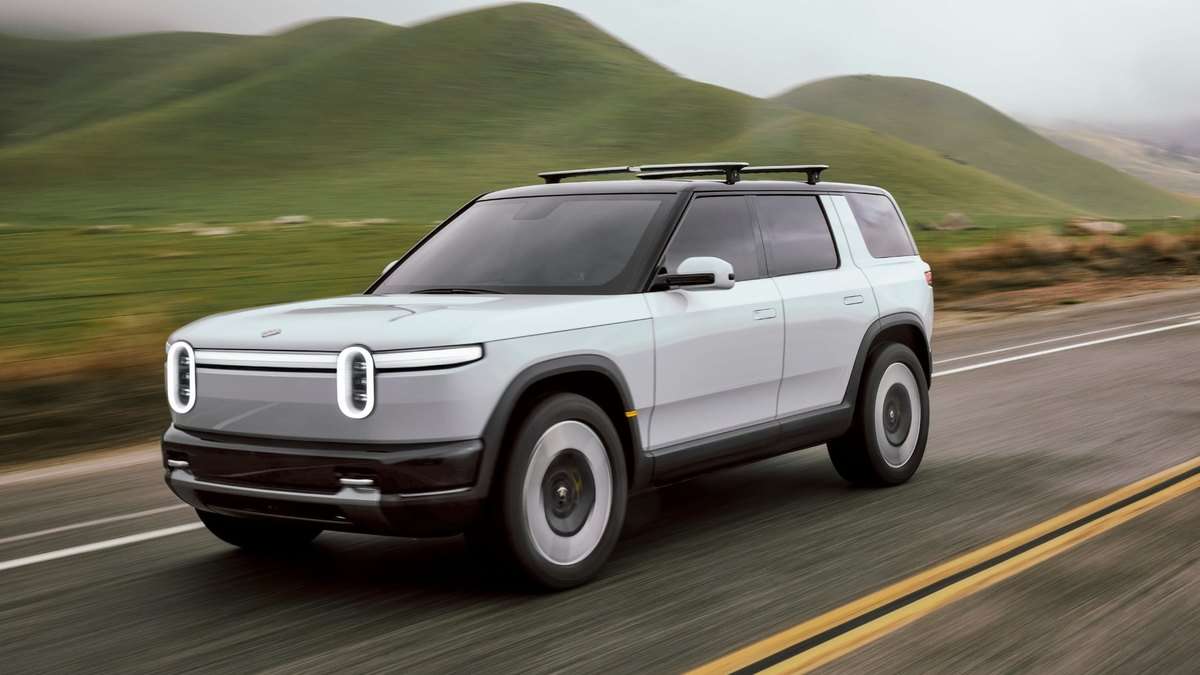

The unveiling of the Rivian R2 generated considerable excitement, yet a critical design element, the rear wiper, has quickly become a focal point of concern among potential owners, particularly those residing in colder climates. This seemingly minor detail has ignited a broader discussion about how manufacturers, including Rivian, validate their vehicle designs against the harsh realities of winter weather. The initial enthusiasm for the R2's aesthetics is now tempered by practical anxieties, suggesting that real-world usability often trumps showroom appeal.
The core of this debate was encapsulated in a recent social media post from a concerned enthusiast, who articulated their apprehension directly:
"I’m convinced that manufacturers, including Rivian, never test their prototypes in actual winter conditions.
R2’s rear wiper will be an absolute nightmare in any snowy climate. Packed with snow, ice, frozen in place for 4 months in the north east. It’s all but guaranteed.
Rivian’s not alone; the Mach-E’s exterior door handles were a pain during the winter months, too.
Hummer EV’s wipers have been god-awful, too. The three of them are sitting in a trough of ice and snow, having to stop short of climbing on the hood to get to the center one to release it from its snowy prison."
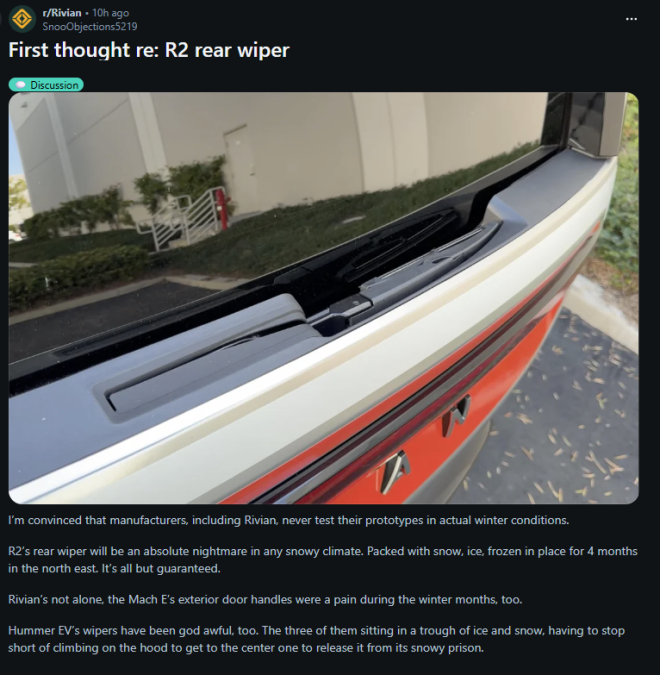
This sentiment resonates deeply with anyone who has battled frozen vehicle components in sub-zero temperatures. The user, SnooObjections5219, shows a persistent issue across several modern EVs, suggesting a systemic oversight in design validation. While aesthetics often drive initial design choices, the practical implications for owners in diverse climates cannot be an afterthought. A wiper that becomes inoperable for a quarter of the year is not merely an inconvenience; it's a safety hazard and a fundamental design failure.
Rivian R2: Addressing Cold Weather Design Concerns
- The Rivian R2 is an upcoming electric SUV designed to offer a more compact and affordable entry into the Rivian lineup, targeting a broader market segment. Its design language largely mirrors the R1S but in a smaller package, aiming for both adventure capability and urban practicality.
- The vehicle is expected to feature a single, dual, or tri-motor setup, promising robust performance and Rivian's signature off-road prowess. Initial estimates suggest a starting price around $45,000, positioning it competitively against other mid-size electric SUVs.
- Concerns regarding the rear wiper's winter performance stem from its recessed design, which some fear could lead to significant ice and snow accumulation. This design choice prioritizes aesthetics but could compromise functionality in regions prone to heavy snowfall and freezing temperatures.
- While some speculate about a heated wiper or drain system, official details from Rivian regarding specific winterization features for the rear wiper remain limited. This ambiguity leaves potential buyers in cold climates questioning the vehicle's real-world readiness for harsh conditions.
One commenter, u/thecanadiandriver101, offered a hopeful, albeit speculative, solution: "Maybe it will have a heater." This reflects a common consumer expectation that modern vehicles, especially premium EVs, should incorporate technology to mitigate such obvious environmental challenges.
However, simply adding a heater might not be the panacea some hope for. While a heated element could prevent initial freezing, the fundamental design of a wiper parked in a recess can still lead to significant ice buildup. Automakers often overlook the physics of meltwater and refreezing, a cycle that can render even heated components ineffective. True winter readiness demands designs that actively shed snow and ice, not just melt it into a new problem.
Another user, u/JustOneMorePuff, reinforced the idea of a potential heater, stating, "One reviewer mentioned it does." This indicates that some pre-production information or early reviews might have touched upon this feature, suggesting Rivian is aware of the potential issue.
Yet, relying on a reviewer's passing mention for such a critical component is hardly reassuring. The industry has a long history of demonstrating vehicles in ideal conditions, often glossing over the compromises necessary for real-world durability. A "drain" or "defrost feature," as mentioned by u/ThisIsPaulDaily, is standard for most rear glass, but it doesn't inherently solve the problem of a wiper arm itself becoming encased in ice. The critical question remains: how effectively does this system prevent the wiper arm from becoming immobilized?
The skepticism is further cemented by u/CipherWeaver's experience: "Often, a heater just means it will melt the snow into water that then freezes. At least, that's my experience with my Tesla 'wiper heaters.'" This firsthand account directly challenges the efficacy of simple heating elements in extreme conditions.
This critique of the Rivian is particularly poignant because it points to a recurring flaw in automotive design: the assumption that a heated component will prevent all ice-related issues. Anyone who has owned a vehicle with heated mirrors or windshields knows that while they help, they don't always prevent ice accumulation in recessed areas or along complex edges. The design of the wiper's resting position is paramount, and if it creates a basin for snow and ice, a heater may only exacerbate the problem by creating a layer of water that refreezes into a solid block.
The final comment from u/sfall, "Doug mentioned the drain but nothing on a heater," shows the inconsistency in information available. This lack of definitive detail from official sources or comprehensive reviews only fuels owner anxiety.
The concerns surrounding the Rivian R2's rear wiper are not mere nitpicking; they are valid questions about fundamental design choices and their impact on daily usability and safety. Manufacturers must move beyond demonstrating vehicles in sunny California and put their prototypes through rigorous, long-term testing in the harshest climates where these vehicles will actually operate. Anything less is a disservice to the consumer and a costly oversight for the brand.
Image Sources: Rivian Media Center
Noah Washington is an automotive journalist based in Atlanta, Georgia. He enjoys covering the latest news in the automotive industry and conducting reviews on the latest cars. He has been in the automotive industry since 15 years old and has been featured in prominent automotive news sites. You can reach him on X and LinkedIn for tips and to follow his automotive coverage.
Set Torque News as Preferred Source on Google
Follow us today...




Comments
Rivian has already stated…
Permalink
Rivian has already stated the rear wiper will have a heater and a drain, as well as a way to set it up for winter operations, probably by raising it out of the recess. While reducing the R2's efficiency a bit, having it preset out of the recess during winter will certainly allow it to operate.