
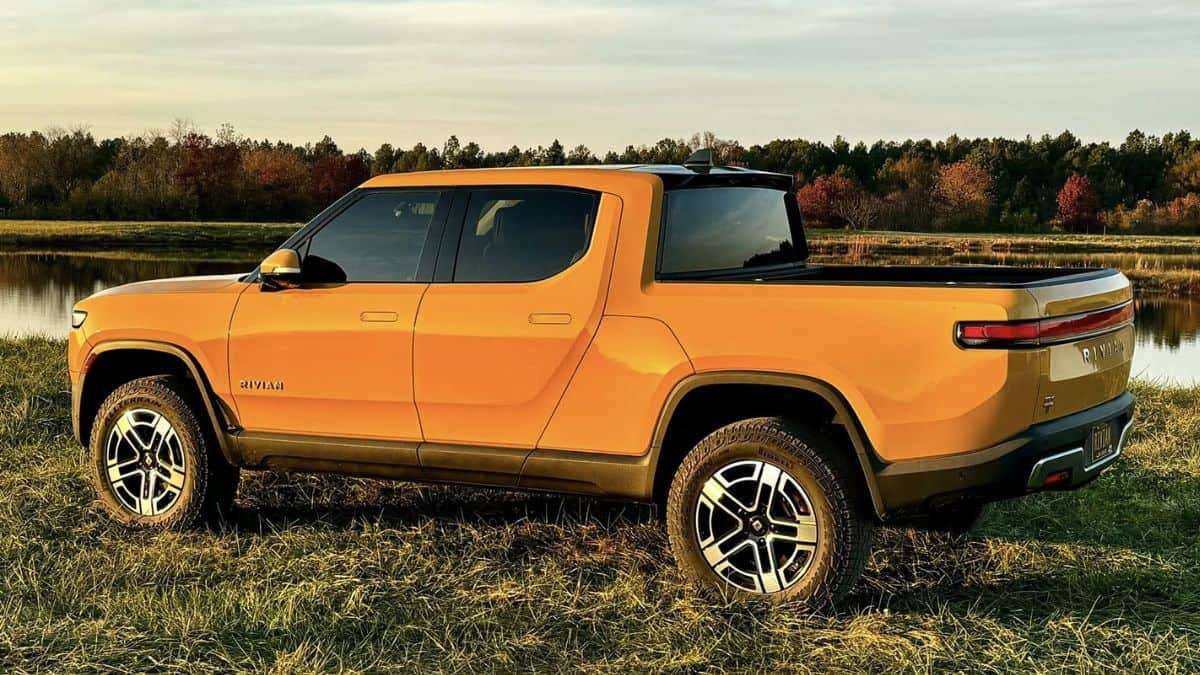

Most vehicles are judged in their first few months on the road. Reviews focus on how they drive when they are new, how fast they accelerate, and what features stand out early on. What often gets lost is how a truck performs once the novelty wears off and real ownership begins, when miles accumulate quietly and expectations shift from excitement to dependability. For electric trucks in particular, that long-term picture is still forming and many drivers are eager to see what holds up once the odometer climbs.
That's what made a recent post in the “RIVIAN Electric Vehicles Discussion” group on Facebook stand out. George Todd shared a refreshingly straightforward update on his Rivian R1T after living with it for more than three years, and his experience cuts against many of the lingering doubts surrounding electric trucks.
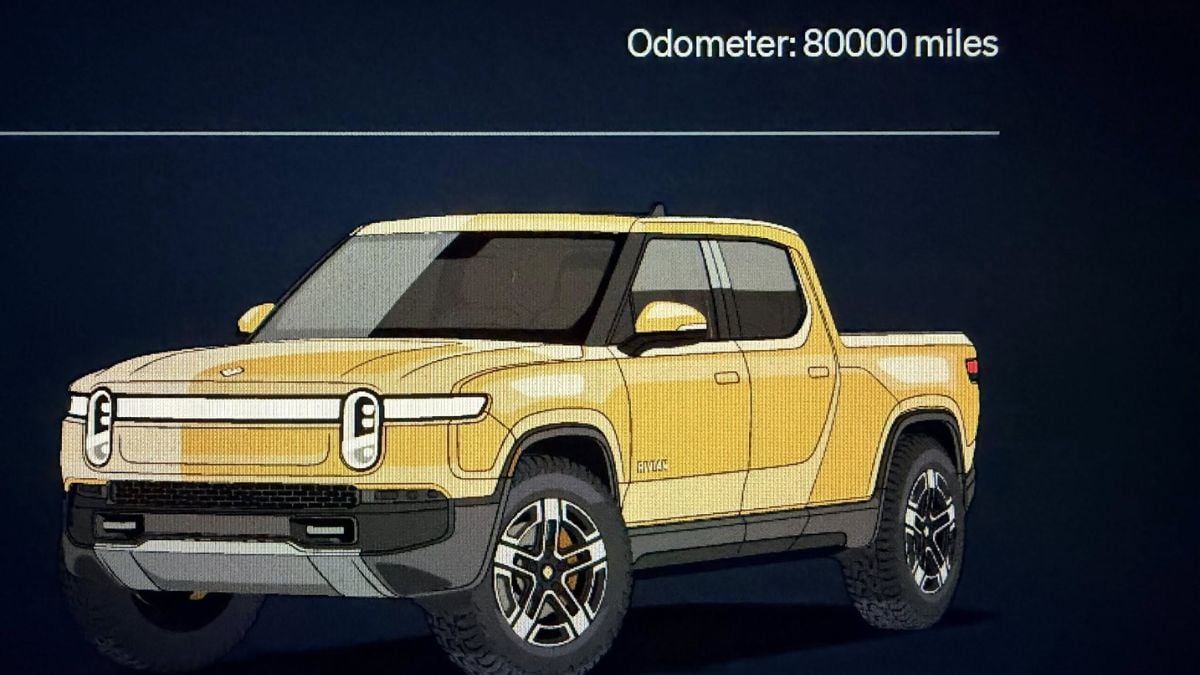
Here is how George summed it up in his own words: “3 years and 4 months later, I have racked up 80,000 trouble free miles. One of the best trucks I've ever had! The range is still essentially the same as when I bought it. It’s got no battery degradation and no major service work. Just tires. I hope everyone is having a similar experience!”
Long-Term Ownership Tells the Real Story
Eighty thousand miles is no longer a honeymoon phase. That kind of mileage represents real-world use through different seasons, road conditions, charging habits, and daily routines. For an electric pickup like the Rivian R1T, it also represents thousands of charging cycles and countless opportunities for something to go wrong. The fact that George’s truck has made it this far without major service visits is meaningful in a segment that still feels new to many buyers.
What stands out most is his comment about range stability. Battery degradation is one of the most common fears among people considering an EV, and it is a topic that comes up frequently in owner forums. George’s experience suggests that, at least in his case, those fears have not materialized in a noticeable way. We’ve seen this in other Rivian R1S customer service stories, where owners have said they genuinely love the support experience when nothing has gone wrong.
Battery Longevity Remains the Biggest Question
For many shoppers on the fence about electric trucks, battery longevity is the deciding factor. The idea of an expensive battery replacement looms large even though most modern EV batteries are engineered to last far longer than early skeptics expected. George’s report of no noticeable degradation after more than three years provides a reassuring data point, especially when paired with similar long-term ownership accounts.
It is also important to remember that battery health is influenced by a range of factors, including charging habits, climate, and driving style. While one owner’s experience will never tell the entire story, these real-world examples help paint a more balanced picture than worst-case scenarios alone. When drivers share mileage milestones instead of failure points, it gives prospective buyers a more realistic sense of what ownership can look like.
Why Trouble-Free Ownership Rarely Goes Viral
One of the commenters under George’s post, Kevin Langan, touched on an important truth about online automotive discussions. He wrote, “Congratulations! All you ever hear about is problems. It would be nice to know how many more have experiences like yours as compared to problems.”
Kevin's got a decent point. Smooth ownership does not generate urgency or outrage, so it rarely travels as far as negative experiences. People are far more likely to post when something breaks than when everything works as expected. That imbalance can create a distorted view of reliability, especially for newer brands like Rivian that are still building public trust.
Stories like George’s help counter that effect. They remind readers that for every post about a failure, there may be many more owners quietly driving thousands of miles without incident. Those voices matter just as much, even if they do not dominate the conversation.
Addressing Battery Anxiety Head-On
Another comment that stood out came from Dan Liese, who admitted, “I have been looking at electric vehicles for a while and still concerned about the longevity of batteries and then the cost of replacing the battery set up when they go.”
That concern is completely understandable. Battery replacement costs are often cited without context, and worst-case figures tend to stick in people’s minds. What often gets lost is how infrequently full battery replacements are needed and how warranties, degradation buffers, and real-world usage patterns play into long-term costs. While no vehicle is immune to aging, examples like George’s show that modern EV batteries are holding up far better than many initially feared.
It’s also worth noting that electric trucks eliminate several traditional maintenance items entirely. There are no oil changes, no exhaust systems, and far fewer moving parts in the drivetrain. Over time, some of those savings can help offset other ownership costs and reshape how drivers think about long-term value.
The Overlooked Role of Tires in EV Ownership
As simple as it sounds, George’s comment that his only major expense has been tires opens the door to an often-overlooked topic in EV ownership. Electric trucks are heavy, and they deliver instant torque, both of which can accelerate tire wear.
William Shepherd asked a practical follow-up question, “How many sets of tires have you purchased over those 80K miles?” George replied, “I’m on my 3rd set. I got 30k miles out of the first, but the second had an early demise thanks to road hazard debris.”
Tires can have a significant impact not just on wear costs, but also on efficiency and range. Small changes in rolling resistance, tread pattern, or wheel setup can lead to noticeable differences in real-world performance. We’ve seen this in other real-world Rivian tire efficiency stories, where changes in tread and rolling resistance made a noticeable difference in daily driving range.
Speed also plays a role in how efficiently an electric truck uses energy. Even modest reductions in cruising speed can stretch range farther than many drivers expect, especially on longer trips. That relationship becomes clearer in Rivian R1T speed‑versus‑range testing.
A Broader Pattern Is Emerging
When George’s experience is viewed alongside other long-term Rivian ownership stories, a pattern begins to form. These trucks are not perfect, and no vehicle ever is, but many owners are finding that the core elements that matter most over time are holding up well. Reliability, consistent range, and minimal service needs are becoming recurring themes rather than exceptions. Owners have echoed this in high‑mileage Rivian R1T ownership reports, reinforcing that these trucks can handle significant mileage without falling apart.
I think what makes George’s post so compelling is not just the mileage number, but the lack of spectacle surrounding it. In an era where automotive conversations often swing between hype and outrage, a calm, matter-of-fact ownership update feels refreshing. It suggests that the real success of electric trucks may not come from headline-grabbing features, but from quietly meeting expectations over the long haul.
They encourage a more balanced discussion about electric vehicles, one that acknowledges concerns without letting them overshadow positive, real-world outcomes. If electric trucks are going to earn long-term trust, it will be through stories like this that unfold mile by mile rather than moment by moment.
Key Takeaways for Long-Term EV Ownership
Mileage tells the truth. High-mileage ownership reveals far more about a vehicle than early impressions or short-term reviews.
Battery fears deserve context. Real-world experiences show that modern EV batteries can maintain performance well into higher mileage.
Maintenance looks different, not nonexistent. While electric trucks eliminate many traditional service items, components like tires play a larger role.
Quiet reliability matters. Trouble-free ownership may not go viral, but it shapes long-term confidence in a brand.
Your Turn to Share
If you own an electric vehicle, how has it held up as the miles have added up, and what has surprised you most about long-term ownership?
And if you are still on the fence about an electric truck, what concerns or questions would you need answered before making the switch?
Aram Krajekian is a young automotive journalist bringing a fresh perspective to his coverage of the evolving automotive landscape. Follow Aram on X and LinkedIn for daily news coverage about cars.
Image Sources: The “RIVIAN Electric Vehicles Discussion” public Facebook group.
Set Torque News as Preferred Source on Google
Follow us today...







Comments
I put 75k on mine and had to…
Permalink
I put 75k on mine and had to finallly unload it because it was the most unreliable vehicle I've ever owned by far. Not even close. 3 MO tsj to get Into service is unacceptable so basically something was almost always broken. They are on bottom of consumer reports reliability for a reason
I am six weeks short of four…
Permalink
I am six weeks short of four years of Rivian R1T ownership. It has 82,000 miles. It has taken me to and through the sand dunes of Oceano/Pismo Beach, the Hollister Hills Vehicle Recreation area, sloppy muddy roads and muddy fields in North Dakota, and in between it cruises at 70, 80, or 90 without complaint. It is without a doubt, the best and most versatile vehicle I have ever owned.
Plus, I have had virtually no range degradation even with high amperage charging. I charged to 100% last week and had range showing of 313 miles.
I purchased a Quad R1S in…
Permalink
I purchased a Quad R1S in 2024. Currently at 23k miles. First EV purchase and was uncertain; however, it’s been a great experience. Initial range anxiety but my R1S has been accurate! Few issues at the start - slight panel misalignment, a suspension height sensor replacement, axle boots were leaking and needed replaced and a door handle replacement. None of these were specific to an EV vehicle. Rivian fixed them quickly (the Columbus Ohio service team is amazing). The range is great, power is amazing and no range anxiety. No signs of battery degradation. My battery started at 206 miles at 70% and now shows 207 at full charge. I trickle charge overnight at low amps (usually 18 amps as I figured that might help the battery long term and would result in less heat loss). I’m on my second set of tires and loving the zero maintenance. Best part, as funny as it sounds, is controlling the cabin temp while in the garage!!! No exhaust - so prepping the vehicle in the winter while in the garage is awesome (90 degrees and a hot seat/steering wheel when I leave)! All said - I’m a thrilled customer!
Maybe when the solid state…
Permalink
Maybe when the solid state batteries come out I'll look seriously into buying a Rivian. The range isn't quite there yet and this article boasting about only 80k miles shows that there are serious quality concerns when it comes to EVs. I have an 8 year old Durango with 131k and a bad brake caliper as the only issue so far. I donated a Chrysler van with 179k to an animal rescue and it's still going fine. No issues other than an alternator and oil filter housing in all those miles. The issue I see for most people is out of warranty repair for EVs. The thought of a battery or motor replacement is a scary thought. Maybe not that much of a difference but the horror stories you hear make it hard to pull the trigger in a purchase.
It is fair to say, however,…
Permalink
It is fair to say, however, that getting 1/2 the tire life is a not-insignificant difference. That eats up at least some of the oil change savings.