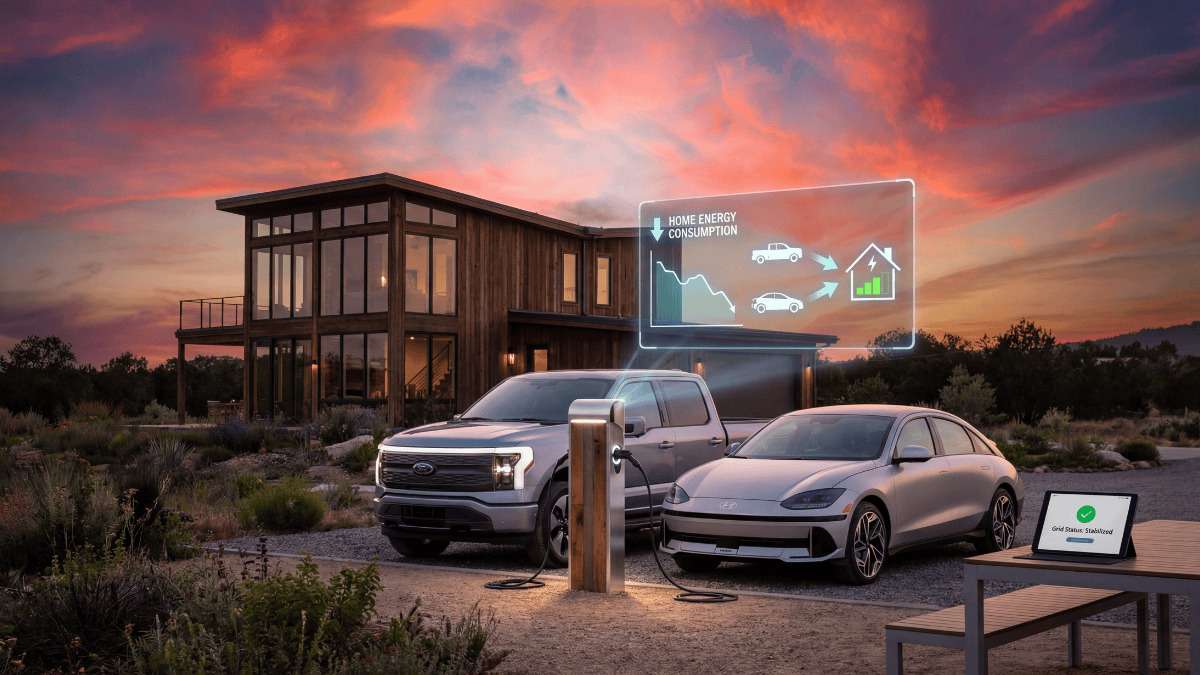

The automotive industry is currently navigating its most significant pivot since the invention of the assembly line. While the initial push for Electric Vehicles (EVs) was centered almost exclusively on reducing tailpipe emissions, a second, more lucrative wave of innovation is cresting: Vehicle-to-Grid (V2G) technology. According to recent market analysis, the global bidirectional EV charging market is projected to reach $5.8 billion by 2036, with 2026 identified as the critical "takeoff point" for mass smart grid integration.
This is no longer a fringe experiment for tech enthusiasts. It is a fundamental reimagining of the power grid, turning every parked EV into a distributed energy resource (DER) that can stabilize national infrastructure and put money back into the pockets of owners.
Understanding V2G: A Brief History of the Two-Way Street
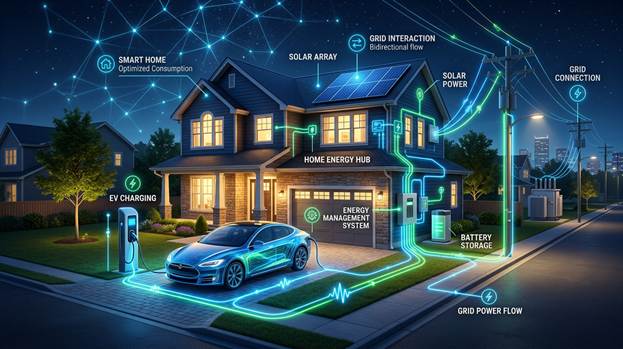
At its core, Vehicle-to-Grid (V2G) is a technology that enables energy to flow bi-directionally between an electric vehicle battery and the public power grid. Unlike traditional charging, where the car is a "load" (consuming energy), V2G allows the car to act as a "generator" (returning energy).
The concept isn’t new. It was first proposed in the mid-1990s by Dr. Willett Kempton of the University of Delaware. Early experiments focused on the theoretical possibility that thousands of parked cars—which sit idle 95% of the time—could provide "regulation services" to the grid, such as maintaining frequency and voltage.
The history of V2G has been a slow burn. For years, the CHAdeMO charging standard (primarily used by the Nissan LEAF) was the only protocol that supported bi-directionality. It wasn't until the early 2020s that the Combined Charging System (CCS) and Tesla’s North American Charging Standard (NACS) began aggressively integrating these features, moving V2G from academic theory to utility-scale pilot programs.
V2G vs. Dedicated Home Batteries: The Battle of the Kilowatts
When homeowners look to gain energy independence—usually in tandem with solar panels—they typically turn to dedicated home batteries like the Tesla Powerwall or Enphase IQ. However, V2G changes the math of home energy management entirely.
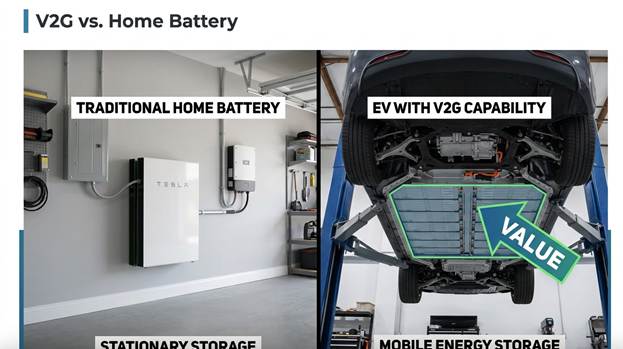
The primary difference is capacity. A standard home battery typically holds between 10 kWh and 13.5 kWh of energy. In contrast, even a "small" modern EV battery, such as the one in a Chevrolet Equinox EV, holds roughly 65 kWh to 85 kWh. High-end trucks like the Ford F-150 Lightning can carry upwards of 130 kWh.
Essentially, an EV is equivalent to five to ten home batteries on wheels. While a dedicated home battery is stationary and always available, the EV offers a massive reservoir of power that can be used for "peak shaving"—discharging energy during the evening when utility rates are highest and recharging in the middle of the night when rates are low. For many, the cost-benefit analysis is shifting: why spend $10,000 on a dedicated wall battery when your $40,000 car already contains a much larger one?
The Hardware Hurdle: What New Owners Need to Know
Transitioning to a V2G-enabled lifestyle isn't as simple as plugging into a standard wall outlet. To unlock this functionality, new owners must navigate three specific requirements:
- A V2G-Compatible Vehicle: Not all EVs are created equal. While the Nissan LEAF and Ford F-150 Lightning were early leaders, manufacturers like Hyundai, Kia, and Volkswagen are just now rolling out "V2X" (Vehicle-to-Everything) capabilities.
- A Bi-directional Charger: Standard Level 2 home chargers are "dumb" one-way valves. V2G requires a specialized bi-directional DC charger or a sophisticated AC inverter setup. These units, such as the Wallbox Quasar 2, are currently more expensive than standard chargers and require professional installation with a "power gateway" to safely disconnect the home from the grid during an outage (to prevent backfeeding and injuring utility workers).
- Utility Approval: Because you are essentially becoming a micro-power plant, your local utility company must approve the interconnection.
Standards and the Rise of Third-Party Chargers
The industry is currently in a "Beta" phase regarding standardization. Historically, the lack of a universal language between the car, the charger, and the grid slowed adoption. However, the ISO 15118-20 standard has emerged as the "digital handshake" that allows different brands of cars and chargers to communicate seamlessly.
We are finally seeing the emergence of third-party V2G chargers. In the past, if you bought a Ford, you had to buy the Ford Charge Station Pro. Moving toward 2026, companies like Fermata Energy, Dcbel, and Emporia are developing universal bi-directional chargers. This competition is expected to drive down hardware costs significantly, making the $5.8 billion market projection a reality as the barrier to entry drops for the average consumer.
How V2G Will Supercharge EV Popularity
The adoption of EVs has recently hit a plateau due to concerns over "range anxiety" and high purchase prices. V2G addresses the "value" side of that equation. When a car is no longer just a depreciating asset but a revenue-generating tool, the Total Cost of Ownership (TCO) plummets.
Utility companies are already launching programs where they pay EV owners to "plug in and help" during heatwaves. By selling power back to the grid during peak demand, owners can offset their monthly car payments. Furthermore, V2G offers the ultimate peace of mind: energy security. In regions prone to hurricanes or grid instability, an EV can power a home for three to ten days, a feature that is becoming a massive selling point for suburban families.
The Road to 2026: The Grid Modernization Catalyst
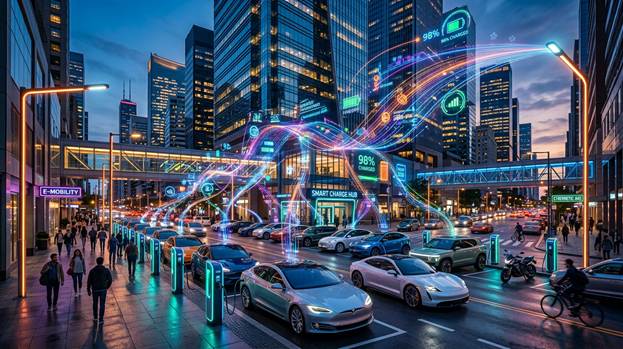
As we approach the 2026 "takeoff point," the focus is shifting toward grid modernization. Governments are realizing that instead of building billion-dollar "peaker" power plants that only run a few days a year, they can incentivize citizens to use their car batteries. The Morningstar report highlights that the acceleration of EV expansion is the primary driver for this $5.8 billion valuation. As more EVs hit the road, the "virtual power plant" becomes more stable and more powerful.
Wrapping Up
The shift toward Vehicle-to-Grid technology represents the "final form" of the electric vehicle. It moves the car from the driveway into the heart of the home’s ecosystem. While the initial costs for bi-directional chargers remain a hurdle, the standardization of protocols and the massive $5.8 billion market potential suggest that by 2026, V2G will be a standard expectation for any new EV buyer.
By providing a battery capacity that dwarfs traditional home storage and offering a way for owners to monetize their vehicles, V2G is the key to making the transition to sustainable energy not just an environmental choice, but a financial one. The grid of the future isn’t just made of wires and poles; it’s made of millions of cars, all working together to keep the lights on.
Disclosure: Images rendered by Artlist.io
Rob Enderle is a technology analyst at Torque News who covers automotive technology and battery developments. You can learn more about Rob on Wikipedia and follow his articles on TechNewsWord, TGDaily, and TechSpective.
Set Torque News as Preferred Source on Google
Follow us today...