
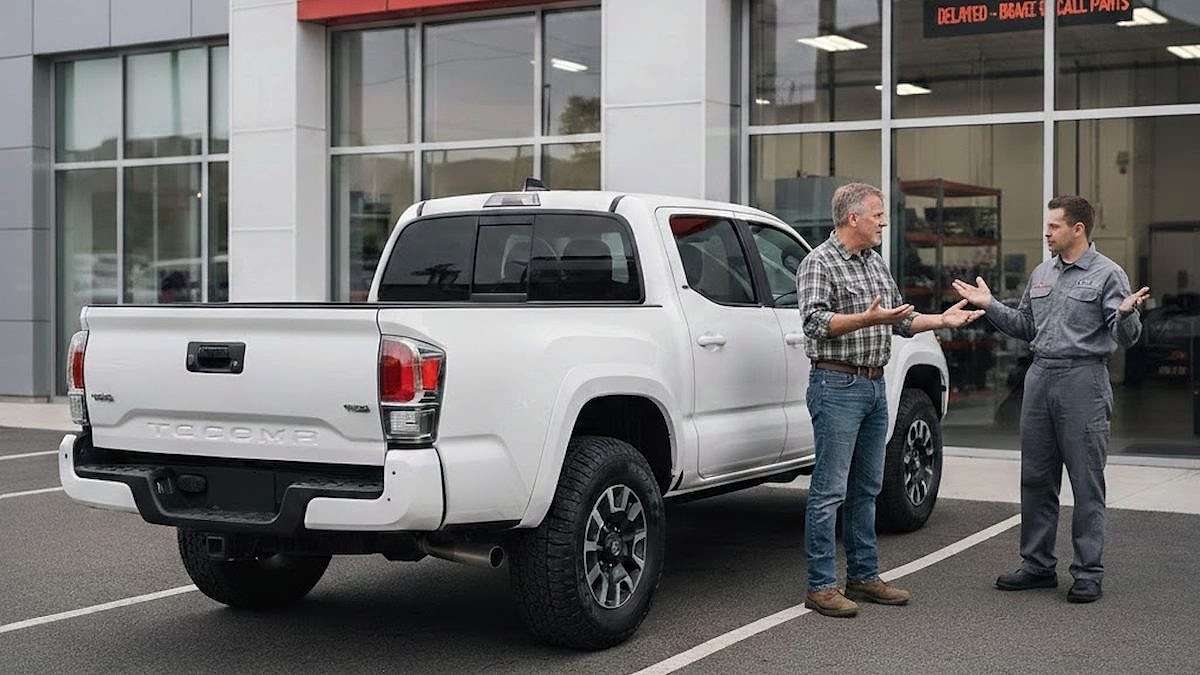

In my research into the latest 4th Gen Tacoma owner experiences, I found a recent post shared in a Facebook community of Toyota truck enthusiasts; Don Nelson from Ohio highlighted growing concerns about the disconnect between Toyota’s sales success and the logistical failures of dealership service departments.
Don says,
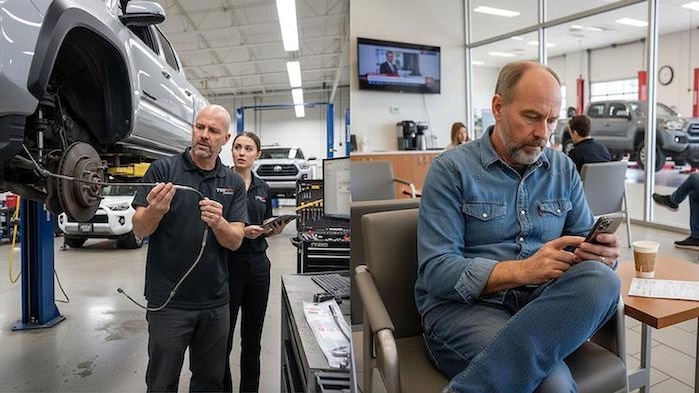
“Brake recall done. Good sales experience, but disappointed with the service department. Called to schedule my 10,000-mile service. Was told that they had to order parts for the rear brake line recall for my Tacoma. An appointment was set for 8:15 the following Tuesday. I arrived about 10 minutes early, and they took me right in. Then I waited for nearly 2 1/2 hours. I expected that when they texted me, it would be ready. I got to the counter and was told it was done, except I would have to come back because they only had the parts to do one side of the brakes. So I drive an hour, wait 2 1/2 hours, only to learn that the job was only half done and I would have to do it all again? Why was I not called and told that the parts didn’t come in? So I left. Got a little way down the road when they called and said they actually had the parts, and if I could come back, they would finish it. I did that and am sitting here waiting once again. I’ve always believed that the salesperson sells you the car, but the service department makes you a returning customer. This dealership has a lot to learn.”
From My View
The situation Nelson describes is what I call the "Incompetence Tax," a hidden cost where owners pay with their time for a dealer's lack of organization. Verified experts at Car and Driver recently warned that the "specific wheel and brake setup may allow dirt or mud buildup to wear through the brake line, potentially causing a failure," underscoring that this isn't just a minor inconvenience but a critical safety hazard.
In my own reporting on Toyota's struggle to bridge the gap between engineering and the customer's reality, I have noted that the truck may be engineered to a high standard, but the ownership experience is judged at the counter.
My Take
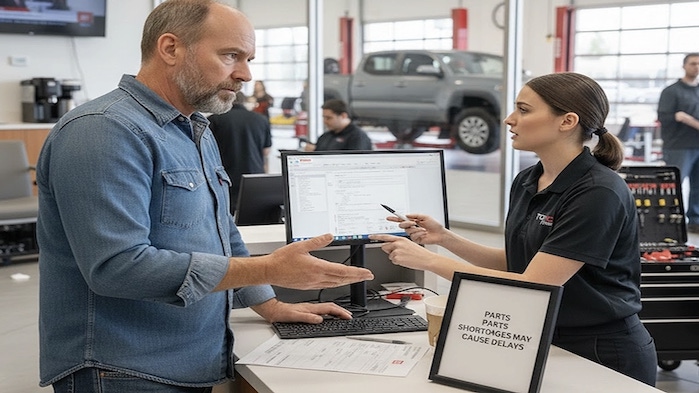
When I look at the "Double-Dip" frustration Nelson endured, it reveals the massive chasm between a smooth sales floor and a chaotic service bay. A report from The Drive highlights that "for any four-wheel drive version of a truck with the sterling reputation of the Toyota Tacoma to have an issue as dumb as 'mud can rip the brake lines off' is pretty frustrating," especially when dealers fumble the fix.
I previously investigated how these logistical nightmares often lead to a "maintenance shock" for owners, and as I stated in my analysis of Toyota's parts availability, dealers are often forced to prioritize high-turnover inventory over shared components.

The Most Potent Metric For Customers
With 30 years of industry experience, I can tell you that the irony of a safety-critical repair being handled with such a lack of precision is exactly what drives owners away from a brand. In 2026, the "bad service" trigger is the most potent metric for customers because it touches on the fundamental trust between a manufacturer and a driver. When a dealer "magically" finds parts only after you have already left their lot, they aren't just wasting your fuel; they are eroding the "Toyota Way" of reliability.
Nelson’s closing "Truth Bomb" about the salesperson selling the car while the service department secures the customer is a universal industry secret that resonates with every person who has ever sat in a plastic waiting room chair for three hours. If you are a 4th Gen owner, you aren't just buying a truck; you are buying into a service network that is currently gasping for air under the weight of these new-generation recalls.
Critical Red Flags for Tacoma Owners
This 2025 Tacoma service failure stands out as a warning for the industry. Here are the critical red flags that every owner should know.
1. The "Half-Safe" Liability: Releasing a truck after servicing only one side of a rear brake line recall is a massive breach of protocol. Recalls are binary; they are either compliant or non-compliant. Driving with asymmetrical braking components is a safety risk no Service Manager should ever authorize.
2. The "Parts Phantom" Phenomenon: When parts "suddenly appear" after a customer leaves, it exposes a failing Inventory Management System (IMS). In 2026, tech-forward shops use real-time tracking, while lagging dealers still rely on manual bin-checks that waste hours of your time.
3. The 4th Gen Logistical Nightmare: Toyota’s new global architecture requires specialized components that regional dealers are struggling to stock. This "Inventory Scarcity" is the engine behind the Incompetence Tax, the price you pay for their logistical errors.
4. The Sales vs. Service Chasm: Dealerships traditionally over-invest in the "Front-End" (Sales) while leaving "Fixed Ops" (Service) with outdated tools. When a service advisor can't fulfill a salesperson's promise, the brand’s E-E-A-T score vanishes instantly.
5. Safety vs. Logistics: Because this recall involves mud wearing through brake lines, treating it as a "routine" scheduling error shows a dangerous lack of authority regarding this NHTSA-mandated fix.
Community Technical Feedback
The frustration isn't limited to Facebook. One user on Reddit noted the severity of the situation, stating, "Well, when the brake fluid drains out, at least the stupid truck can't hit the brakes for me anymore!" reflecting the dark humor many owners use to cope with safety risks.
This owner highlighted the vulnerability of the new design, saying, "The recall notice says they're still working on a solution," even as they wait in limbo for parts that may or may not be in a back room.
Key Takeaways
- The Incompetence Tax is real: Owners are losing hours of their lives due to poor dealership logistics and poor communication.
- Safety is not a "half-fix": Brake recalls require 100% completion; leaving a shop with only one side serviced is a liability.
- The Service Counter is the new Sales Floor: Brand loyalty in 2026 is built on the reliability of the repair, not the charisma of the salesperson.
- Logistics are failing engineering: Toyota’s engineering remains ambitious, but the dealer network is struggling to keep pace with specialized parts needs.
Toyota Needs To Fix More Than the Brakes
It’s the ultimate betrayal of the 'Toyota Way', you drive an hour, wait two more, and realize the left hand doesn't know what the right hand is doing. If Toyota wants to keep 4th Gen owners for the long haul, it needs to fix more than just the brake lines; it needs to fix the service counter.
It’s Your Turn: Have you faced a "parts phantom" at your local Toyota dealer where a simple fix turned into an all-day ordeal? Click on the "Add new comment" below and let me know your story.
About The Author
Denis Flierl is a 14-year Senior Reporter at Torque News and a member of the Rocky Mountain Automotive Press (RMAP) with 30+ years of industry experience. Based in Parker, Colorado, Denis leverages the Rockies' high-altitude terrain as a rigorous testing ground to provide "boots-on-the-ground" analysis for readers across the Rocky Mountain region, California EV corridors, the Northeast, Texas truck markets, and Midwest agricultural zones. A former professional test driver and consultant for Ford, GM, Ram, Toyota, and Tesla, he delivers data-backed insights on reliability and market shifts. Denis cuts through the noise to provide national audiences with the real-world reporting today’s landscape demands. Connect with Denis: Find him on LinkedIn, X @DenisFlierl, @WorldsCoolestRides, Facebook, and Instagram.
Photo credit: Denis Flierl via Toyota
Set Torque News as Preferred Source on Google
Follow us today...



Comments
disheartening to witness…
Permalink
disheartening to witness service failures like this. customer experience must be prioritized, right?
I only take my Tacoma to the…
Permalink
I only take my Tacoma to the dealership for recall service because you can't get it done anywhere else.
The only other time I did, they accepted an appointment to change the oil, and didn't change the oil. If I have to take it somewhere what for oil changes, I may as well have somewhere else do the rest of the maintenance.
This sounds like our Toyota…
Permalink
This sounds like our Toyota service center. They don't put parts back on that they took off. Put the drain plug on with an air ratchet. We had to have my husband's first 4Runner towed to the dealership because, after 3 hours of sliding back and forth on the garage floor, he was unsuccessful in getting it off. And, the oil was already drained. My husband used to run an oil change garage, he knew what he was doing. Toyota......not so much. They NEVER clean the interiors of the vehicles before they sell them. They don't even clean the windows inside. And yet, the salesman tells you they did a thorough detailing!!!!! Its not his fault the service department SUCKS!!!!!
I have had multiple issues…
Permalink
I have had multiple issues with service pertaining to my 4th TRD Sport. The brake remedy took way too long to be released for my truck. I bought the truck in April of 2024 and the brakes have squealed very loudly every single morning. I was told by the service department that Toyota is aware of the issue but has no plans to remedy it.
Secondly, I brought my truck in for a routine oil change. I dropped it off at the dealership at 6am and dropped my key in the drop-box because my truck was "first on the schedule". I'm at work when 3pm rolls around and I never got a call or text saying my truck is ready. I spent 2 hours calling over and over again until I finally got a call back from the service manager. According to him, the staff had lost the keys to the drop-box and every vehicle parked in the drop area had been left all day with no work done. Furthermore, after their shuttle brought me back to the dealership, they still couldn't get into the drop-box so
I couldn't even take my truck home. They had to issue a rental for me and I had to go back the next day after work, go through the process of returning the rental, then pick up my truck with it's finally completed OIL CHANGE. Never have I experienced such a mess with auto service. This is my first Toyota and I absolutely love my truck, but all the recalls, service issues, brake issues, and cheap paint are making me think twice about purchasing another.
Is this a bot post? This is…
Permalink
Is this a bot post? This is a third gen tacoma picture and we're talking about a recall affecting only 2024 models which was going back over a year ago, not 2026. What a stupid article, sounds like the dealership does need to get their belonging together but how is this news. There are parts shortages all over with every industry and car manufacturer.
Bought a 2025 Toyota Camry…
Permalink
Bought a 2025 Toyota Camry XLE (hybrid). After 500 miles, I have driver seat isuue with the lumbar component which keeps poking/popping me in the back which is very uncomfortable. Still waiting for a repair from Toyota on this. Now, we have a safety recall (Toyota recall no. 25TA15) on the Camrys because of the hybrid battery inverter bolt may not be torqued properly and can cause loss of power or a fire while driving, but do not have a repair for it yet. Why would you send out a safety recall without a fix/repair ready to go? Unreal!