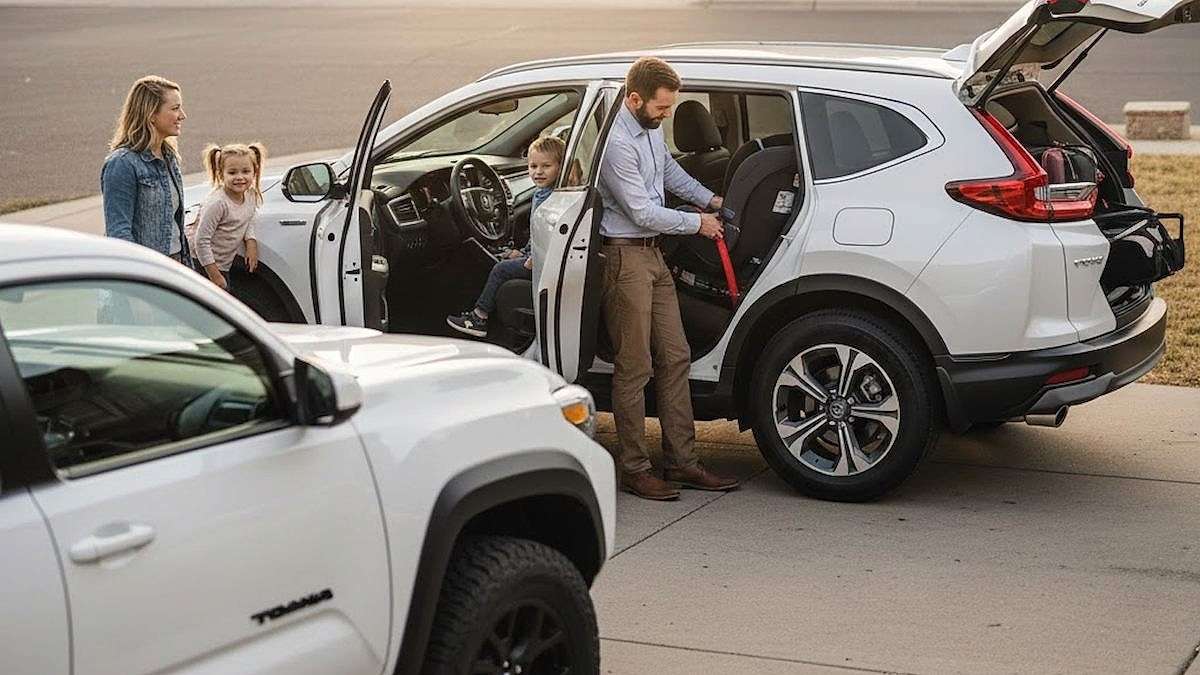

One dad is ditching his sluggish 2.7L Toyota Tacoma for a 2026 Honda CR-V, revealing why 247 b-ft of instant torque beats the RAV4 Hybrid for family road trips.
In my recent research on owner transitions, I found a compelling post shared in a Facebook community of 6th-generation Honda SUV enthusiasts. Ryan Miller highlighted growing frustrations with the "underpowered" 2.7L engine in his low-mileage 2022 Toyota Tacoma and the struggle to balance truck loyalty with the comfort of a growing family.
Ryan says, “I currently have a 2022 Toyota Tacoma, with barely 17,000 miles on it. I’m looking to trade for a 2026 Honda CR-V, and I’m not familiar with them. I’ve always owned a truck. I’m gonna be traveling more for work, and the classic 2.7 4 banger in the Tacoma is severely underpowered and sucks for distance driving. The biggest thing for me is that, since I have the 2.7L in the Tacoma, it struggles when I have to get on the interstate for trips, and it’s definitely not the smoothest ride with the all-terrain tires. I’m at a point with having kiddos where I’m also wanting something more trip-friendly with the family. I’ve loved Toyota, but they’re going all in on the RAV4 hybrid, and I thought the Honda CR-V looked a little roomier in the cargo area. We use my wife’s Chevy Traverse a ton, but for trips where we don’t need such a big vehicle, I thought the CR-V would suit us well.”
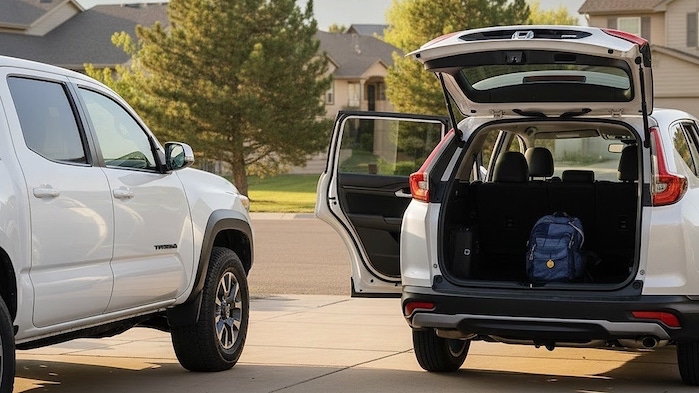
From My View: The 17,000-Mile Turning Point
I’ve spent 30 years in this industry, and I can tell you that Ryan’s situation is more common than most truck enthusiasts want to admit. You buy the Tacoma for the "bulletproof" reputation, but then life happens. You get a job that requires interstate miles, you have kids, and suddenly that 2.7L "Iron Duke" equivalent feels less like a legend and more like a liability.
In my view, Ryan is hitting the "efficiency wall." He has a 2022 Tacoma with only 17,000 miles, which in the Toyota world is basically brand new. However, the 2.7L four-cylinder engine (2TR-FE) produces only 159 horsepower and 180 lb-ft of torque. When you try to merge into 75 mph traffic with a car seat and a stroller in the back, that truck isn't just slow; it's exhausting to drive.
Don't Miss These
1. Torque is King for Merging: The 2026 CR-V Hybrid delivers its 247 lb-ft of torque instantly, whereas the 2.7L Tacoma requires you to floor it to 3,800 RPM just to find its peak 180 lb-ft.
2. The Cabin Noise Gap: Truck tires and body-on-frame designs create a "vibration fatigue" on long trips that unibody SUVs like the CR-V simply don't have.
3. Resale vs. Utility: While the Tacoma holds its value better than almost any vehicle, that value doesn't buy you more legroom or better highway manners.
My Take: Why the 2026 CR-V Hybrid is the "Anti-Tacoma"
Ryan mentioned he’s looking for something "trip-friendly," and he’s wise to question the 2026 RAV4 Hybrid. While Toyota makes a fantastic hybrid, I’ve reported on how the Toyota RAV4 Hybrid's cabin can feel a bit "tinny" compared to the Honda.
The 2026 Honda CR-V Hybrid uses a two-motor system that acts more like an electric vehicle at low speeds. It is incredibly smooth. When you're used to the "hunt-and-peck" shifting of the Tacoma’s 6-speed automatic, the seamless power delivery of the Honda feels like moving from a propeller plane to a private jet.
Who is this for?
This transition is for the "Utility Refugee." It’s for the person who loves the idea of a truck but realizes that 99% of their life is spent on asphalt. Ryan is traveling more for work, and the fuel savings alone are staggering. The Tacoma (2.7L) gets about 21 MPG combined. The 2026 CR-V Hybrid? You’re looking at 37-40 MPG. You are literally doubling your range.
How does it solve the problem?
The "How" is found in the chassis. The Tacoma uses a leaf-spring rear suspension designed to carry 1,000 pounds of gravel. The CR-V uses a multi-link rear suspension designed to carry your family in comfort. Furthermore, experts at Edmunds have noted that the 2.7L Tacoma is "coarse" and "noisy" under load, a sentiment Ryan clearly feels every time he hits the interstate.
Why choose Honda over the RAV4?
Ryan’s hunch about the cargo area is correct. I’ve written extensively about how the Honda CR-V provides a more "usable" cargo floor than its competitors. Even the pros at AutoGuide confirm that the CR-V offers more interior and cargo space overall, which is a "major difference" for families.
Key Takeaways for Transitioning Owners
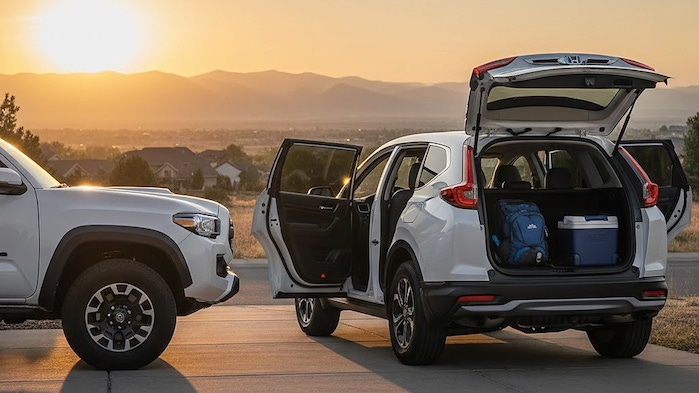
- Cargo Capacity: The CR-V offers 76.5 cubic feet of space with the seats down; the RAV4 tops out around 70.
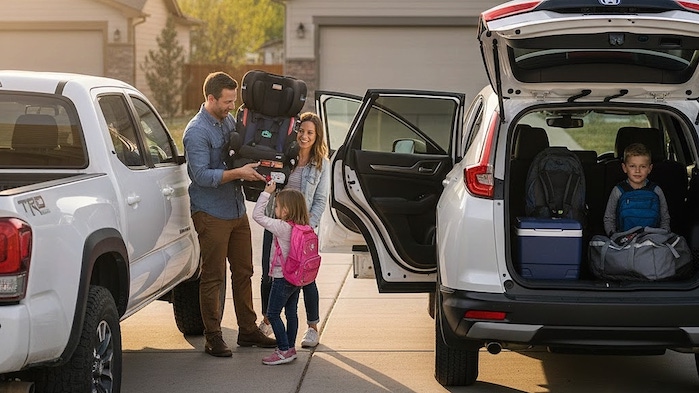
- Rear Doors: Honda’s rear doors open nearly 90 degrees, which is a lifesaver for loading car seats.
- Power Delivery: The 77 lb-ft torque advantage over the RAV4 (247 vs 170) is what makes the Honda feel more "responsive" in city traffic.
Community Technical Feedback
Community feedback on the 6th-generation CR-V has been overwhelmingly positive, particularly from those who are upgrading from noisier vehicles. One Reddit user noted the change in refinement, stating, "It is virtually silent minus general road noise and has a lot more zip to it," referring to the hybrid powertrain's immediate response compared to gas-only models.
Another owner highlighted the long-distance comfort, noting, "This is the first car we've ever owned where we could ride down the highway at 70mph, listen to the radio and carry on a conversation without having to raise our voices," as noted in this Reddit thread. For someone like Ryan, who is tired of the Tacoma's engine drone, this is the ultimate "win."
The "Must-Have" Recommendations
If Ryan makes the jump, I have a few specific recommendations to ensure he doesn't regret the trade. First, he must go for the Sport Touring Hybrid trim. This is the only way to get the acoustic glass and the Bose sound system, which are critical for those long work trips he mentioned. I’ve previously warned readers about Honda's lower trims having more road noise, so don't skimp there.
Secondly, he should check the "TrailSport" trim if he wants to keep a bit of that "truck look." It adds a bit of ruggedness without the bone-jarring ride of all-terrain tires on a solid rear axle. In my report on why the CR-V TrailSport is the sweet spot for former truck owners, I noted that it balances a rugged aesthetic with the "marshmallow" ride quality people expect from Honda.
A Logical Evolution
The 2022 Toyota Tacoma is a legendary vehicle, but it isn't a magic wand that solves every lifestyle need. Ryan Miller’s transition is a logical evolution toward comfort, efficiency, and family utility. By choosing the 2026 Honda CR-V Hybrid over the RAV4, he is prioritizing the 77 lb-ft torque advantage and the class-leading cargo space that will make his work trips and family vacations significantly less stressful.
What Would You Do?
If you had a 2022 Tacoma with only 17,000 miles, would you trade that legendary Toyota reliability for the comfort and 247 lb-ft of torque found in a 2026 CR-V? Or is the "underpowered" truck engine a small price to pay for a vehicle that will last 20 years? Leave a comment in the red “Add new comment” link below and let us know your take!
About The Author
Denis Flierl is a 14-year Senior Reporter at Torque News and a member of the Rocky Mountain Automotive Press (RMAP) with 30+ years of industry experience. Based in Parker, Colorado, Denis leverages the Rockies' high-altitude terrain as a rigorous testing ground to provide "boots-on-the-ground" analysis for readers across the Rocky Mountain region, California EV corridors, the Northeast, Texas truck markets, and Midwest agricultural zones. A former professional test driver and consultant for Ford, GM, Ram, Toyota, and Tesla, he delivers data-backed insights on reliability and market shifts. Denis cuts through the noise to provide national audiences with the real-world reporting today’s landscape demands. Connect with Denis: Find him on LinkedIn, X @DenisFlierl, @WorldsCoolestRides, Facebook, and Instagram.
Photo credit: Denis Flierl via Ryan Miller/Gemini
Set Torque News as Preferred Source on Google
Follow us today...