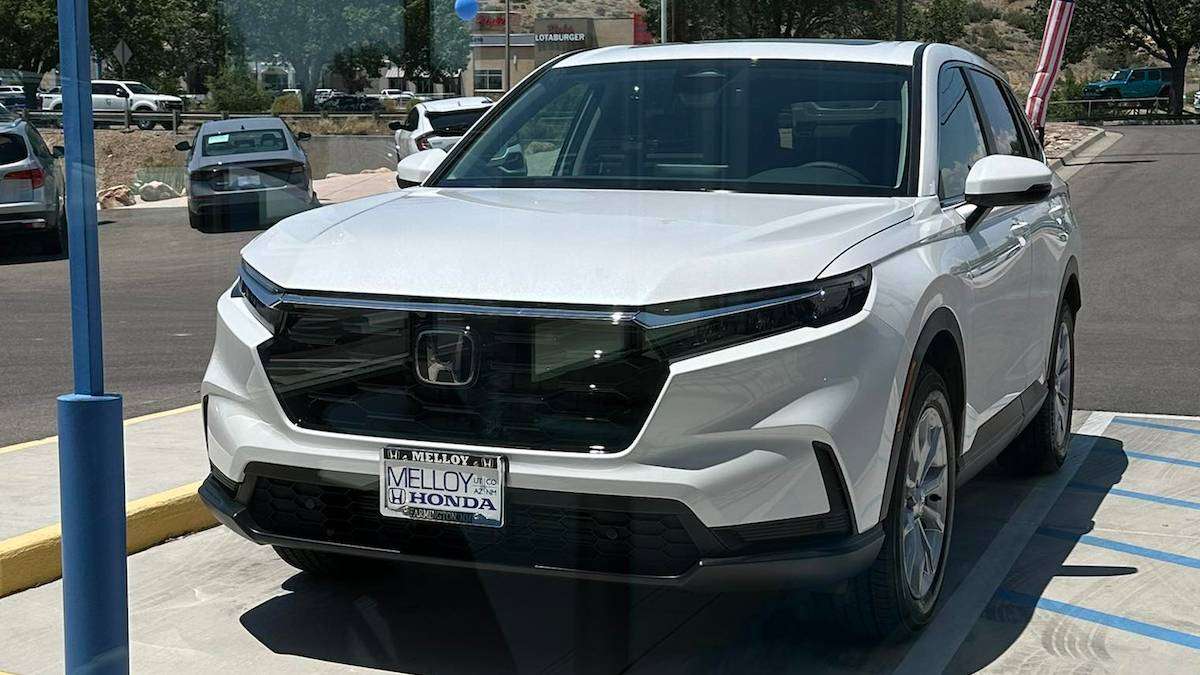

Is the era of the 250,000-mile Honda CR-V officially over?
Recent iSeeCars longevity data indicates that the Honda CR-V has a 10.6% probability of reaching a 250,000-mile threshold, placing it as the lowest-ranked Honda model for extreme longevity compared to the Pilot (13.1%) and Ridgeline (14.7%). While the 6th-generation CR-V remains a top-tier reliability pick, technical analysis of the 1.5L L15BE Turbo and 2.0L Atkinson-cycle Hybrid drivetrains suggests that achieving quarter-million-mile milestones now requires a "Severe Service" maintenance schedule to mitigate high thermal loads and head gasket stress.
In my 30 years of automotive reporting, I’ve tracked the shift from naturally aspirated over-engineering to the high-efficiency, high-pressure systems found in the 2024–2026 models. The "legendary" status of older 2.4L platforms is currently being re-evaluated against modern field data.
As noted in the comprehensive iSeeCars study of over 174 million vehicles, the CR-V’s 10.6% chance of reaching 250,000 miles is still 2.2x higher than the industry average, yet it represents a narrowing margin for owners accustomed to "bulletproof" simplicity. Recent community feedback from owners like Donna Dalpaz underscores a growing concern that this mechanical ceiling is arriving sooner for the latest generation.
The shift toward smaller displacement and electrification has fundamentally changed the blueprint for 250,000-mile survival. While the 2.0L Hybrid powertrain is widely considered the more robust option by Honda Master Technicians, the 1.5L Turbo variants remain prone to oil dilution and gasket fatigue when adhering to the standard 10,000-mile intervals suggested by the Maintenance Minder.
According to updated reliability rankings on iSeeCars, the CR-V maintains a strong 8.2/10 score, but early reports of oil seepage and coolant loss at low mileages suggest that proactive maintenance is the only verifiable path to the quarter-million-mile mark in 2026.
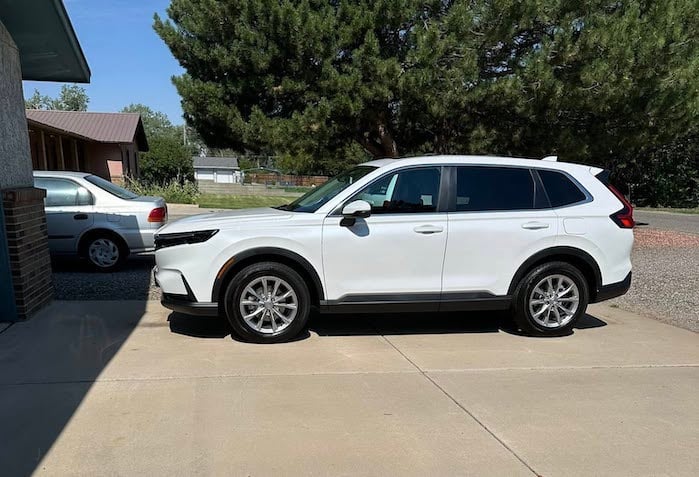
In my recent research into shifting longevity trends, I came across a post shared in a Facebook community of Honda CR-V enthusiasts in which owner Donna Dalpaz highlighted growing concerns about the long-term viability of modern models compared to the brand's legendary past.
It’s the moment every enthusiast fears, realizing that the 250,000-mile dream for your latest investment might be hitting an unexpected expiration date.
Donna says, “My husband was reading an article saying the CR-V is the lowest Honda model with the expectation of hitting 250k miles. We own three Hondas and love them! A 1997 Civic, a 2010 CR-V, and a 2025 CR-V. Now, I’m dreading reading this report.”
From My View: The Legacy vs. Reality Conflict
I remember the 1997 Civic and the 2010 CR-V well. Those vehicles were built on a philosophy of mechanical over-engineering, simple, naturally aspirated engines, and robust transmissions that could shrug off a decade of missed oil changes. When you look at those "legendary" platforms, you see the foundation of Honda's brand equity.
Contrast that with the high-tech 2025 Sport Hybrid or the 1.5L Turbo systems. We have traded that simplicity for direct injection, high-pressure turbochargers, and complex dual-motor hybrid setups. While the efficiency is world-class, the "marathon-running" DNA has fundamentally changed.
Addressing the "Lowest Model" Controversy is about understanding the math of modern complexity. Recent studies suggest the CR-V may face steeper hurdles to reaching the quarter-million-mile mark than its stablemates, like the Pilot or the Ridgeline. This is often due to the higher stress placed on smaller, turbocharged engines in a heavy SUV body. It’s an industry secret that as we push for 40 MPG, the thermal and mechanical loads on internal components skyrocket.
Are you seeing the same thing in your 2024 or 2025 model? I want to hear your story. Leave your comment below.
My Take: Why the 250,000-Mile Goal is Changing
The shift isn't just a rumor. According to a comprehensive longevity study by iSeeCars, the Honda CR-V has a 10.6% chance of reaching 250,000 miles, which actually places it behind the Honda Civic and significantly lower than the brand's truck-based offerings.
I have personally tracked these emerging 6th-generation issues closely, and reports of major mechanical failures on the 2.0L hybrid powertrain are surfacing, challenging Honda's reputation for bulletproof reliability.
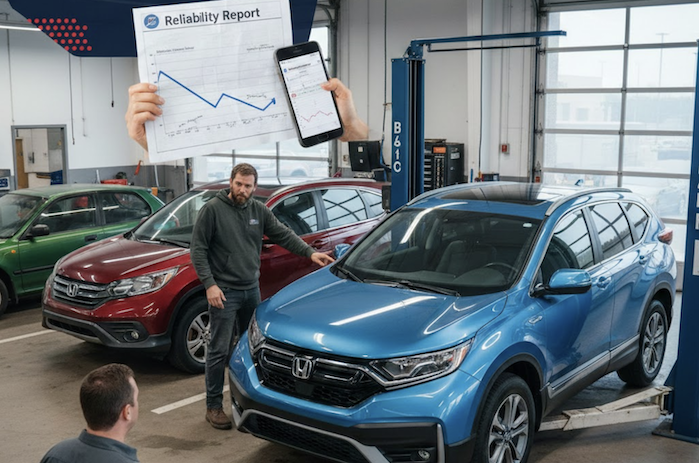
When an engine already shows "200k-mile leaks" at just 4,000 miles, as some owners have reported, we have to ask whether the manufacturing seals are keeping up with the new designs. Further substantiating this, automotive experts at SlashGear noted that while the CR-V remains a top pick, its placement in longevity rankings is "the lowest-placed Honda model to feature" in recent data.
I’ve previously highlighted how a veteran Honda Master Technician is now warning that this reliability nightmare is becoming a reality for too many owners who are seeing their engines fail long before the 100,000-mile mark.
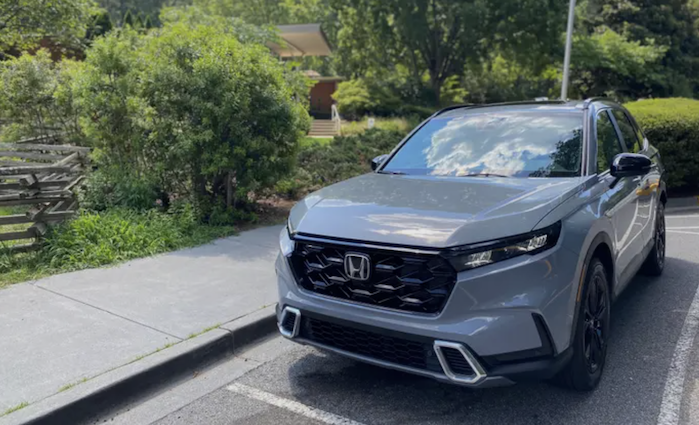
Why This Failed for Us: The Complexity Trap
The "Why" behind the drama is simple: complexity. The 1997 Civic used a "toothpick"- sized throttle body but had almost nothing to go wrong. The 2025 CR-V uses a sophisticated sensor array that can disable the entire vehicle if a single hybrid battery cooling vent is blocked. We are seeing a new "reliability ceiling" where the electronics might outlive the mechanicals, or vice-versa, but rarely do both make it to 250,000 miles together anymore.
What Should CR-V Owners Do? The "250k-Mile" Blueprint
1. The "Turbo-First" Oil Rule
The Problem: Honda's Maintenance Minder often suggests oil changes at 7,500 or even 10,000 miles. For a 1.5L Turbo engine, this is too long. Turbos generate immense heat that "cooks" oil faster.
The Action: Stick to a 5,000-mile full synthetic oil change interval. It is the cheapest insurance policy you will ever buy for your engine’s head gasket and turbo bearings.
2. Hybrid Battery "Breathing" Room
The Problem: If you own the Hybrid Sport or Sport Touring, your high-voltage battery relies on an intake vent (usually located near the rear seats).
The Action: Never block this vent with coats, bags, or pet hair. Once a month, use a vacuum to clear any dust from the intake screen. A cool battery is a long-lived battery.
3. Combat "Short-Trip" Syndrome
The Problem: Modern direct-injection engines (like the CR-V's 1.5L) can suffer from fuel dilution in the oil if the engine doesn't reach full operating temperature.
The Action: If most of your drives are under 10 minutes, take your CR-V for a 20-minute highway "Italian Tune-up" once a week. This burns off moisture and fuel deposits that degrade your oil.
4. Transmission Fluid: Don't Wait for "Life."
The Problem: The CVT (Continuously Variable Transmission) in the 2025 model is sophisticated, but the fluid shears under stress.
The Action: Disregard the "lifetime fluid" myths. I recommend a CVT fluid refresh every 30,000 to 45,000 miles. It’s the difference between a transmission that dies at 120k and one that reaches 250k.
5. The Monthly "Visual" Inspection
The Problem: We’ve seen early reports of oil and coolant leaks on 2025 models with as few as 4,000 miles.
The Action: Pop the hood once a month. Look for "crusty" blue residue (coolant) or dark wet spots (oil). Catching a seal failure under warranty is a "Home Run" for your wallet.
Community Technical Feedback
The community feedback is a vital part of this report. One user on Reddit noted the severity of a design flaw in older models that still haunts the brand's reputation, stating, "Replace radiator or end up replacing tranny like me... had a small leak. Unnoticed. Then boom tranny went out on highway," which you can read in the full discussion here.
Another owner highlighted the vulnerability of the new design and the "phantom" issues that occur at low mileage, mentioning, "The check engine flashes almost always when the engine is cold, cylinder 4 is way too tight," found in this Reddit thread.
Key Takeaways for 2025-2026 Owners
- The 5k Oil Change Rule: Ignore the "Maintenance Minder" if it pushes you to 10,000 miles. Turbocharged engines and hybrids need fresh lubrication to protect those seals.
- Watch the Seals: Early reports of oil leaks at 4,000 miles suggest a potential batch of faulty gaskets. Do a visual check every month.
- Hybrid Battery Care: Keep the rear seat vents clear. Heat is the number one killer of hybrid longevity.
- Extended Warranties: If you plan to keep the car past 100,000 miles, the complexity of the electronics alone makes a factory-backed warranty a smart hedge.
The 250,000 Mile CR-V Is No Longer a Guarantee
The 250,000-mile Honda isn't dead, but it is no longer a "guarantee" that comes with the keys. To reach that milestone in a 2025 or 2026 CR-V, you must be a more proactive owner than those who drove the 1997 or 2010 models. Precision engineering requires precision maintenance.
It's Your Turn: Are you concerned about your new CR-V’s long-term health, or has yours been bulletproof so far? Leave a comment in the red "Add new comment" link below.
Denis Flierl is a 14-year Senior Reporter at Torque News and a member of the Rocky Mountain Automotive Press (RMAP) with 30+ years of industry experience. Based in Parker, Colorado, Denis leverages the Rockies' high-altitude terrain as a rigorous testing ground to provide "boots-on-the-ground" analysis for readers across the Rocky Mountain region, California EV corridors, the Northeast, Texas truck markets, and Midwest agricultural zones.
A former professional test driver and consultant for Ford, GM, Ram, Toyota, and Tesla, he delivers data-backed insights on reliability and market shifts. Denis cuts through the noise to provide national audiences with the real-world reporting today’s landscape demands.
Connect with Denis: Find him on LinkedIn, X @DenisFlierl, @WorldsCoolestRides, Facebook, and Instagram.
Photo credit: Denis Flierl via Donna Dalpaz
Set Torque News as Preferred Source on Google
Follow us today...