
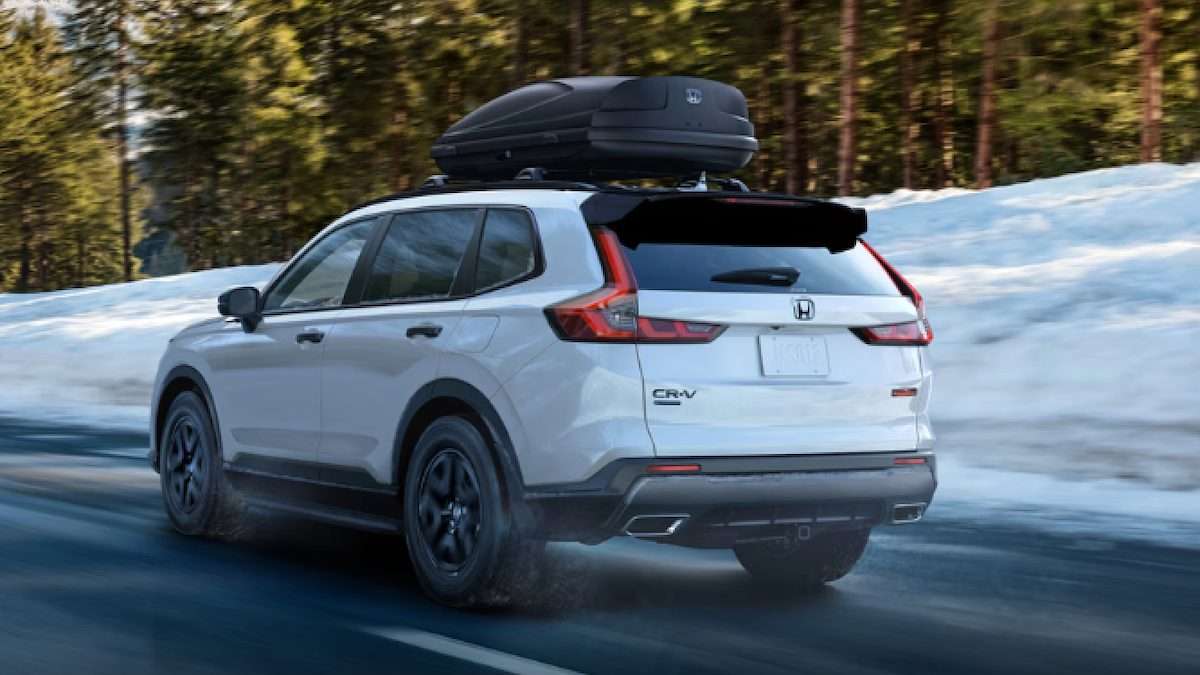

Your high-efficiency Honda CR-V hybrid might be hiding a massive fuel-economy trap the moment the temperature drops, and I’ve uncovered exactly why.
Imagine paying a premium for Honda’s top-tier electrified efficiency, only to watch your fuel economy plummet to the levels of a thirsty, decades-old V6 as soon as the frost hits. While investigating the latest hybrid performance data, I uncovered a troubling account from a new 2026 Honda CR-V Hybrid Sport Touring owner who is witnessing their 40 MPG promise evaporate into a dismal 28-mile-per-gallon reality.
A Honda CR-V owner on this Reddit thread says, “I’m getting 28.9 MPG, and it feels low on my new 2026 CR-V Hybrid Sport Touring. Does anyone else? I bought my CR-V Sport Touring Hybrid about a month ago. In Texas, I was getting 30–35 MPG, which already felt low since many report 40+. After moving to a colder state and driving 2,500 miles, I’m now averaging 28 MPG. I use top-tier gas, I have a light foot (no aggressive driving, normal trips, not all short city driving, and average highway speeds.”
From My View
After 30 years in this industry, I have seen every "miracle" fuel-saver come and go, but the gap between EPA stickers and winter reality for hybrids remains one of the most frustrating hurdles for my readers. When you buy a 2026 Honda CR-V Hybrid Sport Touring, you are paying for the pinnacle of Honda engineering. You expect that 40 MPG "lock" you saw in the brochure. But as the Texas-to-cold-state transplant found out, geography can be a brutal tax on your wallet.
I’ve spoken with many owners like you who feel they’ve been sold a bill of goods. It isn't just about "driving style." It is about a complex web of chemistry, physics, and how Honda prioritizes your comfort over your fuel tank. Earlier this year, I reported that a veteran Honda Master Technician is warning that many 1.5L turbo owners are seeing their engines fail well before the 100,000-mile mark, which you can read in my full breakdown of Honda engine reliability here. While the hybrid is a much better choice than that 1.5L turbo, it isn't immune to the "cold truth."
My Take
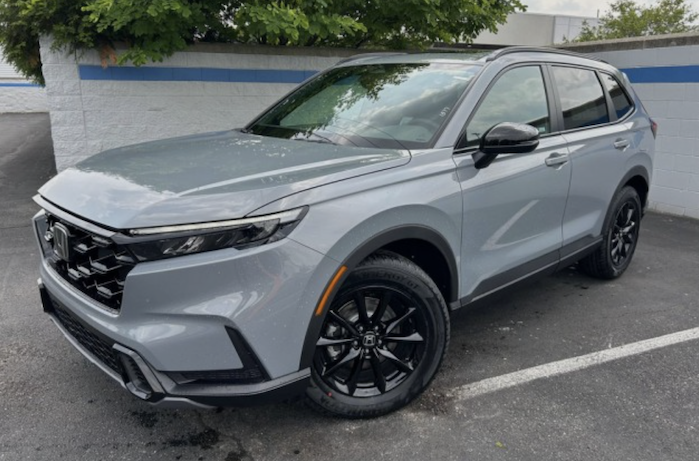
The "How" of this MPG crash is actually quite scientific, even if it feels like a personal insult from the car. In cold weather, your hybrid's internal combustion engine (ICE) must run more frequently. Why? Because, unlike a traditional gas car, where heat is a "waste product," a hybrid wants to shut the engine off to save fuel. However, if the heater is set to 72 degrees, the engine must run to keep the coolant hot enough to warm the cabin.
According to the U.S. Department of Energy, "fuel economy tests show that, in city driving, a conventional gasoline car's gas mileage is roughly 15% lower at 20°F than it would be at 77°F," a figure that effectively doubles for hybrids as the official data shows here. This perfectly explains why our friend's 40 MPG dream turned into a 28 MPG nightmare.
I have written extensively about these frustrations, including a story in which a 2024 CR-V owner felt abandoned by their dealer after a series of issues. You can see why that breach of trust is so damaging to the brand here.
The "Winter Blend" Trap
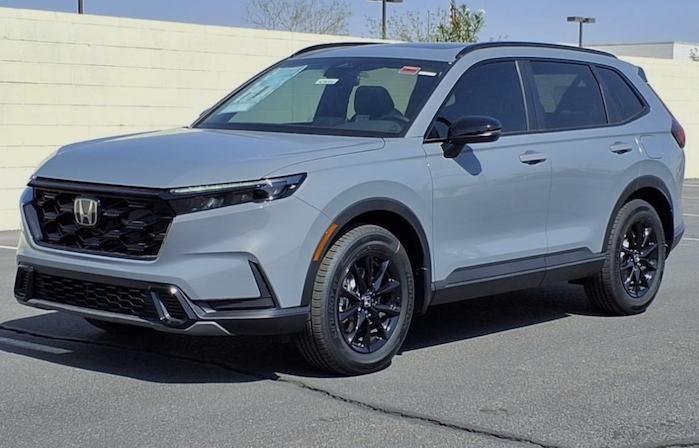
Here is what many dealers won't explain clearly. Refineries switch to "winter-blend" gasoline every autumn. This fuel has a higher Reid Vapor Pressure (RVP), meaning it evaporates more easily to help your engine start in sub-zero temps. The trade-off? It contains less energy per gallon.
As AAA experts note, "a higher butane concentration lowers fuel efficiency, as the winter blend contains fewer energy units per gallon than other gasoline components," which is a key factor in seasonal mileage declines. When you combine low-energy fuel with a battery that loses chemical efficiency in cold weather, you get the 25–28 MPG floor that is currently shocking 2026 owners.
I’ve previously analyzed recurring failures in earlier models, including why the 2017-2022 CR-V 1.5L engines struggled so significantly. It shows that while Honda makes great cars, they aren't perfect and require a specific touch to get the most out of them.
Key Takeaways
- The Heater is a Fuel Thief: Every time you crank the heat, you’re forcing the gas engine to stay on.
- Winter Blend Fuel: You’re paying for fuel that has roughly 1.7% to 2% less energy density than summer gas.
- Tire Pressure Matters: Cold air shrinks, dropping your PSI and increasing rolling resistance.
- Short Trips Are Killers: If your commute is under 5 miles, the engine never reaches its optimal operating temperature, keeping you in the "thirsty" zone for the entire drive.
What CR-V Owners Are Saying
The Reddit community hasn't been shy about this. One owner in Wisconsin shared a sobering reality: "In the summer, without the A/C on... I get 40mpg. In the Wisconsin winter? 27-29 tops," as noted in this detailed owner thread.
Another owner highlighted how even their best efforts sometimes fail, noting, "22.3mpg average on ours doing all the tricks to save gas. I'm convinced there's something wrong with ours, but the dealer is zero help," a sentiment shared by many in this growing discussion. This lack of dealer transparency is something I’ve covered before, specifically when I reported on a 2020 CR-V owner's "nightmare" experience with sudden braking and reliability issues.
Don't Panic, Spring Is Coming
The 2026 Honda CR-V Hybrid Sport Touring remains one of the best SUVs on the market, but it cannot beat the laws of thermodynamics. If you are seeing 28 MPG right now, don't panic. You aren't necessarily doing anything wrong; the car is simply prioritizing your warmth and its own survival over the EPA rating. As the weather warms and the "summer blend" returns to the pumps, you should see those numbers climb back toward the 40 MPG mark.
What’s Your CR-V Experience?
Are you seeing your mileage tank this winter, or have you found a "pro tip" to keep it high? Leave a comment in the red Add new comment link below and let’s get the conversation started.
Next Up: I recently took a deep dive into the 2026 Honda Prelude Hybrid, which offers a "sports car feel with Civic convenience." If you're looking for efficiency without the "boring" SUV tax, check out my first-drive report here.
Denis Flierl is a 14-year Senior Reporter at Torque News and a member of the Rocky Mountain Automotive Press (RMAP) with 30+ years of industry experience. Based in Parker, Colorado, Denis leverages the Rockies' high-altitude terrain as a rigorous testing ground to provide "boots-on-the-ground" analysis for readers across the Rocky Mountain region, California EV corridors, the Northeast, Texas truck markets, and Midwest agricultural zones.
A former professional test driver and consultant for Ford, GM, Ram, Toyota, and Tesla, he delivers data-backed insights on reliability and market shifts. Denis cuts through the noise to provide national audiences with the real-world reporting today’s landscape demands.
Connect with Denis: Find him on LinkedIn, X @DenisFlierl, @WorldsCoolestRides, Facebook, and Instagram.
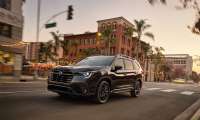
Photo credit: Denis Flierl via Honda
Set Torque News as Preferred Source on Google
Follow us today...



Comments
I have the same problem on a…
Permalink
I have the same problem on a 2026 Crv Trailsport Hybrid. Really cold it drops to 27 mpg.