
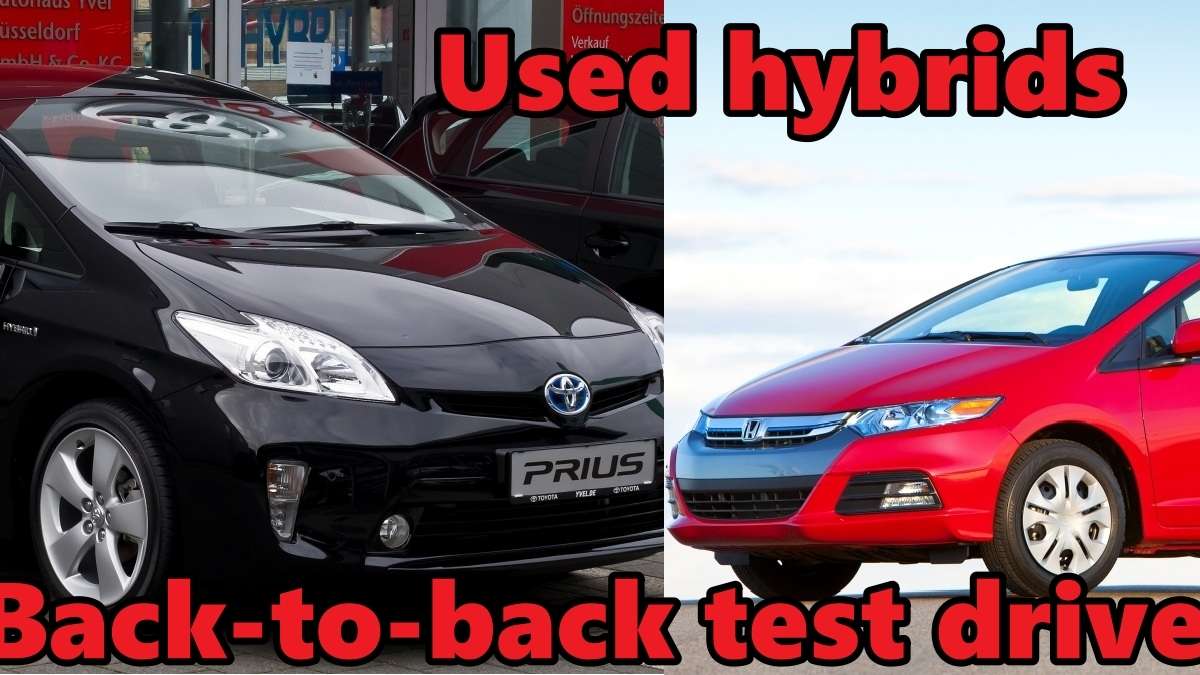

If you follow my work, you probably know that I am not the biggest fan of hybrid or electric vehicles. Eventually, I might be forced to convert, but that time hasn’t come yet. That said, while my car is getting its engine rebuilt, I found myself borrowing cars from various friends and relatives. As luck would have it, I recently drove a few hybrid vehicles that I normally wouldn’t bat an eye at. Some of these include a 2013 Toyota Prius and a 2010 Honda Insight.
These cars are direct competitors and are well over 10 years old now, so I decided to compare them and see how they fare after more than a decade on bad roads and unleaded fuel of questionable quality.
Driving impressions
Being an ardent supporter (and owner) of performance cars, I had to lower my expectations quite a bit. Still, both hybrid models are great commuters and are very frugal. The specs say that the Prius is slightly more fuel-efficient, managing 46 MPG combined (EPA) while the Insight gets 41-42 MPG combined. I found that both cars gravitated around 40-42 MPG in mixed driving, without hypermiling. Both vehicles are full hybrids, meaning they cannot run purely on electricity.
The Honda Insight is down on power, but feels more engaging
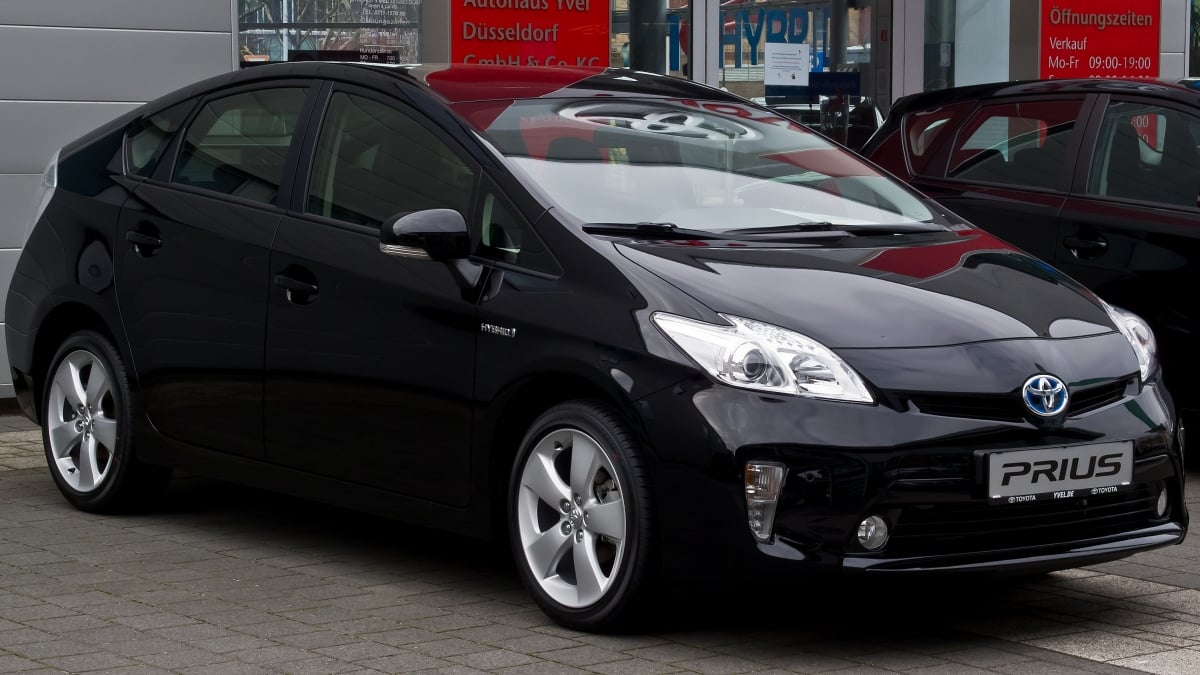
The Prius is powered by the well-known 1.8-liter, Atkinson cycle engine. The normally-aspirated inline-four is paired with a single electric motor. Together, they power the front wheels and produce a combined output of 134 horsepower.
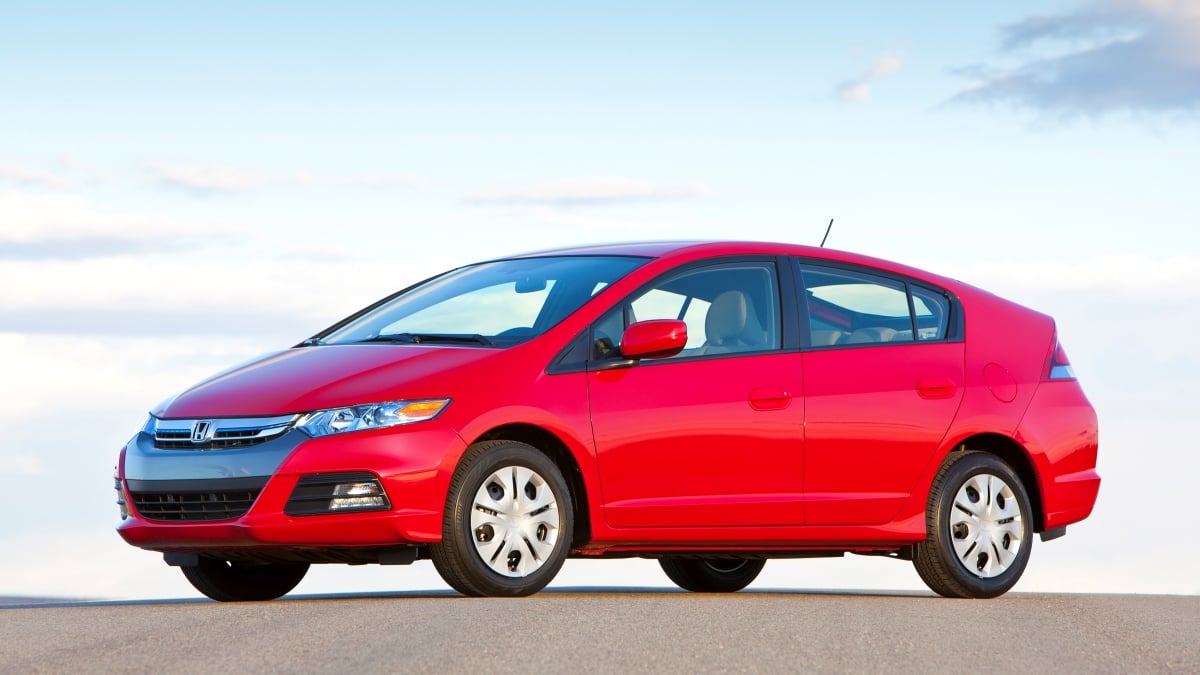
The Honda Insight features a smaller, 1.3-liter normally-aspirated engine, also paired with a single electric motor. Combined output is 101 horsepower.
The Toyota Prius is marginally quicker, with a 0 to 60 mph time of 9.9 seconds compared to the Insight’s 10.2 seconds. However, the Honda feels slightly more exciting. The Insight’s CVT features a start clutch for a smooth start, and has paddle-shifters that allow you to change between six simulated gear ratios.
The Prius doesn’t give you the option of manually “changing gears”, but its electronically-controlled CVT is smoother. It also doesn’t have a clutch to wear out, which is just one of the key reasons why Toyota hybrids continue to dominate the market.
In typical Honda fashion, the Insight offers firmer suspension for a somewhat sporty feel. While I would appreciate the better handling that this results in, it doesn’t make much sense in a frugal hybrid. The Prius, while no Rolls-Royce, glides over the road by comparison.
Neither of the two hybrids can drive on electricity alone, but they can take off without using the internal-combustion engine, if you are gentle enough with the accelerator. I found that the engine kicks in a bit earlier in the Insight, possibly due to the hybrid powertrain featuring a smaller ICE and a less-powerful electric motor. With normal driving, I found that the engine “chimes in” at 12 to 15 mph.
The Prius engine typically comes “alive” at around 25-30 mpg, but only if you are gentle and on even ground. I don’t like to be the person everyone honks at, so in order to keep a good pace, the engine in the Prius kicked in at around 15-20 mph. Still, that initial electric torque without burning fuel is what gets you around 8-10 extra MPG in the city.
The interior
If we compared the first-generation Prius to the Insight, things would have been a lot closer. However, Toyota’s hybrid is a sure winner here. The interior is more futuristic, has better materials, and is more spacious. The Prius has a total passenger volume of 96.2 cubic feet, while the Insight falls behind with 85 cubic feet. Front legroom is the only dimension where the Insight is better, but only by 0.4 inches.
Cargo capacity is also slightly better on the Insight - 15.9 versus 15.7 cubic feet, but that changes once the rear seats fold. Then, the Prius offers 54.5 cubic feet while the Insight falls behind with 31.5 cubic feet. I found both vehicles to be very practical, but the Prius’ extra space does come in handy when hauling stuff. Both hybrids offer great visibility.
Which offers better value for money?
When new, a 2010 Honda Insight had a starting MSRP of $19,800 (approximately $29,431 in 2026 money). The 2013 Toyota Prius was noticeably more expensive, starting at $24,200 when new. That’s $33,786 in 2026 money.
Honda and Toyota are known to retain their value exceptionally well on the used market. That said, the average used price for a 2010 Honda Insight currently, is around $6,000-$6,600. You can find good examples for around $4,000, while high-mileage, running examples occasionally pop up for as little as $1,000.
The 2013 Toyota Prius is newer and retains a bit more of its value. Average used market prices currently range from $9,000-$9,500. You can find good examples for $6,500 while newer, less-driven examples may set you back around $11,500.
Both vehicles are known for reliability. The Insight’s hybrid powertrain is borrowed from the Civic hybrid, so you know it was built to last. In fact, not long ago, I reported on a one-owner, first-generation Honda Insight, which racked up nearly a million miles without serious issues. The same can be said about the Prius. Toyota still uses a version of the same setup even today, in a variety of models. Cheap to run, frugal, and reliable.
I am curious to hear what your thoughts are on these two popular hybrid models. If you have one, feel free to share your experience in the comments below.
Related stories:
4 Things That Make The Toyota Prius Plug-in Hybrid Worth The Price
2025 Honda Civic e:HEV: Finally Better Than The Toyota Corolla Hybrid?
Dimitar Angelov has been an automotive journalist since 2014. His passion for cars and motorcycles led him to take up classic car restoration at the Classic Car Museum in Malta. While living there, he also graduated with a Master's in Media and Communications. Aside from Torquenews, his work can also be seen on Topspeed.com, HotCars.com, Motorheads.com, Jalopnik.com, and his own website, Ridereverie.com, where he also includes motorcycle content. Other relevant experience to the automotive scene include working at a Toyota dealership, professional driving, and automotive insurance. Dim is happy to get behind the wheel of any car and share his impressions. You can follow Dimitar on X, LinkedIn, Instagram, and Facebook.
Image sources: Honda Insight, Toyota Prius
Set Torque News as Preferred Source on Google
Follow us today...







Comments
An older Prius passed me at…
Permalink
An older Prius passed me at 65 mph yesterday very aggressively. It reminded me of the days when Toyotas could take a beating not like my weakling 1.8 Corolla of today. My 78 Celica and 80 Corolla could take hard driving, not the 2013 Corolla I drive now.
Newer cars are burdened with…
Permalink
In reply to An older Prius passed me at… by David Segal (not verified)
Newer cars are burdened with tech compared to older models, so you often get less performance with newer cars, at least when it comes to the more affordable offerings on the market.