
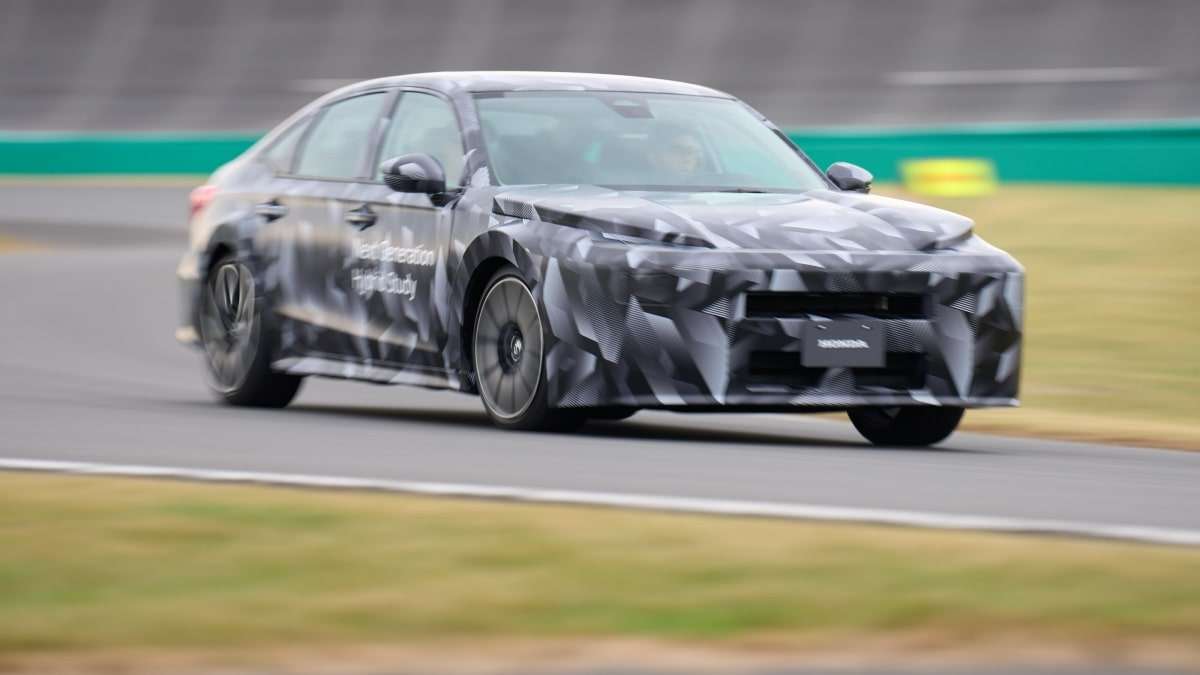

During Honda’s Automotive Technology Workshop in October, the brand showed innovative technology that will be featured in upcoming models. Honda was once behind on the electrification front, but now it looks like the brand is picking up the pace. For me, the tip of the iceberg was the new V-6 hybrid powertrain, which will be used in the brand’s future larger models.
Honda aims for carbon neutrality with a V-6?
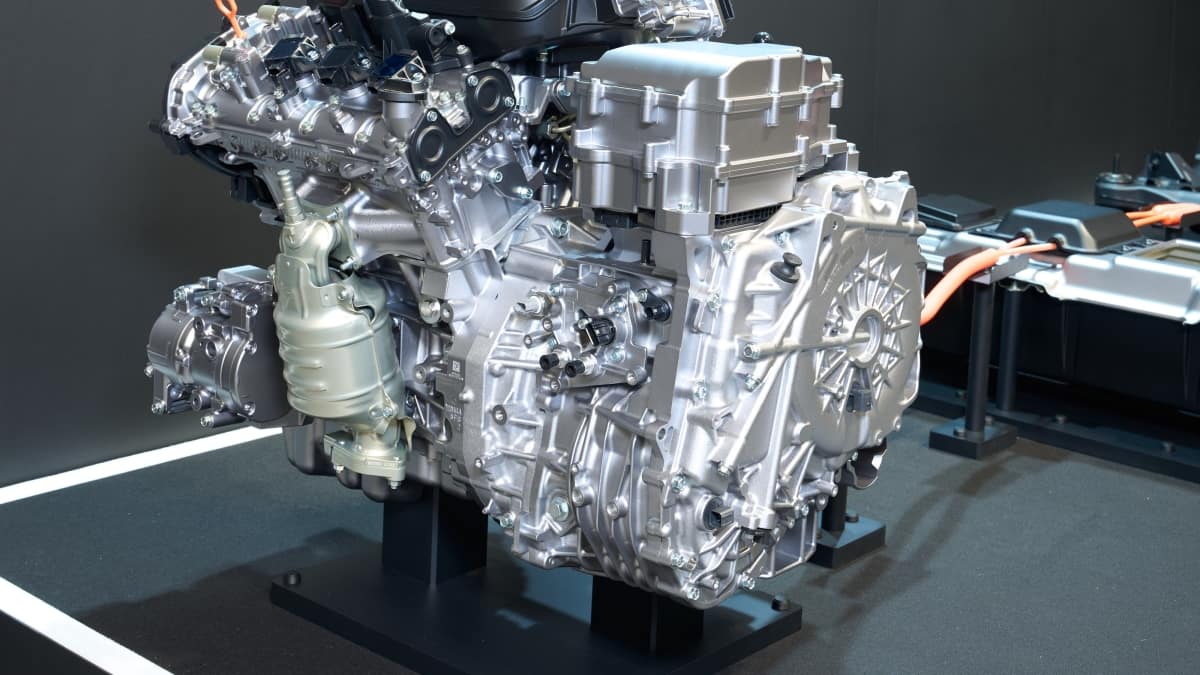
Honda hasn’t entirely phased out its existing V-6 engine. Models like the Passport and Pilot SUVs still feature the normally-aspirated V-6, which is also their biggest selling point versus rival Toyota models. However, models like the Accord dropped the iconic V-6 in 2017 (2019 for Asia), which hinted the company was slowly moving away from this engine configuration. Or so we thought.
Nowadays, Honda’s main focus is on the “environment” and “safety”. The brand wants to achieve carbon neutrality for all its products, and apparently, a V-6 is the way to do it (which I have nothing against).
Carbon neutrality doesn’t mean no carbon dioxide emissions. It means a reduction to a point where the amount of CO2 released into the atmosphere is equal to the amount by which it is reduced, thus achieving a net-zero carbon footprint.
Honda is making it clear that this isn’t simply an add-on for existing hybrid powertrains, but an entirely new hybrid system. Certain Acura models like the TLX Type-S continued using a V-6, and while this new engine is also a 3.0-liter, it is a completely new design.
All-wheel drive and no physical transmission
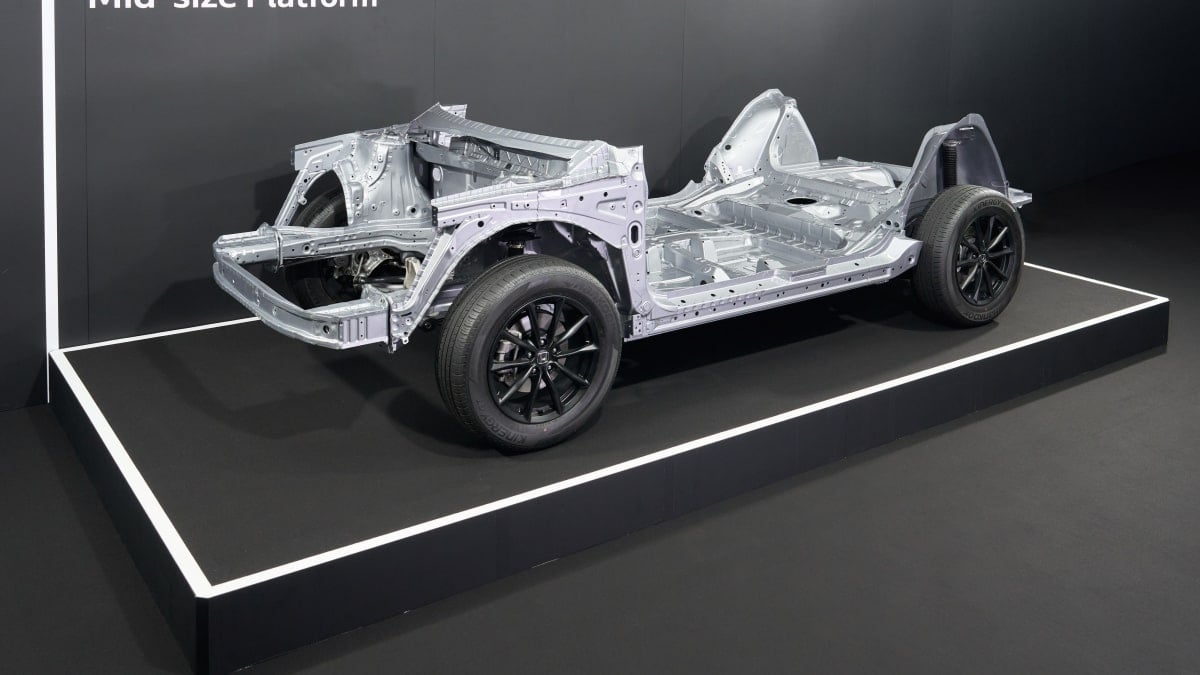
Honda’s V-6 hybrid setup will feature two electric motors at the front and, optionally, a third on the rear axle, which will provide all-wheel-drive capabilities. This is nothing new for the industry, but what is interesting is how the internal-combustion engine and electric motors will work together.
The electric motors will handle low-speed driving and high-torque situations, such as towing and off-roading, where the fuel economy would take a significant hit due to the ICE straining significantly more. Meanwhile, the V-6 engine will provide power during cruising for reduced fuel economy.
Similar to what we see on the Honda Civic e:HEV and the new Prelude, this new hybrid system will not rely on a physical transmission. The “gear-shifting” action is emulated by the electric motors. Future models equipped with this powertrain are also expected to make use of the S+ shift strategy, which simulates gear ratios and allows for manual “gear change” through paddle shifters.
There will be a low and high-gear drive for the motor, depending on what ratios are needed. The powertrain will also be able to work in hybrid mode when the battery is low, meaning the V-6 will also double as a generator. Overall, it sounds like a very flexible system that will allow different degrees of involvement for the electric motors and V-6 engine, depending on the driving requirements.
Improved efficiency and improved performance
At this point in time, we don’t have official power and torque figures to go by. Honda says it will be 30 percent more fuel-efficient and provide 10 percent better performance than current non-hybrid V-6 models.
The cooling system has been completely revised. Instead of two separate cooling systems - one for the ICE and one for the e-motors- the new powertrain features a two-in-one system, which manages heat for both propulsion aspects.
A rigid, yet flexible platform for improved handling
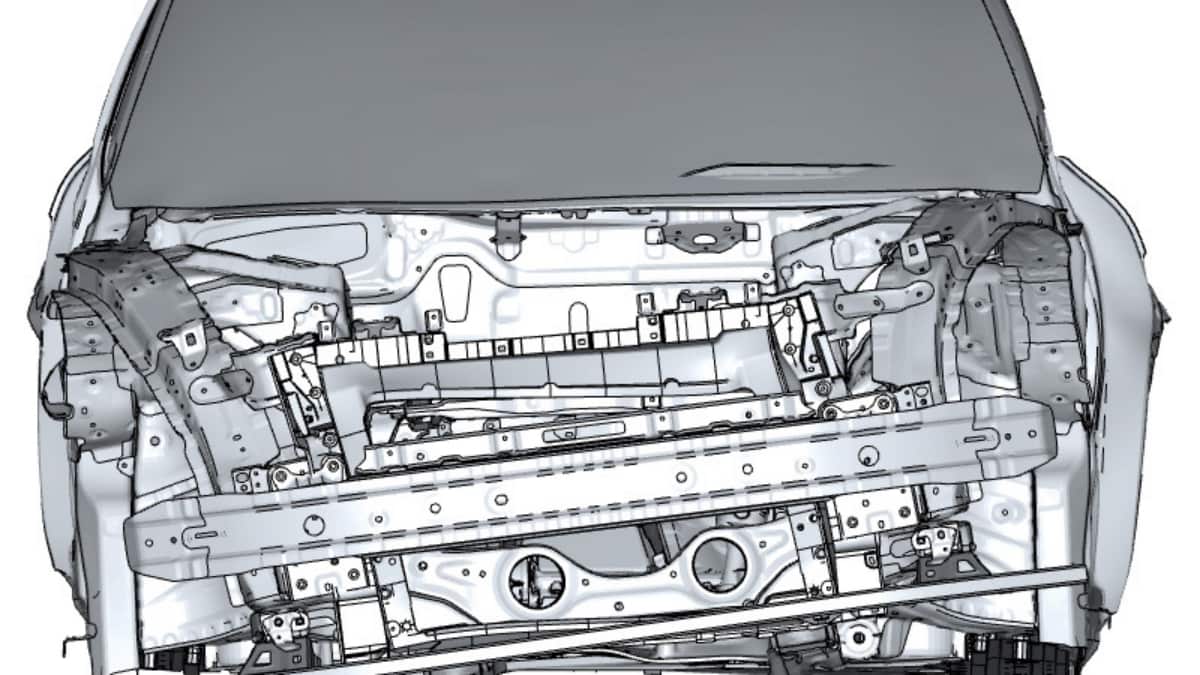
Perhaps, the most intriguing aspect of this new platform isn't the hybrid V-6 or lack of a traditional transmission, but the new chassis. Honda is going about improving performance in a very innovative way.
It involves a high-rigidity platform with a front section featuring less-rigid sections, which intentionally allow for a small degree of flexing. This controlled deformation, only about 1.0 mm (0.04 inches), negates wheel lift during sharp cornering, thus improving road-holding.
Will the next-generation Accord have a V-6?
The eleventh-generation Accord arrived in 2023, which means it will stay for at least a few more years, and will likely get a mid-cycle refresh. Honda is aiming to put the new V-6 hybrid in production by 2027, but the current-generation Accord would need to undergo a significant redesign in order to fit the new unit. That said, Honda’s next-generation hybrid study model is based on the current Honda Civic.
The test mule features a heavily altered front end, likely because of the V-6 powertrain, so the only logical conclusion is that a larger sedan is in the making. Whether it will be an Accord or something larger (like a Legend?) remains to be seen.
One thing we know for sure is that the powertrain is meant for larger SUVs, minivans, and possibly sedans. People have been asking for a V-6 Accord, and this would be the way to do it. Should the next-generation Honda Accord get a V-6? Feel free to share your thoughts in the comment section.
Related Honda stories:
-
The 2026 Honda Prelude, As It Is, Could Be Discontinued, But Something Better Is Coming
-
The First 2026 Honda Prelude Dyno Run Did Not Go As Planned, But We Have a Number
-
I Was Willing To Forgive Honda For The Prelude, But Then I Saw The 0 To 60 MPH Time
Dimitar Angelov's automotive interests made him an expert in a wide variety of vehicles. Japanese brands like Toyota and Nissan are closest to his heart, although performance cars in general are his favorite segment, which is why he is constantly on the lookout for the best deals on the market. Dimitar Angelov's car passion and knack for the written word led him to complete a Master of Arts in Media and Communications, and classic car restoration. Dim is happy to get behind the wheel of any car and share his impressions. You can follow Dimitar on X, Linked-in, Instagram, and Facebook.
Image source: Honda News Global
Set Torque News as Preferred Source on Google
Follow us today...




Comments
Hope they make a powerful…
Permalink
Hope they make a powerful fuel efficient hybrid for the odyssey. I love my 2023 but the seats are impossible to find a comfortable seating position especially for long trips. Take a cloth odyssey seat and cover it in leather. May be the trick. Lots of room and decent gas mileage.
A V6 Hybrid Odyssey would be…
Permalink
In reply to Hope they make a powerful… by Ray (not verified)
A V6 Hybrid Odyssey would be great for sure. As for the seats, I've never driven one. I find some Japanese vehicles have very shallow seats, as in your thighs are floating in the air instead of being supported.
Many of the newer models fixed this, but I can't say about the Odyssey.
I have sold Honda for almost…
Permalink
I have sold Honda for almost 11 years and I always tell my customers that Honda is always"fashionably late" to the party but when they get there, they knock it out of the park. This would be game changing compared to the smaller 4 cylinder options for larger vehicles
I agree. The Civic e:HEV is…
Permalink
In reply to I have sold Honda for almost… by Lee Cohen (not verified)
I agree. The Civic e:HEV is a great example.
I hope we get a V-6 Accord again.