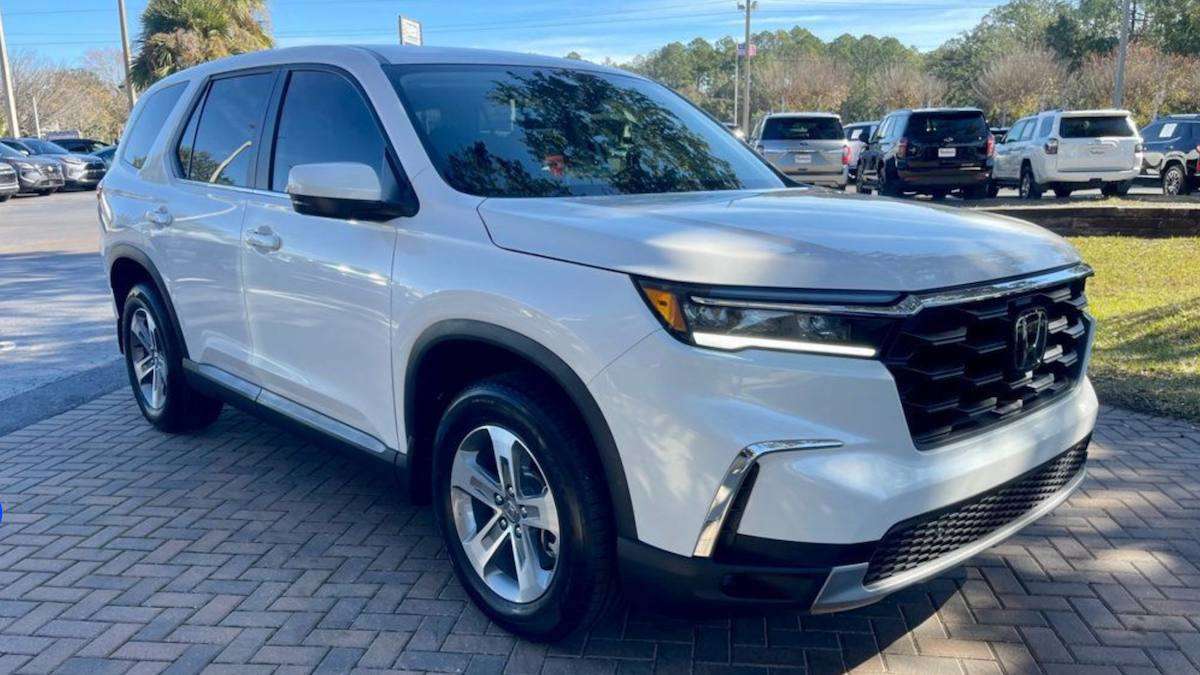

If you’re waiting for your 2025 Honda Pilot’s dashboard to tell you when to change your oil, you might be letting 'metallic glitter' and factory debris slowly destroy your engine from the inside out.
Imagine pulling the dipstick on your brand-new 2025 Pilot only to find the oil level dangerously low and the factory filter already clogged with "metallic glitter" and manufacturing debris. While the dashboard stays silent, the physical evidence in your hands proves that waiting for a computer to tell you to service your engine is a gamble with your car's long-term survival.
In my research on the latest Honda reliability trends, I found a recent post in a dedicated Pilot enthusiast community on Reddit where an owner named John highlighted growing concerns about the "factory fill" and the significant risks of blindly following modern maintenance schedules. His findings serve as a stark warning for anyone picking up a 2025 model: the "metallic glitter" and manufacturing debris trapped in his filter at just 808 miles tell a story your dashboard's Maintenance Minder will never share.
John says, "I changed the oil in our 2025 Pilot at 808 miles because I believe replacing the factory fill early to remove break-in contaminants is beneficial in the long run. At the time of the change, the dipstick was already at the very bottom of the range, and while the oil looked clean in the pan, cutting open the OEM filter revealed otherwise. The filter was filled with 'metallic glitter' and bits of sealer typical for a new engine, but exactly the kind of debris you want to flush out early. I’m sharing this because while there is debate on early intervals, the physical evidence of metal in the media shows why the 'Maintenance Minder' might be waiting too long."
I have spent over 30 years in the automotive industry, and if there is one thing I have learned, it is that the bond between a driver and their car is built on trust. But lately, I am seeing that trust being tested by what I call the "Maintenance Trap." John's story that perfectly illustrates why so many of you are feeling frustrated with your new vehicles. This 2025 Honda Pilot owner, wanting to protect their $50,000 investment, decided to pull the drain plug at just 800 miles. What they found wasn't just oil; it was a "metallic glitter" of engine break-in debris that the manufacturer recommends leaving in for nearly 10,000 miles.
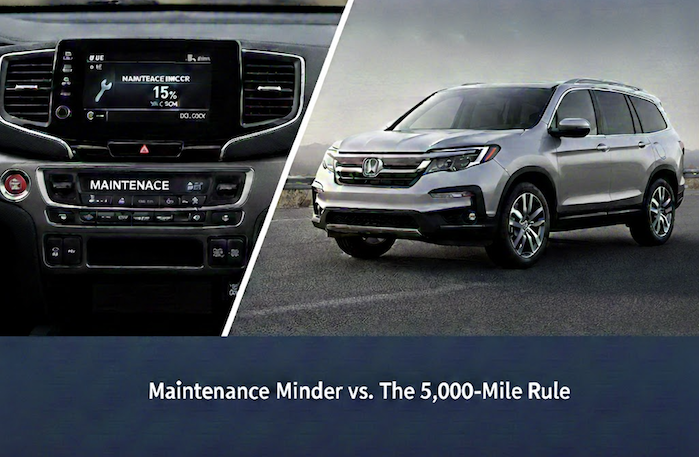
When I hear about a dealership or a digital "Minder" telling an owner to wait until their oil life reaches 15%, which can take a full year, my "expertise" alarm starts ringing. We aren't talking about a simple fluid swap; we are talking about the very lifeblood of your engine.
From My View
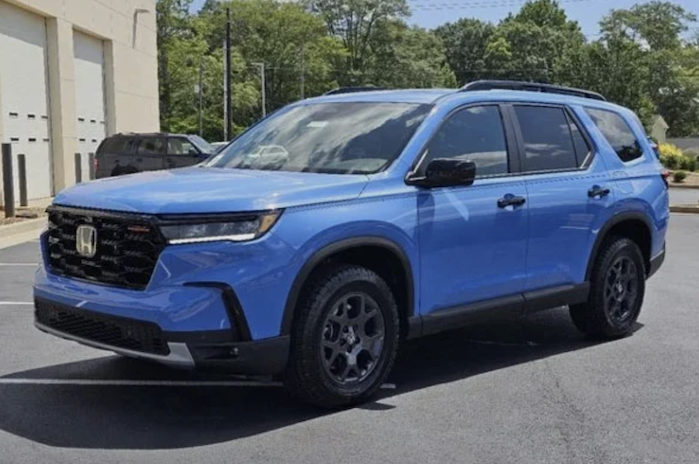
From my perspective, the automotive world is shifting into a "Cost of Ownership" numbers game, and it is catching many loyal owners off guard. In this specific case, the owner of a 2025 Pilot found that the factory fill was already at the bottom of the dipstick and the filter was filled with sealer bits and metal shavings. The "Maintenance Minder" isn't designed for the owner; it’s designed for the lease cycle and to keep the manufacturer's "free maintenance" costs low.
I have previously reported on similar engine longevity concerns, such as when I analyzed why Honda's V6 engines are currently facing a massive class-action lawsuit over connecting-rod failures. While the hardware is marketed as "bulletproof," the real-world results often tell a different story. As noted by Autoblog experts, the troublesome 3.5L V6 engine has led to widespread complaints, and they report that engine failures have occurred at under 40,000 miles in some cases due to internal bearing issues.
My Take
My take on this is simple: physics hasn't changed, even if the software has. In my 14 years of reporting, I’ve adopted the "Rule of 1,000": The most important oil change in your car's life happens before the odometer hits four digits. This "Break-In" change is the only way to flush out the assembly lubes, metal shavings, and casting sand that inevitably end up in a brand-new block.
I remember writing about the Subaru oil-consumption saga, where owners faced similar issues with extended intervals. It’s a pattern. Today, it’s a Honda Pilot "glitter" issue; tomorrow, it might be a seized bearing because you waited for a light on the dash to tell you what to do.
Key Takeaways for My Readers
- The First Change Is the Most Important: Follow the "Rule of 1,000" and replace the factory oil early.
- Don't Trust the Minder for Longevity: The Maintenance Minder is a convenience tool, not a preservation tool.
- Check Your Levels Weekly: Modern engines, including the Honda 3.5L V6, can consume oil during the break-in period.
- Full Synthetic is Non-Negotiable: Always use the specified high-quality 0W-20 or 5W-30, but don't let it sit in the pan for 10,000 miles.
What Pilot Owners Are Saying
The community is fired up about this. One user on Reddit noted the severity of what they found during an early swap, stating, "The oil inside the filter had quite a bit of metal (glitter) in it. Not alarming, pretty typical for new engines... filter media had metal and bits of sealer caught in it," which you can read in the full discussion here.
Another owner highlighted the risk of blindly following factory advice, noting, "I waited 8k to change my oil the first time and no issues... [but] others say for the manufacturer to say wait until 10k is insane to me," as reported in this Reddit thread. These owners are realizing that the "dependability" reputation of a brand is only as good as the maintenance you put into it.
Why the Drama?
The "why" behind this drama is the pressure on automakers to reduce the "Environmental Impact" and "Total Cost of Ownership" (TCO). By extending oil changes to 10,000 miles, they save millions in service costs and oil disposal costs. As noted in a report by J.D. Power, a proper engine break-in helps ensure long-term optimal performance, reliability, and longevity, yet the report notes that automakers often recommend waiting much longer than the 500-1,000 miles that mechanical experts suggest.
I have seen this before with the Honda CR-V oil dilution problems. It starts with a "convenient" interval and ends with compromised engine internals. Don't be the one paying for their marketing numbers.
How to Protect Your Engine
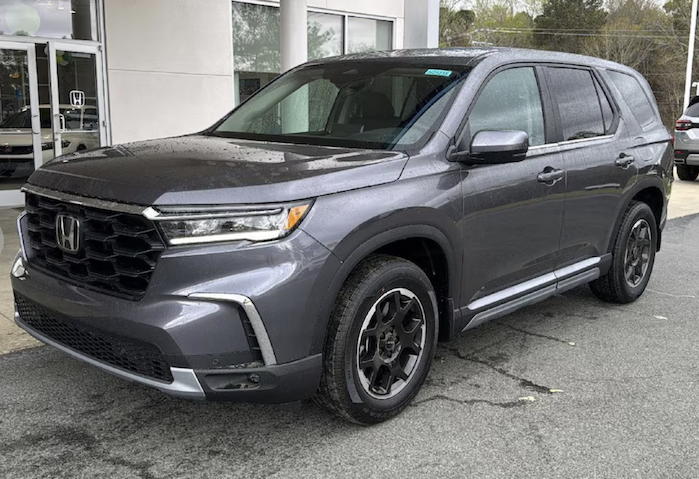
If a dealer tells you that your 2025 Pilot doesn't need service until the light comes on, remember that they aren't the ones paying for an $11,000 engine replacement once you're out of warranty. Your grandfather’s Pilot would have never seen 10,000 miles on factory oil, so why are we letting 2026 tech convince us that physics has changed?
I’ve covered the hidden maintenance tips for Honda owners that can add 100,000 miles to your car’s life. It starts with ignoring the Minder and taking control of your maintenance schedule.
Don't Be Afraid To Go "Old School"
The era of the "10,000-Mile Trap" is officially here, and the 2025 Honda Pilot is the current battleground. While synthetic oils are marvels of engineering, they cannot magically remove the physical debris left over from the manufacturing process. By following the "Rule of 1,000" and performing the first critical oil change early, you ensure your Honda remains the reliable family hauler it was meant to be. Stay vigilant, trust your dipstick over your dashboard, and never be afraid to go "old school" when it comes to protecting your engine.
How About You? Have you ever found "glitter" or metal shavings during your first oil change? Tell us your story and leave a comment in the red “Add new comment” link below.
Next Up: The engine isn't the only concern for the 2026 model year. I have analyzed a growing trend in safety system failures that every Honda owner needs to watch for in my report: Is Your Honda's Sensing System Failing? What New Owners are Reporting.
Denis Flierl is a 14-year Senior Reporter at Torque News and a member of the Rocky Mountain Automotive Press (RMAP) with 30+ years of industry experience. Based in Parker, Colorado, Denis leverages the Rockies' high-altitude terrain as a rigorous testing ground to provide "boots-on-the-ground" analysis for readers across the Rocky Mountain region, California EV corridors, the Northeast, Texas truck markets, and Midwest agricultural zones.
A former professional test driver and consultant for Ford, GM, Ram, Toyota, and Tesla, he delivers data-backed insights on reliability and market shifts. Denis cuts through the noise to provide national audiences with the real-world reporting today’s landscape demands.
Connect with Denis: Find him on LinkedIn, X @DenisFlierl, @WorldsCoolestRides, Facebook, and Instagram.
Photo credit: Denis Flierl via Honda
Set Torque News as Preferred Source on Google
Follow us today...