
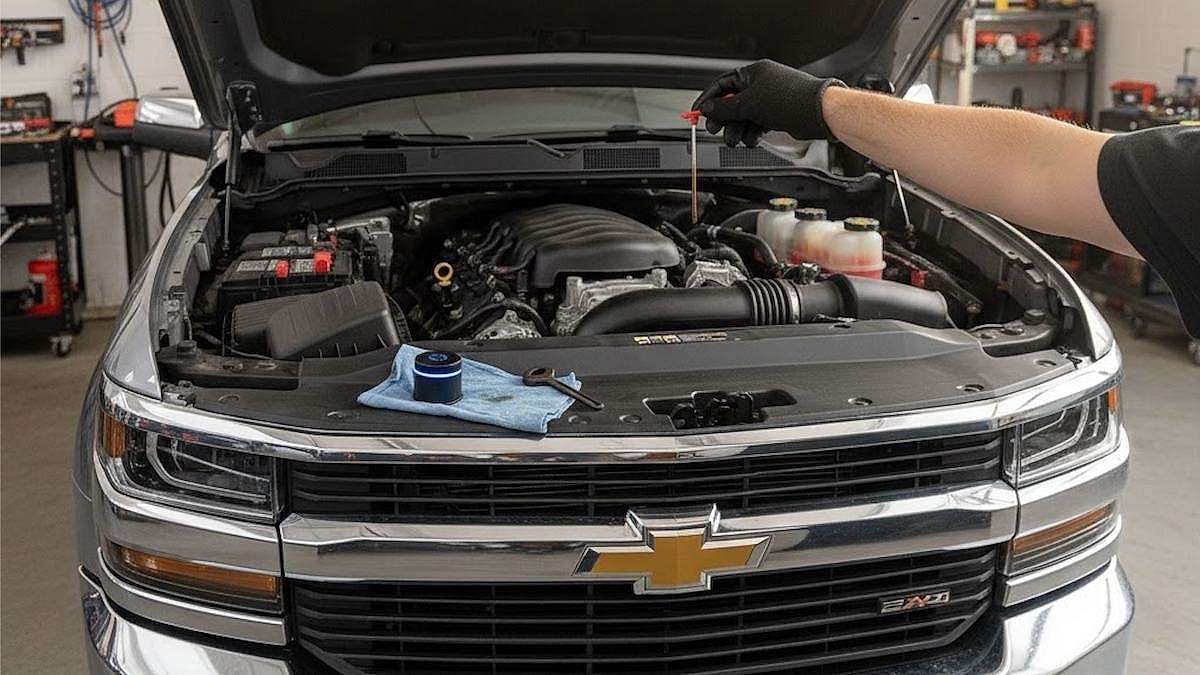

In my three decades of investigating the automotive landscape, I’ve learned that when truck owners start comparing notes in a Facebook community, it usually precedes a major shift in how we understand vehicle reliability. I recently found a compelling case study shared in the 2019 - 2026 Chevy Silverado & GMC Sierra Owners Facebook group where a driver named Stephen Lee from Tennessee highlighted a dramatic shift in engine health.
I’ve tracked the evolution of GM’s V8 powerplants since the early days, and this specific report provides a "smoking gun" for the oil consumption issues plaguing the 5.3L engine.
Stephen detailed a three-step experiment that effectively silenced his engine’s thirst for oil. As a veteran reporter who has seen dozens of "miracle fixes" come and go, I find this data set particularly significant because it addresses the mechanical root cause rather than just treating the symptom.
Stephen Lee reports: “My 2023 Chevy Silverado 5.3 liter used a little over 2 quarts 0w20 oil in 5,000 miles. I switched to 5w30, and my truck used 1.5 quarts in 3,000 miles. I disabled the auto-stop/start system and DFM, and my truck used zero quarts over 3,000 miles. This is not a recommendation. I am just reporting results.”
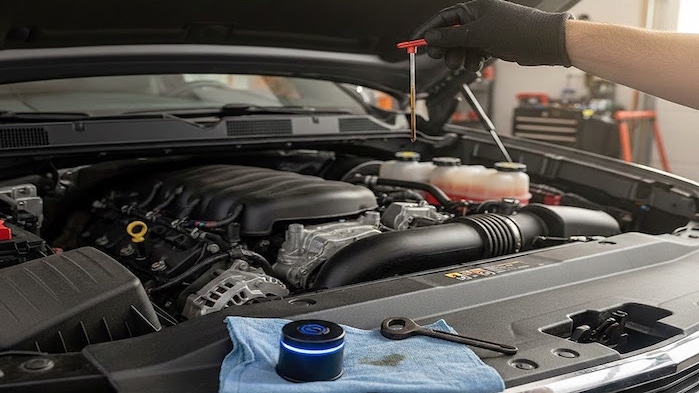
Why This Happened
To understand why this happened, we have to look at who is affected, how the systems interact, and why the factory settings might be failing you. The "Who" is any owner of a 2019–2026 Silverado or Sierra equipped with the 5.3L or 6.2L V8. The "How" involves the complex interaction between ultra-thin 0w20 oil and Dynamic Fuel Management (DFM) lifters. Finally, the "Why" is the most controversial: DFM and Auto Stop/Start are designed for emissions compliance, not necessarily for 200,000-mile engine longevity.
My Take: The Hidden Cost of "Fuel Economy"
I’ve investigated how deep this rabbit hole goes, and as I noted in my previous report about a Chevy Silverado owner who did everything right but still saw his engine fail at 130,000 miles, the hardware itself is the primary weak point. DFM relies on specialized "collapsible" lifters that deactivate cylinders to save fuel. When these systems are active, oil pressure fluctuates constantly. By disabling DFM, Lee essentially forced his engine to remain in V8 mode, maintaining consistent oil pressure and preventing the lifters from "cycling," which many experts believe can lead to premature wear and oil bypass.
Furthermore, outside experts agree that the factory oil recommendations might be too thin for real-world heavy use. In a technical bulletin on excessive oil consumption, the team at Pickup Truck Talk notes that "acceptable oil usage" can reach 1 quart per 2,000 miles, a standard many owners find unacceptable for a modern vehicle.
From My View: What You Need To Know
To boost your truck's survival rate in the February 2026 news cycle, here is my take on the situation:
1. DFM and Lifter Wear: The constant deactivation of cylinders creates uneven thermal expansion and irregular oil flow, which can lead to carbon buildup around the rings.
2. Viscosity Matters: Moving from 0w20 to 5w30 provides a thicker film of protection at operating temperature, reducing "blow-by" where oil escapes into the combustion chamber.
3. Auto Stop/Start Stress: Every time your engine restarts, it experiences a momentary "dry start" where oil pressure is not yet at its peak. Disabling this reduces the thousands of micro-wear events your bearings face annually.
I’ve explored these reliability crises before, specifically in my investigative piece where a 2025 Chevy Silverado Duramax owner saw his engine fail at just 5,000 miles, proving that even the latest models aren't immune to assembly and design flaws.
Community Technical Feedback
The sentiment on the ground is reaching a boiling point. One user on Reddit noted the severity of the situation, stating, "I usually have to top it up with a half quart or so in between oil changes... I usually top off every 1k miles as it'll reach the low mark on the dip stick," which you can read in the full discussion here. Another owner highlighted the frustration with factory advice, mentioning, "Normal driving can burn 1 qt every 2k miles. Per gm. Newer engines use more due to operating temps and clearances," found in this Reddit thread.
Key Takeaways
- Monitor Oil Levels Weekly: Don’t wait for the dashboard light; manually check the dipstick every 1,000 miles.
- Consider a DFM Disabler: While it may be a gray area for warranties, it prevents the mechanical "cycling" that leads to lifter failure.
- Shorten Service Intervals: I recommend 5,000-mile oil changes regardless of what the "Oil Life Monitor" says.
I am constantly hearing from owners who are at their wits' end. I recently detailed the story of a 2019 Silverado owner who paid $13,000 for a new engine because the lifter failure eventually chewed up the camshaft. This is why Stephen Lee’s results are so vital: they offer a potential preventative path before the catastrophic "ticking" starts.
Even the National Highway Traffic Safety Administration (NHTSA) has released documents from GM acknowledging that oil consumption is directly related to fuel use, and while they claim some consumption is "normal," our community knows better.
My Advice: Take Control
If you own a modern Silverado, you are essentially participating in a long-term engineering experiment. Based on my 30 years of reporting, the most trustworthy advice I can give you is to take control of your maintenance: disable the invasive fuel-saving tech if you can, use a slightly heavier high-quality synthetic oil, and never assume "normal" oil loss is acceptable.
Tell Us What You Think
Have you noticed your Silverado or Sierra consuming more oil than usual between service visits? I want to hear from you: Have you experimented with different oil weights or considered a DFM disabler to protect your engine's longevity? Your real-world experience is what helps this community stay ahead of the curve. Please leave a comment in the red “Add new comment” link below and share your story with us.
About The Author
Denis Flierl is a 14-year Senior Reporter at Torque News and a member of the Rocky Mountain Automotive Press (RMAP) with 30+ years of industry experience. Based in Parker, Colorado, Denis leverages the Rockies' high-altitude terrain as a rigorous testing ground to provide "boots-on-the-ground" analysis for readers across the Rocky Mountain region, California EV corridors, the Northeast, Texas truck markets, and Midwest agricultural zones. A former professional test driver and consultant for Ford, GM, Ram, Toyota, and Tesla, he delivers data-backed insights on reliability and market shifts. Denis cuts through the noise to provide national audiences with the real-world reporting today’s landscape demands. Connect with Denis: Find him on LinkedIn, X @DenisFlierl, @WorldsCoolestRides, Facebook, and Instagram.
Photo credit: Denis Flierl via Gemini
Set Torque News as Preferred Source on Google
Follow us today...





Comments
There are no 2026 1500 for…
Permalink
There are no 2026 1500 for sale anywhere with non dfm, vin code #8 =E is non existant, show me even one on a dealer web site.