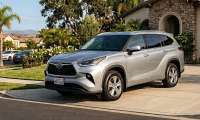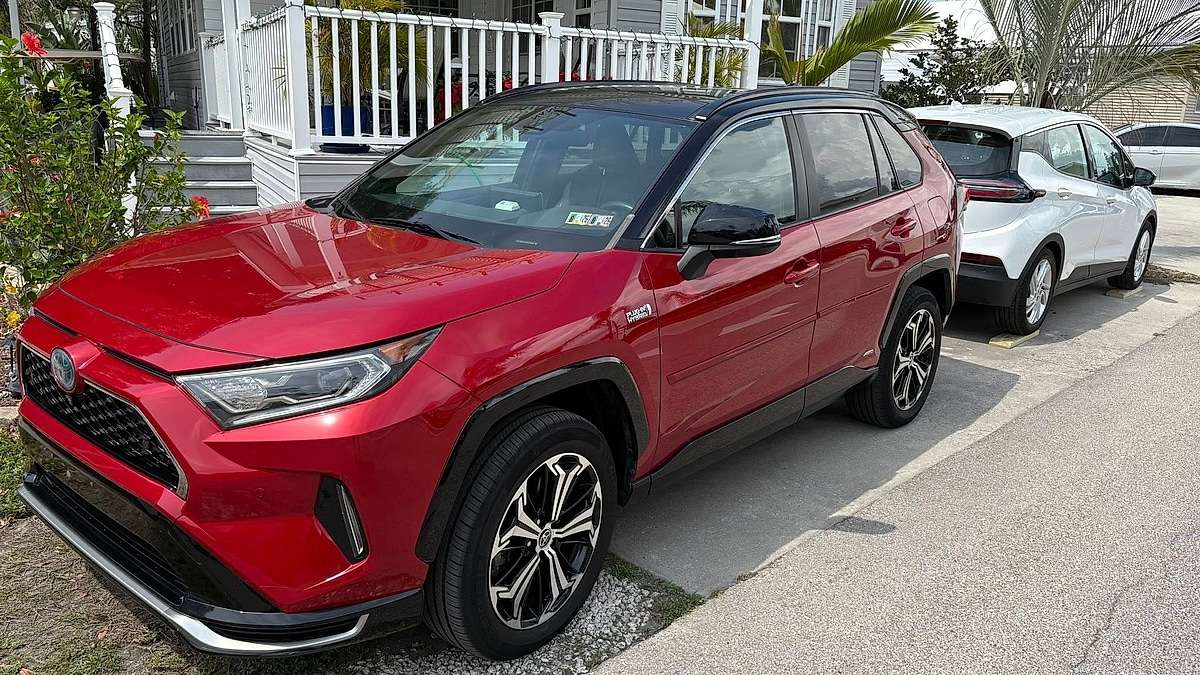

Gordon Groff, a technical writer and longtime EV advocate, has become an informal advisor to Torque News. He’s spent years driving electric vehicles and strongly supports the technology, yet he says he’ll never give up having at least one gas-powered vehicle in his two-car garage. That perspective may surprise some EV fans, but it aligns closely with what we’ve found after decades of testing electrified vehicles. Here’s what he loves about EVs, and why he still won’t go all-in.
The RAV4 Prime As a “Gateway Drug”
Gordon bought his Toyota RAV4 Prime plug-in hybrid-electric vehicle (PHEV) about five years ago and has become a big fan of driving electric. And drive, Gordon does, having taken the RAV4 Prime on multiple road trips of over 1200 miles, doing the snowbird route so many East Coast residents do. New England to Florida and back six months later. “On our annual 1200-mile snowbird trips, we still had EV range left at the end simply by toggling between EV and Hybrid modes at every highway on-ramp and off-ramp.” Gordon is referring to using the EV range wisely when traveling in stop-and-go situations and then using Hybrid mode when on the highway.
Like most snowbirds, Gordon and his wife have tired of the difficult north-south migration by car, and they now fly. When they needed a new car, Gordon says the choice of vehicle type was easy. “Having fallen in love with the strong, smooth QUIET power of EV driving in our Prime, I knew that our next vehicle would be electric,” Gordon says. “Since I had already installed a Level 2 charger (EVSE) here at our Florida place for our Prime, it was a no-brainer to go full EV, especially since our driving down here is relatively short range.”
Gordon fell in love with the driving experience that an electrified powertrain offers. “The driving experience with EV is so superior to a conventional gas engine, I would choose EV regardless of fuel or vehicle cost.” This is the first of many ways that I find myself in agreement with Gordon. For a daily driver, an EV powertrain is simply better. Smoother, instant torque, quieter, and I love the feeling of brake energy regeneration. It reminds me I’m saving gas and adding back energy every time the vehicle slows down.
A Chevy Bolt Joins the Plug-In Family
After searching for a new EV, Gordon and his wife opted to try an all-electric Chevy Bolt. As a value shopper, the choice was very easy. They found a Hertz rental Bolt that was being sold at a crazy low price and didn’t hesitate. “We got a one-year-old Bolt with the factory warranty in effect for $16,400, which is less than some of my neighbors have paid for fancy golf carts.”
Like the RAV4 Prime, the Bolt proved to have all the pluses that Gordon expected. However, the Bolt has one big downside when it comes to ownership: public charging. Like me, Gordon charges his EVs happily at home on his own Level 2 charger. It’s an easy way to keep the vehicle ready for use around town, or even on a short trip out of town. The big downside that Gordon discovered is that he is “allergic” to public charging, to use his own word. Here is what Gordon says about driving his Bolt outside his local area:
I will not road trip with an EV. If reliable charging is available at our destination, I might be willing to do a round trip beyond range, but that’s about all I’d be willing to do with an electric-only vehicle. As much as I’m a fan of EV, I despise public charging. No matter what the enthusiasts say, it’s a much greater hassle than just buying gas. Yeah, there are workarounds, and for those willing to embrace the learning curve and compromise their travel plans, EV road tripping is just fine. Not for me. I hate uncertainty or delay. Will the charger be available when you get there? Will the tech work? Yeah, there are answers and apps to help with this, but there’s still a level of uncertainty and many stumbling blocks for the non-tech enthusiasts to fall over. Not to mention that public DC charging costs are MUCH greater than the gas equivalent. This added fuel cost is not a factor for me, but folks should know.
Gordon’s take mirrors my own experience. I could live with an EV if it fit my needs and didn’t require frequent road trip charging. But I’m on the highway multiple times a month, and that’s where EVs still fall short. I’ve tested them on long drives, and the added time, planning, and cost of DC fast charging can take the joy out of the trip. That’s a big reason our most recent purchase was a 2024 Toyota hybrid. It delivers the features I need, like all-wheel drive, smartphone integration, and even a spare tire, at a price point around $45,000 that today’s EVs are unable to match.
In a recent story, I called EVs the world’s best second car, and I mean it. For my lifestyle, which I think is not usual, an EV as my only car is not the best option. Gordon agrees, despite owning only cars with plugs. “My RAV4 Prime is an everyday EV and great road tripper with no need for public charging!” So for Gordon, the battery-electric vehicle suits his needs for an around-town car, and the more capable RAV4 Prime plug-in hybrid can suit all of his needs, local, road tripping, or even driving back and forth from New England to Florida.
Why Many EV Owners and Fans Still Keep a Gas Vehicle
Gordon’s experience highlights a reality many EV owners quietly acknowledge: you can love electric vehicles and still not want one as your only car. The biggest hurdle remains that public charging hasn’t matched the convenience or reliability of gas stations. It takes 87 seconds to add 425 miles of range to a Toyota RAV4 Hybrid. There is no charging and EV battery technology that comes close to that speed. If I’m wrong and if EVs someday have the same features and price point as hybrids do today, I’ll be joining Gordon by exclusively owning plug-in vehicles.
What is your take on this subject? Do you feel that our opinions, based on our combined decades of EV testing and ownership, are unfounded? Tell us in the comments below.
Top of page image courtesy of Gordon Groff.
John Goreham is a 14-year veteran of Torque News. An accomplished writer and a long-time expert in vehicle testing, Goreham also serves as the Vice President of the New England Motor Press Association and has a growing social media presence. He’s also a 10-year staff writer and community moderator for Car Talk. Goreham holds a B.S. in Mechanical Engineering and an undergraduate Certificate in Marketing. In addition to vehicle and tire content, he offers deep dives into market trends and opinion pieces. You can follow John Goreham on X and TikTok, and connect with him on LinkedIn.
Set Torque News as Preferred Source on Google
Follow us today...