
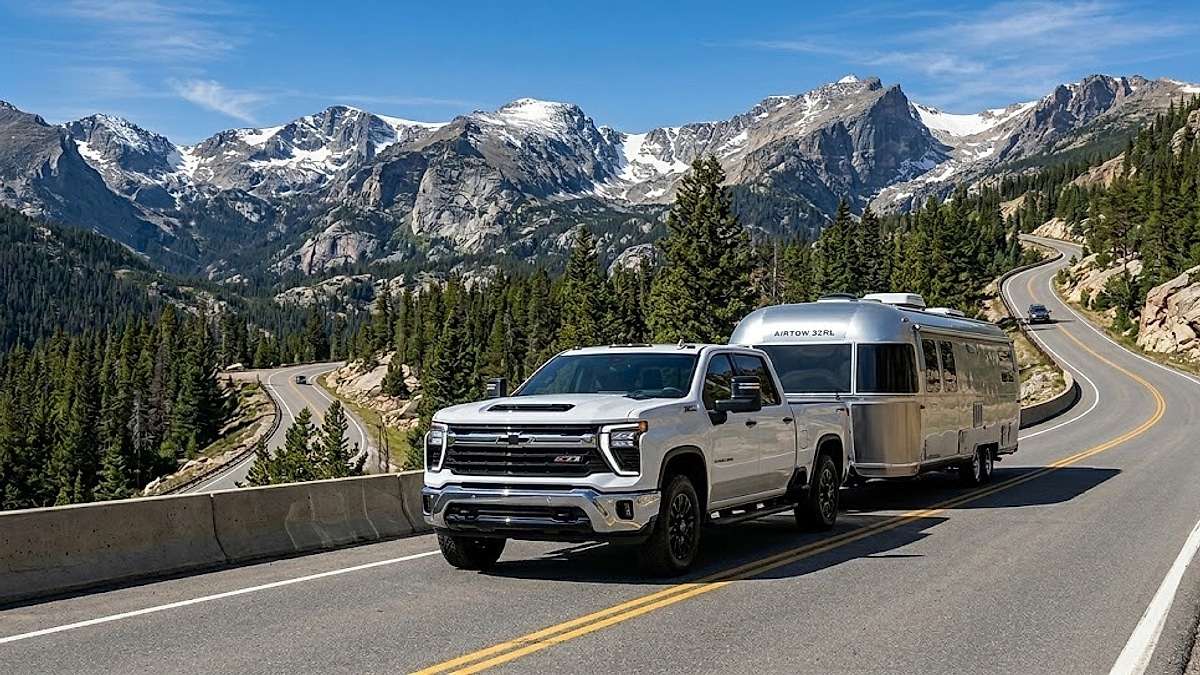

Before diving into our Torque News comprehensive technical breakdown, you can review Denis Fierl's foundational coverage of full-size truck powertrain vulnerabilities in Part 1: 3-Time Silverado Owner Reports 2021 Z71 Texas Edition Burns Oil Fast at 75K Miles, where we explore how low-tension piston rings and factory maintenance schedules trigger sudden oil loss. Following that, our deep technical dive in Part 2: Silverado Oil Consumption: Disabling DFM and 5W-30 Viscosity Solution outlines the exact mechanical modifications and heavier lubricant strategies owners are using to counter these design flaws.
For decades, half-ton truck buyers purchased a new full-size pickup with an implicit guarantee: commit to standard factory preventative maintenance, and the powertrain would easily cross the 200,000-mile threshold. However, a major shift in automotive engineering has disrupted this baseline expectation. Across the pickup landscape, a troubling pattern of premature mechanical failures, severe oil consumption, and bearing degradation has left truck owners vulnerable.
At the center of this industry-wide crisis is a fundamental conflict between modern fuel-economy regulations and long-term mechanical durability. To satisfy tightening federal efficiency standards, manufacturers have moved toward complex, highly stressed engine designs, shifting from naturally aspirated V8s to forced-induction, small-displacement platforms, and using ultra-low-viscosity lubricants like 0W-20. While these modifications reduce internal friction and cut emissions on paper, they leave very little margin for error in real-world conditions.
The Modern Full-Size Truck Engine Crisis: Debris, Viscosity, and Premature Wear
The vulnerability of modern truck platforms is prominently highlighted by ongoing manufacturing challenges facing some of the industry's top-selling models. According to ongoing Torque News by Denis Flierl, tracking of manufacturing defects, structural vulnerabilities, and fluid dynamics issues continues to impact modern utility drivetrains. A major concern is the third-generation Toyota Tundra, powered by the V35A-FTS 3.4-liter twin-turbo V6. Although engineered for higher thermal efficiency, this platform has faced significant scrutiny regarding internal contamination and bearing longevity.
Industry experts at Car and Driver have documented this ongoing crisis, noting that machining debris left in the engine during manufacturing can cause main bearing failure in the crankshaft. This vulnerability became even more evident when federal regulators stepped in to investigate the scope of the defect. As reported by LiveNOW from FOX, the National Highway Traffic Safety Administration expanded its investigation to 126,691 vehicles because manufacturing debris might contaminate the engine and cause main bearings to fail. This internal contamination introduces microscopic metallic particles directly into the lubrication loop, acting as an abrasive compound that targets high-stress components.
This vulnerability scales up rapidly under demanding driving conditions, such as towing heavy loads or navigating high-altitude mountain passes. Under heavy boost, twin-turbochargers operate under extreme thermal stress, relying on small oil-metering pathways to cool assemblies spinning at over 200,000 RPM. When ultra-low-viscosity oils thin out under extreme heat, the hydraulic film protecting the crankshaft main journals and turbocharger bearings breaks down. If abrasive manufacturing swarf is cycling through the block at the same time, the soft bearing substrates experience immediate, irrecoverable scoring.
Viscosity Solutions: Re-evaluating Factory Service Recommendations
This breakdown of lubrication protection under intense thermal loads is an issue that spans multiple auto manufacturers. In our ongoing coverage of automotive reliability, Torque News Senior Reporter Denis Flierl has uncovered an unresolved dispute over the long-term efficacy of factory oil viscosity recommendations and extended maintenance timelines.
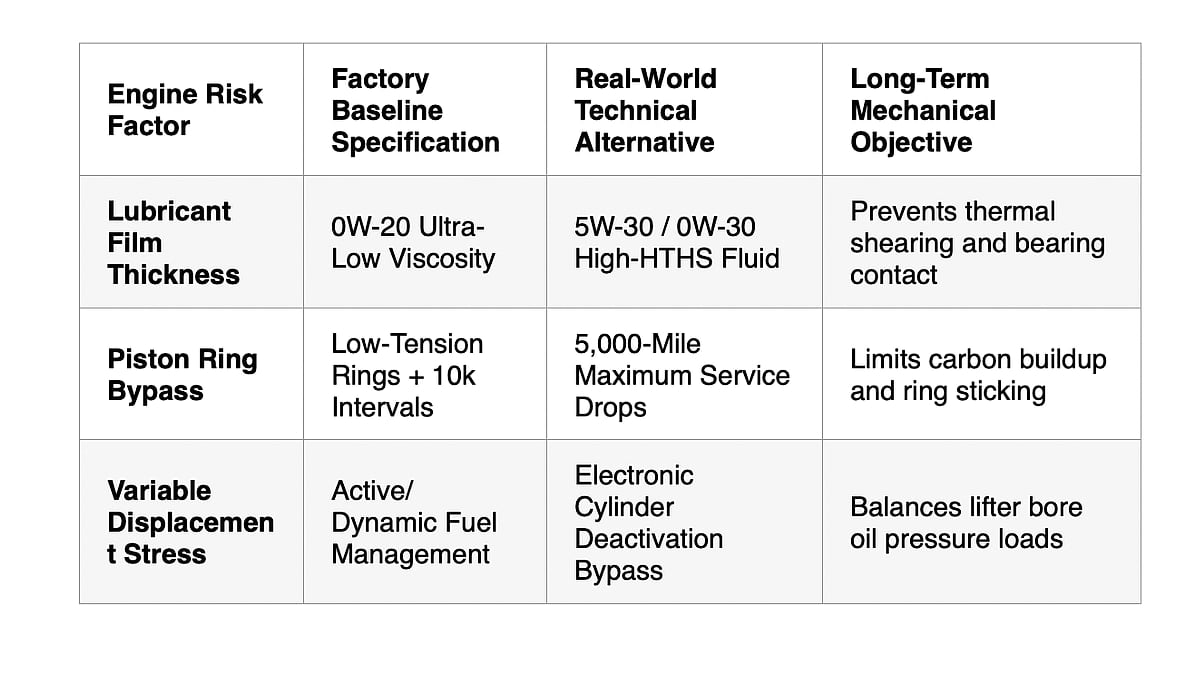
To better understand this issue, it helps to examine how individual truck platforms react to low-viscosity lubrication under real-world workloads. In a foundational report on corporate powertrain defects, Denis Flierl detailed how a 3-time Silverado owner reported his 2021 Z71 Texas Edition was burning oil fast at just 75,000 miles, casting doubt on the long-term viability of factory oil management. When low-tension piston rings designed to minimize internal friction are combined with highly fluid lubricants, the thin film can slip past the ring packs and burn off in the combustion chamber. This leads to accelerated oil consumption long before standard service intervals are reached.
To counter this rapid degradation, automotive technicians are increasingly considering heavier-duty lubricant alternatives. In a secondary, in-depth technical update, Denis Flierl explored the practical mechanics of disabling Dynamic Fuel Management (DFM) and upgrading to a thicker 5W-30 viscosity solution to restore film thickness and safeguard internal engine components.
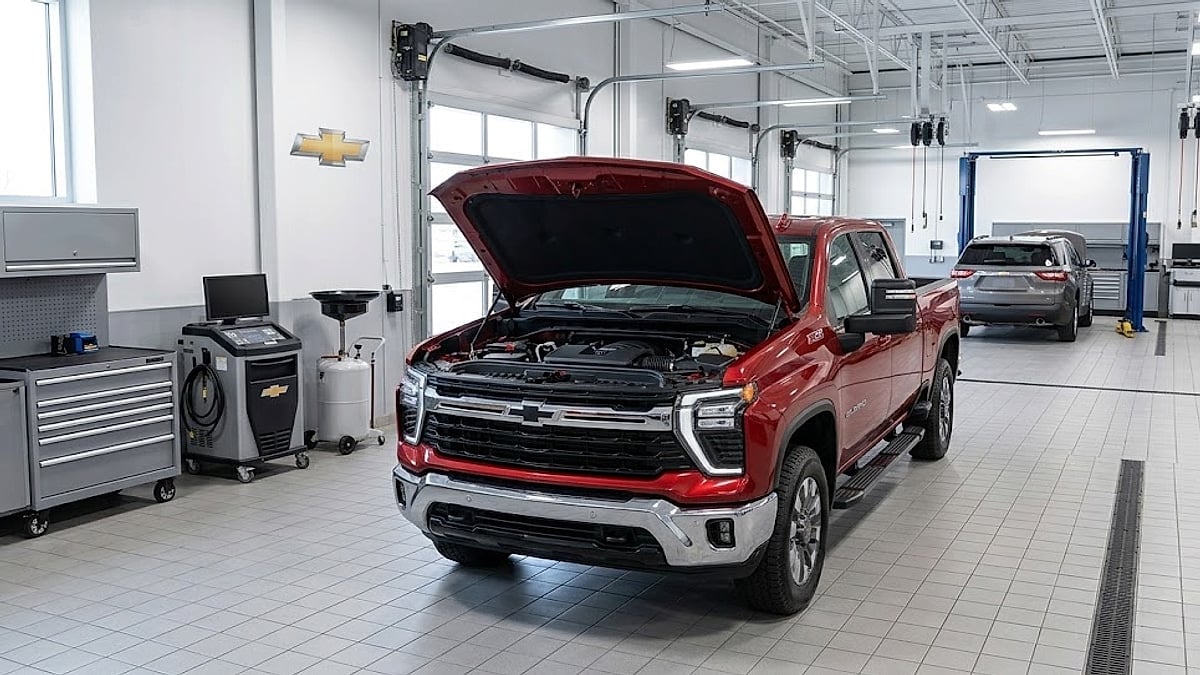
Torque News technical analysis by Denis Flierl identifies a critical gap between factory maintenance schedules and real-world component longevity. While standard 10,000-mile intervals and ultra-thin lubricants help OEMs meet regulatory goals, they frequently fail to provide adequate protection for high-mileage trucks operating under demanding, real-world conditions.
High-Altitude Demands and Regional Realities
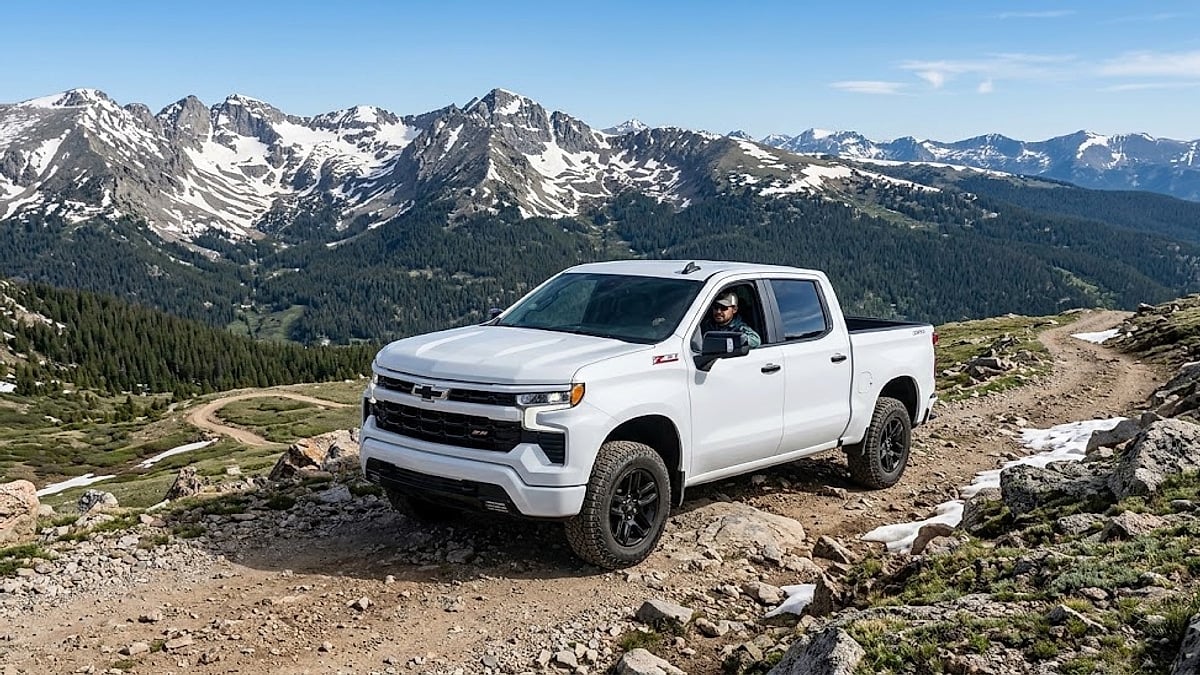
These mechanical vulnerabilities are particularly magnified for drivers operating in demanding regional environments. In high-altitude areas like Parker, Colorado, the combination of steep mountain climbs and thin air subjects truck powertrains to prolonged, severe stress.
Navigating steep mountain passes requires sustained turbocharger boost or high RPMs under load, driving internal engine temperatures to extreme levels. In these conditions, thin lubricants lose their load-bearing capacity much faster than they would at sea level. For truck owners who routinely tow trailers up steep grades, strictly adhering to a 10,000-mile factory oil change interval can pose significant risks. At high altitudes, regional vehicle usage requires a more defensive maintenance strategy to prevent premature engine wear.
The Blueprint for Safeguarding Your Truck
For truck owners looking to protect their vehicles past the 100,000-mile mark, a proactive maintenance approach is essential. Waiting for a dashboard oil light or warning indicator to illuminate often means that internal mechanical wear has already occurred.
- Shorten Service Intervals: Transition away from extended factory guidelines toward a strict 5,000-mile oil-and-filter change routine. This helps clear out suspended metallic particulates, fuel dilution, and combustion byproducts before they can score polished bearing journals.
- Conduct Oil Filter Inspections: During routine oil changes, consider opening the spent oil filter casing. Inspecting the filter pleats under direct light lets you check for non-ferrous aluminum glitter or iron flakes, providing an early warning of internal component degradation.
- Utilize Independent Fluid Testing: Partner with an independent testing laboratory to perform regular spectroscopic fluid analysis to track the wear levels of iron, copper, and lead in your oil. This creates a clear record of the engine's internal health and provides early evidence of premature bearing wear.
Modern trucks remain highly capable tools, but their advanced engineering demands a higher level of maintenance discipline. By understanding the limits of factory maintenance schedules and low-viscosity oils, owners can take practical steps to ensure their powertrains last for the long haul.
It’s Your Turn
Are you experiencing unexpected oil consumption or engine noise in your late-model truck, or have you already altered your maintenance schedule to protect your engine? Tell us what you think and share your direct ownership experiences by leaving a comment in the red "Add new comment" link below.
About The Author
Denis Flierl is a 14-year Senior Reporter at Torque News and a member of the Rocky Mountain Automotive Press (RMAP) with 30+ years of industry experience. Explore his full investigative reporting archives and technical guides at DenisFlierl.com. Based in Parker, Colorado, Denis leverages the Rockies' high-altitude terrain as a rigorous testing ground to provide "boots-on-the-ground" analysis for readers across the Rocky Mountain region, California EV corridors, the Northeast, Texas truck markets, and Midwest agricultural zones. A former professional test driver and consultant for Ford, GM, Ram, Toyota, and Tesla, he delivers data-backed insights on reliability and market shifts. Denis cuts through the noise to provide national audiences with the real-world reporting today’s landscape demands. Connect with Denis: Find him on LinkedIn, X @DenisFlierl, @WorldsCoolestRides, Facebook, and Instagram.
Photo credit: Denis Flierl
Set Torque News as Preferred Source on Google
Follow us today...







Comments
On my 2014 Silverado I have…
Permalink
On my 2014 Silverado I have 47000 miles on it so far. The 1st two oil changes I had to Add oil before the changes.. since driving on L5 instead of drive I had no problem with losing oil before the oil changes.. also just got a 2026 Sierra SLE 5.3 engine I've been using L9 most of the time. It seems to run smoother and only losing 1 to 2 mph combined city/hiway.. but no engine noise yet.
Any new vehicle, especially…
Permalink
Any new vehicle, especially trucks, should add a separate 1 micron oil filtration system. For under $1000 you can add peace of mind and lots of miles.
We've been building IC…
Permalink
We've been building IC engines for more than 125 years. It's a mature technology which we understand well. Auto makers could easily make vehicles that routinely pass 200K miles of travel. They don't want to. There's far more profit to be had by designing vehicles to fail early so they can sell either very expensive repairs or very expensive replacements. This isn't complicated. Evil but not complicated. It's the same phenomenon we see with her consumer goods. Refrigerators used to routinely last 20-30 years. Now your doing well to get 10. Washers and dryers are now disposable. Almost everything is now designed to fail...quickly. It's deliberate and intentional. None of what's happening is accidental or incidental. It's designed to bankrupt the middle class and enrich the already wealthy. Nothing that happens does by coincidence.
Well said man. I think you…
Permalink
In reply to We've been building IC… by Dan (not verified)
Well said man. I think you hit right on the head.
NO manufacturer is purposely…
Permalink
In reply to We've been building IC… by Dan (not verified)
NO manufacturer is purposely building cars that don't last in hopes that you'll buy your next car sooner. That's just nuts.
I am 83, and have owned many…
Permalink
I am 83, and have owned many GM & Toyota cars and trucks. I recently assisted my daughter with the purchase of a 2024 GM car. At 1500 miles I insisted on the oil and filter be changed, then every 5000 or less thereafter, just like I have since my first 1956 Pontiac. Seems like my theory of flushing the engine still applies.
Trying to squeeze high…
Permalink
Trying to squeeze high mileage out of a 6000 lb pickup truck is like trying to squeeze orange juice out of a pickle. Manufacturers have lost the plot here.
I change the oil once each…
Permalink
I change the oil once each year in my tow vehicle, a 2004 Chevy Suburban 1500. I use 5W30 Mobil 1. I drive this truck 2,000-3,000 mile annually. No AFM or other cylinder deactivation gizmos in my factory stock configuration. So far, oil consumption is unmeasureably low. I would not own a newer Suburban or pickup, given the engine problems GM has had in their light trucks starting with the 2007 model year. Federal regulation + overly optimistic factory maintenance schedules have ruined light truck reliability.