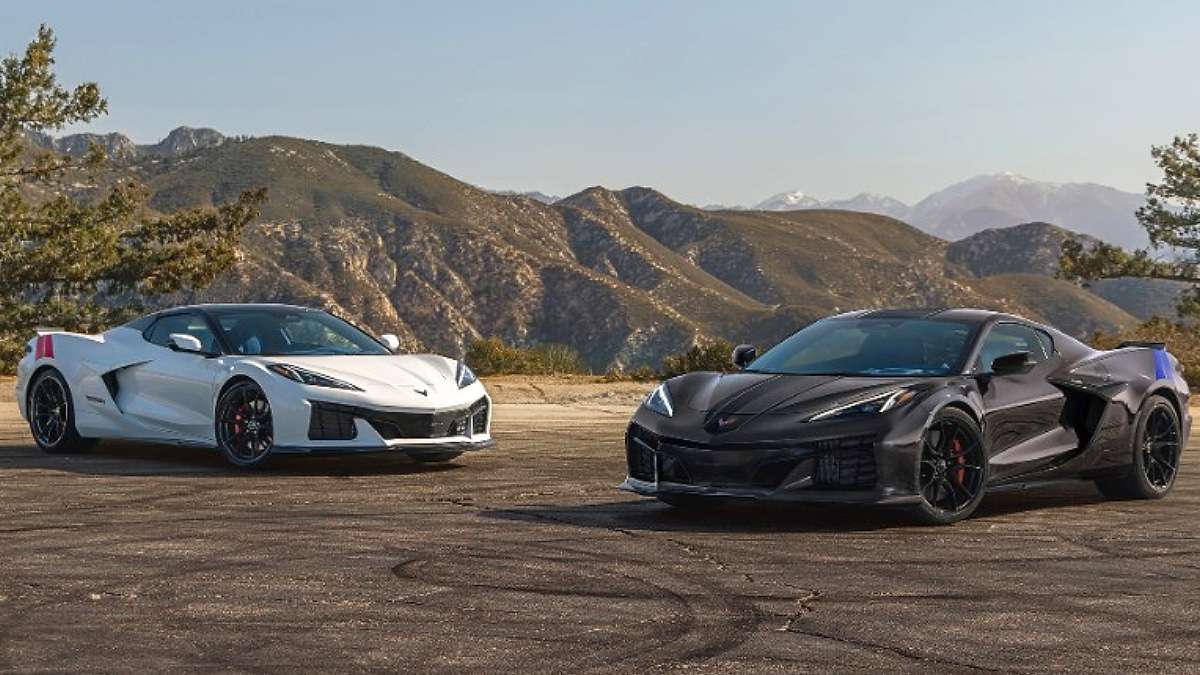

Note: Chevrolet didn't specifically tell anything to the 2027 Corvette buyers, but this is what Torque News thinks regarding the EPA rating.
For decades, Corvette buyers knew exactly what Chevrolet's iconic sports car stood for. It wasn't built around fuel economy. This mirrors a debate playing out in Chevrolet's truck lineup too, where the new 2027 Silverado leans on bigger V8 power rather than chasing smaller displacement. And it certainly wasn't created to chase environmental bragging rights. The Corvette became America's sports car because it delivered something enthusiasts wanted more than anything else, the same instinct that pushed the new Grand Sport back into the spotlight at Sebring: performance.
That is why one of the most interesting details surrounding the new 2027 Chevrolet Corvette Stingray isn't its horsepower figure or even its larger engine. It's a small change buried in the EPA fuel economy ratings. Before we get into why that matters, let me ask you a question. If Chevrolet could give you more power, a better driving experience, and a more exciting engine, would you be willing to give up one mile per gallon to get it? Keep that thought in mind as you read and share your answer in the comments section below.
According to EPA fuel economy data, the 2027 Corvette Stingray equipped with Chevrolet's new LS6 V8 receives an EPA rating of 15 mpg city, 25 mpg highway, and 18 mpg combined. That confirms what we already detailed when the engine upgrade and horsepower jump for the Stingray were first announced. That's slightly lower than the previous Stingray's ratings of 16 mpg city, 24 mpg highway, and 19 mpg combined.
At first glance, that sounds like bad news.
After all, fuel economy improvements are usually celebrated, while fuel economy declines often generate criticism. But I believe that's looking at the situation from the wrong angle, much like the conversation around whether a detuned version of the same 6.7 liter engine might eventually power the next Camaro instead of obsessing over straight line numbers.
The real story isn't that the Corvette lost one mile per gallon.
The real story is that Chevrolet appears perfectly comfortable making that trade.
Why Would Chevrolet Accept Lower Fuel Economy?
That question gets to the heart of what may be happening with the Corvette.
The automotive industry is currently obsessed with efficiency. Automakers are downsizing engines. Turbochargers have become common. Hybrid systems are appearing in vehicles that never had them before, the same shift we have been tracking in GM's broader battery strategy for upcoming EVs. Every engineering decision seems to be evaluated through the lens of fuel economy and emissions.
Then Chevrolet introduces a larger naturally aspirated V8.
That alone makes the Corvette unusual in 2027.
The new LS6 grows to 6.7 liters, replacing the previous 6.2-liter LT2 V8. Along with the larger displacement comes more power and more torque. Chevrolet hasn't hidden the fact that performance was a primary goal of the new engine, the same engine that will also anchor the 2027 Corvette Grand Sport that many enthusiasts have been waiting years to see.
And that's what makes the EPA ratings so revealing. The new LS6 does not appear to bring a major fuel efficiency penalty despite the increase in horsepower, with the Canadian highway figures staying flat even as city consumption ticked up slightly.
The MPG Numbers May Reveal Chevrolet's Confidence
Think about who buys a Corvette.
Most owners aren't cross-shopping hybrid sedans.
Most buyers aren't choosing a Corvette because it gets excellent fuel economy. That mindset has a long history at this brand, and we made a similar point years ago when Chevy's old small block pushrod V8 kept beating turbocharged rivals on efficiency despite the displacement penalty.
They're buying a Corvette because of the sound, the acceleration, the driving feel, and the emotional connection that comes from a naturally aspirated V8.
Chevrolet understands this.
The company knows Corvette buyers care deeply about the driving experience. The small drop in combined fuel economy suggests Chevrolet was willing to prioritize that experience rather than aggressively tune the vehicle to preserve every last MPG, the same attitude reflected in owner feedback we have seen around reliability concerns that surface once Corvette engines are pushed hard over tens of thousands of miles.
In other words, the company appears to be saying something many enthusiasts have wanted to hear for years.
Performance still matters.
Is Chevrolet Returning Corvette To Its Roots?
In some ways, the answer appears to be yes.
The Corvette has always evolved with the times. It adopted fuel injection. It embraced advanced aerodynamics. It transitioned to a mid-engine layout, a shift we explored when looking back at how the C8's mid-engine Stingray changed the ownership experience compared to earlier generations. Chevrolet has never been afraid of change.
But throughout all those changes, one characteristic remained consistent.
The Corvette was always built around driving enjoyment.
The new LS6 seems to reinforce that philosophy.
Instead of shrinking displacement, Chevrolet increased it.
Instead of relying on turbochargers, Chevrolet stayed naturally aspirated, a choice that also defines the range topping Corvette ZR1, which carries the most powerful production engine GM has ever built.
Instead of chasing fuel economy headlines, Chevrolet appears focused on delivering the kind of powertrain enthusiasts actually want.
That's a very traditional Corvette formula.
The Most Interesting Part Isn't The Fuel Economy Loss, It's How Small The Penalty Is
Here's another perspective worth considering.
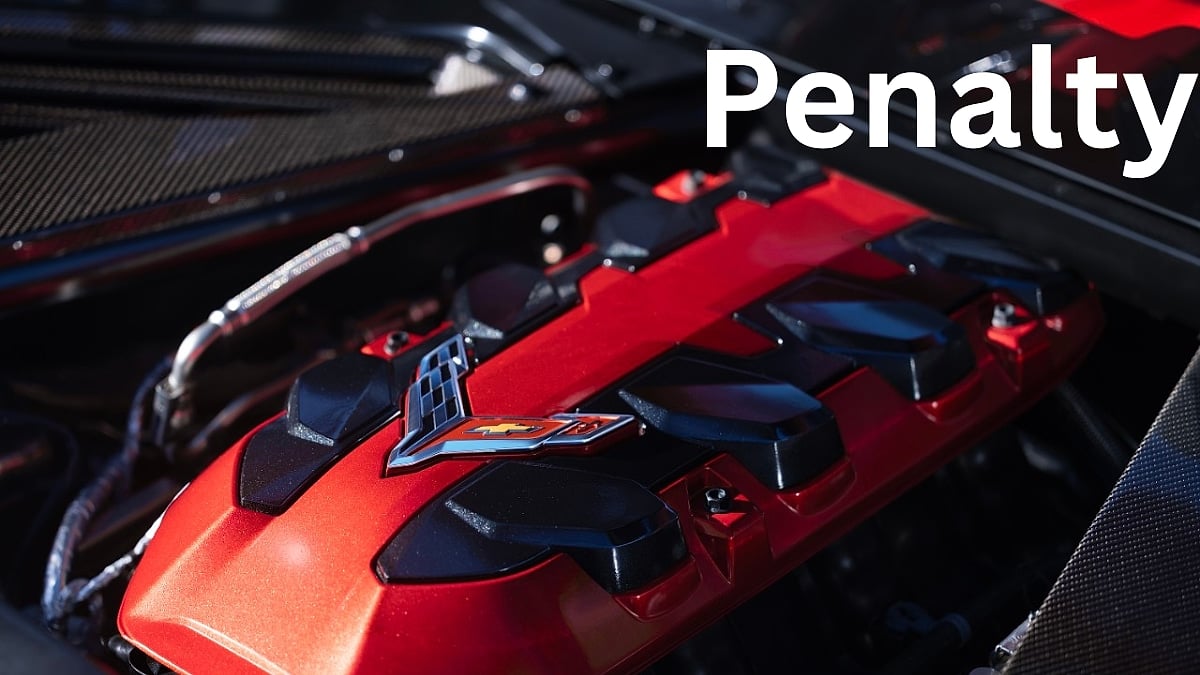
The new LS6 delivers meaningful gains in power and displacement, yet the EPA ratings barely changed.
Think about that.
We're talking about a larger naturally aspirated V8 producing more output while losing just one combined MPG.
That may actually be one of the most impressive engineering achievements behind the new Corvette, and it builds on engine development we have followed since the Z06's LT6 first proved that natural aspiration could still deliver supercar level output without forced induction.
Many enthusiasts expected a larger fuel economy penalty.
Instead, Chevrolet appears to have found a way to significantly improve performance while keeping efficiency surprisingly close to the outgoing model.
That's not a step backward.
That's engineering progress.
Why This Matters Beyond Corvette Buyers
This story isn't really about fuel economy.
It's about priorities.
Across the automotive industry, there's an ongoing debate about what enthusiasts actually want.
Some believe performance cars should become increasingly electrified and efficiency-focused.
Others argue that emotion, sound, character, and driver engagement remain just as important as ever.
The 2027 Corvette Stingray seems to offer Chevrolet's answer.
The company appears to believe there is still a place for a large naturally aspirated V8 in a modern sports car, a belief reinforced by how the same LS6 architecture is now spreading into the next generation Silverado's most powerful naturally aspirated truck engine lineup ever.
And judging by the excitement surrounding the LS6, many enthusiasts seem to agree.
What Potential Buyers May Be Wondering
If you're considering a 2027 Corvette Stingray, several questions naturally come to mind.
Will the additional power be noticeable in everyday driving?
How different will the new LS6 sound compared with the outgoing LT2?
Will the larger engine improve acceleration significantly?
And perhaps most importantly, does the enhanced driving experience justify the small fuel economy tradeoff?
Those are questions enthusiasts will be eager to answer once the new Stingray reaches customers and independent reviews begin appearing.
For now, however, the EPA ratings have already revealed something important.
Chevrolet's Message Is Bigger Than One MPG
The new fuel economy numbers may look insignificant on paper.
But they tell a much larger story.
In an era when many performance vehicles are becoming increasingly focused on efficiency, Chevrolet appears willing to make a different argument.
The company seems comfortable giving enthusiasts a larger V8, more power, and more excitement, even if it costs one mile per gallon.
That's not a compromise.
That's a statement.
And it suggests the 2027 Corvette Stingray is staying true to the philosophy that made the Corvette famous in the first place.
Performance first.
Efficiency second.
For many Corvette enthusiasts, that's exactly what they wanted to hear.
What Do You Think?
Would you gladly give up one MPG if it meant getting more power and a larger naturally aspirated V8 in the 2027 Corvette Stingray? And do you think Chevrolet made the right decision by prioritizing performance over maximizing fuel economy? Let us know your thoughts in the comments section below.
Return tomorrow, or check our Torque News Home Page for more interesting automotive news articles.
About The Author
Armen Hareyan is the founder and Editor-in-Chief of Torque News and an automotive journalist with over 15 years of experience writing car reviews and industry news. Now based in the Charlotte region (Indian Land, SC, he founded Torque News in 2010, which since then has been publishing expert news and analysis about the automotive industry. He can be reached at Torque News on X, Linkedin, Facebook, and Youtube. Armen holds three Masters Degrees, including an MBA, and has become one of the known voices in the industry, specializing in the landscape of electric vehicles and real-world stories of actual car owners. Armen focuses on providing readers with transparent, data-backed analysis bridging the gap of complex engineering and car buyer practicality. Armen frequently participates in automotive events throughout the United States, national and local car reveals and personally test-drives new vehicles every week. Armen has also been published as an automotive expert in publications like the Transit Tomorrow, discussing how will autonomous vehicles reshape the supply chain, and emerging technologies in vehicle maintenance.
Set Torque News as Preferred Source on Google
Follow us today...