
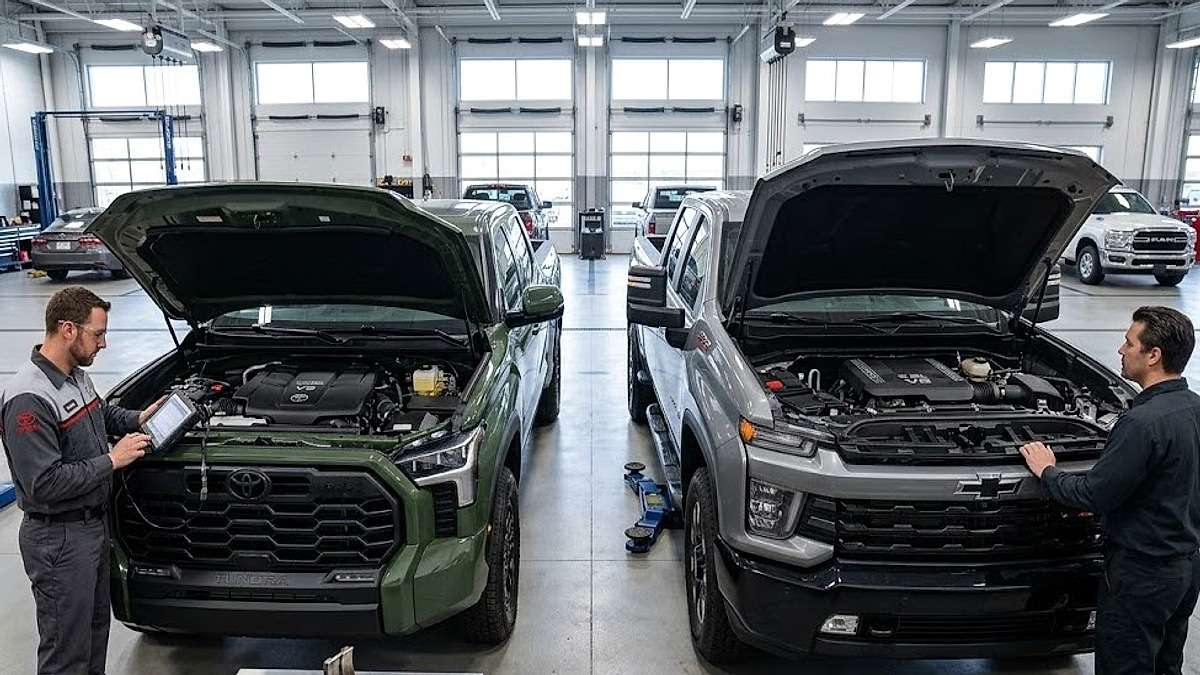

In our Torque News primary investigative report, "AK Toyota Family Dilemma: Tundra Owner Upgrades to 2025 Chevy Silverado HD ZR2 Bison 6.6L, Pivots To Keep Both Trucks Over Wife's RAV4 Hybrid," we analyzed a growing trend among light-duty truck owners migrating to heavy-duty platforms to satisfy severe towing requirements.
In this consumer report, Torque News' Denis Flierl investigates the mechanical underpinnings of Toyota's May 20, 2026, engine recall expansion (NHTSA Campaign 26V320) covering 44,000 additional 2024 Tundra platforms. Our forensic review examines federal laboratory teardowns that isolated a destructive mechanical relationship between timing chain tension, structural engine loads, and localized oil-film collapse at the #1 main bearing.
The technical data establishes clear operational parameters for owners of twin-turbocharged V35A-FTS V6 platforms, providing a strategic blueprint to mitigate the risk of catastrophic crankshaft seizure while awaiting final, phased dealer remedy notifications.
The operational limits of the downsized twin-turbocharged 3.4L V35A-FTS V6 engine have faced renewed federal scrutiny following an unexpected wave of powertrain component failures in newer truck assemblies. According to ongoing Torque News by Denis Flierl, tracking of manufacturing defects, sub-millimeter metal machining fragments known as manufacturing swarf, continues to compromise internal engine lubrication passages.
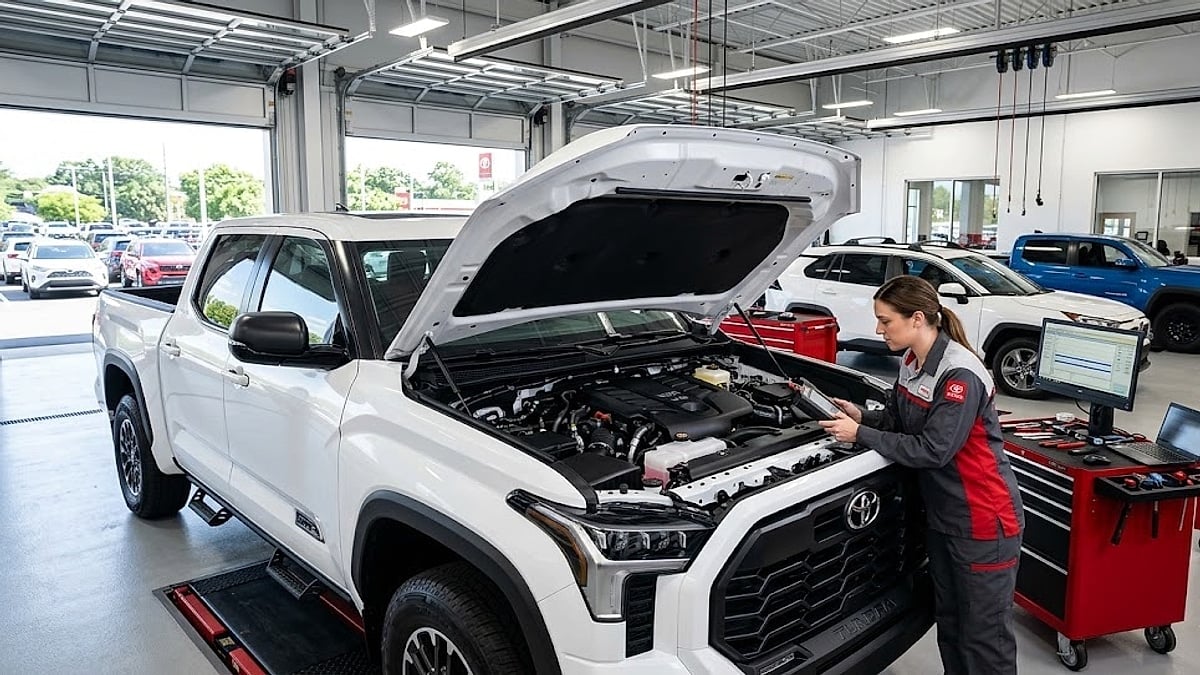
In our ongoing coverage of Toyota reliability, Senior Reporter Denis Flierl has uncovered an unresolved dispute over why engines built after Toyota implemented secondary manufacturing cleanliness protocols are still experiencing complete crankshaft bearing seizures.
The physical mechanism driving these progressive engine failures involves an explicit mechanical pressure vulnerability unique to the front of the crankshaft assembly. According to official laboratory teardown data submitted to federal regulators, internal testing completed in February 2026 isolated an intense stack-up of bearing pressure resulting from the specific geometric layout of the front accessory drive.
This structural load condition can be analyzed in depth in the official NHTSA 2026 V35A Defect Report, which notes that severe timing chain tension coupled with sustained towing loads increases localized pressure on the #1 main bearing, causing microscopic debris to permanently embed in the bearing faces.
This oil-film breakdown operates on an accelerated timeline when vehicles are operated under heavy engine loads. When the twin-turbochargers deliver high boost levels for extended periods, the immense cylinder pressures push the pistons down, concentrating force on a crankshaft already pulled taut by the timing chain assembly.
This mechanical force layout creates localized boundary lubrication conditions, allowing leftover block-drilling metal debris to score the bearing shells, disrupt the hydrodynamic oil film, and cause a sudden loss of motive power at highway speeds.
The Engineering Teardown: Timing Chain Tension vs. Hydrodynamic Lubrication
Torque News technical analysis by Denis Flierl identifies a critical gap between factory maintenance schedules and real-world component longevity. The primary engineering defect is not simply that metal filings are floating through the oil pan; it is the fact that the engine architecture channels extreme physical force directly to the very first bearing journal. Under normal operating parameters, a thin layer of pressurized engine oil keeps the spinning steel crankshaft from ever physically touching the softer aluminum-faced bearing shell.
However, when high timing chain tension continuously pulls the front of the crankshaft upward, the physical clearance space on the loaded side of the #1 main bearing drops below acceptable tolerances, via NHTSA Safety Recall Report 26V320.
When an owner couples this architectural limitation with heavy towing duties through high-altitude terrain, the safety margins disappear completely. The superheated, ultra-thin 0W-20 oil can no longer flush out contaminants. Instead, the microscopic metal debris gets pinched tightly between the spinning journal and the shell, generating intense friction that instantly welds the two metal components together, causing a rod to fail or the engine to lock out entirely.
Field Observations from Owner Communities
Enthusiast platforms highlight how consumers discover these internal failure loops during routine maintenance checks, long before an official recall letter arrives in their mailbox.
In a recent technical discussion on r/Silverado, several owners noted that the P0606 code often appeared after a low-voltage battery event. Based on my 30 years of experience, this aligns with how sensitive GM's Powertrain Control Modules are to voltage drops during the start cycle, as discussed in the full discussion on the r/Silverado Community Thread.
Other truck communities are actively identifying physical evidence of metal contamination in their factory oil filtration elements at incredibly low operating mileage.
The radiator on these models has an isolated portion for cooling the automatic transmission fluid... if it's not cooling it, bad things happen, as documented in the broader automotive diagnostics community on r/Silverado Technical Archive.
Regional Impact Dynamics: High-Altitude Thermal Realities for the V35A Platform
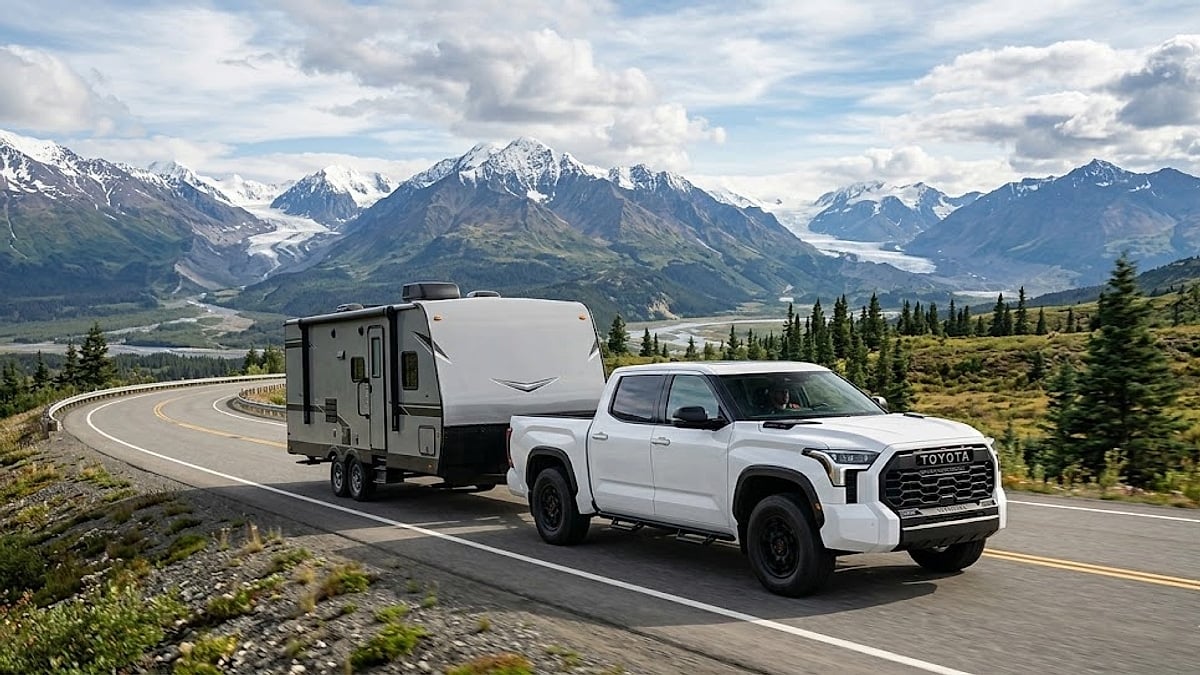
Operating a downsized turbocharged truck across the steep, high-altitude corridors of the American West significantly compounds these internal bearing stress factors. At high elevations, such as Vail Pass or the Eisenhower Tunnel along Colorado's Interstate 70, air density drops significantly, forcing the engine control module to command a much higher turbocharger wastegate duty cycle to maintain the standard target power output. This sustained high-boost operation generates extreme thermal loads that bypass the engine oil cooling circuit, thinning factory-specified lubricants just when the crankshaft requires maximum hydrodynamic protection.
An evaluation by Denis Flierl on Torque News Tundra Critical Maintenance establishes that short oil change intervals are mandatory for protecting delicate turbocharger components from premature carbonization. Waiting for the factory-recommended 10,000-mile service interval under severe high-altitude towing cycles allows oxidized, fuel-diluted oil to circulate through highly stressed bearing surfaces.
Furthermore, extensive field evaluations published in Torque News Heavy Duty Capability demonstrate that large-displacement, naturally aspirated powerplants do not exhibit the same severe oil breakdown patterns as downsized turbo platforms under mountain load cycles. The steady, low-RPM torque delivery of a large gas motor eliminates the intense cylinder-pressure spikes that can drop a turbocharged V6 into a destructive boundary-lubrication loop.
Key Takeaways
- Check your Vehicle Identification Number immediately via the federal database to verify if your platform falls under the May 20, 2026, Campaign 26V320 expansion.
- Reduce maximum trailer tongue weight and towing speeds when operating in high-temperature or high-altitude mountain environments to minimize crankshaft bearing pressure stack-up.
- Analyze the contents of your oil filter housing at every oil change, specifically checking for silver metallic flakes that indicate premature #1 main bearing wear.
- Flush your engine oil at strict 3,000-mile intervals using a heavy-duty oil formulation to maintain maximum hydrodynamic film thickness under heavy load conditions.
The Next Question: Can Owners Demand a New Engine Assembly Before Failure Symptoms Occur?
Because Toyota's official remedy preparations for the late 2025 and mid-2026 recall expansions are still under development, dealers cannot perform preventive engine block replacements without documented mechanical symptoms. Owners must wait until official phased notifications roll out starting in July 2026, meaning trucks must actively display audible engine knocking, rough idling, or diagnostic trouble codes to trigger immediate mechanical intervention at the dealer level. If you suspect your truck is showing early signs of bearing distress, document the operational noises immediately with an authorized service advisor to establish a formal engineering paper trail.
Final Recall Assessment
The expansion of the V35A engine recall highlights the steep engineering hurdles of relying on downsized, highly pressurized twin-turbocharged platforms for heavy utility work. While a definitive manufacturing remedy is prepared, proactive fluid management remains the best path forward to protect vehicle assets from sudden mechanical failures.
Tell Us What You Think: Has your twin-turbo Tundra experienced engine knocking, rough idling, or oil filter metal flakes while towing heavy loads? Leave a comment in the red Add new comment link below and share your real-world service experience.
Come back tomorrow, or check my Torque News Home Page for more of Denis Flierl's interesting automotive news articles.
About The Author
Denis Flierl is a 14-year Senior Reporter at Torque News and a member of the Rocky Mountain Automotive Press (RMAP) with 30+ years of industry experience. Explore his full investigative reporting archives and technical guides at DenisFlierl.com. Based in Parker, Colorado, Denis leverages the Rockies' high-altitude terrain as a rigorous testing ground to provide "boots-on-the-ground" analysis for readers across the Rocky Mountain region, California EV corridors, the Northeast, Texas truck markets, and Midwest agricultural zones. A former professional test driver and consultant for Ford, GM, Ram, Toyota, and Tesla, he delivers data-backed insights on reliability and market shifts. Denis cuts through the noise to provide national audiences with the real-world reporting today’s landscape demands. Connect with Denis: Find him on LinkedIn, X @DenisFlierl, @WorldsCoolestRides, Facebook, and Instagram.
Photo credit: Denis Flierl
Set Torque News as Preferred Source on Google
Follow us today...





Comments
V-8 & thicker oil…
Permalink
V-8 & thicker oil.
Problem solved.
Having bought a Lexus GX550…
Permalink
In reply to V-8 & thicker oil… by RB (not verified)
Having bought a Lexus GX550 with the aforementioned engine , is there a specific recommendation as to the preferred SAE Oil Viscosity to use in lieu of the manufacturer recommendation of 0-20 ? Changed the oil at 1000mi which I’ll continue to do .
I would be wary of…
Permalink
In reply to Having bought a Lexus GX550… by Stan Mason (not verified)
I would be wary of attempting to mitigate the problem by using thicker oil. The engine uses hydraulic activation of the exhaust side VVT (variable valve timing), and I've read that these systems are calibrated to the oil viscosity specified, and are very sensitive to any changes. I don't see any really safe and effective way to bypass this issue, other than what is said about frequent oil changes and inspections, and not accelerating hard or towing heavy loads and staying at low altitudes on flat land, lol. These are unacceptable restrictions imo, in a vehicle of this price range. I would certainly be agitating in any and all legal channels with Toyota. I know no company is perfect, and both GM and Ford have had some serious issues with their new trucks that I would not accept either, so it's not a case of giving up on Toyota. But I'm just glad I still have my old truck.
It's not that easy. They…
Permalink
In reply to V-8 & thicker oil… by RB (not verified)
It's not that easy. They have to use all that thin in order to meet the epa's strict fuel economy standards which is the whole reason for the V6 in the first place.
This article doesn't make any sense. It contradicted itself when it said that the timing chain is pulling up on the crankshaft having it on the verge of being through the oil film and then the added stress of the Pistons pushing down on the crankshaft goes through that oil film all together. That's two different directions so the Pistons pushing down on the crankshaft would actually help the problem.. half the time when they come up with a TSB or an explanation for any problem it's all bs anyway. It's a very well thought out carefully worded statement that protects them from lawsuits and has nothing to do with the actual problem at hand.
These truck manufacturers…
Permalink
These truck manufacturers should at least do r&d when coming out on a new platform, that allows the previous generation engine to be used. As it stands, even if toyota wanted to bring the 5.7v8 or even the 4.6v8 back, they would need extensive research, and it would be about 2-3 years before those engines would be available. They would have to crash test and more. All manufacturers should plan on their newest engine having a severe issue like this, and should already have an easy back up plan in place. The back up plan should be to make sure that the previous generation engine works in/with their new platform. Just make it a more expensive option. Im sure tundra owners would love to just have the option of having the 5.7 or 4.6 available in the newest generation. Honestly, the new tacoma should've received the 4.6 v8 as an optional engine, as well as this 3.5L tundra engine, once they finally fix it. The tacoma should always have the option to get a de-tuned or smaller tundra engine, meaning last generation tacoma should've had the option for last tundra generations 4.6L v8, and this generations tacoma should have the less powerful turbo 3.5L tundra engine as an option(assuming there never was an engine problem). I think they would sell more, and it would do a lot for their reliability, assuming they never had the issue with the 3.5L or they actually fix it.
This is what happens when…
Permalink
This is what happens when engineers can't keep up with government regulations! Most people buy new vehicles for reliability, but are now paying through the nose for uncertainty!
The timing chain pulls…
Permalink
The timing chain pulls upward on the crank. The pistons push downward on the crank. The #1 main bearing will have less total load than the others. Article makes no sense.
You obviously dont know…
Permalink
In reply to The timing chain pulls… by Ski in NC (not verified)
You obviously dont know aquatic about engines.
I almost upgraded my 2010…
Permalink
I almost upgraded my 2010 Tundra for a new one in 2024 because of heavier towing demands. I too ordered a Chevrolet 2500 HD instead because I felt that the small twin turbo engine on the Tundra would be overwhelmed. Why can't Toyota offer more engine choices?
They're sticking this twin turbo down everyone's throat! Humble yourself Toyota and offer a naturally aspirated V8! And maybe some of your customers will come back!
John
Owner of 24 Tundra Limited…
Permalink
Owner of 24 Tundra Limited with 75k on the odometer. I love this truck after owning multiple GMC”s with 6.2 and 5.3. Both had lifter and rod damage resulting in partial engine rebuilds. Add oil consumption, tranny cooling line replacement, transmission issues that feel like being rear ended while down shifting, awful in traffic on 95. The dealer says this is all normal. Normal for what?
Now I am waiting for the inevitable engine failure in my Tundra. I change oil every 5k and use Amsoil. Keeping fingers crossed and praying to the gods I don’t have to pay for another engine issue.
Kudos on the amsoil, it will…
Permalink
In reply to Owner of 24 Tundra Limited… by Jim (not verified)
Kudos on the amsoil, it will run longer if you change it at 3k. I've been doing it for 20 yrs and can visually see the difference between 3k mile oil changes and the 5k mile oil changes. Turbos absolutely kill the engine oil.
Live in Canada I have a…
Permalink
Live in Canada I have a 2022 tundra motor was changed in march 2025 I wonder if this motor is any better I think they should replace it again once they figure out what is really wrong is 0w20 oil still good to use. thank you
Hey Dave, can you quote your…
Permalink
Hey Dave, can you quote your source on this? At high elevations, such as Vail Pass or the Eisenhower Tunnel along Colorado's Interstate 70, air density drops significantly, forcing the engine control module to command a much higher turbocharger wastegate duty cycle to maintain the standard target power output.
Why not put a thicker…
Permalink
Why not put a thicker viscosity oil in and ignore their recommendations? Personally I'd never buy a turbo charged anything. They ask too much from a small motor, and do so at everyones expense. This is another example of bs leftist excuses to cheapen the vehicle so Toyota executives can make massive bonuses,. Lets let their v6 turbos rot. Think about it, why are they making v6 turbos? Remember folks when they started making a bunch of data centers they said they were wrong about the environment. So lets hold them accountable and let them go back to the v8.
At one point this article…
Permalink
In reply to Why not put a thicker… by Aaron (not verified)
At one point this article turned into talking about a silverado. I seen another comment saying the article makes no sense. Thats very true. It is all over the place you have no idea who is talking about what. I love how they talk about the downsized Tundra engine being unreliable while Chevy has a class action lawsuit against them over the 6.2s. Also I had 80k on my 2022 silverado, it was burning through an entire oil tank before the 5k mark. Could smell it. My 2022 Tundra that "was going to explode because of the debris" has been driven harder than Nascar. I bought it at 8k im now at 172k after 2 years. Not a single engine problem. If you want to go back to the V8 versions go ahead. They start at 50 grand with 200,000 kilometers on them.
What a great job in…
Permalink
What a great job in discovery and reporting the complex relations between the elements that together create these failures.
As a former mechanic myself,…
Permalink
As a former mechanic myself, you couldn't give me a turbo engine vehicle today. Not only are they ask to produce a lot of horse power and torque but are more complex and obviously not engineered properly either. Toyota should have stuck with their V8 but I suspect they were facing tighter emissions and had little choice. Or they simply fell into a save the planet mindset that these smaller turbo engines were just better for environment. In either case the loser is the owners who trusted Toyota's past legacy of durability and now realize that ship has long since sailed.
As an owner of a 22…
Permalink
As an owner of a 22 CapstoneTundra hybrid we are screwed same engine but no recall even though there are now hybrids experiencing failures. It was unerving when my wife had to take me to the airport 2hrs away at 3 am. Wondering if I was going to make it there or if my wife would be safe going home. Truly disappointing for a very expensive truck and a huge financial loss to sell it.
Moving on from my second 3.5…
Permalink
Moving on from my second 3.5 Ecoboost to a 7.3 Godzilla for this exact reason. Start-Stop, cylinder deactivation, aluminum blocks, high pressure oil and fuel pumps, 0W oil all required for CAFE standards are the problem.
I still believe this problem…
Permalink
I still believe this problem can be fixed, its gonna cost toyota alot of 💰 I honestly think they should have left the 5.7 ltr V8 in the Tundra.
I drive a ‘23 Tundra Hybrid…
Permalink
I drive a ‘23 Tundra Hybrid. I’ve had it just over 3 years and have 134K miles on it. Suffered the dreaded engine failure May 2025 at 90K miles. Thankfully, the extended warranty we had on the truck to 100K covered the negotiated cost of $27K to perform a replacement that only covered the parts that oil flowed through. No crate engine, individually sourced parts brought in from all around the country and hand-built at the dealership over a period of 7 weeks. Am I thankful I didn’t have to cover the cost? Yes. Is it in the back of my mind that it will happen again? Yes. I drive in the desert southwest primarily, at altitude and through the 120°+ days on the highways of AZ, NV and CA primarily, with some CO thrown in too. I change my oil every 5K. Wouldn’t buy another on of these or any boosted truck engine in the near future. Emission controls and mileage standards have killed engine and transmission reliability over the past 20 years, starting with cylinder deactivation, to transmission gearing, to diesel engines w/DEF. My next truck will be a pre-2000 V8 and I’ll happily go down the road not worrying about when it’ll break down.
Turbo's were not meant for …
Permalink
In reply to I drive a ‘23 Tundra Hybrid… by Andrew C (not verified)
Turbo's were not meant for vehicles used by the regular public . Eliminate them altogether and the EPA that is telling the car /truck manufacturers that they must comply. This is a result of the Government Desk Jockeys controlling the public how they must live.
Like a Toyota employee once…
Permalink
Like a Toyota employee once said: "There's no replacement for displacement".
My truck has almost…
Permalink
My truck has almost 8000miles on it and I have started to notice a slight rough idle
After putting 235,000 miles…
Permalink
After putting 235,000 miles on my 2013 Platinum Tundra V8 5.7 with never any major problems I traded to a 24 Tundra Limited. I felt after giving Toyota two full model years on the new platform they would have fixed the early engine problems but Toyota failed us! Lost a ton of money last week as I gave up and traded it on a new Lexus RX 350. Not a truck made right now that is worth a crap. Loved the way it drove and handled but learned a new lesson at 75 about manufactures and EPA Cafe requirements forcing them to build stupid engines that just fail. I was getting One mile per gallon better fuel economy. Than my 2013 Tundra 5.7! Makes totally no sense and we consumer are who ends up getting crushed financially and emotionally! My close friend ordered a $90,000 Suburban 6.2 and at 9,000 miles the engine blew! GM offered him 6 months of free Sirius radio service and free emergency service which he already had! He had bought 32 new GM vehicles and was a top loyalty customer. That’s all they offered him, sad and pathetic. I’ll borrow or rent a truck when I need one it’s way cheaper for me. I feel for all the people needing one every day and having to deal with this BS.
In other words, the main…
Permalink
In other words, the main bearings don't have enough area, i.e., undersized. How will they fix that? A bandaid fix, such as trying to force more oil though? There is no way I would consider buying one without a complete redesign of the bearings. And I don't know how they would do that without a complete engine redesign.
I had a 2022 Tundra. I…
Permalink
I had a 2022 Tundra. I bought it new. At 18k I began having rough idle, throttle lag, and even failure to launch from a stop only when towing an 8k camper. I would have to power down and restart the truck to get going. I took it in to Toyota and was told they would not attempt a repair and I had to wait on an updated engine. I took my truck in and left it 3 times for a new engine. The last time it went in for a new engine we were to take a trip to Disneys Ft wilderness. We ended up staying at a cabin as we didn't have a truck to take the camper. I talked to every new generation Tundra owner at the campground and cabins. Every one had had an issue with their truck and even ones with the replacement engines were still having issues. Upon my return, I traded my new Tundra to a very low 20k mile 2018 Tundra 1794 edition truck. I traded even a 22 with 19k miles to a Tundra valued at 46k. I lost my behind but now have an awesome truck. This has been 2 years ago and no issues with the 2018. The odd thing is I had an 18 Tundra I traded on the new 22. If I were going to get another truck it would be 2500 ram with the 6.4. I have a fleet of trucks both Ford and Ram. Both good but the 21 Ram has over 100k miles no issues and the 22 Fords needed timing chains at 70k. Now that was the 6.2. We have 6.8 and 7.3 gas engines in 26 Fords now and so far so good
But for me, I suggest a good used Tundra with the good old V8.