
Dumping a notoriously glitchy Chevy Traverse for a pristine Toyota Highlander should feel like escaping a bad marriage.
You buy the legendary Japanese badge, breathe a sigh of relief, and prepare for a decade of stress-free driving.
Then you log on to an owner forum and discover your "bulletproof" family hauler is packing an unexpected $9,000 transmission reality check.
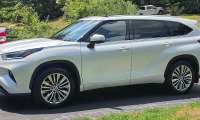
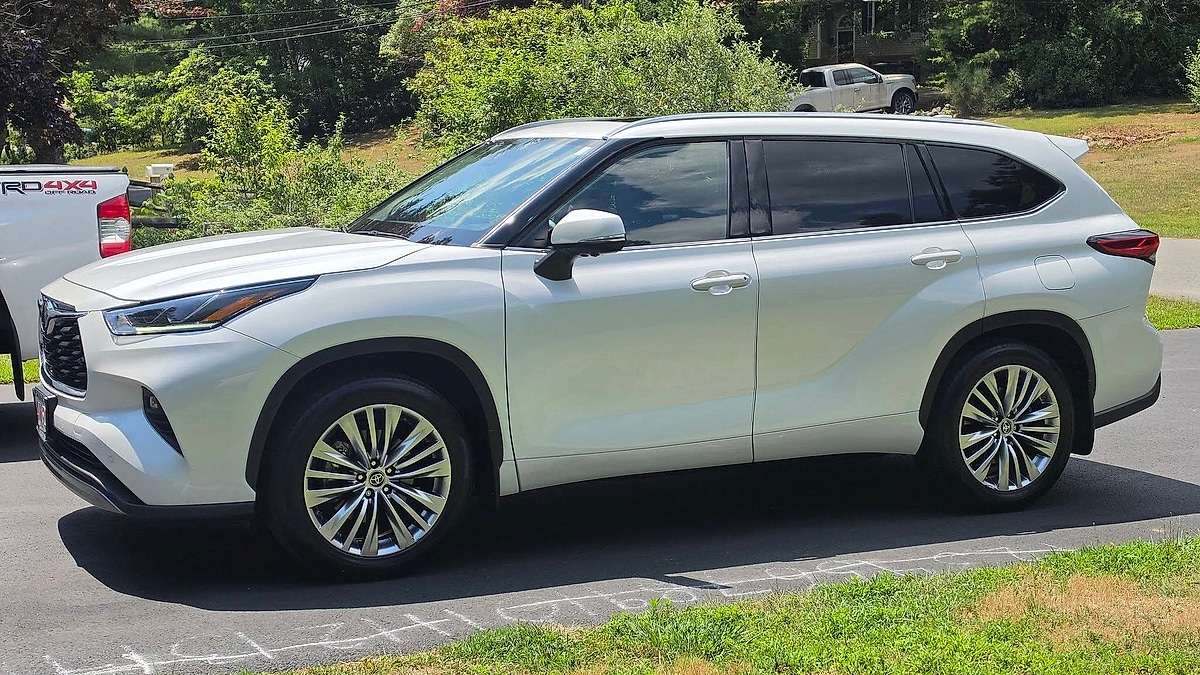
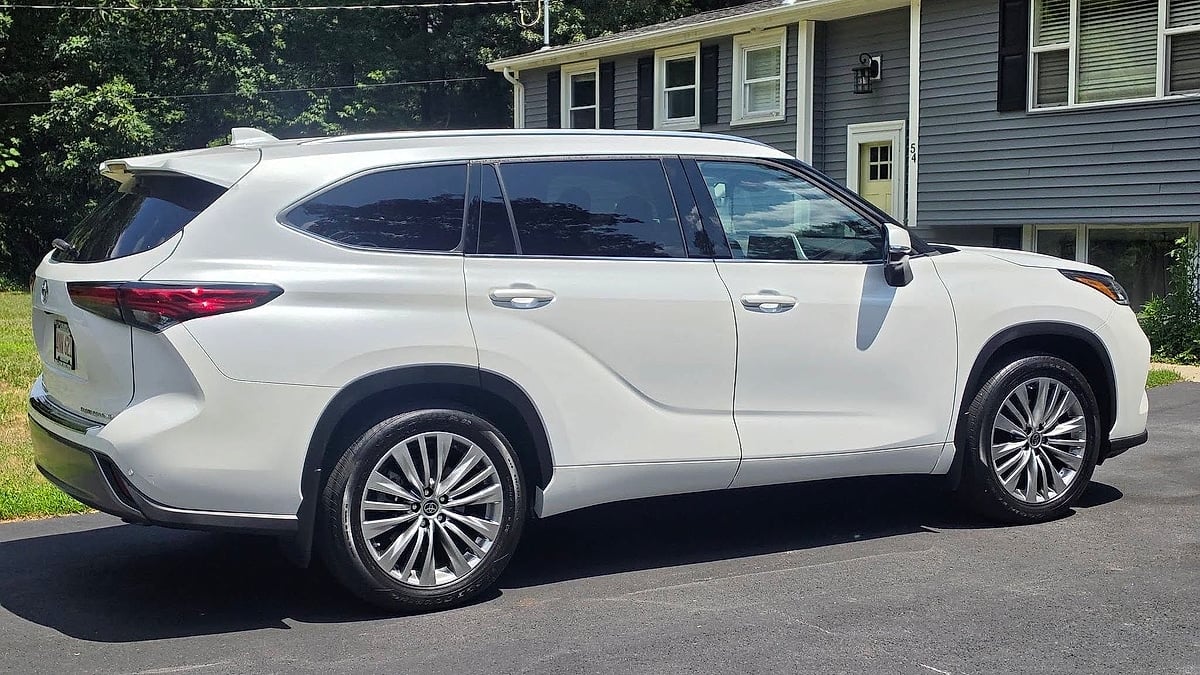
That is exactly the mechanical whiplash hitting domestic defectors right now. Take Tom Dumont from Boston, Massachusetts, who recently took to the Toyota Highlander Owners Club Facebook page to share his family's drastic garage transformation.
“Got rid of the Chevy Traverse and got the wife a 2023 Highlander Platinum with only 18k miles on it... Her first ever non-GM vehicle, big step for her," Dumont posted. "I made the switch from GM 4 months ago when I got rid of my Chevy Suburban and bought a Toyota Tundra... However, I had no idea the transmissions were known to have this many issues in the 2.4 turbo Highlanders... Just wondering, besides the warranty, if there's anything I can do to help avoid a major transmission failure in the future?”
The Great Japanese Reliability Myth Meets Reality
For decades, the standard automotive script has been incredibly predictable. You buy a domestic product, deal with structural headaches, and eventually run to a Toyota dealership to seek ultimate mechanical asylum.
But as an automotive journalist with over 30 years of hands-on experience, I am here to tell you that the modern automotive landscape has completely changed. The massive pressure on automakers to hit brutal corporate average fuel economy targets has forced even legendary manufacturers to push hardware to its absolute limit.
The hidden story here isn't just that a family changed their brand loyalty. The real story is that modern engineering compromises have completely leveled the playing field, leaving unsuspecting buyers to deal with massive dealer backlogs and complex software glitches.
Three Massive Class-Action Lawsuits Blow the Lid Off the 8-Speed
If you think Tom is just suffering from internet-induced forum panic, you need to look at what is happening in federal courtrooms right now.
According to a major investigative report by Carscoops, Toyota is currently facing three distinct class-action lawsuits targeting early mechanical failures, harsh shifting, and sudden power loss in its modern 8-speed automatic gearboxes.
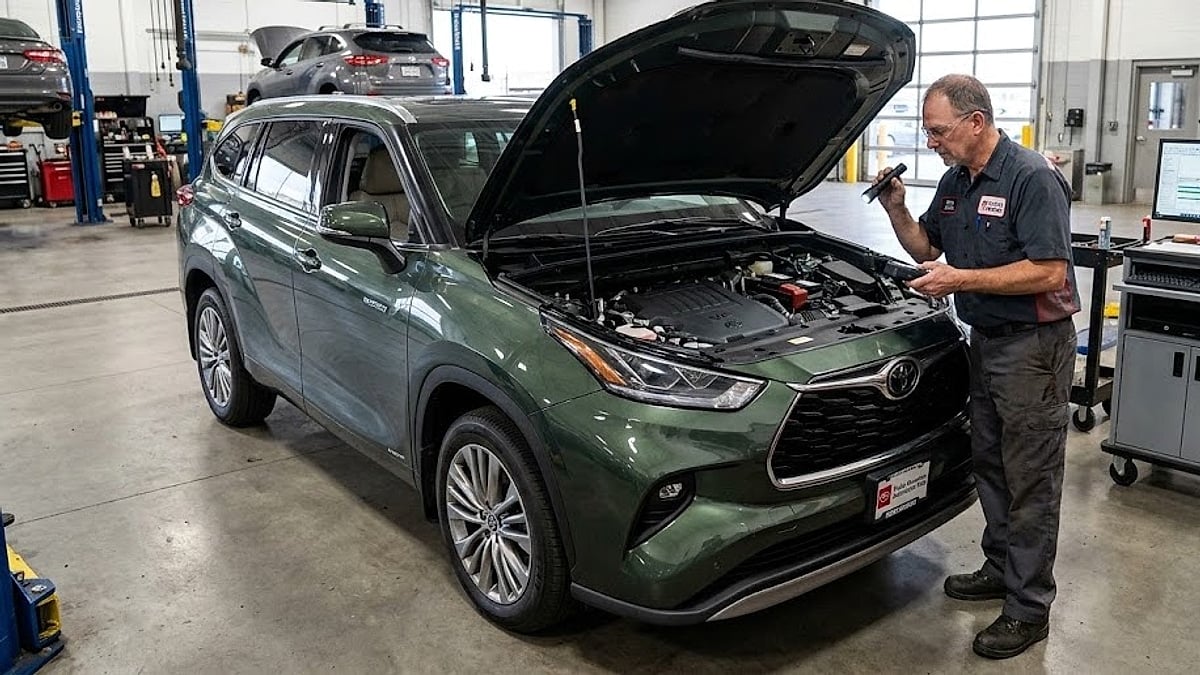
The legal filings paint an incredibly damning picture of contemporary powertrain engineering. The lawsuits openly allege that "excess heat reportedly builds up inside the gearbox, accelerating wear and degrading the transmission fluid," while faulty software programming aggressively forces the vehicle to upshift way too early.
This programming creates a continuous micro-shuddering effect that destroys internal components.
As legal specialists at Ted Law formally documented, these aggressive, emissions-focused software calibrations can lead to complete transmission failure shortly after the factory powertrain warranty expires, leaving owners stuck with replacement bills that often top $7,400 to $9,000.
Unmasking the Real Root Cause: UA80E vs. UB80
To truly understand what is going on beneath the floorboards, we have to look directly at the engineering changes that occurred between vehicle generations. For years, the Highlander relied on a 3.5-liter naturally aspirated V6 paired with the notorious UA80E 8-speed automatic transmission.
In my investigative tracking of manufacturing defects at Torque News, I previously exposed that Toyota Highlander UA80E Eight-Speed Transmission Failures Cost Owners $12,000 After Warranty Expiration due to severe pitting defects hidden deep within the front carrier assembly pinion shafts.
That specific mechanical nightmare resulted in the infamous acoustic "whine of death," an unmistakable metal-on-metal drone that signals total transaxle destruction.
However, when Toyota dropped the V6 in 2023 in favor of the 2.4-liter turbocharged four-cylinder engine, they quietly swapped the internal layout to a revised architecture known as the UB80 series.
As I detailed in a follow-up analysis titled "Why Your 2022-2024 Highlander is Shifting Oddly," this updated transaxle uses modified gear ratios designed specifically to handle the sudden, low-end torque spikes of forced induction.
But while the UB80 fixed some of the old mechanical carrier bearing vulnerabilities, it introduced a frustrating software-driven reality check.
Because the computer is desperately programmed to chase high fuel economy ratings, it cuts off initial throttle response, leaving drivers to deal with an unpredictable "dead pedal" hesitation.
High Altitude Hates Soft Software Calibration
This software struggle becomes incredibly apparent when you drive these modern vehicles through demanding high-altitude environments.
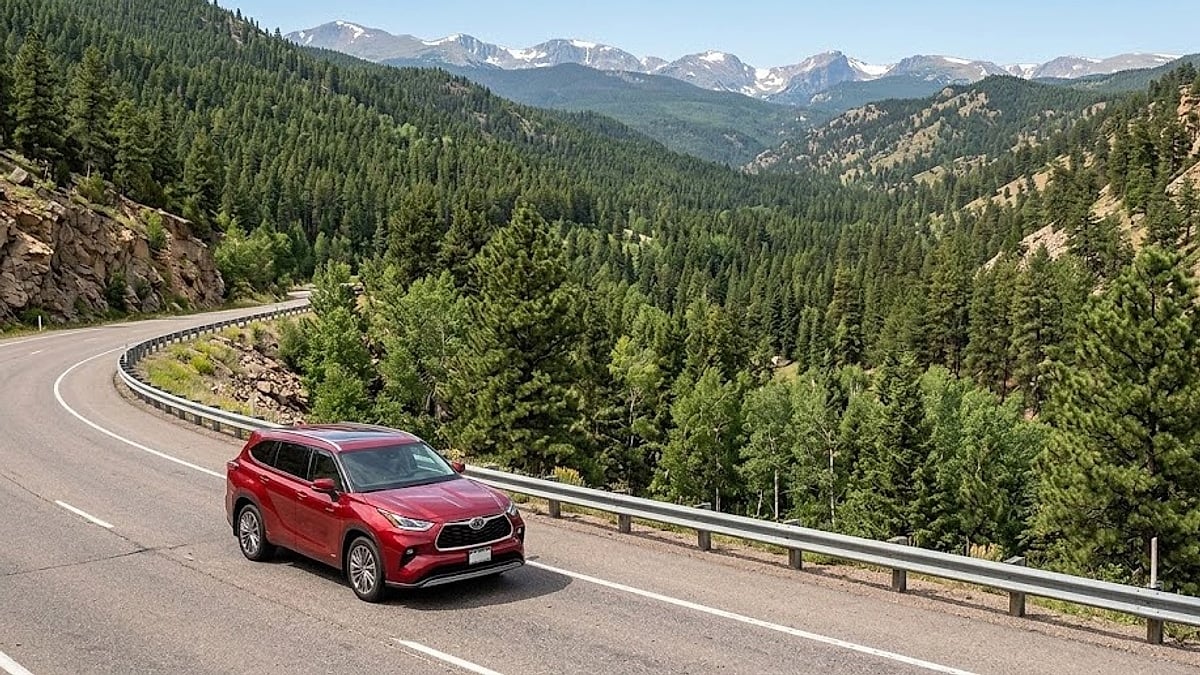
Out here in Colorado, testing a vehicle along the steep, punishing inclines of the Floyd Hill or pushing up toward the Eisenhower Tunnel will quickly expose any inherent flaws in an electronic control map.
When a turbocharger faces thin mountain air, the engine control module has to carefully balance boost pressures, throttle angles, and transmission gear holding. If the factory software is poorly calibrated, a vehicle will hunt erratically between gears, generating excessive internal friction and dangerous thermal spikes.
For cross-shoppers leaving a heavy Chevy Suburban or a Traverse, this sudden, high-tech hesitation feels completely unnatural compared to the predictable behavior of an old-school domestic powertrain.
The Secret Software Fix Hiding in the Service Counter
Thankfully, if you own a 2023 model like the one in Tom’s garage, your transmission problem isn't necessarily a terminal mechanical failure. The distinct 1- to 2-second hesitation you experience when accelerating from a stop is actually a known logic error that can be completely overwritten at the dealership level.
According to National Highway Traffic Safety Administration documentation, Toyota officially released Technical Service Bulletin T-SB-0087-23 to address this exact operational issue.
"Some 2023 model year Highlander vehicles may exhibit... Hesitation when accelerating from a stop or Non-linear acceleration from a stop or rolling stop with steady throttle," the official bulletin states.
To permanently eliminate this sluggish throttle behavior, a dealership technician must connect the vehicle to their specialized GTS+ diagnostic platform and flash-reprogram the Engine Control Module with an updated calibration file. This update completely re-maps the throttle progression, delivering a smoother, safer, and far more predictable driving experience.
Next Question: How Do I Prevent Thermal Degradation on a "Lifetime Fluid" Gearbox?
The very next question that any smart vehicle owner will ask is: If the factory software is constantly trying to cook the transmission fluid to save gas, how do I keep my transmission alive after the warranty ends?
The answer requires you to completely reject the manufacturer's marketing claims regarding "lifetime" automatic transmission fluid. There is no such thing as a lifetime fluid; running fluid past 50,000 miles under heavy thermal stress will rapidly oxidize the oil, destroying its lubricating properties and wearing down the clutch packs.
To protect your vehicle, you should proactively drain and fill your transmission fluid every 45,000 to 50,000 miles.
Additionally, you should routinely drive the vehicle with the ECT/Power Mode toggled on, which alters the computer's shift mapping to hold gears longer, reducing the constant torque converter locking and unlocking that creates excessive internal heat.
Navigating the Modern Reliability Minefield
The days of assuming a vehicle is flawless just because it wears a specific badge on the grille are officially over. By combining proactive fluid changes with targeted factory software updates, modern buyers can successfully safeguard their vehicles against expensive out-of-pocket failures.
How About You? Have you noticed a scary acceleration lag or a strange shifting hesitation in your newer vehicle? Let us know your experience by leaving a comment in the red "Add new comment" link below!
There’s More Coming Tomorrow… Also check out my Torque News Home Page for more of my informative Toyota Highlander news articles.
About The Author
Denis Flierl is a 14-year Senior Reporter at Torque News and a member of the Rocky Mountain Automotive Press (RMAP) with 30+ years of industry experience. Explore his full investigative reporting archives and technical guides at DenisFlierl.com.
Based in Parker, Colorado, Denis leverages the Rockies' high-altitude terrain as a rigorous testing ground to provide "boots-on-the-ground" analysis for readers across the Rocky Mountain region, California EV corridors, the Northeast, Texas truck markets, and Midwest agricultural zones.
A former professional test driver and consultant for Ford, GM, Ram, Toyota, and Tesla, he delivers data-backed insights on reliability and market shifts. Denis cuts through the noise to provide national audiences with the real-world reporting today’s landscape demands.
Connect with Denis: Find him on LinkedIn, X @DenisFlierl, @WorldsCoolestRides, Facebook, and Instagram.
Photo credit: Denis Flierl via Tom Dumont
Set Torque News as Preferred Source on Google
Follow us today...