
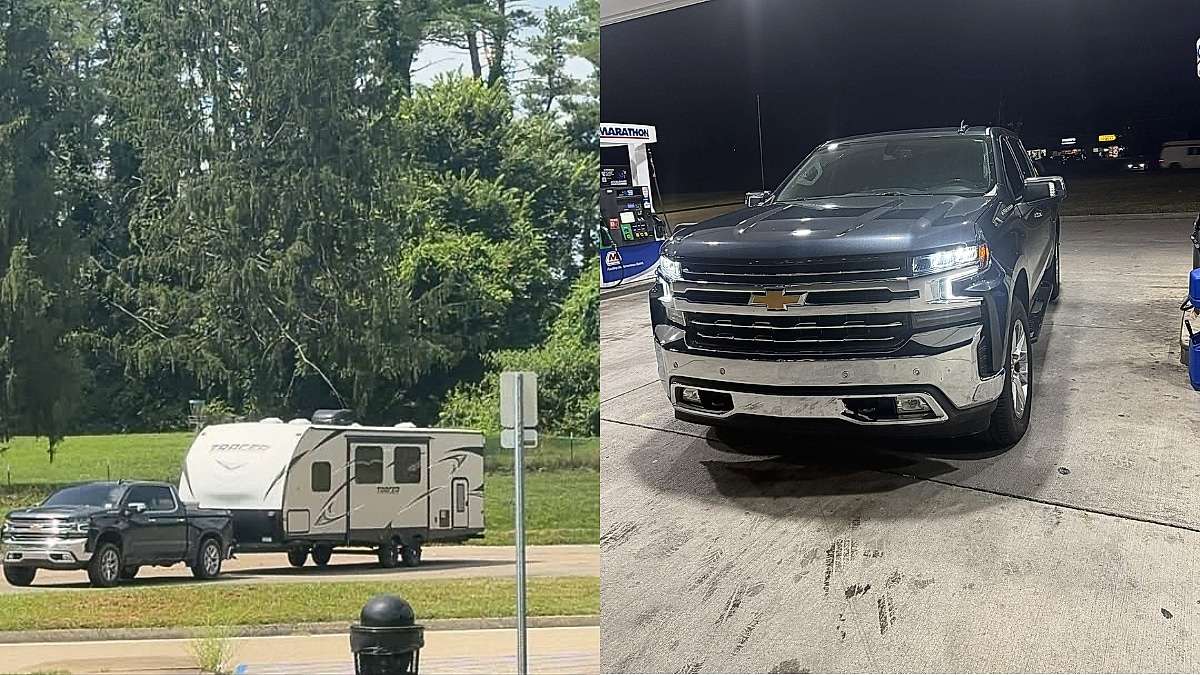

A 2021 Chevrolet Silverado owner expected a stressful first trip pulling his 34-foot camper through the mountains of West Virginia. But, instead, his experience revealed something many truck buyers still underestimate. Today's half-ton pickups aren't just capable of towing heavy trailers. Instead, they're engineered to make it feel almost routine. Even his highest transmission temperature of 196°F told part of that story.
Today's story comes from the 2022 2021 2020 2019 Chevy Silverado and GMC Sierra Owners group, where one man's first big tow turned into a lesson for every camper owner watching from the sidelines. This story connects directly to the ongoing conversation about how far the half ton Silverado has evolved since its early towing tests, and it also echoes concerns raised when payload limits catch owners off guard.
Timothy Laxton posted this on his own page, and it quickly spread through the group. He wrote:
"Pulling a 34 foot camper with my 2021 Chevy Silverado for the first time. I am highly impressed. Actually didn't think it would do this good. Highest trans temp I've gotten has been 196, but that's to be expected traveling the mountains of WV. Yes I have a weight distribution hitch I just have a 3.5 inch level on the front."
That is a confident post from a first time tower. But is it the full picture? Let us break down what actually happened, and why it matters so much for anyone eyeing a similar setup.
What Happens When A Half Ton Truck Meets A 34 Foot Camper For The First Time?
Most new owners expect the worst on their first big trip. Timothy admitted he did not think his truck would perform this well. That surprise is common. Half ton trucks have quietly become far more capable than their reputation suggests, a shift that shows up again and again in owner reports like the one covering a Silverado EV owner who found towing far more pleasant than his old Suburban.
The mountains of West Virginia are not gentle. They are steep, winding, and unforgiving on any drivetrain. A 34 foot camper adds serious wind resistance on top of raw weight. For a first timer to come away impressed instead of shaken says something about modern engineering, not just luck.
Is 196 Degrees A Safe Transmission Temperature When Towing In The Mountains?
Timothy noted his highest transmission temperature was 196 degrees. That number alone tells only part of the story. Most modern automatic transmissions run comfortably between 175 and 225 degrees under load. Anything creeping past 240 starts shortening fluid life fast. So 196 during a mountain climb is not alarming. It sits right in the expected range for a hard working half ton.
Still, this is exactly the kind of detail that separates a good tow from a damaging one. Owners chasing similar climbs should treat 196 as a checkpoint, not a target to beat. Watching that number the way Timothy did is a habit every new tower should adopt, especially those following the same routes discussed in stories about engine debates among Silverado owners comparing torque and reliability.
Why Do Half Ton Trucks Still Struggle With Payload Even When Towing Feels Easy?
Here is where Timothy's story gets interesting, and where the comment section pushed back hard. Corey Pruitt jumped in and said he added bags to the back to fix the sag on his own truck. That single comment reveals a truth many first time owners miss. A truck can feel unshaken while towing and still be fighting a payload problem underneath.
Timothy Maslowski offered a sharper take, writing that half ton trucks handle the actual weight just fine, but that trailer manufacturers build campers too light and too large for the truck's real limitation, which is size, not raw pulling power. That distinction matters. Weight is rarely the true enemy. Frontal area, sway, and length are what test a half ton the hardest, a pattern that shows up repeatedly in reports like the one about a 29 foot trailer exposing instability behind a shorter wheelbase truck.
Then Greg Blandino added a warning that payload on these trucks is genuinely limited, and suggested checking shock stops on the rear before deciding the truck is a keeper. That is not pessimism. That is the kind of blunt advice that saves someone from a payload mistake down the road, similar to the lesson learned in the story of a camper that pushed a half ton truck 400 pounds over its GVWR.
Jesse Souders Gochenaur compared notes from the diesel side, noting his 34 foot trailer weighs about 11000 pounds fully loaded behind a 2024 Ram 2500 with the 6.7 Cummins. That comparison matters because it shows the difference between a half ton stretching its limits and a heavy duty truck barely noticing the load, a gap covered in depth in stories about Duramax owners who say the low end torque changes everything when towing.
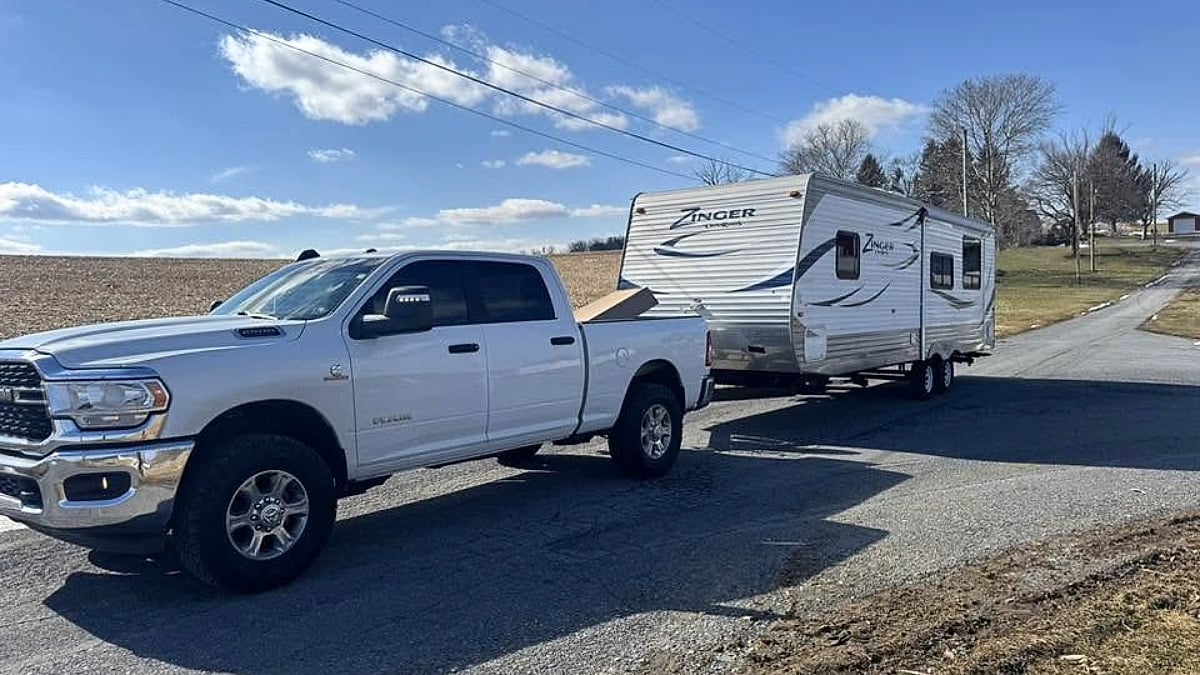
Tyler Wattenbarger backed up Timothy's experience, saying he has pulled a 32 foot camper with his 2016 Silverado 1500 through the mountains near Pigeon Forge and Gatlinburg more times than he can count.
His advice was simple. Use weight distribution, use sway control, and drive at a reasonable speed. That is not a workaround. That is the correct formula, and it lines up with what owners discovered when pairing a sensible trailer size with the right hitch setup kept a truck well inside its comfort zone.
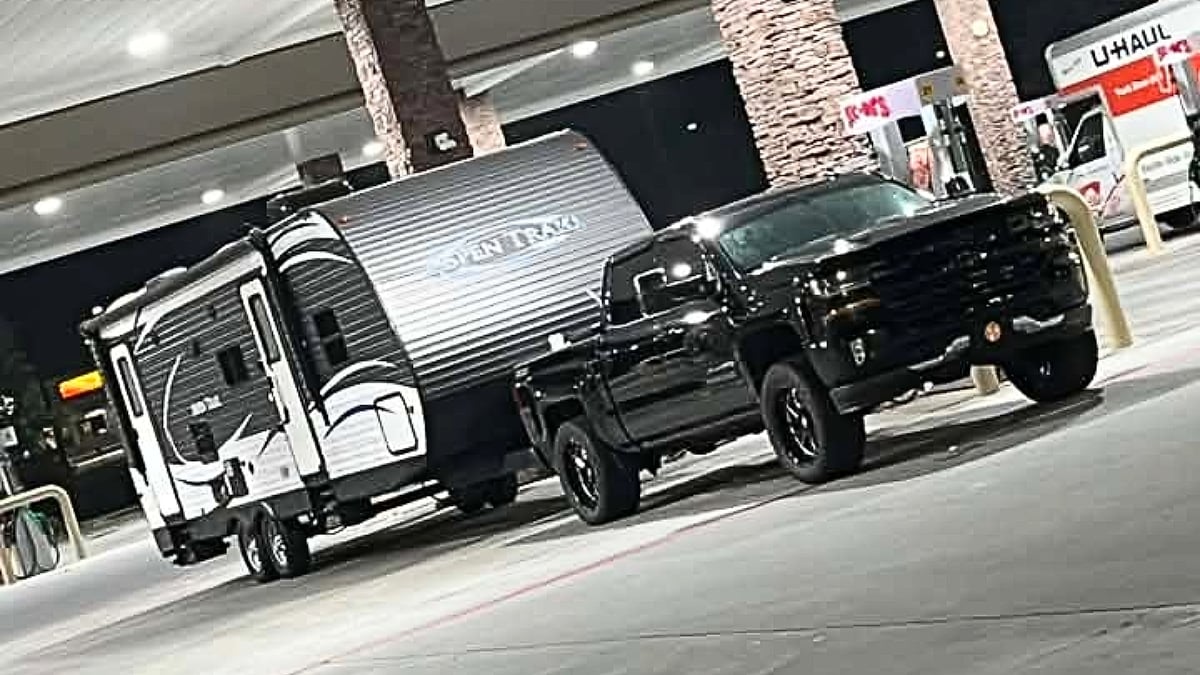
Jon Soutra offered the most technical pushback in the thread. He argued that a 34 foot camper looks like a lot of trailer for a half ton, and predicted many owners in similar setups are quietly over payload or pushing close to their hitch rated tongue weight. He pointed out that most loaded campers run around 15 percent of total trailer weight at the tongue, which on a 7500 pound trailer would already challenge a class four hitch and possibly consume most of the truck's payload. That is not an attack on Timothy. It is a warning every reader towing something similar should hear.
What Should Every First Time Camper Owner Check Before Hitting The Road?
This is the pressing problem hiding inside Timothy's success story. A truck can feel composed on the highway while still being loaded past its safe limits underneath. The fix is not complicated, but it requires discipline most owners skip.
Before any long trip, weigh the truck and trailer fully loaded at a certified scale, exactly as it will travel. Check the actual tongue weight, not the advertised dry number. Compare both figures against the door sticker payload rating, not the marketing brochure. This same lesson repeats across dozens of owner stories we have covered, including cases where a lifted truck's factory geometry changed the entire towing equation and situations where airbags corrected a sagging rear end before a long haul.
This is where a simple tool becomes genuinely useful. A basic tongue weight and payload worksheet, the kind any owner can build with a bathroom scale, a notepad, and a CAT scale receipt, solves the exact problem Jon Soutra raised in the comments. It does not require buying anything expensive. It requires five minutes of honesty before the trip instead of a surprise squat halfway up a mountain. That single habit, more than any engine or transmission upgrade, is what actually prevents the kind of overload Greg Blandino warned about.
Usually reviewers of this truck have found that the truck's handling is surprisingly agile and the brake pedal provides firm and reassuring feedback, a description that matches exactly what Timothy experienced on his first big pull.
There is a moral tucked inside this thread that goes beyond trucks. Timothy shared his experience honestly, including the parts that were not perfect, like his front end sitting slightly out of level. That honesty is what allowed Corey, Timothy Maslowski, Greg, Jesse, Tyler, and Jon to add real value instead of empty praise. A community only helps when people are willing to show the unfinished parts of their setup, not just the wins. That kind of openness protects the next new owner from making the same mistake blind.
Half ton trucks have come a long way, and this story proves it. But capability without discipline is where trouble starts. Timothy's 196 degree reading and his weight distribution hitch show he did his homework. The comment section shows what happens when a community fills in the gaps a single post cannot cover.
Have you ever towed something that made your truck feel smaller than you expected? What is the highest transmission temperature you have seen while climbing a mountain grade with a full camper behind you? Share your experience in the comments below.
Three Key Points
- A 2021 Silverado owner hitches a 34 foot camper for the first time in the mountains of West Virginia.
- His transmission peaks at 196 degrees, a number that sparks a heated debate among fellow truck owners.
- Group members reveal a hidden payload problem that every half ton buyer needs to understand before towing big.
Return tomorrow, or check our Torque News Home Page for more interesting automotive news articles.
Images by Timothy Laxton, Jesse Souders-Gochenaur and Tyler Wattenbarger from the open group discussion used for this news-reporting purpose.
About The Author
Armen Hareyan is the founder and Editor-in-Chief of Torque News and an automotive journalist with over 15 years of experience writing car reviews and industry news. Now based in the Charlotte region (Indian Land, SC, he founded Torque News in 2010, which since then has been publishing expert news and analysis about the automotive industry. He can be reached at Torque News on X, Linkedin, Facebook, and Youtube. Armen holds three Masters Degrees, including an MBA, and has become one of the known voices in the industry, specializing in the landscape of electric vehicles and real-world stories of actual car owners. Armen focuses on providing readers with transparent, data-backed analysis bridging the gap of complex engineering and car buyer practicality. Armen frequently participates in automotive events throughout the United States, national and local car reveals and personally test-drives new vehicles every week. Armen has also been published as an automotive expert in publications like the Transit Tomorrow, discussing how will autonomous vehicles reshape the supply chain, and emerging technologies in vehicle maintenance.
Set Torque News as Preferred Source on Google
Follow us today...





Comments
Been there done that with a…
Permalink
Been there done that with a Ram 1500 big horn, it was a nightmare, I'd never do it again. yes I had a fancy hitch for sway and weight transfer. helped but still not good.
Ram 1500s aren’t great for…
Permalink
In reply to Been there done that with a… by Carl Swierszak (not verified)
Ram 1500s aren’t great for towing honestly. The power is there but the suspension was built for comfort, not for serious towing.