
The most dangerous phrase in recreational towing may be, “It tows like a dream.”
Dreams do not issue certified axle weights.
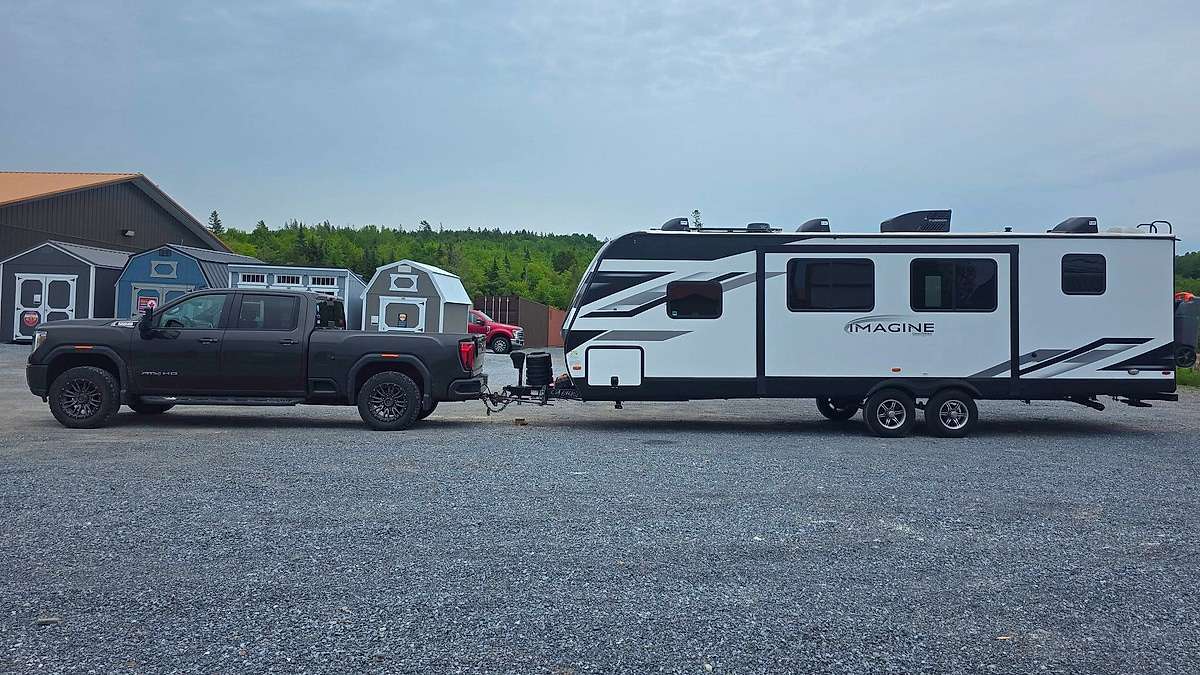
Phil Walsworth took his Toyota Tundra and Grand Design Imagine 2800BH to a CAT Scale and found the number that the campground testimonials had missed. The trailer carried an advertised dry hitch weight of 604 pounds. Loaded for real travel, the tongue weight sat near 1,200 pounds.
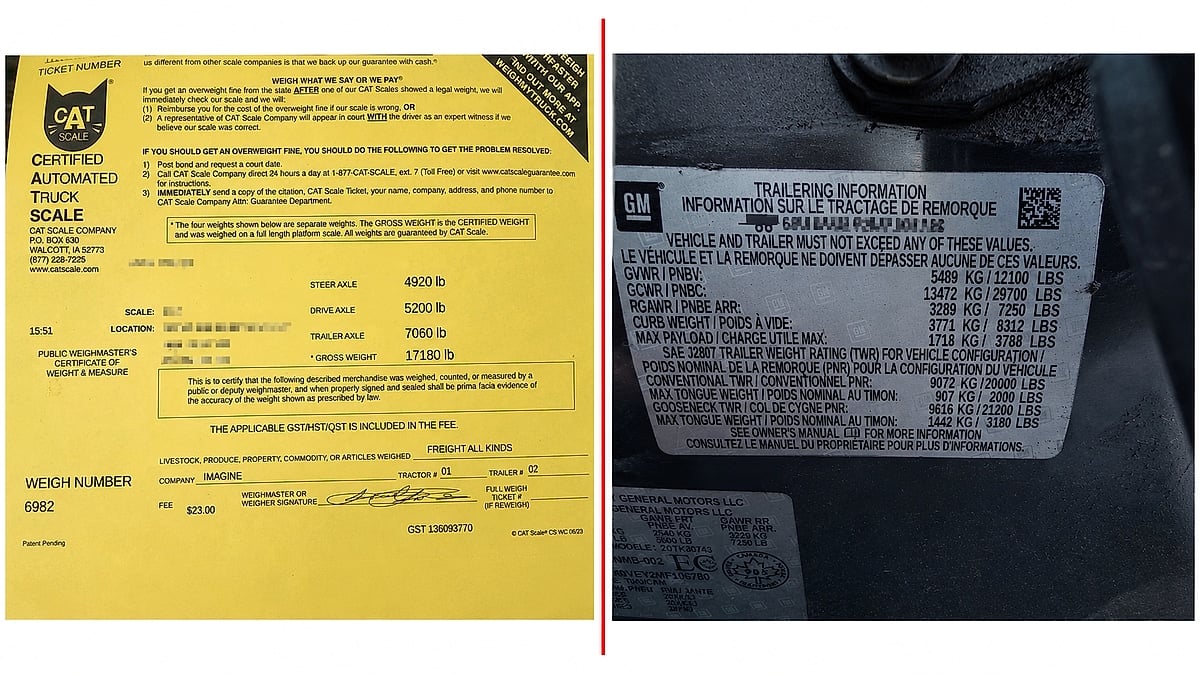
- The Grand Design Imagine 2800BH carries an 8,495-pound GVWR, meaning a properly loaded tongue weight can realistically land between 1,000 and 1,275 pounds using the common 12–15% stability guideline.
- Toyota advertises up to 12,000 pounds of towing capacity for certain Tundra configurations, but payload ratings often become the limiting factor long before the truck reaches its maximum tow rating.
- A CAT Scale weighs the steer axle, drive axle, and trailer axles separately, allowing owners to verify GVWR, axle ratings, and actual tongue weight instead of relying on brochure estimates.
Why A 604-Pound Dry Hitch Weight Became 1,200 Pounds In The Real World
Nearly double.
Add passengers, hitch hardware, cargo, and the rest of the truck’s traveling load, and Walsworth's Tundra landed about 400 pounds over its gross vehicle weight rating. The trailer could follow the truck down the highway. The certified numbers said the combination had already crossed a line.
So he made a change that many RV owners eventually make after seeing real scale numbers.
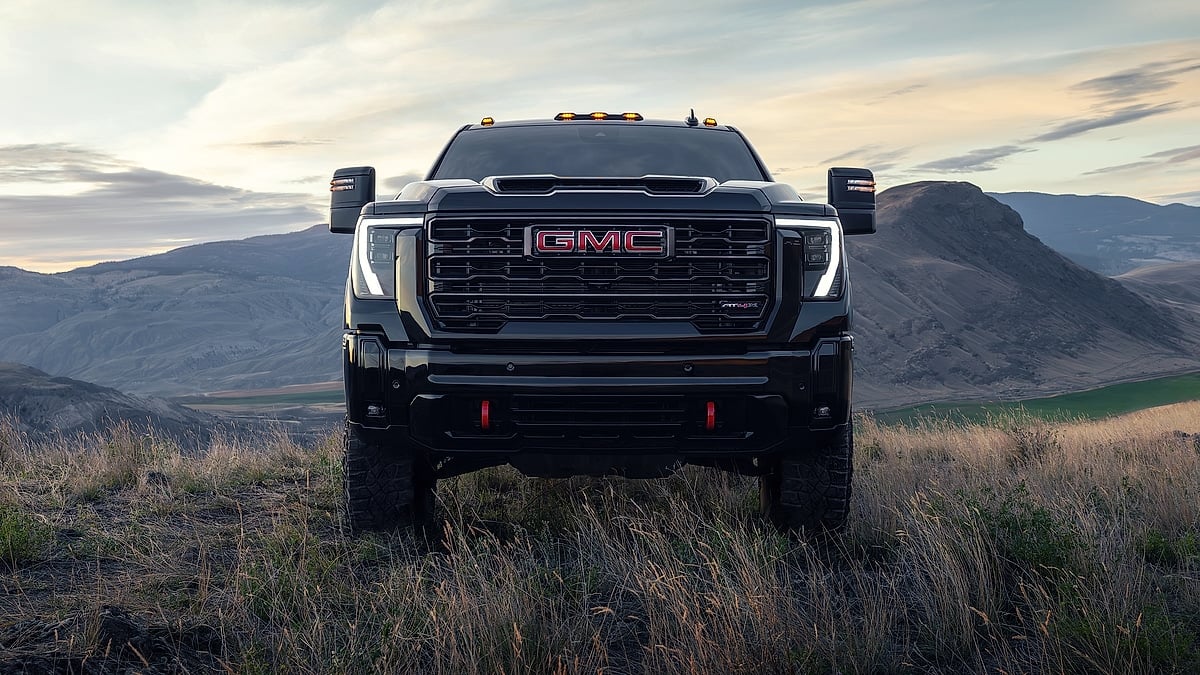
He traded the Tundra for a GMC Sierra 3500HD AT4 diesel.
That decision will look excessive to people who shop by maximum tow rating. The scale ticket explains why it was sensible.
The 604-pound figure was never a travel weight
An advertised dry hitch weight describes a trailer before the owner turns it into a camper.
No food. No clothing. No tools. No camp chairs. No water. No dealer-installed equipment. Batteries and propane may be absent from the factory calculation. Storage layout then decides how much of every added pound reaches the tongue.
The Imagine 2800BH puts several common storage and utility areas toward the front. Add batteries, filled propane cylinders, hitch equipment, food, and cargo in the forward compartments, and the tongue begins gaining weight before anybody packs the first cooler.
Walsworth’s 1,200-pound measurement represents a 596-pound increase over the advertised 604. That works out to a 99-percent jump.
The figure sounds shocking until it is compared with the trailer’s size. If the 2800BH were loaded near its 8,495-pound GVWR, a 1,200-pound tongue would equal roughly 14.1 percent of trailer weight. That lands within the normal stability range for a conventional travel trailer.
The loaded tongue weight was not bizarre.
The dry figure created the illusion.
RV manufacturers should print a prominent loaded-hitch planning range beside every dry number. A shopper sees 604 pounds and imagines a comfortable margin. A realistic travel estimate closer to 1,000 or 1,200 pounds would change the truck conversation before anybody signs financing papers.
Tow rating asks the wrong question first
A Tundra can possess enough engine, transmission, cooling, and chassis capability to pull a trailer while running out of legal truck weight inside the cab.
That is the half-ton towing trap.
The large number in the brochure describes how much trailer a carefully configured truck can pull under defined test conditions. The smaller payload number governs the weight pressing down on the truck itself. Tongue weight, passengers, pets, luggage, bed cargo, accessories, and the weight-distributing hitch all live in that smaller allowance.
Put 1,200 pounds on the ball. Add a 100-pound hitch and 400 pounds of passengers. The truck has already absorbed 1,700 pounds before anyone puts tools, firewood, bicycles, a tonneau cover, or a cooler in the bed.
Toyota’s headline Tundra payload number can reach around 1,850 pounds in the right configuration. A heavily optioned CrewMax may carry far less. Leather, panoramic glass, four-wheel drive, hybrid equipment, skid plates, power steps, larger wheels, and luxury hardware all consume payload before the buyer arrives.
The only number that belongs to your truck is printed on its door jamb.
That sticker outranks the advertisement, online configurator, salesman, Facebook group, and the fellow at the campground who says his Tundra “doesn’t even know the trailer is back there.”
The rear axle knows.
The tires know.
The brakes know.
A weight-distributing hitch cannot repeal arithmetic
Weight-distributing hitches create another pocket of confusion.
Proper adjustment transfers some load away from the truck’s rear axle and distributes it toward the front axle and trailer axles. That improves steering authority, braking balance, headlight aim, and stability. It may bring axle weights into a better relationship.
The hitch does not make the tongue weight disappear.
The combined rig still carries every pound. The truck still has a GVWR. The rear axle still has a rating. The receiver still has limits. The tires still have load indexes. A scale ticket can show a well-distributed combination that remains overweight overall.
A proper weighing process should reveal more than total gross weight.
The first pass measures the truck and trailer with the weight-distribution system engaged. The second pass, with the spring bars released, shows how the raw tongue load changes the truck’s axles. A truck-only pass allows the owner to calculate the trailer’s real weight and tongue load.
Those three readings tell you:
- Loaded truck weight
- Loaded trailer weight
- Tongue weight
- Front-axle load restoration
- Rear-axle load
- Whether the truck exceeds GVWR or either axle rating
- Whether hitch adjustment is helping or merely hiding rear squat
A shiny tow mirror cannot provide any of that.
“I have done it for years” is not engineering evidence
One commenter said he had towed above capacity for a decade without trouble and that 400 extra pounds would not end anyone’s world.
He may continue for another decade.
That does not turn his survival into a vehicle rating.
Mechanical limits rarely announce themselves with a Hollywood explosion. Excess weight can show up as longer stopping distances, tire heat, reduced emergency maneuvering reserve, faster suspension wear, rear-axle stress, poor weight transfer, and a smaller margin when wind, rain, traffic, or a failed trailer tire adds one more problem.
The driver may never experience the event that exposes the overload.
That is luck, not validation.
GVWR does not describe the exact pound at which a truck breaks in half. It defines the maximum loaded vehicle weight the manufacturer has certified for operation. Exceeding it removes reserve from a system whose weak point may only appear during the one maneuver the owner never planned to make.
Nobody buys a larger tow vehicle because the trailer is impossible to move with the smaller one.
They buy it because the emergency should not require perfect conditions.
Why The GMC Sierra 3500HD AT4 Diesel Made Sense
The move from a Toyota Tundra to a GMC Sierra 3500HD AT4 diesel was not about chasing horsepower.
It was about restoring margin.
The Sierra 3500HD brings substantially more payload capacity, rear-axle capacity, tire capacity, braking reserve, wheelbase, cooling capability, and chassis strength than a half-ton pickup. Its diesel exhaust brake can help control speed on long descents without relying entirely on the service brakes. The suspension operates comfortably within its intended load range rather than near the edge of it.
The trailer did not become lighter.
The truck simply became more appropriate for the load.
That is why owners who move from half-ton trucks into heavy-duty pickups often describe the experience as calmer rather than faster. The steering feels less busy. Crosswinds become less dramatic. The truck settles into the task instead of working at its limits.
Walsworth could have solved the problem by downsizing the trailer.
Instead, he chose a truck designed to carry the weight the CAT Scale revealed.
The scale ticket made the decision for him.
Shop for the loaded trailer
A travel-trailer buyer should begin with the trailer’s GVWR and a realistic tongue estimate of roughly 12 to 15 percent. Use the upper portion of that range for planning unless real measurements prove otherwise.
Then subtract the following from the truck’s door-sticker payload:
- Expected loaded tongue weight
- Weight-distributing hitch
- Every passenger
- Pets
- Bed cargo
- Bed covers, steps, toolboxes, racks, and other accessories
- Anything added after the truck left the factory
Check GVWR, front and rear axle ratings, tire ratings, receiver limits, GCWR, and trailer rating. Every number must work at the same time.
Then visit a scale after packing the trailer exactly as it travels.
Water where you normally carry it. Propane full. Batteries installed. Family aboard. Food, tools, luggage, bikes, and hitch equipment in their usual places.
The certified ticket may confirm the setup.
It may save you from a very expensive mistake.
Walsworth needed one scale visit to learn that “tows like a dream” had no value besides 1,200 pounds of real tongue weight and a truck 400 pounds over GVWR.
The result was a GMC Sierra 3500HD AT4 diesel sitting where the Tundra used to be.
More owners should be willing to trust the scale before trusting the brochure.
Tundra owners, post the ticket
If you tow a travel trailer with a Tundra, share the truck’s door-sticker payload, trailer model, loaded CAT Scale axle weights, calculated tongue weight, and weight-distribution setup. The tow-rating number alone tells almost none of the story.
Comment down below with the specifications.
Three images by Phil Walsworth
About The Author
Noah Washington is an automotive journalist based in Atlanta, Georgia, covering sports cars, luxury vehicles, and performance culture. His reporting focuses on explaining the engineering, design philosophy, and real-world ownership experience behind modern vehicles.
Noah has been immersed in the automotive world since his early teens, attending industry events and following the enthusiast communities that shape how cars are built and driven today. His work blends industry insight with enthusiastic storytelling, helping readers understand not just what a car is, but why it matters.
Noah is also a member of the Southeast Automotive Media Association (SAMA), a professional organization for automotive journalists and industry media in the Southeast.
His coverage regularly explores sports cars, luxury vehicles, and performance-driven segments of the automotive industry, including the evolving culture surrounding Formula Drift and enthusiast builds.
Read more of Noah's work on his author profile page.
You can also follow Noah here:
Set Torque News as Preferred Source on Google
Follow us today...