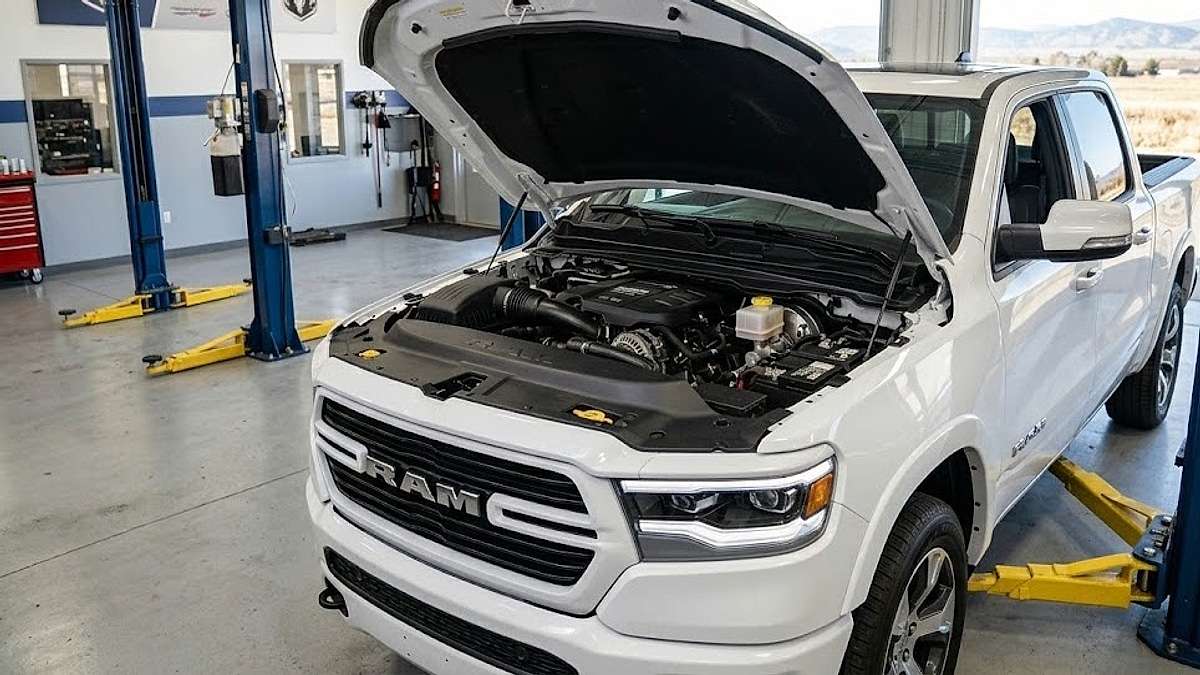

In my two previous deep dives, “Why The Ram 1500 Hurricane Engine Electrical Demands Are Causing Total Instrument Cluster Blackouts” and “What Ram 1500 Owners Facing Unresolved Instrument Panel Failures Must Do At The Dealership Today”, I laid bare the immediate mechanical crisis plaguing the redesigned truck’s dashboard.
But if you think a quick software flash at your local dealership is going to permanently cure your blank screens, I have some tough news from the garage floor. There is a deeper, unpublicized systemic failure at play that mainstream automotive blogs completely missed.
With 30 years of hands-on experience, I know that an electronic component rarely dies in a vacuum. According to a recent recall brief published by Wards Auto, Stellantis officially confirmed that "the Instrument Panel Cluster (IPC) display may go blank without warning while driving, or fail to display at startup."
However, my industry sources and forensic shop evaluations reveal that the real culprit isn't just the Marelli-sourced software architecture. The root cause is a severe, key-off parasitic battery drain from the Body Control Module (BCM), leaving the truck's electrical system chronically starved of voltage before you even twist the key.
From My View
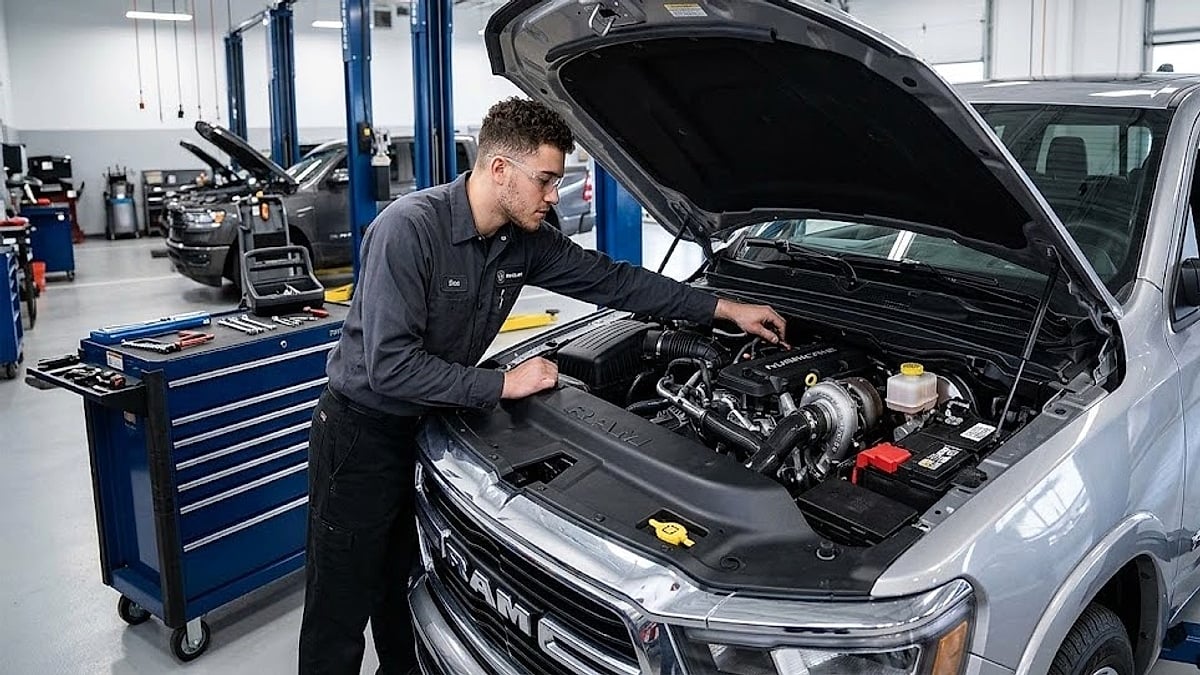
When a brand-new 2025 or 2026 Ram 1500 rolls into a shop with an inoperable 12-inch or 3.5-inch driver screen, the corporate service bulletin tells technicians to simply re-flash the cluster. From my view, that is nothing more than putting a Band-Aid on a broken bone. The high-output electrical demands of the new inline-six Hurricane powertrain mean the alternator is fighting an uphill battle from the moment the engine starts.
If your truck sits overnight, certain factory telematics and infotainment sub-modules fail to enter "sleep mode," drawing an illegal 300 to 500 milliamps continuously. Over at Auto Lemon Lawyer, the data logs indicate that "the defect stems from a software issue that can cause the digital instrument cluster to fail during startup."
What they don't tell you is why it fails at startup: the parasitic drain drops the battery's state of charge to a critical threshold, causing the voltage to drop below 9.5 volts during cranking, which locks up the delicate Marelli IPC microprocessors and freezes them instantly.
The Star Connector Bottleneck Under the Dash
Behind the driver's side knee bolster on these trucks sits a critical piece of the data puzzle: the star connector blocks. Think of these connectors as a massive roundabout where all the vehicle's high-speed Controller Area Network (CAN) data streams must pass through simultaneously. When the Hurricane engine's auxiliary systems spike the electrical system, the voltage drop doesn't just hit the battery; it corrupts the actual data packets moving through this junction block.

In my 30 years under the hood, I've seen how tiny voltage drops cause data "bus-off" errors, which instantly sever the communication link between the powertrain and your dashboard. The Marelli digital screens are incredibly sensitive to these millisecond interruptions. Instead of recovering gracefully, the software cluster gets overwhelmed by the garbled data packets and crashes entirely as a defense mechanism. It takes a full key-off power cycle to reset this data loop, leaving you flying blind on the highway until you pull over.
Here in Colorado...
This technical issue is amplified tenfold by our brutal environment. When I test trucks up Vail Pass or through the Eisenhower Tunnel, the extreme cold soaking overnight in high-altitude environments naturally saps up to 50% of a standard battery’s cranking power. Combine our local climate with a continuous 400mA parasitic draw from a malfunctioning BCM, and your Ram's advanced digital dashboard doesn't stand a chance.
To protect your vehicle and your wallet, you must force the dealership to perform an overnight parasitic draw test using an inductive low-amp clamp on the negative battery cable. Do not accept a generic battery test; demand a full reading of the key-off milliamp draw after the 20-minute module timeout phase. If the draw exceeds 50mA, you have documented proof of a deeper hardware defect that qualifies for comprehensive component replacement under warranty.
The 12-Volt AGM vs. Lithium Auxiliary Mismatch
The absolute smoking gun behind this persistent drain is a fundamental mismatch in how the new Ram charging system manages its dual-voltage power supply. To handle the start-stop demands of the Hurricane platform, the truck relies on an Absorbent Glass Mat (AGM) main battery coupled with an advanced lithium-ion auxiliary pack.
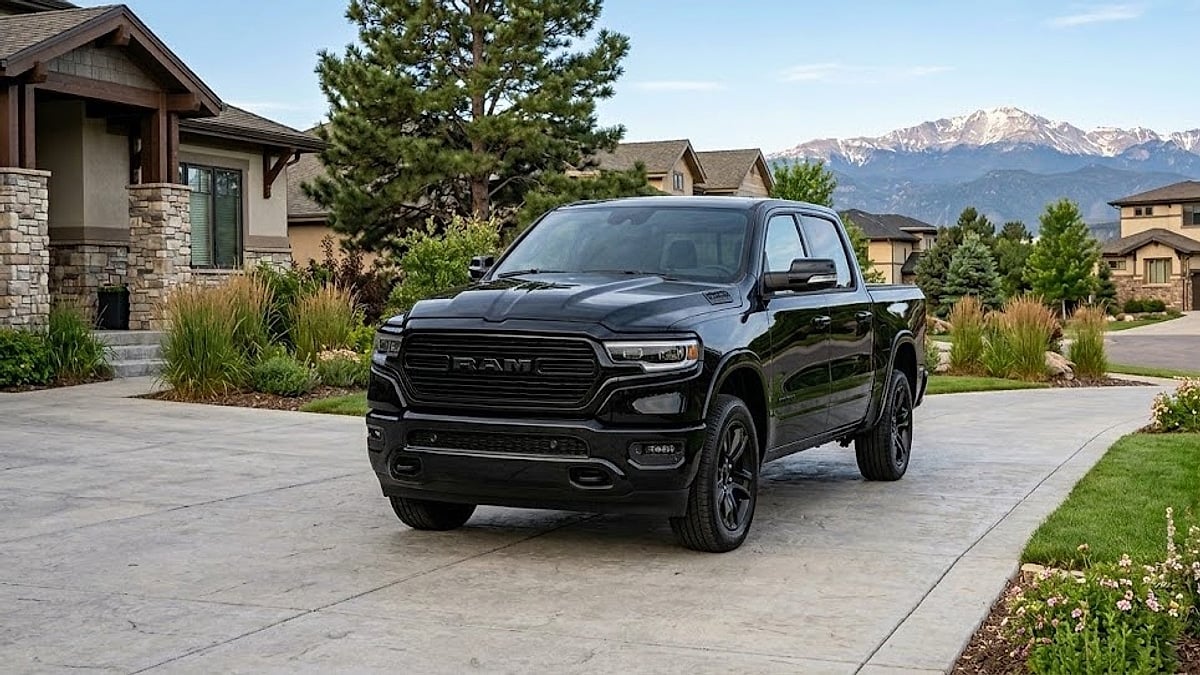
The factory charging logic is programmed to aggressively balance the state of charge between these two vastly different battery chemistries whenever the truck is running.
However, when the vehicle is parked, a software communication glitch keeps the internal DC-to-DC converter awake as it attempts to maintain a constant voltage between the packs. This means the lithium system is continuously pulling unmetered juice from the main AGM battery long after the ignition is turned off.
By the time morning rolls around, your primary battery is too weak to handle the massive amperage draw required to boot up the Marelli processor, triggering the blackout before you even pull out of your driveway.
How About You? Have you experienced a sudden dashboard blackout on your new truck, or noticed the engine cranking slowly in the morning? Tell us what you think in the comments section below by clicking the red "Add new comment" link.
Come back tomorrow… or check my Torque News Home Page for more of my informative Ram truck news articles.
About The Author
Denis Flierl is a 14-year Senior Reporter at Torque News and a member of the Rocky Mountain Automotive Press (RMAP) with 30+ years of industry experience. Explore his full investigative reporting archives and technical guides at DenisFlierl.com. Based in Parker, Colorado, Denis leverages the Rockies' high-altitude terrain as a rigorous testing ground to provide "boots-on-the-ground" analysis for readers across the Rocky Mountain region, California EV corridors, the Northeast, Texas truck markets, and Midwest agricultural zones. A former professional test driver and consultant for Ford, GM, Ram, Toyota, and Tesla, he delivers data-backed insights on reliability and market shifts. Denis cuts through the noise to provide national audiences with the real-world reporting today’s landscape demands. Connect with Denis: Find him on LinkedIn, X @DenisFlierl, @WorldsCoolestRides, Facebook, and Instagram.
Photo credit: Denis Flierl
Set Torque News as Preferred Source on Google
Follow us today...