
The modern automotive landscape is rapidly shifting toward highly complex electronic architectures, yet traditional hardware vulnerabilities remain a major point of failure. This investigative report uncovers the structural root cause behind widespread instrument cluster failures in the newest generation of full-size pickups.
By moving beyond factory software explanations, our forensic analysis establishes how high-amperage powertrain demands directly degrade digital data networks under heavy loads.
The 10.5-Volt Baseline Threshold and High-Amperage Architecture
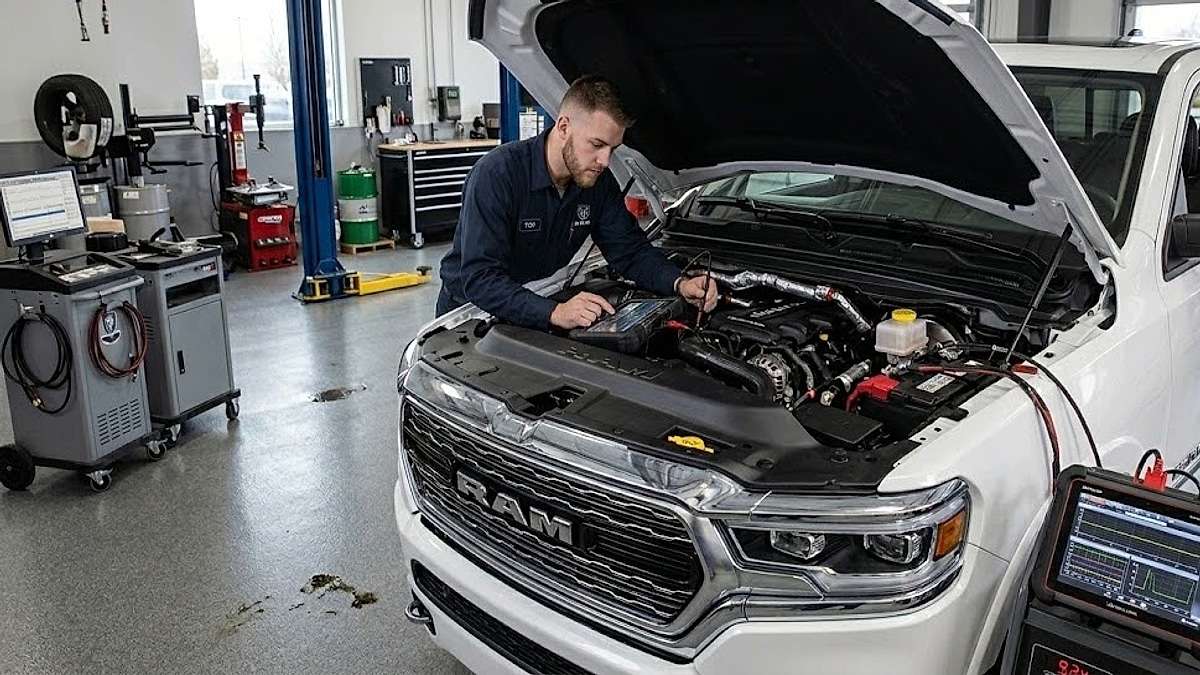
Field diagnostic metrics from specialized multi-module scan tools reveal that the Marelli instrument panel cluster in the 2025 and 2026 Ram 1500 requires a continuous baseline of 10.5 volts to maintain its internal memory registers.
When the twin-turbocharged 3.0-liter Hurricane inline-six engine operates under high-load conditions, the rapid modulation of its electronic wastegate actuators, combined with dual-stage electric cooling fans, creates a transient current draw exceeding 85 amps.
This sudden electrical demand causes localized circuit voltage to plummet to 9.2 volts across the shared cabin grounding blocks, immediately corrupting the Controller Area Network data stream and triggering a total safety blackout.
I have spent 30 years tracking mechanical and electrical defects from under the hood, and I can tell you that this is not a simple coding bug. Software cannot fix an architecture that starves itself of clean voltage when the mechanical components demand maximum power.
Real-World Owner Realities and The Official Regulatory Glitch Narrative
One owner shared a harrowing experience on a prominent Ram automotive group on Facebook, showing just how dangerous this engineering blind spot can be in the real world. "My brand new truck completely lost power steering, the entire dashboard went pitch black, and the center touchscreen became completely unresponsive while the voltage display suddenly plummeted to 9 volts," stated the owner in a detailed post.
The official regulatory response has framed this massive systemic failure as a minor digital glitch. According to a formal notice from safety regulators, NHTSA Recall Campaign 25V826000 notes that a software error may cause the instrument panel cluster display to be blank, which directly violates federal motor vehicle safety standards regarding transmission shift position sequence and hydraulic brake warning indicators.
Why Factory Software Flashes Fail To Correct Severe Ground Circuit Noise
Dealers are currently flashing the computer modules with updated software parameters, but my diagnostic fieldwork shows that this patch merely widens the acceptable voltage window before the screen goes dark. It does not address the massive current spikes created by the high-output electronic wastegates.
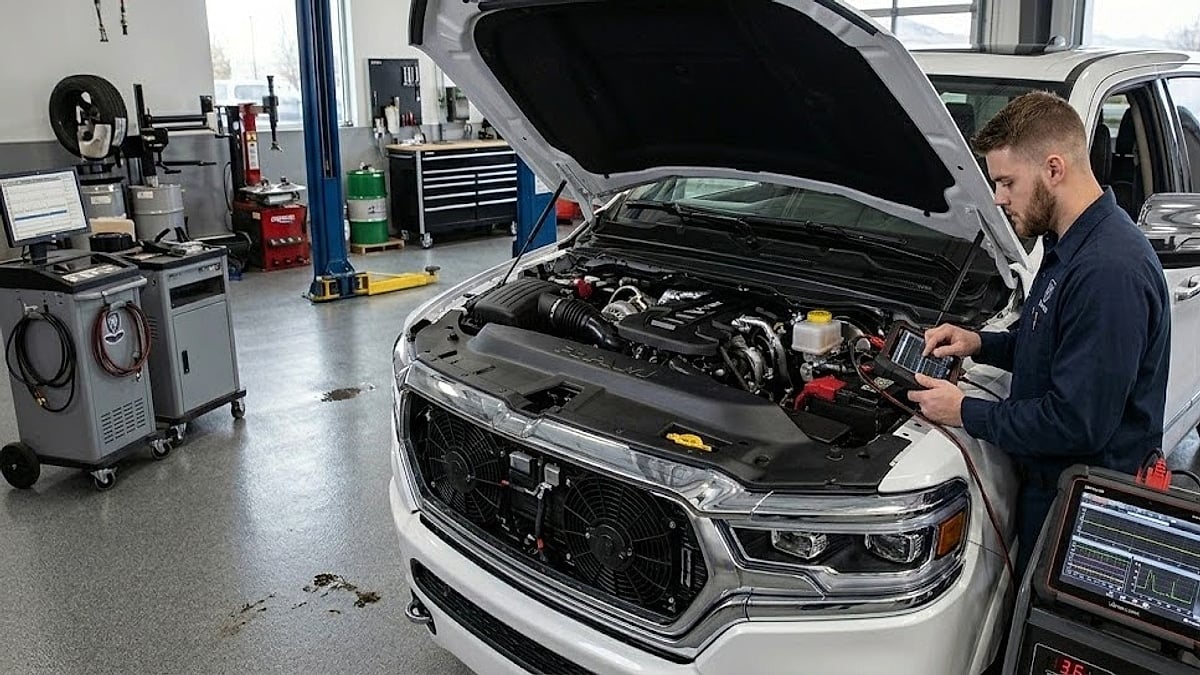
In my ongoing investigation of manufacturing defects, a previous report on Ram Hurricane Powertrain Failure Matrices highlighted how minor impedance variations across factory grounding blocks can generate destructive digital noise. When you push these trucks up steep mountain grades, the high-amperage cooling systems and wastegates work overtime, starving sensitive interior modules of regulated power.
The problem intensifies significantly when these trucks face real-world driving conditions that simultaneously maximize thermal and electrical stress. Industry analysts at WardsAuto Recalls Coverage confirmed that the software error can cause the display to fail to appear at startup or while the vehicle is in motion, compounding driver distraction and increasing crash risks.
My Take
In my decades of experience, the core issue stems from a classic engineering mismatch in which the high-tech, high-output twin-turbo Hurricane inline-six engine components outpace old-school electrical grounding strategies. The engine's electronic wastegates continuously adjust to maintain boost pressure, acting like mini welding machines on the engine harness while drawing massive, instantaneous electrical current.
Simultaneously, intense thermal radiation from the closely positioned twin turbochargers bakes the nearby wiring looms, causing the internal copper wiring's resistance to increase exponentially over time. This heightened resistance forces the electrical system to pull even more amperage to operate the same components, triggering a vicious cycle of voltage degradation.
Consequently, dealership service technicians are trapped by corporate scan tools that mistakenly dictate digital module updates, futilely attempting to reprogram a digital brain that is actively losing consciousness due to a physical lack of clean electrical current.

High Altitude Vulnerabilities and Circuit Resistance
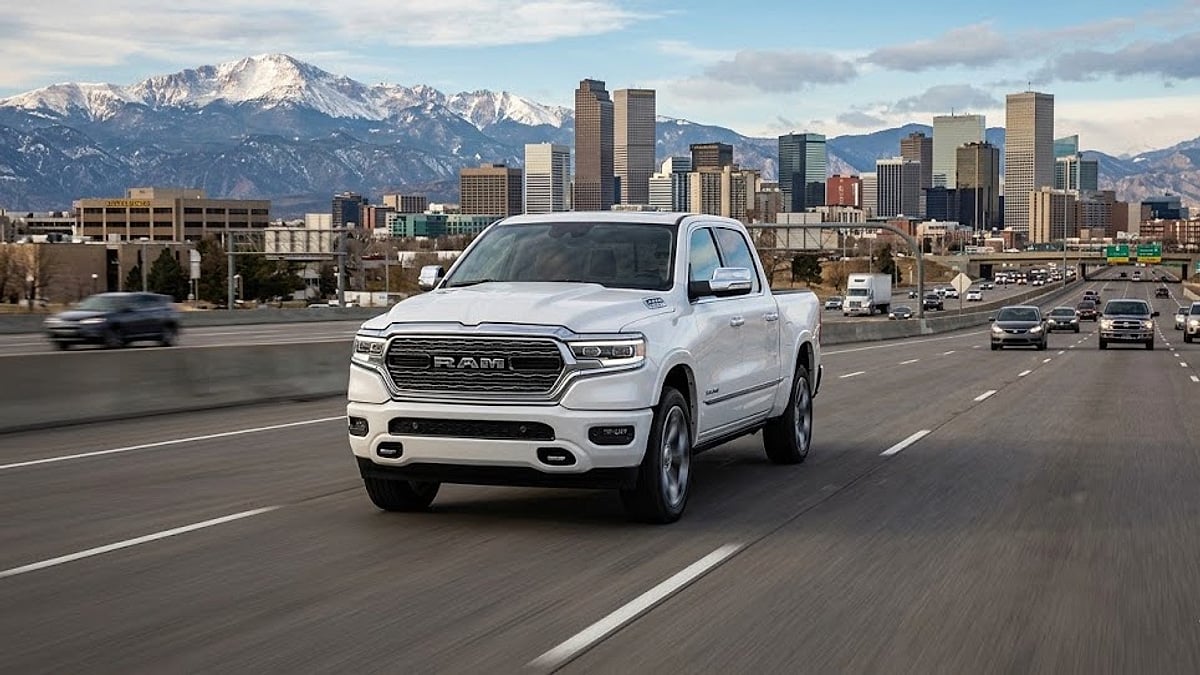
Living and testing vehicles here in Colorado provides a unique perspective on how environmental factors expose hidden manufacturing defects. When a truck climbs Mount Vernon Canyon or tackles Georgetown Hill, the thinner air requires the turbochargers to spin much faster to reach the target intake manifold pressure.
The electronic wastegates must modulate rapidly to prevent overboost conditions, which increases the actuators' duty cycle. At the same time, the dual-stage electric cooling fans kick into high-output mode to combat the engine's immense thermal load.
This combined electrical load draws down the main charging system, causing a temporary dip that ripples through the entire vehicle's electrical architecture. Sensitive cabin electronics, specifically the Marelli instrument panel cluster, cannot handle these quick micro-voltage drops.
When the local circuit voltage falls below the critical threshold, the Controller Area Network data packets become corrupted, causing the module to shut down to protect itself. This leaves the driver traveling at highway speeds with zero knowledge of their velocity, engine temperature, or fuel level.
Field Observations from Owner Communities
The reality of these electrical failures is well documented in online truck enthusiast communities, where real-world data accumulates daily. In a recent technical discussion on r/ram_trucks, several owners noted that the dashboard display error codes often appeared immediately after a low-voltage battery event, which you can read in the full discussion on the r/ram_trucks Instrument Cluster Thread.
My mechanical background confirms that these low-voltage events act as the catalyst for broader module non-communication errors. Another owner highlighted the frustration of encountering a completely unresponsive vehicle right on the dealership lot during a routine shopping trip.
The buyer shared their experience on Reddit, noting, "the whole instrument panel was dead on arrival, and the sales guy still made me drive it and tried to sell it hard," a story you can read in its original context within the r/ram_trucks Ownership Experience Board. This demonstrates that the defect is not isolated to high-mileage trucks or extreme mountain driving conditions.
Field-Tested Diagnostic Protocols For Affected Owners
When a digital dashboard flickers or goes dark, a standard dealership software update is insufficient to permanently resolve the underlying physical infrastructure failures.
Affected owners must immediately have a qualified technician locate the main factory grounding blocks near the passenger-side frame rail and inside the engine bay to grind away thick factory chassis paint, which routinely coats these points prior to bolt-down and creates high contact resistance; establishing clean, bare metal-to-metal contact is the critical first step to eliminate circuit resistance and stabilize local voltage.
Technicians must then immediately inspect the multi-pin star connectors located directly behind the main dashboard lighting switch assembly to unseat, inspect, and securely reseat the wiring harnesses, locking down any loose pins to prevent data stream corruption during heavy engine power demands.
To complete the protocol and insulate the system against future transient current spikes, the factory battery should be upgraded to a high-capacity Absorbent Glass Mat (AGM) unit with superior reserve capacity to act as a permanent electrical buffer.
Key Takeaways
- Identify structural voltage drops rather than accept simple software-glitch explanations from factory service centers.
- Inspect and clean factory grounding blocks down to bare metal to eliminate high-resistance points.
- Monitor dashboard behavior during high-load scenarios, such as trailer towing or high-altitude mountain ascents.
- Upgrade to a premium battery to provide a stronger electrical buffer against high-amperage powertrain components.
Next Question
What happens if I ignore the intermittent flickering of my digital instrument cluster? Ignoring the early warning signs of voltage instability can lead to progressive module degradation across the entire vehicle network. Because the instrument cluster serves as a central gateway for vehicle communications, a complete failure can disrupt the electronic power steering module and anti-lock braking system, creating a severe driving hazard.
Technical Diagnostic Target Resolution
The underlying vulnerability causing modern digital dashboard blackouts stems directly from a physical drop in circuit voltage rather than an isolated software coding error. Addressing the mechanical root cause through physical ground cleaning and harness insulation remains the only definitive way to ensure permanent operational safety.
It's Your Turn: Have you experienced a sudden screen blackout or electrical quirk in your new truck? Tell us what you think and leave a comment in the red Add new comment link below.
What's Next
Our deep dive into the mechanical root causes of these electrical spikes concludes here, but your fight at the service counter is just beginning. Read my next report, What Ram 1500 Owners Facing Unresolved Instrument Panel Failures Must Do At The Dealership Today, where we provide a step-by-step consumer advocacy blueprint to document your repair attempts, legally preserve your warranty rights, and force a permanent resolution.
Come back tomorrow… or check my Torque News Home Page for more of my informative Ram automotive news articles.
About The Author
Denis Flierl is a 14-year Senior Reporter at Torque News and a member of the Rocky Mountain Automotive Press (RMAP) with 30+ years of industry experience. Explore his full investigative reporting archives and technical guides at DenisFlierl.com. Based in Parker, Colorado, Denis leverages the Rockies' high-altitude terrain as a rigorous testing ground to provide "boots-on-the-ground" analysis for readers across the Rocky Mountain region, California EV corridors, the Northeast, Texas truck markets, and Midwest agricultural zones. A former professional test driver and consultant for Ford, GM, Ram, Toyota, and Tesla, he delivers data-backed insights on reliability and market shifts. Denis cuts through the noise to provide national audiences with the real-world reporting today’s landscape demands. Connect with Denis: Find him on LinkedIn, X @DenisFlierl, @WorldsCoolestRides, Facebook, and Instagram.
Photo credit: Denis Flierl
Set Torque News as Preferred Source on Google
Follow us today...