
The modern light-duty truck market has officially reached a tipping point. As luxury truck debt traps snap shut on consumers facing underwater equity and post-warranty repair costs, and as over-engineered half-tons skyrocket in price, the secondary market has become a high-stakes minefield. Buyers priced out of $80,000 showrooms are flooding the pre-owned market with a single mission: to secure a reliable, durable workhorse within a strict $35,000 budget.
However, entering the used truck market without a technical roadmap is a recipe for financial disaster. In our role as a consumer watchdog, this Torque News proprietary investigation serves as a dedicated coverage stream to separate marketing hype from real-world powertrain longevity. Driven by over 30 years of hands-on automotive consulting, technical advising, and high-altitude vehicle testing, Denis Flierl has developed the ultimate playbook for navigating the used-truck arena.
The Downsizing Illusion: Navigating the Turbocharged Used Market
For decades, the standard recipe for a light-duty truck was a naturally aspirated V8 engine paired with a simple torque-converter automatic transmission. In the drive to meet stringent federal fuel-economy and emissions mandates, manufacturers pivoted to high-stringency, small-displacement turbocharged platforms. While these power plants deliver exceptional peak torque at sea level, the secondary market has exposed severe structural vulnerabilities as these complex forced-induction systems age out of their factory warranties.
The most glaring case study in this engineering shift centers around Toyota's transition from its legendary, bulletproof naturally aspirated 5.7L V8 to the third-generation Tundra’s V35A-FTS 3.4-liter twin-turbo V6. According to ongoing Torque News by Denis Flierl tracking of manufacturing defects, Toyota’s systemic engine contamination issue has officially breached even the newest model years, shattering the automaker's narrative of a clean slate.
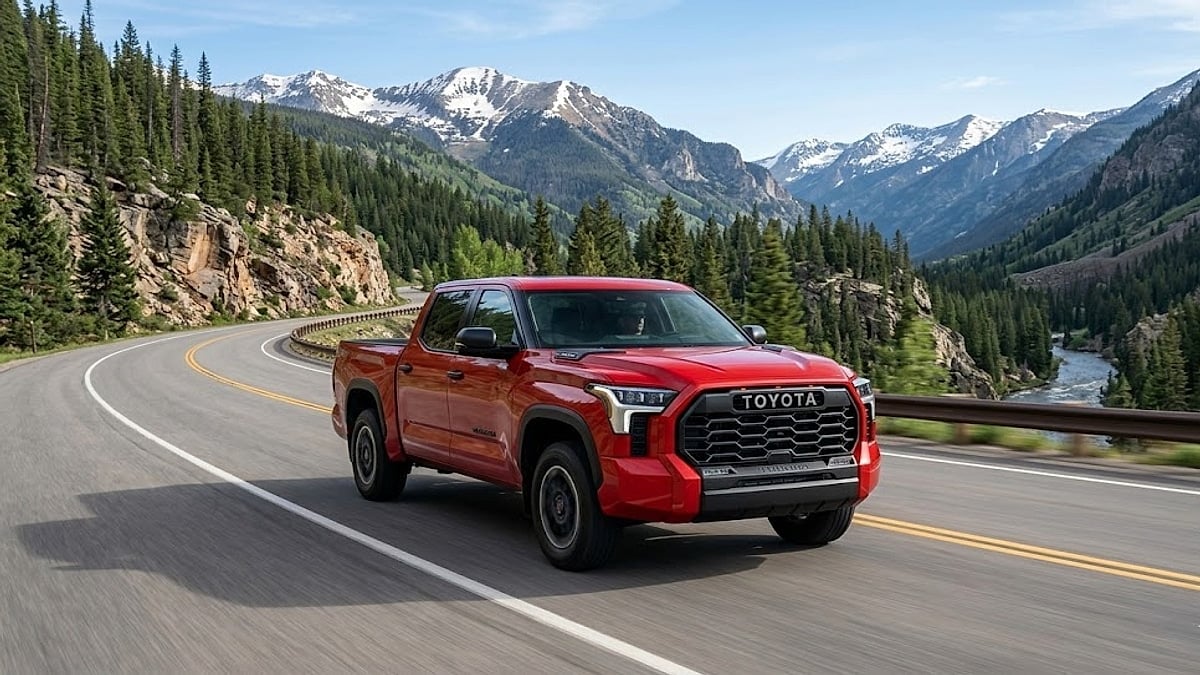
This crisis is not an isolated design quirk but a deep-seated production vulnerability. Industry experts at Car and Driver have extensively documented this powertrain crisis, noting that machining debris left in the engine during manufacturing can cause catastrophic main bearing failure in the crankshaft. Furthermore, federal regulators have been forced to intervene due to the sheer volume of component failures. As officially documented in federal safety reports on the NHTSA 26V320 Safety Defect Portal, residual manufacturing particles in the V35A engine can cause sudden bearing failure, leading to engine knocking, rough operation, stalling, or a complete loss of drive power at highway speeds.
For a used buyer looking at a $35,000 budget, a 2022 or 2023 Tundra might seem tempting as prices slip, but the mechanical risk scales exponentially under demanding conditions. In a previous deep investigative dive into the platform, Denis Flierl detailed how a 2024 Tundra owner's catastrophic engine failure revealed that factory-level containment windows were severely underestimated, signaling that the core cleaning and assembly methodology remained vulnerable.
When floating manufacturing debris or unhardened bearing substrate enters the microscopic oil metering orifices supplying the twin turbochargers, even a minor restriction can trigger an instantaneous thermal spike and bearing burnout.
Compounding the issue, as documented in a separate long-term powertrain assessment by Denis Flierl, the maintenance burden for turbocharger longevity on these high-output V6 platforms is significantly higher than that of the previous naturally aspirated 5.7L V8 generation, leaving almost zero margin for error when oil quality drops.
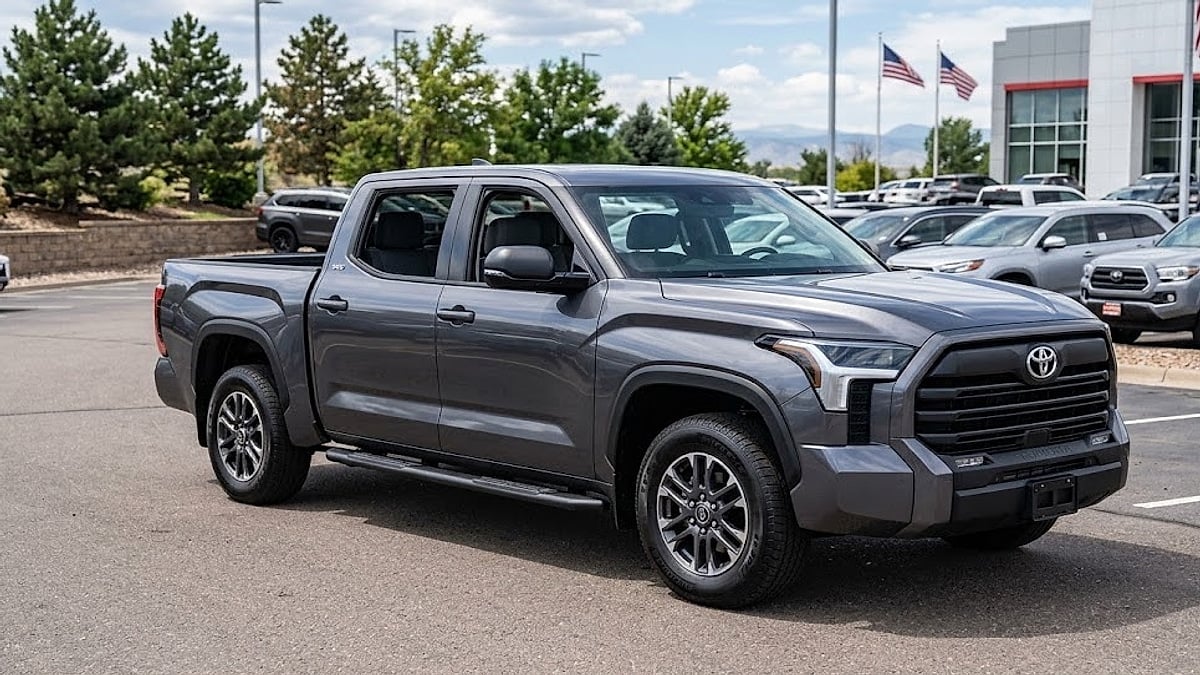
If you are shopping the used market under $35,000, avoiding the 2022–2024 Toyota Tundra V6 turbo is highly recommended unless an absolute, verified paper trail proves a complete dealer short-block engine replacement has been executed, and even then, post-recall assembly anomalies remain a secondary threat.
The V8 Survival Guide: The Best Pre-Owned Platforms Under $35,000
If modern downsized turbocharged engines carry deep out-of-warranty liabilities, where should a budget-conscious buyer invest their hard-earned $35,000? Our technical analysis identifies three distinct V8 and alternative-powertrain configurations that offer the highest probability of reaching 200,000 miles without requiring a second mortgage for repairs.
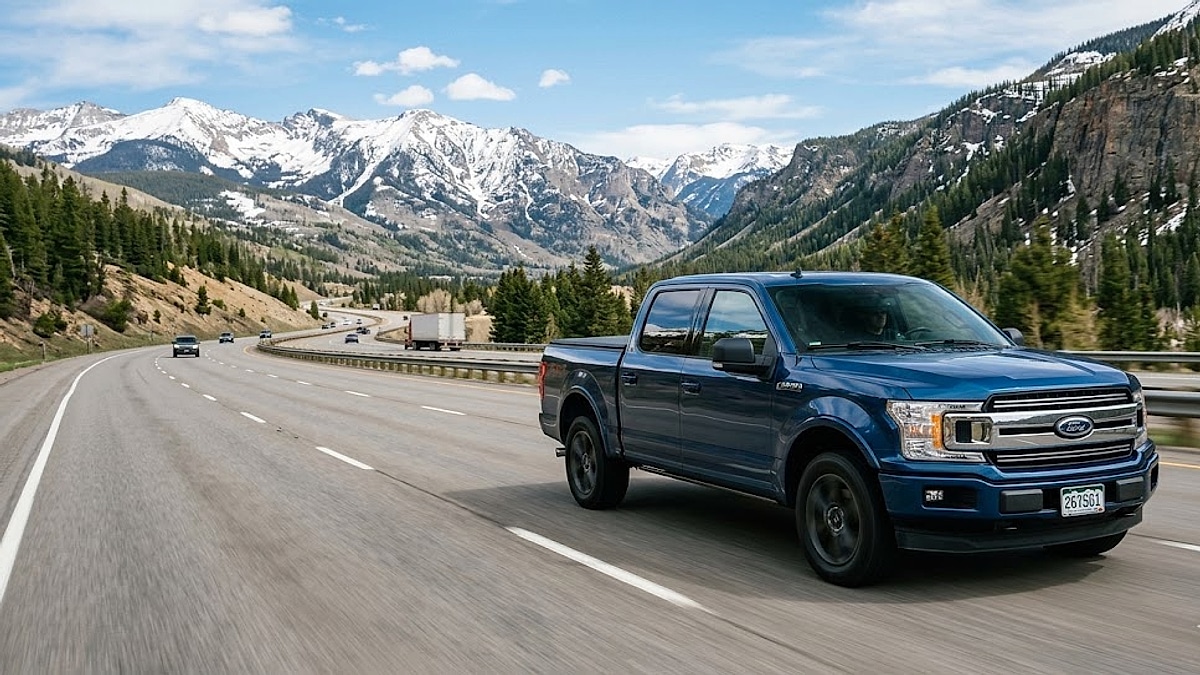
1. The Safe Bet: Ford F-150 with the 5.0L Gen 3 Coyote V8 (2018–2020)
While Ford’s 3.5L EcoBoost twin-turbo V6 commands massive respect for its towing capacity, its dual timing chains, cam phasers, and turbo wastegate actuators become significant financial liabilities past 100,000 miles. Conversely, the 5.0-liter naturally aspirated Coyote V8 in its third generation utilizes a dual-injection system (both port and direct injection) that minimizes carbon buildup on the intake valves, a persistent headache for pure direct-injection engines. Pairs beautifully with the 10R80 10-speed transmission, provided the shift solenoids have been updated.
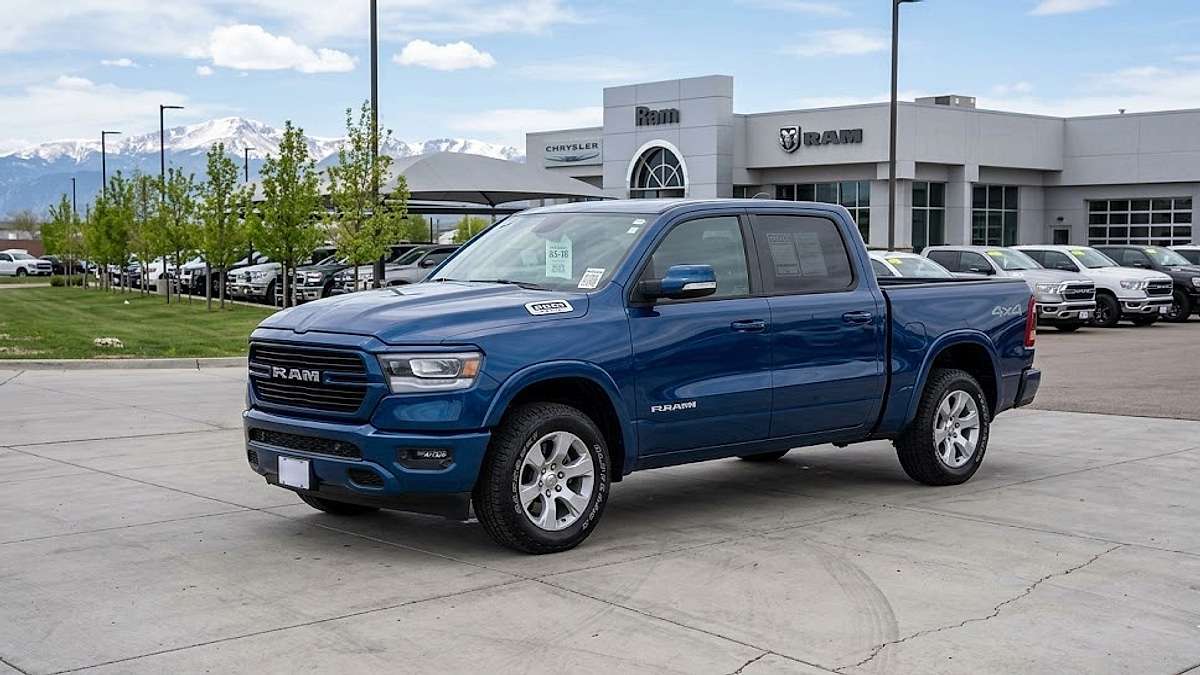
2. The Heavy Hauler: Ram 1500 with the 5.7L HEMI V8 (Classic or Fifth-Gen 2019–2021)
The 5.7-liter HEMI V8 is an incredibly robust, cast-iron-block powerhouse that can easily be found in immaculate condition within our $35,000 threshold. The single critical checkpoint for the HEMI platform is the Multi-Displacement System (MDS), which deactivates four cylinders under light loads. Torque News technical analysis by Denis Flierl identifies a critical gap between factory maintenance schedules and real-world component longevity, particularly regarding lifter roller bearing failures caused by prolonged idling and extended oil change intervals. Buyers who choose models serviced exclusively with high-quality synthetic lubricants every 5,000 miles can enjoy decades of reliable service.
3. The Forgotten Legend: Toyota Tundra 5.7L i-FORCE V8 (2018–2021)
If you want total mechanical peace of mind, redirect your attention away from the third-generation turbo V6 and locate a pristine, late-model second-generation Tundra powered by the naturally aspirated 3UR-FE 5.7-liter V8. It is a thirstier engine, but its mechanical reliability is legendary. It features dual overhead cams, massive timing chains, and an overbuilt cooling system built for heavy-duty loops. Under $35,000, an immaculate 2019 or 2020 Tundra V8 represents the peak of modern truck durability.
High-Altitude Stress: The Rocky Mountain Testing Ground
As a third-generation Colorado native reporting from Parker, Colorado, my technical evaluation of these used-truck platforms relies heavily on firsthand performance metrics gathered on North America's most demanding terrain. Driving a truck along the Cherry Creek Trail at lower elevations is one thing; pulling a 7,000-pound trailer up the extreme grades of the Rocky Mountains’ Eisenhower Tunnel or across Vail Pass at over 11,000 feet above sea level is another entirely.
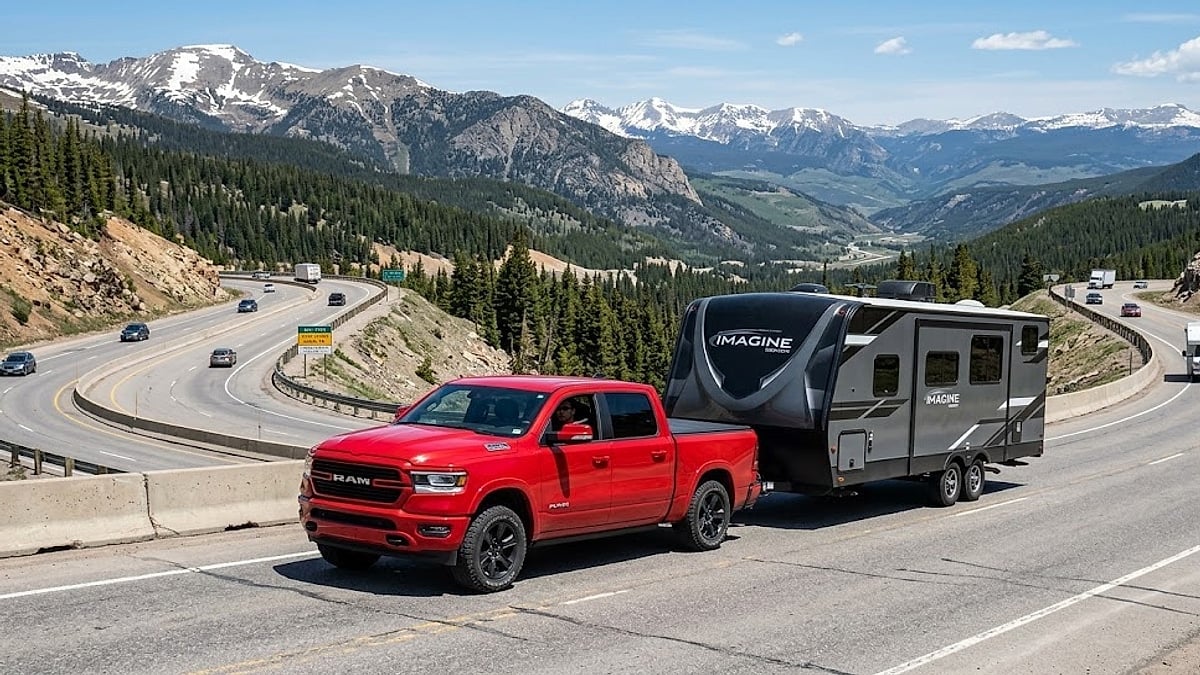
High altitude alters the mechanical equation significantly:
Naturally aspirated V8s experience a predictable performance loss of roughly 3% for every 1,000 feet of elevation gain due to reduced oxygen density. A V8 that feels punchy in Texas will work considerably harder climbing the Rockies. However, this additional physical workload does not compromise the engine block's structural integrity.
Turbocharged Platforms compensate for high altitudes by spinning their impellers at exponentially higher speeds to compress the thin mountain air and maintain factory boost targets. In our ongoing coverage of high-altitude powertrain reliability, Torque News Senior Reporter Denis Flierl has uncovered an unresolved dispute over the accelerated thermal degradation of turbo bearings during sustained mountain climbing under heavy load. The extreme heat generated under these conditions will instantly bake substandard or neglected engine oil, turning it into abrasive carbon slag that destroys oil feed lines.
For used truck buyers operating in Western states, mountainous terrain, or high-payload environments, buying a pre-owned truck requires a hyper-aggressive inspection protocol.
The Pre-Owned Inspection Protocol: Avoid the Lemon Trap
Before handing over $35,000 to a private seller or dealership, protect your capital by executing this proprietary four-point field inspection checklist:
1. The Cold-Start Valvetrain Audit: Always insist on inspecting the vehicle after it has sat overnight. Listen intently upon initial ignition. Any persistent metallic clicking or rattling that lasts longer than three seconds points directly to worn cam phasers on a Ford EcoBoost or a collapsing lifter roller on a Ram HEMI.
2. The Forensic Oil Filter Inspection: During a pre-purchase inspection at a trusted independent shop, request that the technician pull the engine oil filter and cut open the pleated element. If you see highly reflective, metallic "glitter" or fine bronze dust trapped in the fibers, walk away immediately. This is the visual signature of disintegrating main bearings or connecting rod wear substrate.
3. The Fluid Diagnostics Paper Trail: Demand a comprehensive CARFAX report and look specifically for localized service density. If a truck has changed hands multiple times in a short window or shows frequent visits to a dealership for "electrical system checked" or "powertrain module reprogrammed," you are looking at someone else’s unresolved nightmare.
4. The Transmission Thermal Test: Take the truck on an extended 20-minute test drive that involves high-speed highway merging. Monitor the transmission fluid temperature on the digital dashboard. If a modern 10-speed or 8-speed automatic climbs past 220°F without a heavy payload behind it, the internal clutch packs or thermal bypass valves are already failing.
In The End
The used truck market holds phenomenal value under $35,000, provided you prioritize proven mechanical simplicity over tech-heavy, downsized turbo configurations that leave zero room for maintenance errors. Keep your oil clean, audit your filters, and buy the proven platform, not the marketing wrapper.
It’s Your Turn: Let us know your real-world experiences! Please leave your comments and insights in the red Add new comment link directly below. Tell us what you think. Are you ready to abandon downsized turbocharged trucks for a proven, naturally aspirated V8, or do you believe forced induction is worth the out-of-warranty mechanical risk? Have you experienced a catastrophic engine failure on a modern half-ton platform while driving or towing?
About The Author
Denis Flierl is a 14-year Senior Reporter at Torque News and a member of the Rocky Mountain Automotive Press (RMAP) with 30+ years of industry experience. Explore his full investigative reporting archives and technical guides at DenisFlierl.com. Based in Parker, Colorado, Denis leverages the Rockies' high-altitude terrain as a rigorous testing ground to provide "boots-on-the-ground" analysis for readers across the Rocky Mountain region, California EV corridors, the Northeast, Texas truck markets, and Midwest agricultural zones. A former professional test driver and consultant for Ford, GM, Ram, Toyota, and Tesla, he delivers data-backed insights on reliability and market shifts. Denis cuts through the noise to provide national audiences with the real-world reporting today’s landscape demands. Connect with Denis: Find him on LinkedIn, X @DenisFlierl, @WorldsCoolestRides, Facebook, and Instagram.
Photo credit: Denis Flierl
Set Torque News as Preferred Source on Google
Follow us today...