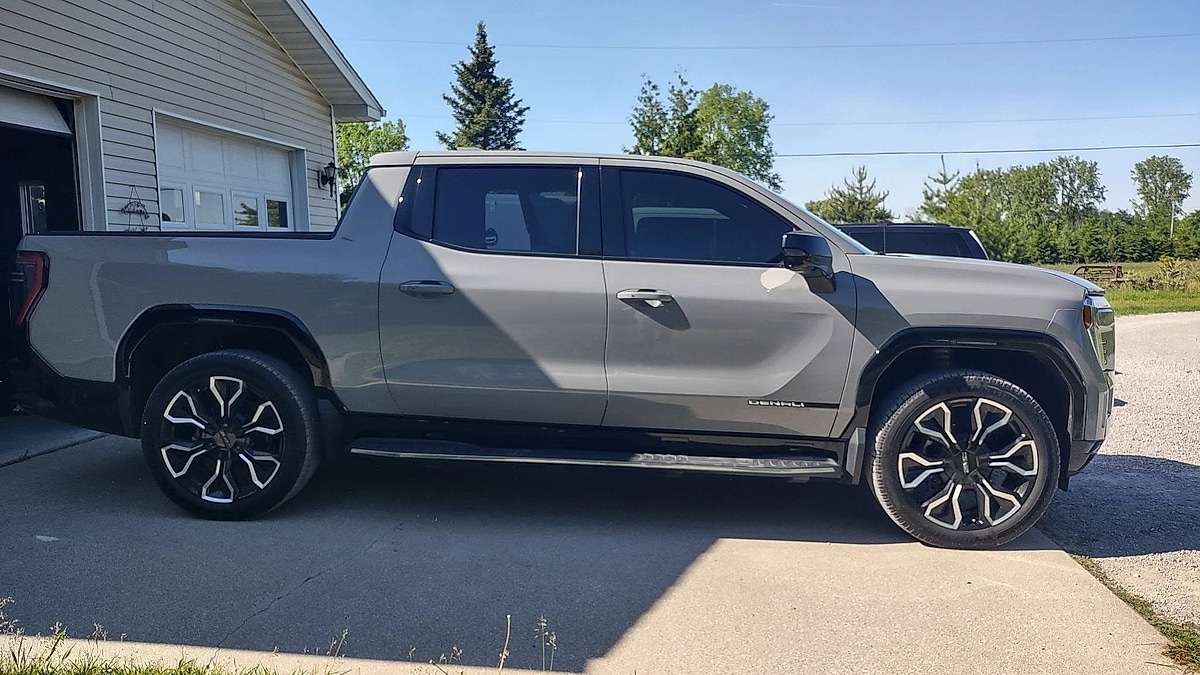

Jaron Erickson expected the diesel to win.
Hard to blame him.
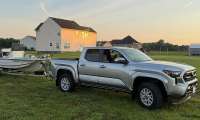
A 2022 Ford F-250 with the 6.7-liter Power Stroke diesel is not some soft suburban ornament pretending to be useful. It is a real heavy-duty truck with 1,050 lb-ft of torque, a frame built for abuse, and the kind of reputation earned by spending long days with trailers in the mirrors. If you lined up most pickup owners and asked which truck should win a rolling trailer pull against a luxury electric half-ton, plenty would point to the Ford before the question ended.
Erickson had both trucks and one camper.
- He wanted to compare real-world towing performance, not spec-sheet bragging rights, using the same trailer, route, and conditions for both trucks
- The goal was to feel how each truck behaved under load in everyday driving, not just measure peak numbers or ideal scenarios
- By owning both vehicles, he could eliminate guesswork and bias, giving a rare back-to-back comparison most drivers never get
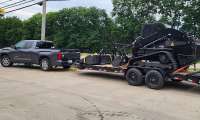
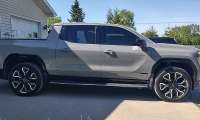
He hooked a 27-foot trailer, roughly 7,000 pounds, to the F-250 diesel and then to his 2024 GMC Sierra EV Denali. He ran the same comparison loop, with about half expressway driving, 70 mph on the faster stretch, and 55 mph on side roads. The timed test was a 20-to-60 mph pull with the camper attached.
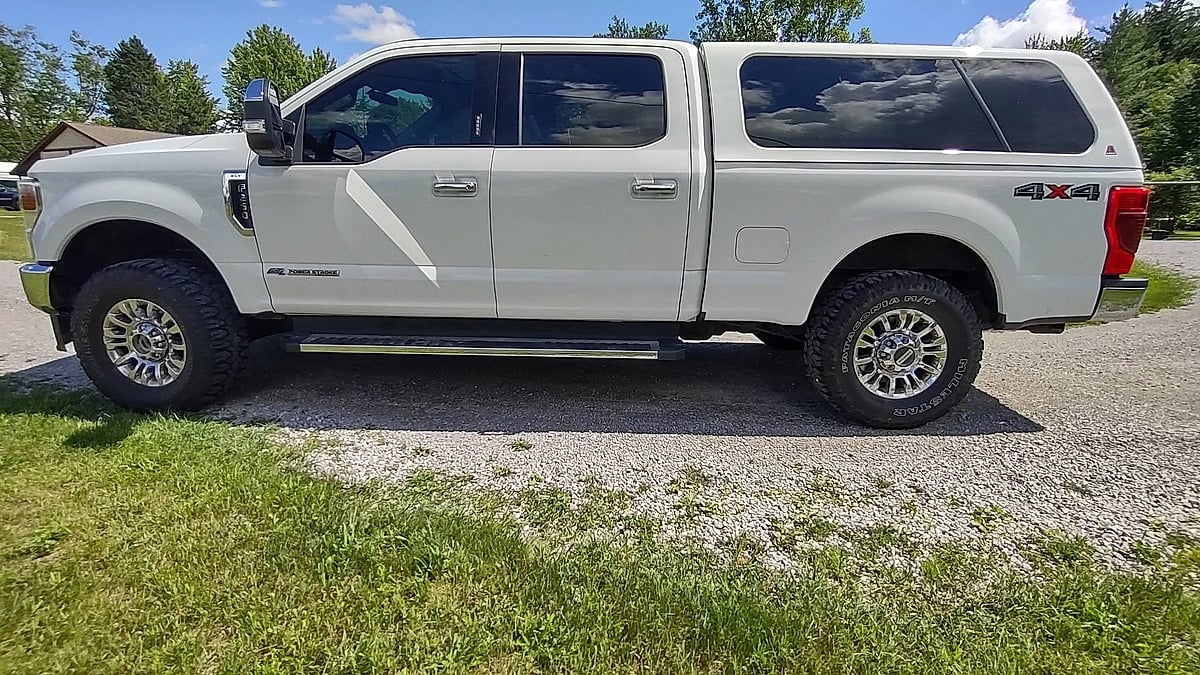
The Ford did it in about 10.5 seconds.
The Sierra did it in about six.
Erickson said the difference was large enough to feel obvious, and he did not use the Sierra’s Max Power mode.
That result should not embarrass the diesel. It should change how people talk about towing power.
The Diesel Has Torque The EV Has Timing
The old way to discuss towing was simple: displacement, torque rating, rear axle, transmission, cooling, and weight.
Those still matter.
The F-250 diesel has the right numbers and the right hardware for heavy work. It remains the truck I would pick for long, repeated towing days where the trailer stays attached for hundreds of miles, fuel stops need to be fast, and the schedule matters more than quietness or acceleration theater.
Erickson’s test measured a different part of towing.
A rolling 20-to-60 pull asks how quickly the truck can produce usable wheel torque under load. That is where an electric truck becomes rude. No turbo has to build boost. No transmission has to hunt for the right gear. No engine has to climb into its best rpm range. The Sierra’s motors simply answer.
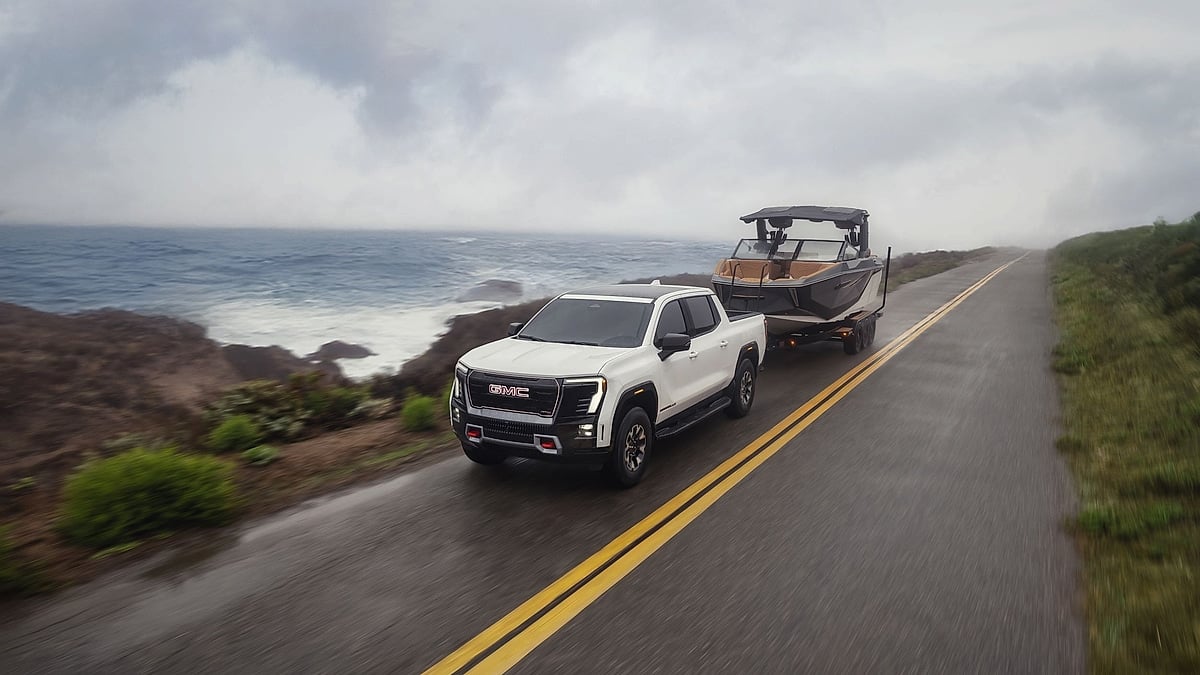
That does not make the F-250 weak.
It makes the Sierra EV immediate.
A diesel Super Duty delivers power through a brilliant mechanical chain: turbocharger, engine, torque converter, transmission, driveshaft, axle, tires. The EV shortens the argument. The motors are already waiting. The truck does not gather itself before responding. It goes.
That is why the owner’s surprise matters. He already owns a Bolt EV, so he understands electric torque in theory. The shock came from feeling that advantage with a 7,000-pound camper behind a full-size truck.
A heavy trailer usually makes power feel smaller.
The Sierra made the trailer feel smaller.
The 20-Mile Loop Shows The Good Stuff First
Erickson’s numbers from the loop were useful.
The F-250 returned about 10 mpg. The Sierra EV used roughly 0.8 kWh per mile, reading his “0.8kw/mi” as the common owner shorthand for 0.8 kWh/mi.
Over 20 miles, that means the Ford burned about two gallons of diesel. The Sierra used about 16 kWh.
At home, electricity rates in the Sierra would be dramatically cheaper to run. At public DC fast-charging prices, the cost advantage can shrink or disappear. The exact winner depends on local diesel prices, home charging, public charging rates, and how often the trip requires fast charging.
That is where the diesel keeps its dignity.
A diesel truck can take on fuel quickly almost anywhere. A Sierra EV towing at 0.8 kWh per mile can still cover a serious distance, but every route becomes a charging question. Where is the charger? How fast is it? Is it working? Can the truck fit with the trailer attached? Is it priced like electricity or like airport food?
The loop measured acceleration, smoothness, braking feel, and short-run energy use.
It did not settle the case for a 600-mile towing day.
Erickson knows that. He said he still sees the diesel case for people hauling long distances or hundreds of miles every day. That is the adult answer. The Sierra won its use case. The F-250 still owns plenty of commercial reality.
Regen Changes How Towing Feels
The most interesting part of Erickson’s post was not the acceleration number.
It was the braking.
He said that with regen set high, he barely needed the brake pedal. Compared with the Ford’s diesel exhaust brake doing its best to help, the Sierra EV felt more controlled and easier to slow.
This is where electric towing begins to feel fundamentally different.
A diesel exhaust brake is a wonderful tool. Anyone who has pulled weight downhill knows the relief of hearing the truck hold itself back without cooking the service brakes. It turns engine restriction into control.
An electric truck has another weapon. Regeneration turns the drive motors into generators and sends energy back toward the battery while slowing the vehicle. In routine deceleration, it can feel cleaner and stronger than expected, especially with a heavy trailer pushing behind the truck.
Trailer brakes still matter. They remain part of the safety system, and the controller still needs proper adjustment. A truck using regen is not excused from managing trailer-brake heat, brake balance, or emergency stopping. On long descents, owners need to understand how their trailer brakes interact with regenerative braking and tow mode.
Erickson’s point was about everyday control.
In his short loop, the Sierra shed speed with less drama and less brake-pedal use. That changes driver fatigue. It changes confidence. It changes how composed the truck feels when traffic bunches up ahead, and the camper starts reminding everyone it exists.
The diesel had an exhaust brake.
The Sierra had a generator.
The Cameras Helped, The Mirrors Still Lost
The Sierra’s cameras earned praise. Erickson liked being able to check things while driving.
Then he named the obvious problem: he still wanted wider towing mirrors.
That is the kind of detail that separates a useful tow report from a fan letter.
Cameras can show the hitch, trailer sides, blind spots, rear traffic, and other angles that old trucks could never provide. They reduce stress. They help with lane changes and campground maneuvers. A trailer camera can make the whole combination feel less blind.
Mirrors still do work that cameras do not fully replace.
They give instant peripheral reference. They keep the driver’s eyes closer to the road. They show motion in a familiar way. They remain available when a lens is dirty, a screen is occupied, or glare makes the display less useful. A wide camper behind a wide truck should not make the owner wish for aftermarket help on a vehicle this expensive.
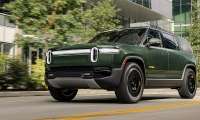
GMC gave the Sierra EV enormous power, excellent camera tech, four-wheel steering, air suspension, and trailering-capable Super Cruise.
It should also give serious towing mirrors.
Old truck solutions survive because some of them were already correct.
Payload Remains The Quiet Limit
One commenter asked about towing an RV just under 8,000 pounds with family aboard and a 50-pound dog, saying that combination would put him near the payload limit.
That is exactly the question Sierra EV shoppers need to ask before getting lost in the torque number.
GMC’s 2024 Sierra EV Denali Edition 1 carries a 10,000-pound max towing estimate and a 1,450-pound max payload estimate. A 7,000-pound camper can place 700 to 1,050 pounds on the hitch if the tongue weight lands in the common 10-to-15-percent range. Add passengers, a dog, a cooler, hitch hardware, bed cargo, and accessories, and the payload can disappear faster than the tow rating suggests.
This is not unique to electric trucks.
Half-ton gas and diesel pickups run into the same math all the time. Electric trucks bring their own twist because the battery makes the vehicle heavy before the owner loads anything. The Sierra EV has plenty of power for a 7,000-pound camper. The scale ticket decides how much family and gear belong in the cab at the same time.
Anyone shopping for RV towing should read the specific truck’s door sticker, not the brochure headline.
The truck may have the muscle.
The payload label gets the final vote.
Super Cruise With A Trailer Is Impressive, Even If Trust Comes Slowly
Erickson mentioned that the Denali was locked into Super Cruise while towing.
He was impressed, though not fully ready to trust it.
That is the proper reaction.
Hands-free driver assistance with a camper attached is a genuine technical achievement. The system has to manage lane position, traffic, road curvature, trailer behavior, and driver supervision while moving a large combined rig at highway speed.
It can reduce fatigue on compatible roads.
It should never become an excuse to mentally leave the cab.
GMC’s own language tells drivers to keep paying attention while using Super Cruise. That warning matters more with a trailer. Crosswinds, road debris, construction zones, merging traffic, and drivers who hate being behind a camper can all turn a calm highway into a fast decision.
The feature is a bonus. The driver remains the captain.
The Sierra Won The Part Of Towing Owners Feel First
The F-250 diesel is still a superb tool.
It has range, fast refueling, heavy-duty chassis margins, diesel durability for long-haul use, and the relaxed confidence of a truck built for ugly days. Its job is not threatened by one 20-mile comparison loop.
The Sierra EV Denali showed something important anyway.
It pulled a 7,000-pound camper with startling acceleration, excellent smoothness, strong regenerative deceleration, useful cameras, and enough composure to make an experienced truck owner rethink his assumptions. At 0.8 kWh per mile, it also provided a real energy number for owners trying to judge camper range.
This is where electric trucks shine: local towing, regional camping, homeowners with charging, drivers who value smooth control, and people who do not need to cross three states every day with the trailer attached.
Diesel still makes sense for the long-haul crowd.
The Sierra makes a convincing case for everyone whose towing life starts and ends within a battery plan.
Erickson expected the Power Stroke to win the pull.
The electric Denali made the old torque argument feel incomplete.
Sierra EV And Super Duty Owners, What Does Your Trailer Say?
If you tow with a Sierra EV, Silverado EV, Hummer EV, F-250, or other diesel truck, share the trailer weight, speed, fuel or energy use, route length, and whether the truck felt better accelerating, slowing, or simply staying composed.
Comment down below.
Two images by Jaron Erickson
About The Author
Noah Washington is an automotive journalist based in Atlanta, Georgia, covering sports cars, luxury vehicles, and performance culture. His reporting focuses on explaining the engineering, design philosophy, and real-world ownership experience behind modern vehicles.
Noah has been immersed in the automotive world since his early teens, attending industry events and following the enthusiast communities that shape how cars are built and driven today. His work blends industry insight with enthusiastic storytelling, helping readers understand not just what a car is, but why it matters.
Noah is also a member of the Southeast Automotive Media Association (SAMA), a professional organization for automotive journalists and industry media in the Southeast.
His coverage regularly explores sports cars, luxury vehicles, and performance-driven segments of the automotive industry, including the evolving culture surrounding Formula Drift and enthusiast builds.
Read more of Noah's work on his author profile page.
You can also follow Noah here:
Set Torque News as Preferred Source on Google
Follow us today...