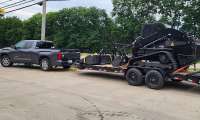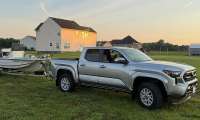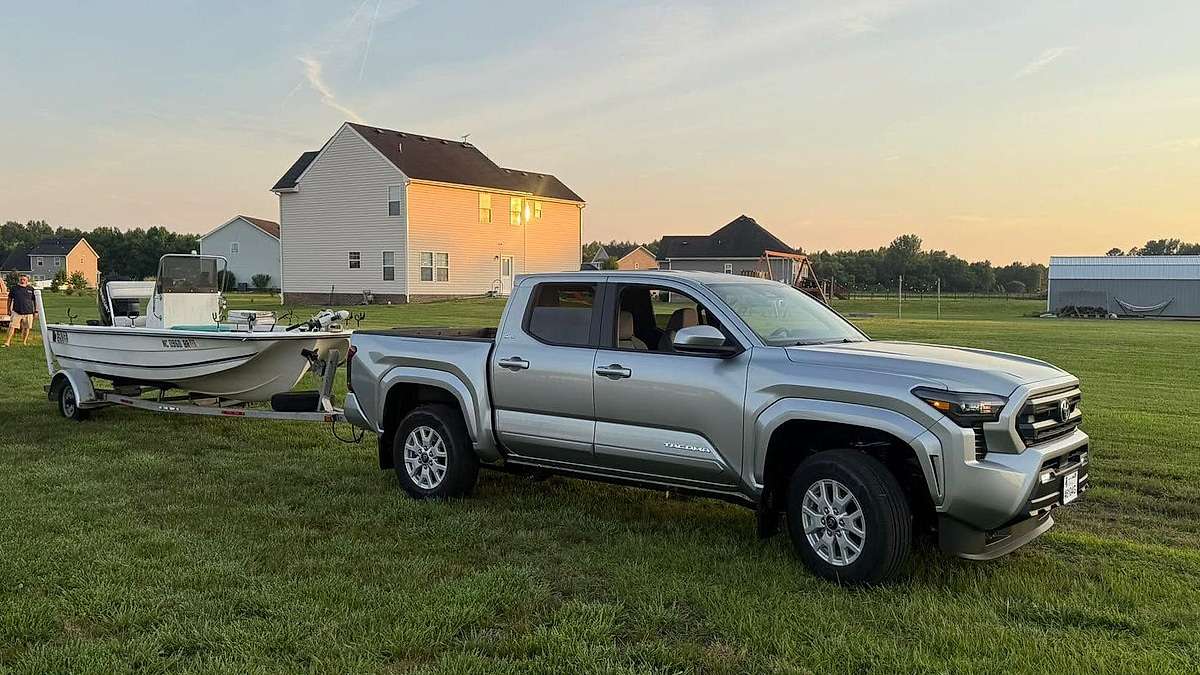

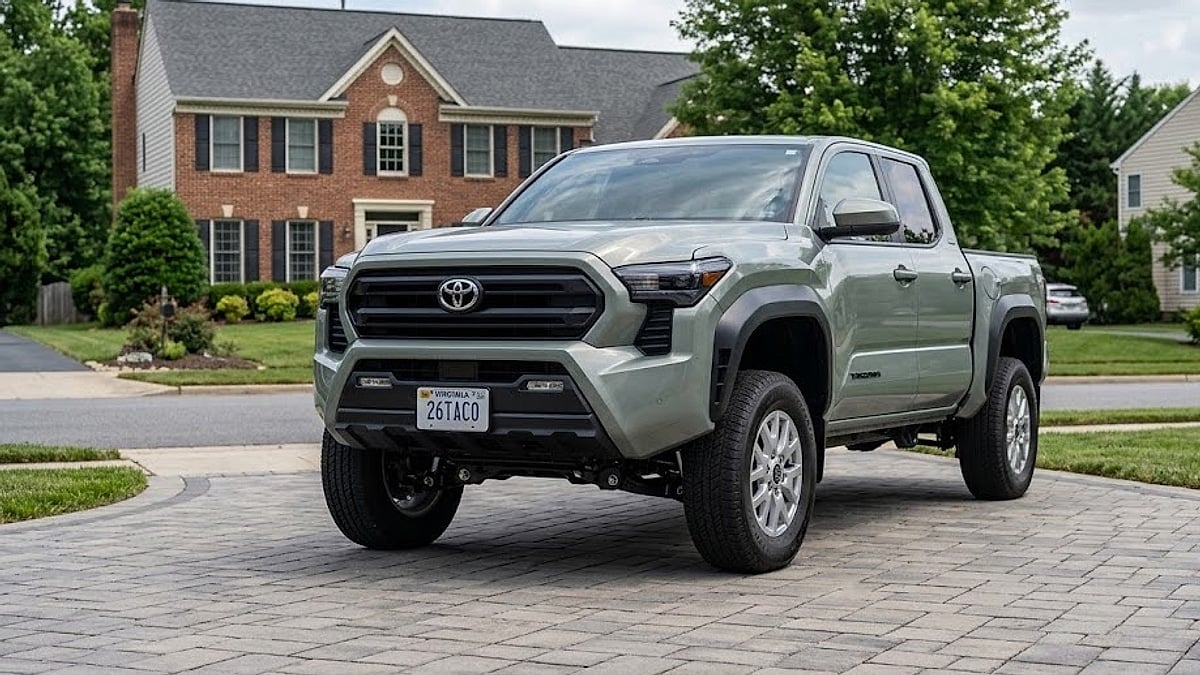
When Noah Goodwin bought his 2026 Toyota Tacoma SR5 4WD from a Virginia dealership, he thought he secured the ultimate peace of mind.
The truck came with Toyota’s standard factory coverage, plus a dealer-backed lifetime powertrain warranty tied to driving under 20,000 miles a year and staying current on routine maintenance.
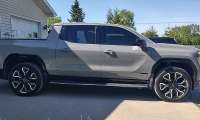
The friction started the moment Goodwin decided to level out the nose-down stance of his new 4th-Generation pickup.
The dealership informed him that maintaining his extended warranty required a dealer-installed, TRD-approved leveling kit. The price tag for that simple stance correction came out to a staggering $3,600.
He posted his story on the 4th Gen Toyota Tacoma Owners Facebook Group.
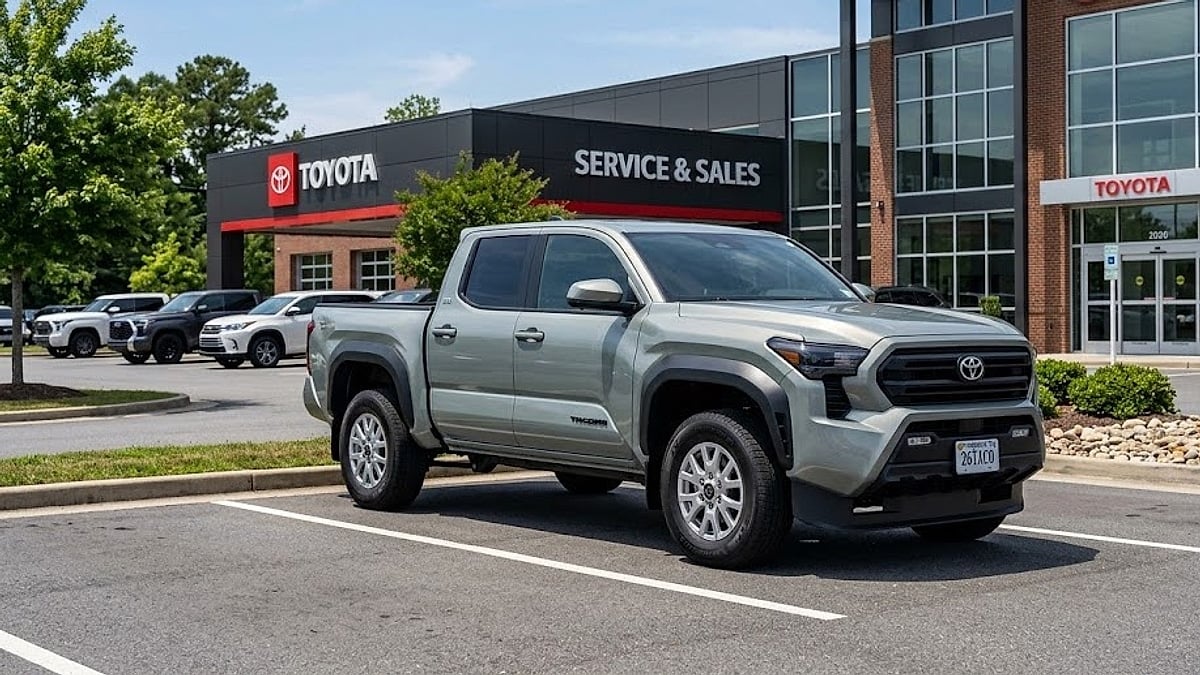
The Hidden Trap Inside Dealers 'Lifetime' Warranties
Many truck buyers do not realize that the standard 3-year/36,000-mile Toyota bumper-to-bumper warranty is completely separate from third-party or dealer-specific lifetime policies. While federal law protects your right to work on your own vehicle, those ultra-long-range dealer warranties often include strict clauses requiring all modifications to be performed by an authorized facility using OEM parts.
Dealership service departments use these high-dollar accessory requirements to offset the long-term financial risks of offering lifetime coverage.
If you bolt on an aftermarket spacer kit in your home garage, you might not just lose coverage on a squeaking ball joint; you could hand the warranty administrator a legal loophole to deny a future transmission claim.
Why a 3-Inch Lift Scrambles 4th-Gen Geometry
The mechanical reality of the redesigned 2026 Tacoma chassis makes home-brewed suspension modifications far more complex than they were on older trucks. Pushing a 4th-Generation front suspension out to a 3-inch lift drastically changes the operating angles of the upper control arms (UCAs), ball joints, and front constant-velocity (CV) axles.
Automotive engineers design modern CV boots and needle bearings to operate within a very narrow sweeping arc to meet strict fuel economy and durability targets.
When you force those components to run at a permanent, aggressive downward angle without dropping the front differential, you accelerate wear on the inner joint rollers and invite premature boot tearing.
The Magnuson-Moss Act Meets Reality in the Service Bay
Under the federal Magnuson-Moss Warranty Act, a manufacturer cannot simply void your entire vehicle warranty because you installed an aftermarket part. To deny a claim, the burden of proof is on the automaker to demonstrate that your specific modification directly caused the mechanical failure.
However, in the real world of a busy dealership service bay, that legal distinction becomes highly stressful for a vehicle owner.
If your front differential seals begin leaking or an electronic steering rack fails, the service advisor can easily point to the altered suspension geometry as the root cause of the breakdown.
The True Cost Breakdown of the $3,600 Price Tag
A standard high-quality aftermarket leveling kit typically costs between $150 and $500 for the physical components. The massive discrepancy in the dealer's $3,600 quote comes from a combination of premium TRD-stamped parts, flat-rate dealership labor fees, and mandatory electronic recalibrations.
Modern midsize trucks rely heavily on forward-facing camera networks and radar sensors hidden inside the grille to operate adaptive cruise control and automatic emergency braking systems.
Altering the ride height by several inches changes the sensor pitch relative to the road surface, requiring a complex, specialized digital aiming process that independent garages rarely have the tooling to perform.
How to Protect Your Truck and Your Wallet
For hands-on owners like Goodwin, who possess the mechanical skills to wrench on their own, the smartest path forward is to read the exact legal text of the lifetime contract before touching a single suspension bolt. If the contract explicitly mandates dealer installation for suspension alterations, executing a DIY install is an immediate financial gamble.
If you choose to proceed with a home garage installation, documenting your torque specs, taking step-by-step photos, and keeping receipts for premium aftermarket components is your only line of defense.
Alternatively, looking for independent, ASE-certified shops that offer a robust labor warranty can provide a critical layer of protection if a component fails down the line.
Navigating the Stance Dilemma Safely
The 2026 Tacoma is a highly capable, beautifully engineered platform that handles moderate modifications incredibly well when executed with precision. The real challenge for modern truck enthusiasts isn't turning the wrenches; it is navigating the complex web of corporate policy and dealership profit margins.
By understanding where factory boundaries end and dealer restrictions begin, you can build the truck you want without sacrificing the long-term protection you paid for.
Before you buy any new midsize truck with the intention of lifting it, demand a copy of the modification policy in writing so you aren't blindsided by a multi-thousand-dollar surprise at the service desk.
It’s Your Turn
What would you do? If you were an experienced mechanic like Noah, would you risk voiding a dealer-backed lifetime warranty to install your own 3-inch lift kit correctly, or would you swallow the bitter $3,600 pill to keep the paperwork flawless? Have you ever had a dealership use an aftermarket accessory as an excuse to deny a powertrain claim on your truck?
Tell us what you think! Drop your thoughts, mechanical advice, or dealership warranty horror stories in the red "Add new comment" link below.
Come back tomorrow… or check my Torque News Home Page for more of my informative Toyota Tacoma news articles.
About The Author
Denis Flierl is a 14-year Senior Reporter at Torque News and a member of the Rocky Mountain Automotive Press (RMAP) with 30+ years of industry experience. Explore his full investigative reporting archives and technical guides at DenisFlierl.com.
Based in Parker, Colorado, Denis leverages the Rockies' high-altitude terrain as a rigorous testing ground to provide "boots-on-the-ground" analysis for readers across the Rocky Mountain region, California EV corridors, the Northeast, Texas truck markets, and Midwest agricultural zones.
A former professional test driver and consultant for Ford, GM, Ram, Toyota, and Tesla, he delivers data-backed insights on reliability and market shifts. Denis cuts through the noise to provide national audiences with the real-world reporting today’s landscape demands.
Connect with Denis: Find him on LinkedIn, X @DenisFlierl, @WorldsCoolestRides, Facebook, and Instagram.
Photo credit: Denis Flierl via Noah Goodwin
Set Torque News as Preferred Source on Google
Follow us today...