
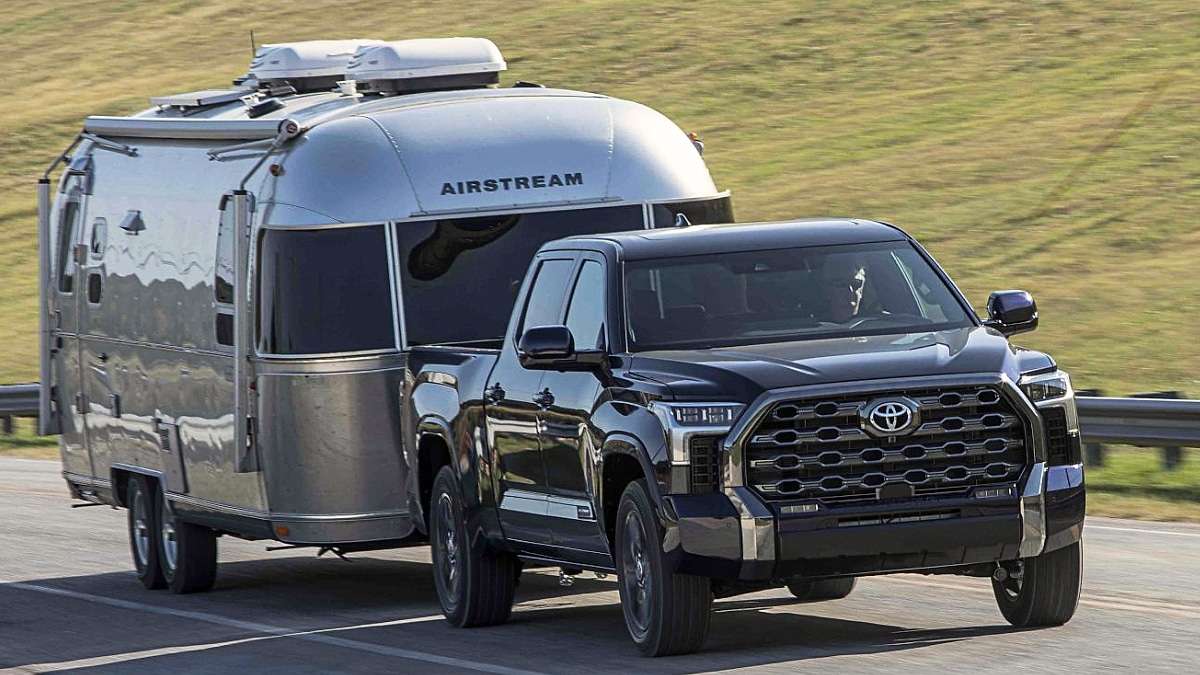

The old school automotive wisdom says your first 1,000 miles are the most critical for a new engine's life. Many truck enthusiasts swear by an early break in oil change, a habit one owner detailed when he started changing the oil in his Toyota Tundra at 1,000, 3,000, 6,000 and then every 5,000 miles after owning 37 trucks. But for one 2026 Toyota Tundra owner, the real danger didn't come from the factory floor. It came straight from the dealership service bay, a problem that echoes what happened when another Tundra owner brought his truck in for an oil change and was sent home with metal flakes still inside the filter.
Before we dive into the mechanical nightmare of what happens when a modern powertrain is mishandled, ask yourself this. When you pick your truck up from a dealership service department, do you actually pull the dipstick to check their work before driving off the lot, or do you trust that the certified technicians got it right? It is a question more new truck buyers are forcing themselves to ponder, much like the discussion that followed a Tacoma owner whose dealer broke the oil filter housing during a routine visit, and we want to know your routine in the comments section below.
The Incident: From Service Bay to Flatbed
The owner of a brand new 2026 Toyota Tundra took to a prominent Facebook owner's group to share a frustrating saga that every new vehicle buyer dreads. Seeking advice from the community, he detailed a routine maintenance visit that went catastrophically wrong over the course of a weekend, a pattern that feels familiar after a 2024 Toyota Tundra owner discovered his oil filter had come loose just 5,000 miles after a dealer service.
He wrote, "Looking for advice. Purchased a 2026 Toyota Tundra last month. Brought it in to dealer Friday for a 1K oil change. Upon picking it up seemed like I had a rougher idle than normal at low rpm but wasn't sure if it was AC compressor. Barely drove it all weekend but on way to work had smoke coming from tailpipe that smelled like oil. Guessing it was somehow overfilled. Tow truck is taking it back to dealership to look at it. Obviously it's all covered by them but what should I ask, look out for or be concerned about. I am beyond frustrated right now."
Imagine spending hard earned money on a cutting edge, complex modern pickup, taking proactive care of it, and watching it get hauled away on a flatbed less than 72 hours later. The owner's frustration is entirely justified, and it is not an isolated story, since one Toyota 4Runner owner described a nearly identical scene when a 5,000 mile service turned into a smoke filled nightmare that the dealer reportedly tried to hide.
Since making that initial post, the owner has provided a critical update on the dealership’s findings. "Dealer got back saying it was overfilled," he wrote. "They are going to keep it over night to run it a few more times. No lights or codes have come up thus far but they want to be safe." While it is a massive relief that the Tundra's sophisticated onboard diagnostics haven't thrown any active trouble codes or triggered a check engine light yet, the fact that the dealer feels the need to keep the truck overnight to "run it a few more times" proves that clearing out an oil-saturated intake system requires more than just a quick drain and refill.
The Mechanical Reality: Why Overfilling a Twin Turbo V6 Is Highly Dangerous
On older, naturally aspirated V8 engines, a slight oil overfill might just result in a bit of extra pressure or a messy cleanup. On the current generation Toyota Tundra's 3.4 liter twin turbo V6 (the V35A FTS engine, found in both the standard i FORCE and i FORCE MAX hybrid configurations), an overfill is a serious mechanical hazard, the same engine family at the center of Toyota's recent recall expansion tied to front bearing failures in the V35A platform.
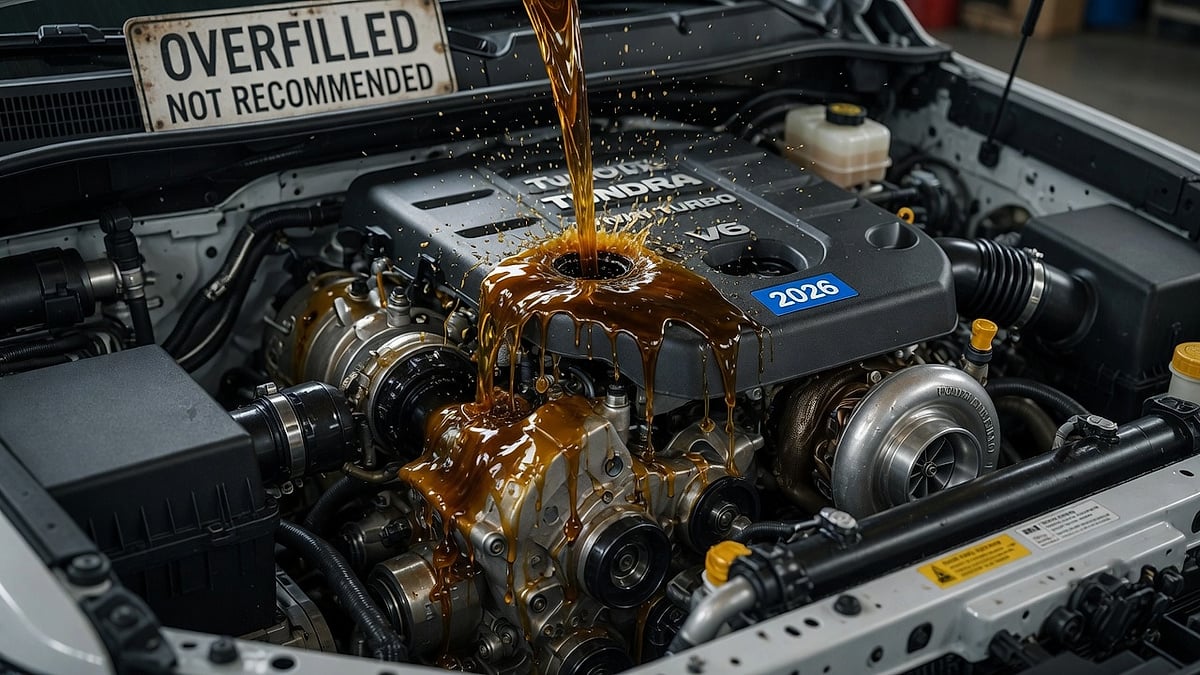
The twin turbo V6 requires precisely 7.7 quarts of motor oil when changing the filter. When a rushed service technician pumps bulk oil without verifying the capacity, or mistakes the spec for another powertrain, the engine suffers, much like the RAV4 owner who said her dealer overfilled her engine for 15,000 miles straight and left her wondering whether she had grounds to sue.
Here is exactly what happens inside the Tundra's engine when the oil level is significantly exceeded.
Oil Aeration. The spinning crankshaft acts like a massive blender, striking the excess oil in the oil pan and whipping it into a frothy foam, the same effect described by a GR86 and RAV4 owner who found his Toyota dealer repeatedly filled the oil past the high mark on the dipstick.
PCV System Overload. This frothy, highly pressurized oil foam bypasses the Positive Crankcase Ventilation valve. Instead of venting gases, the system begins sucking liquid engine oil directly into the air intake tracts, a failure mode also documented by the Toyota 4Runner owner whose technician left the oil cap off and triggered the same kind of PCV contamination.
Turbocharger Contamination. Once oil enters the intake system of a twin turbo engine, it passes right through the hot turbochargers. The oil combusts in the cylinders and the exhaust system, creating the rough low RPM idle and the thick, blue, oil scented smoke pouring out of the tailpipe, the very symptom that appeared after a Mazda owner's dealer responded to an oil consumption complaint by overfilling the engine even further. According to Cars.com, burning oil in the exhaust will usually cause blue or gray smoke, while a coolant leak tends to produce white smoke instead.
What the Owner Should Demand From the Dealership
Because this error happened entirely under the dealership's care, the financial burden is on them. However, a smoking tailpipe means oil went where it was never designed to go. To protect the longevity of the truck, the owner needs to arm themselves with specific, technical questions before the keys are handed back, the same approach recommended after a Toyota Highlander owner was hit with an unexpected diagnostic bill following a dealer service visit.
- Document the Exact Volume Removed. The very first thing the service department must do is drain the oil and measure it. The owner must demand to know exactly how many quarts were in the engine. Having a service ticket stating drained 9.5 quarts from a 7.7 quart capacity system is definitive proof of dealer negligence if components fail later, the kind of paper trail that mattered most in a separate case where a 4Runner owner pushed for documentation after suspecting the dealer tried to quietly clean up the evidence.
- Inspect and Clean the Turbocharger Intakes and Intercooler. If oil was burning heavily enough to smoke out the tailpipe, it has likely pooled inside the turbocharger inlet pipes or the intercooler. If left there, this residual oil can degrade vacuum lines, ruin sensors, or cause further rough idling. The technicians must physically inspect and clean these tracts, a step that owners who experienced a Toyota Tundra oil sample analysis after the first 1,000 miles say should never be skipped on a turbocharged truck.
- Check for Catalytic Converter Poisoning. A vehicle's emissions system is designed to handle exhaust gases, not raw, burning motor oil. Heavy oil consumption can quickly coat and poison the internal catalysts inside the catalytic converters, leading to premature failure. The dealer should run a full diagnostic on the emissions system and document the values. As Cars.com notes, burned oil leaving deposits behind can damage the converter long after the original mistake has been corrected.
The Ultimate Consumer Paper Trail
When you buy a vehicle as dependable as a Tundra, you expect dealership maintenance to preserve that dependability, not threaten it. For this owner, the path forward requires stubborn documentation, the same lesson that came out of an owner who found a brand new engine waiting for him instead of a routine oil change after Toyota identified a manufacturing defect. Every conversation, tow receipt, diagnostic report, and cleaning procedure must be recorded on a corporate service ticket to ensure the factory warranty remains entirely uncompromised, a habit that also helped a Tundra Platinum owner who found metal flakes in his oil at just 17,000 miles build a credible case with his dealer.
The moral here is simple. A truck this complex deserves a level of attention that matches its engineering, and that attention has to come from the owner too, not just the service department. Trust is earned one honest repair order at a time, and the owners who keep records tend to come out ahead when something goes wrong.
Now we want to hear from the truck community on this delicate balance of maintenance and trust. Have you ever experienced a major mechanical blunder by a dealership technician during a routine service visit? If you were in this owner's shoes, would you lose trust in this specific service department, or would you give them the chance to make it right?
Return tomorrow, or check our Torque News Home Page for more interesting automotive news articles.
Images by Fred Jones and Jorge Velez from the public Facebook group, used for news-reporting purpose with credit.
About The Author
Armen Hareyan is the founder and Editor-in-Chief of Torque News and an automotive journalist with over 15 years of experience writing car reviews and industry news. Now based in the Charlotte region (Indian Land, SC, he founded Torque News in 2010, which since then has been publishing expert news and analysis about the automotive industry. He can be reached at Torque News on X, Linkedin, Facebook, and Youtube. Armen holds three Masters Degrees, including an MBA, and has become one of the known voices in the industry, specializing in the landscape of electric vehicles and real-world stories of actual car owners. Armen focuses on providing readers with transparent, data-backed analysis bridging the gap of complex engineering and car buyer practicality. Armen frequently participates in automotive events throughout the United States, national and local car reveals and personally test-drives new vehicles every week. Armen has also been published as an automotive expert in publications like the Transit Tomorrow, discussing how will autonomous vehicles reshape the supply chain, and emerging technologies in vehicle maintenance.
Set Torque News as Preferred Source on Google
Follow us today...





Comments
I checked my last oil change…
Permalink
I checked my last oil change (1000 mile, new 2025 Pilot)when I got home. 100% correct.