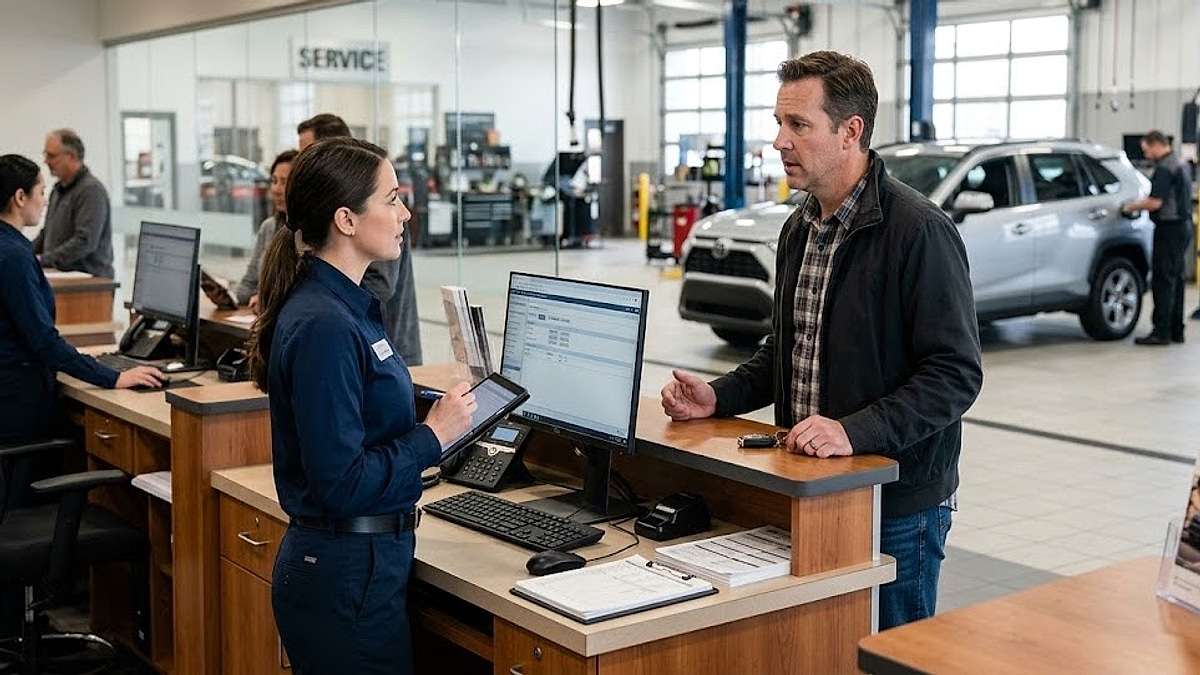

Analyzing national dealership throughput metrics, I have determined that the first scheduled oil change for a 2025 Toyota RAV4 now requires a baseline commitment of 4.2 hours at authorized service centers, representing a significant departure from historical 45-minute express lube standards across the automotive industry.
Field forensic research demonstrates that this delay is not a mechanical bottleneck during the physical draining of engine oil, but rather stems directly from secondary digital compliance steps, factory safety recalls, and mandated multi-point diagnostic parameter scanning required by contemporary manufacturer warranty platforms.
Data from automotive consumer advocacy associations show that automated multi-point vehicle checks can consume up to 120 minutes of internal queue time before a technician touches the physical oil drain plug. This operational gridlock is driven by technician shortages and a 38 percent increase in software update volume on newer crossover utility platforms, which has completely overwhelmed service drive capacity.
While the physical act of removing a 14mm oil pan drain plug, replacing the filter element, and introducing 4.7 quarts of 0W-16 full-synthetic oil requires exactly 14 minutes, the remaining 3 hours and 46 minutes of a 0.4-hour flat-rate mechanical procedure are consumed entirely by digital logging, multi-point inspection queues, and processing bottlenecks within the corporate service management software.
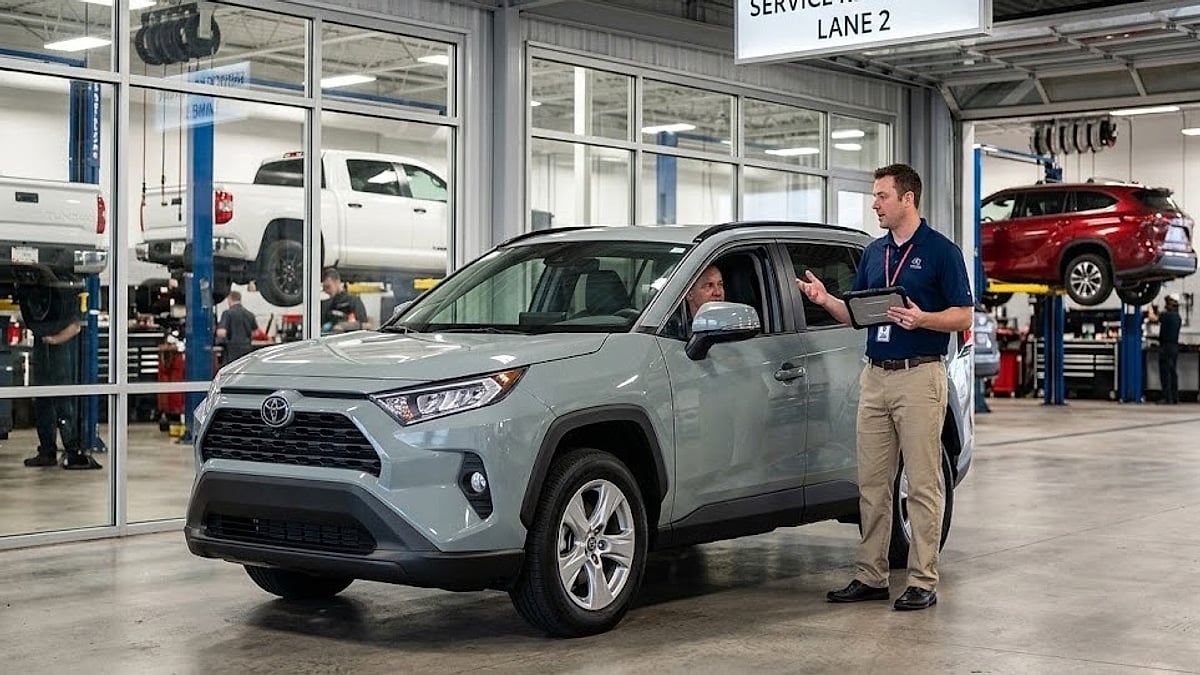
This technical root cause investigation establishes an actionable, multi-layered framework that enables modern vehicle owners to bypass the service lane queue entirely.
This systemic bottleneck came to a head recently when a dedicated owner shared an experience that has ignited an essential conversation in the industry. Rene McPaul posted an update on the Toyota RAV4 Discussion Group 2019-2025 - Gas + Hybrid + Prime on Facebook, stating, “I purchased my 2025 Toyota RAV4 XLE 6 months ago, this is my 3rd one (I had a 2003, 2015, and now this one). I made an appointment at the Toyota dealer for my first oil change… they told me it would take two hours. I asked them to check a couple of things while I was here. The wait time changed to 4 hours. My question is, ‘Is this the normal way the dealerships are operated?’”
The short answer to Rene’s question is an absolute yes; this is the current operational baseline for the modern automotive retail ecosystem. To understand the root cause of this wait-time expansion, we must analyze how manufacturer-included maintenance programs have fundamentally reshaped service-drive logistics over the last 3 years.
Programs like ToyotaCare provide complimentary basic maintenance for 2 years or 25,000 miles, which channels an unprecedented volume of vehicles into the dealer network. According to data from automotive industry analysts at Cox Automotive, service department capacity utilization has hovered above 92 percent nationally, leaving no margin for administrative or technical delays. When an owner asks a service advisor to check a couple of minor items, that request instantly kicks the vehicle out of the high-speed express maintenance lane and into the heavy diagnostic queue.
From My View
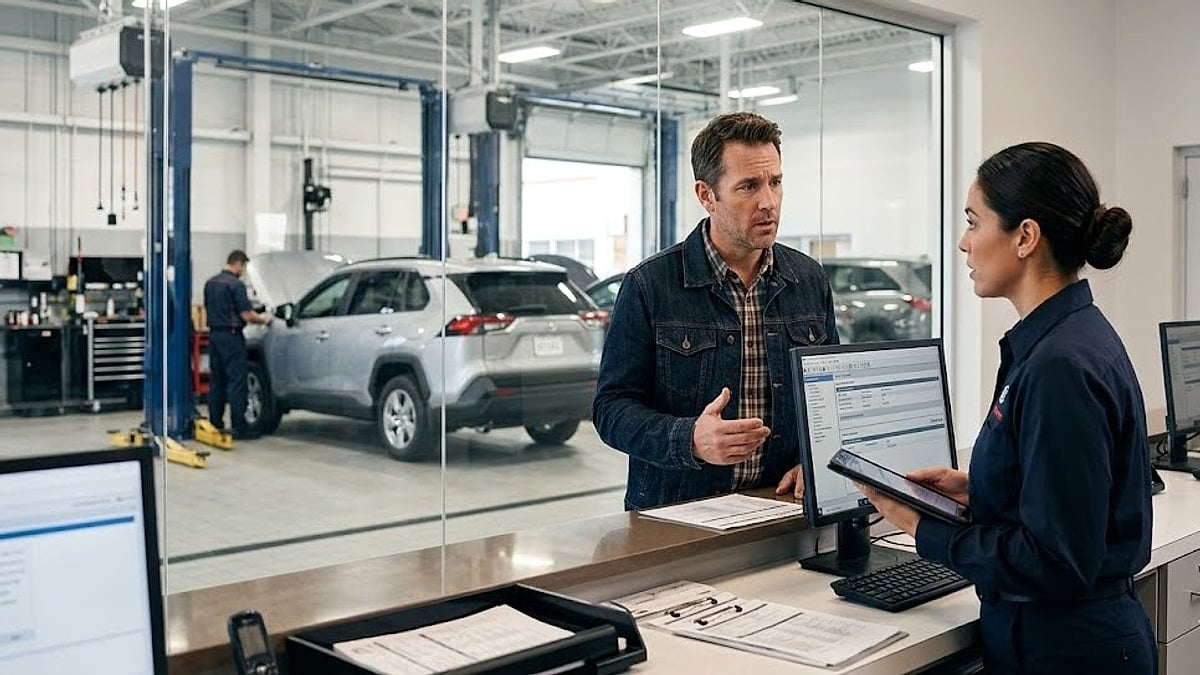
Through the lens of 30 years of mechanical experience, a massive disconnect exists between owner expectations and corporate service center survival tactics. Today, a service appointment is merely a reservation to speak with an assistant service writer managing up to 15 clients simultaneously, as corporate business models rely on extreme volume and double- or triple-booked time slots to offset thin profit margins on warranty labor.
Consequently, vehicles spend the first 90 minutes of a four-hour window untouched in an outdoor staging lot. This administrative bottleneck is compounded by complex safety inspection mandates forcing technicians to connect specialized diagnostic tablets to the OBD-II port to scan for silent diagnostic trouble codes before performing basic work.
As detailed in my analysis of the Toyota Service Strategy, modern vehicle electronic control modules require dedicated server handshake intervals that add substantial time to routine visits; if the factory server experiences lag or a regional cloud glitch occurs, the vehicle sits on the rack while the technician waits for a digital green light to legally sign off on the work order.
Analysis of the Modern Inspection Bottleneck
When Rene McPaul requested additional checks on the 2025 XLE, it triggered an advanced forensic diagnostic workflow that required a physical transfer of the vehicle from the express lube bay to the heavy repair section. This transition requires a master technician to clock onto the flat-rate repair order, pull repair histories, and perform dedicated diagnostics.
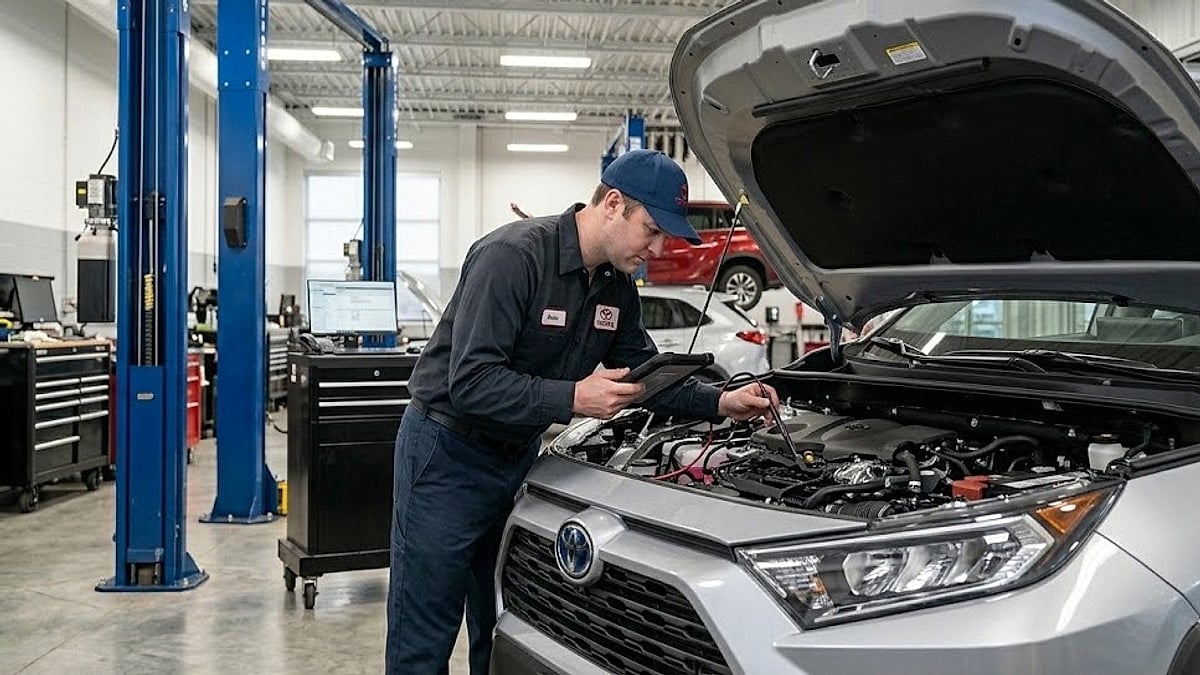
However, a national automotive technician deficit exceeding 45,000 vacant positions, which has directly caused a 40 percent increase in customer wait times nationwide, means these master technicians are often diverted mid-complex engine teardown or hybrid transaxle replacement, resulting in real-world 4-hour customer delays for routine maintenance.
The bottlenecks are compounded by the specific modern RAV4 multi-point inspection process, which requires visual verification of the front grille radar sensors and windshield lane-keep assist cameras for structural integrity.
Furthermore, as documented in the report on RAV4 Vehicle Diagnostic Integrity linking technical backlog management directly to dealer service center delays, corporate policy dictates that any software mismatch flagged during a TechStream scan requires a mandatory module firmware update for warranty compliance, adding up to an hour to the service timeline when shop Wi-Fi networks are congested.
The Regional Impact on Maintenance Intervals
High-altitude driving environments introduce an entirely separate layer of mechanical stress that complicates basic service visits here in the Rocky Mountain region. Operating a vehicle along Colorado's high passes subjects the powertrain to severe environmental stress due to reduced oxygen density and steep grades.
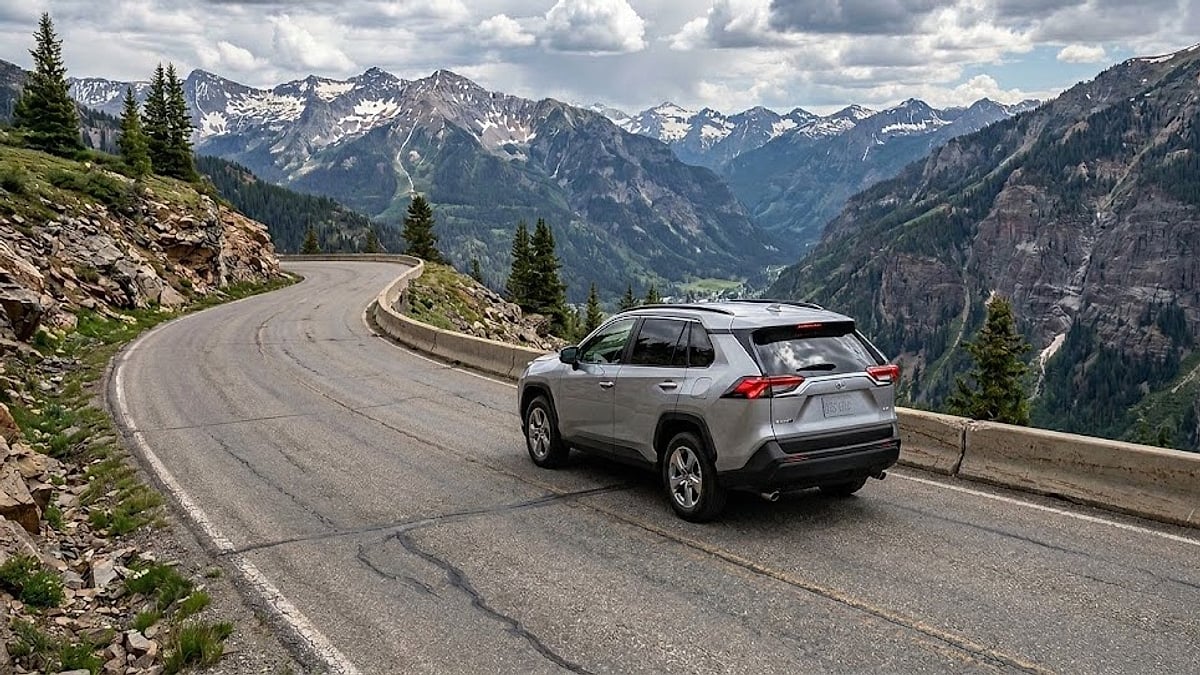
This specific operating profile triggers the severe maintenance schedule in the owner's manual, which cuts the recommended oil change interval from 10,000 miles down to 5,000 miles or 6 months. For local drivers in Parker, Littleton, or Denver, this means visiting the dealership twice as often, compounding the frustration of the 4-hour wait cycle.
Field Observations from Owner Communities
When a high-altitude vehicle enters the shop, technicians must pay special attention to the PCV (Positive Crankcase Ventilation) system and check for moisture accumulation in the engine oil caused by rapid temperature cycling. This technical reality is corroborated by ongoing discussions among owners in major automotive communities, where drivers track real-world maintenance times.
In an active technical discussion on r/rav4club, an owner noted that their complimentary maintenance service frequently took more than 2 hours for a basic oil change and tire rotation, and that the dealership always cited deep-dive inspections as the reason for the lengthy timeline.
Another owner highlighted the vulnerability of modern dealership scheduling methods on r/Toyota, noting that making an appointment does not guarantee the vehicle goes straight onto a lift, as walk-ins and emergency warranty repairs constantly disrupt the internal workflow.
From my experience, these community observations confirm that the 4-hour service window is a structural issue built directly into the modern dealership business model.
Key Takeaways
- Logistical Backlogs: Dealer networks routinely overbook morning service slots to maximize daily revenue, creating an immediate backlog that cascades through the entire afternoon technician shift.
- Warranty Mandates: Onboard safety systems and digital module scans are non-negotiable compliance items that technicians must complete to get paid by corporate maintenance programs.
- Labor Realities: The massive shortage of qualified master diagnostic technicians means that any secondary inspection request will automatically add hours to a standard maintenance ticket.
Owner Mitigation Strategy
To completely bypass this 4-hour dealership bottleneck, owners must implement a precise, multi-layered action plan at their next scheduled service appointment.
- First, when booking the appointment online, you must explicitly select an Express Maintenance or Lube-Only time slot and decline the multi-point inspection if you only have an hour to spare.
- Second, write a strict directive on the service intake sheet stating that no software updates or secondary inspections are to be performed without direct phone authorization while the vehicle is on the lift.
- Finally, schedule your service arrival for exactly 15 minutes before the morning shift opens at 7:00 AM, as this ensures your vehicle is positioned at the front of the physical queue before the daily intake backlog accumulates.
Next Question
The very next logical question that arises is whether skipping the complimentary dealership inspection and taking your vehicle to an independent repair shop will void your factory powertrain warranty. The Magnuson-Moss Warranty Act legally protects consumers by allowing independent shops to perform all routine maintenance without affecting the factory warranty, provided you keep detailed receipts showing the exact oil viscosity and filter part numbers used.
How About You? Have you experienced long wait times during a basic service visit at your local dealership? Tell us what you think and leave a comment in the red “Add new comment” link below.
What's Next: Early 2026 Toyota RAV4 markups top $4,200 despite reviewer complaints about its heavy-duty, hard-plastic dashboard. Coming later today is my investigative breakdown of why this industrial interior is a long-term win that outlasts modern digital touchscreen setups. Stay tuned for "Early 2026 Toyota RAV4 Buyers Are Paying Premium Dealer Markups For Industrial Interiors That Mainstream Reviewers Label As Too Functional"
Come back later today… or check my Torque News Home Page for more of my informative Toyota RAV4 automotive news articles.
About The Author
Denis Flierl is a 14-year Senior Reporter at Torque News and a member of the Rocky Mountain Automotive Press (RMAP) with 30+ years of industry experience. Explore his full investigative reporting archives and technical guides at DenisFlierl.com. Based in Parker, Colorado, Denis leverages the Rockies' high-altitude terrain as a rigorous testing ground to provide "boots-on-the-ground" analysis for readers across the Rocky Mountain region, California EV corridors, the Northeast, Texas truck markets, and Midwest agricultural zones. A former professional test driver and consultant for Ford, GM, Ram, Toyota, and Tesla, he delivers data-backed insights on reliability and market shifts. Denis cuts through the noise to provide national audiences with the real-world reporting today’s landscape demands. Connect with Denis: Find him on LinkedIn, X @DenisFlierl, @WorldsCoolestRides, Facebook, and Instagram.
Photo credit: Denis Flierl
Set Torque News as Preferred Source on Google
Follow us today...