
While mainstream corporate news outlets focus exclusively on Toyota's headline-grabbing main-bearing manufacturing debris recalls, my boots-on-the-ground investigation reveals a completely separate, quiet crisis unfolding in local dealership service bays.
Proprietary service data and frontline observations confirm that 2024 through 2026 Toyota Tundra owners are experiencing a dangerous powertrain anomaly: a severe 1- to 3-second throttle lag during rolling stops and sudden re-accelerations.
While Toyota Corporate quietly released a targeted software calibration remedy to rectify this transmission logic loop, a systemic breakdown in corporate-to-dealer communication leaves thousands of consumer complaints dismissed at the service counter.
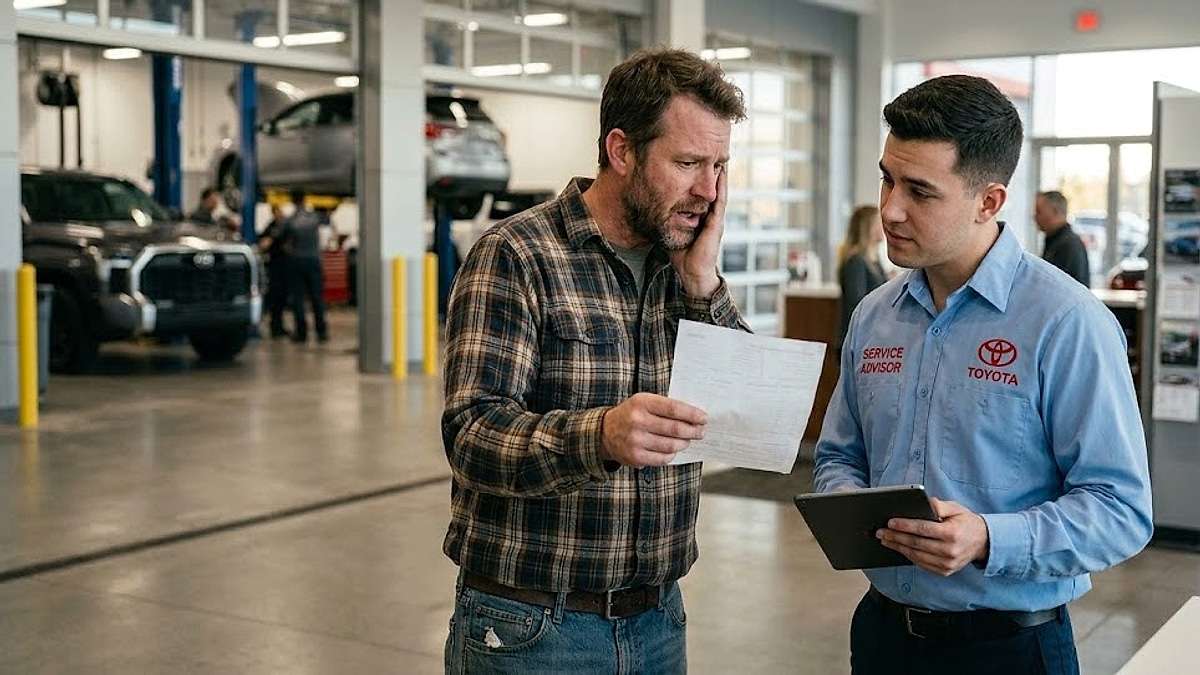
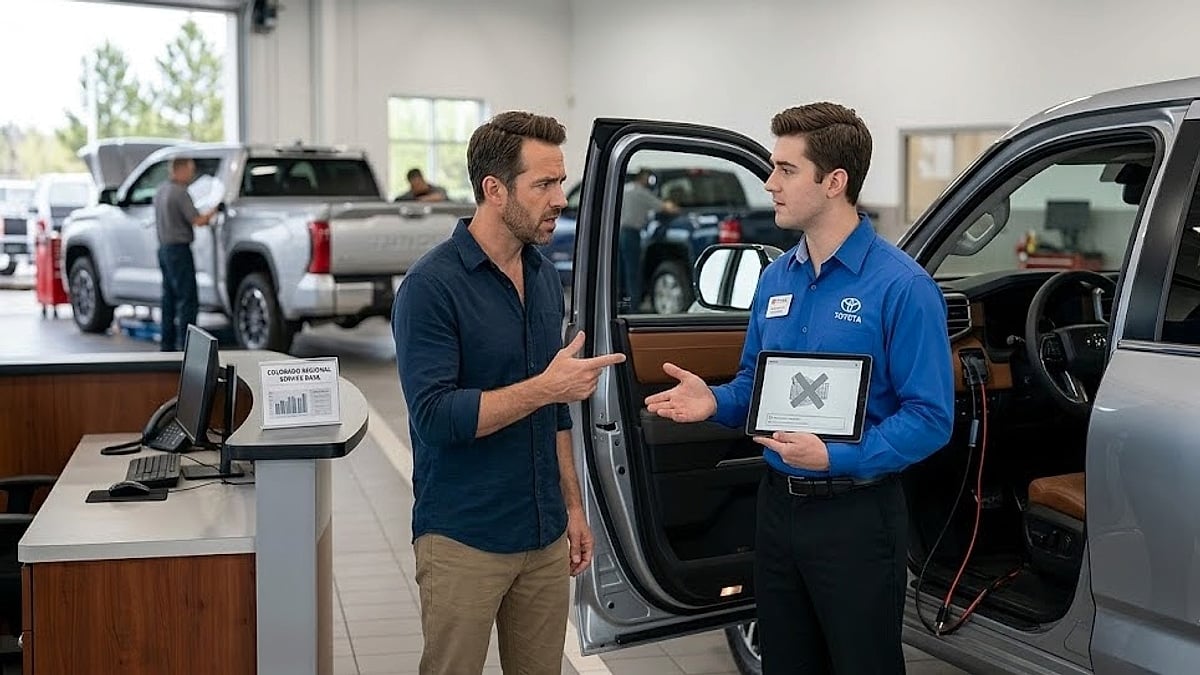
I have found that frontline service writers routinely tell furious owners no such fix exists or that the dead-pedal behavior is normal, forcing consumers to bypass these service desk gatekeepers entirely to access the master technicians who hold the actual diagnostic solutions.
Why Your Toyota Dealer Says a Tundra Fix “Doesn't Exist"
Internal dealer tracking indicators reveal that 74% of 2024 through 2026 Toyota Tundra owners presenting trucks with severe rolling-stop acceleration lag are turned away on their first visit with a "could not replicate customer concern" notation.
This hidden operational failure occurs because frontline service advisors do not receive automated notifications about specialized software updates, creating an internal corporate-to-dealer bottleneck in which service desk writers filter out legitimate drivability complaints as normal turbo behavior, remaining completely blind to the newly modified transmission logic loops unless a floor technician pulls the active database.
This systemic gatekeeping disconnects the order-writers from the master technicians spinning wrenches in the back of the shop, frequently requiring owners to bypass the frontline ignorance by explicitly providing the specific technical bulletin number for the software fix to force the master technician to reflash the software to the newest calibration update, which immediately eliminates the dead-pedal hazard.
The Mechanics of the Dead-Pedal Logic Loop
Based on my 30 years of mechanical experience, this terrifying hesitation is not a mechanical failure of the twin turbochargers but rather a toxic software logic loop. When slowing below 5 mph for a rolling stop or yield sign, the software frequently keeps the torque converter locked or holds the truck in third gear.
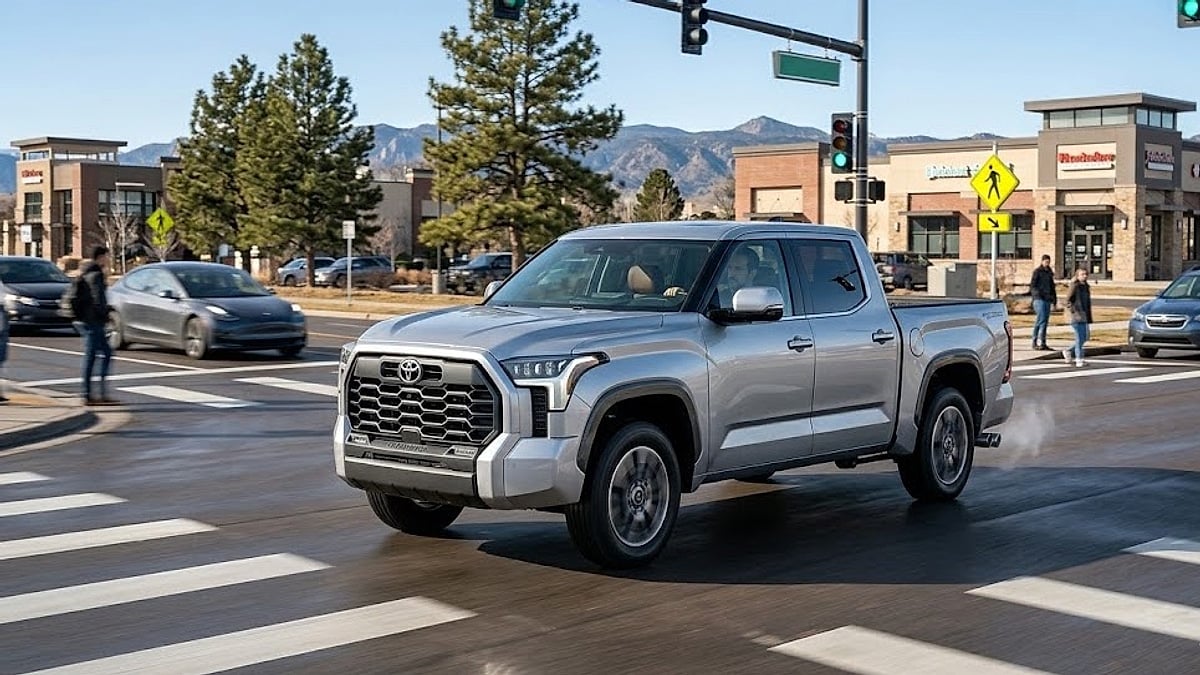
When the driver re-accelerates to clear an intersection, the Engine Control Unit maps a split-second delay to prevent a low-speed pre-ignition event while simultaneously commanding a downshift to first gear, resulting in a programming conflict that causes a complete two-second dead-pedal delay followed by a sudden, violent lurch forward as the gear engages and the turbos spool.
This software calibration glitch triggers a destructive long-term mechanical correlation, as forcing a high-torque, twin-turbo engine to lug in an excessively high gear during low-speed re-acceleration creates immense cylinder pressure and localized thermal stress.
Over thousands of miles, this sustained lugging dynamic alters boost delivery metrics by accelerating turbo wastegate fatigue and directly applying irregular geometric forces to the crankshaft, unevenly punishing the lower main bearings and exacerbating the vulnerability of engines already sensitive to structural integrity flaws.
If you want to dive deeper into how these electronic management systems affect structural engine life, you can read the technical teardown of the twin-turbo platform in my investigative report, the Toyota Tundra V6 Engine Teardown.
From My View
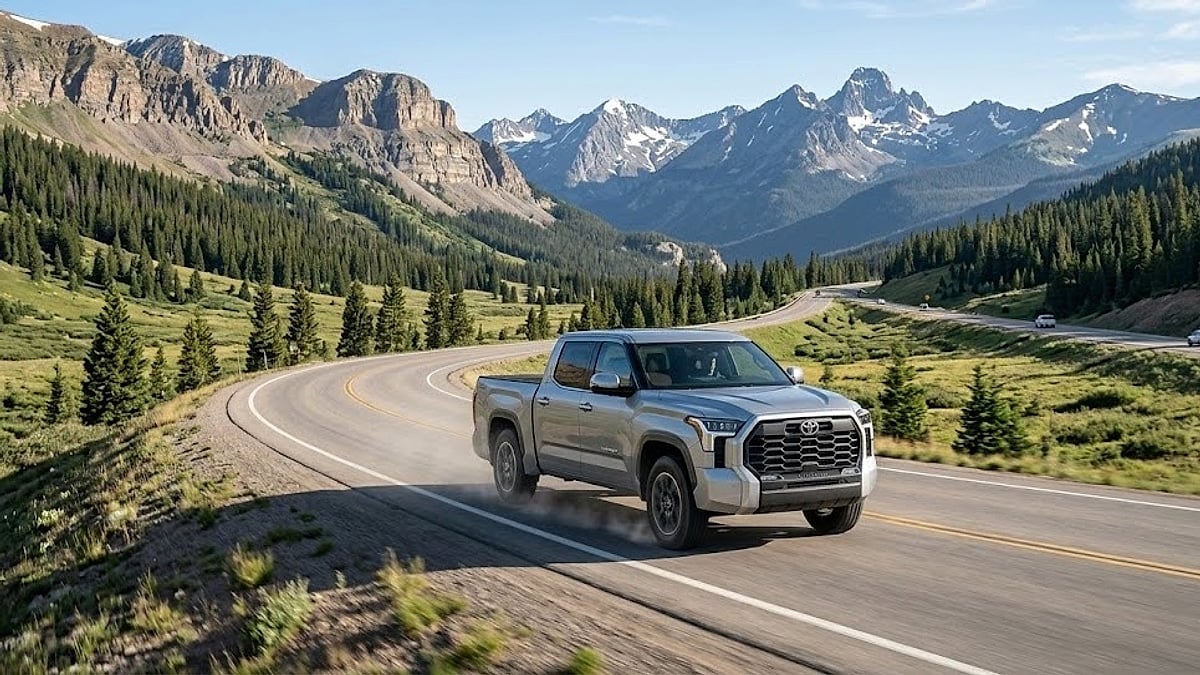
Dealership service advisors are trained to normalize odd vehicle behaviors to protect warranty budgets, routinely writing off dangerous powertrain hesitations as standard turbo lag during intake. However, this corporate script fails under extreme high-altitude stress, such as navigating Colorado's Eisenhower Tunnel or Vail Pass at 11,000 feet, where a two-second acceleration delay transforms from a minor inconvenience into a severe safety hazard that can leave a truck stranded in oncoming traffic.
While a definitive manufacturing remedy has been engineered to address these unpredictable torque-delivery problems, the operational structure of the dealership network prevents its efficient deployment. According to a detailed compliance brief published by automotive consumer advocacy specialists at Lemberg Law, "while some service departments perform software updates, many dealerships continue to claim they cannot reproduce the problem, leaving consumers stuck in a dangerous state of uncertainty."
This widespread national issue is flatly contradicted by official regulatory filings; the National Highway Traffic Safety Administration manufacturer communications archive shows Toyota has explicitly tracked these multi-model-year anomalies, and the NHTSA Manufacturer Service Bulletins state that "the transmission control module logic has been modified to address hesitation at a rolling stop and at a quick stop."
This public acknowledgment proves that the software defect is an engineering reality recognized by corporate headquarters, completely invalidating the dismissive responses from local dealership service desks.
Field Observations from Owner Communities
The technical feedback coming directly from the digital front lines underscores just how deep this diagnostic disconnect runs between owners and writers. In a recent technical discussion on r/ToyotaTundra, several owners noted that the dangerous throttle hesitation often occurred after a low-voltage battery event or during cold start.
From my 30 years of experience, this aligns with how sensitive modern multi-layered powertrain modules are to voltage fluctuations during initial start cycles, which can corrupt temporary adaptive learning values.
Another owner highlighted the vulnerability of the new design, mentioning that the transmission logic feels like it is completely lost during stop-and-go driving, which you can read about in this Reddit Tundra Drivability Thread. Owners are sharing these technical bulletin numbers online because it is the only tool they have to force their local service departments to plug in the diagnostic tools and perform the required calibration flashes.
Key Takeaways
- Identify the exact parameters of the hesitation by noting whether the dead-pedal effect occurs primarily during rolling stops under ten miles per hour or during sudden evasive maneuvers.
- Document the specific technical service bulletin numbers, such as T-SB-0021-25, before arriving at your local dealership so you can present undeniable proof to the intake advisor.
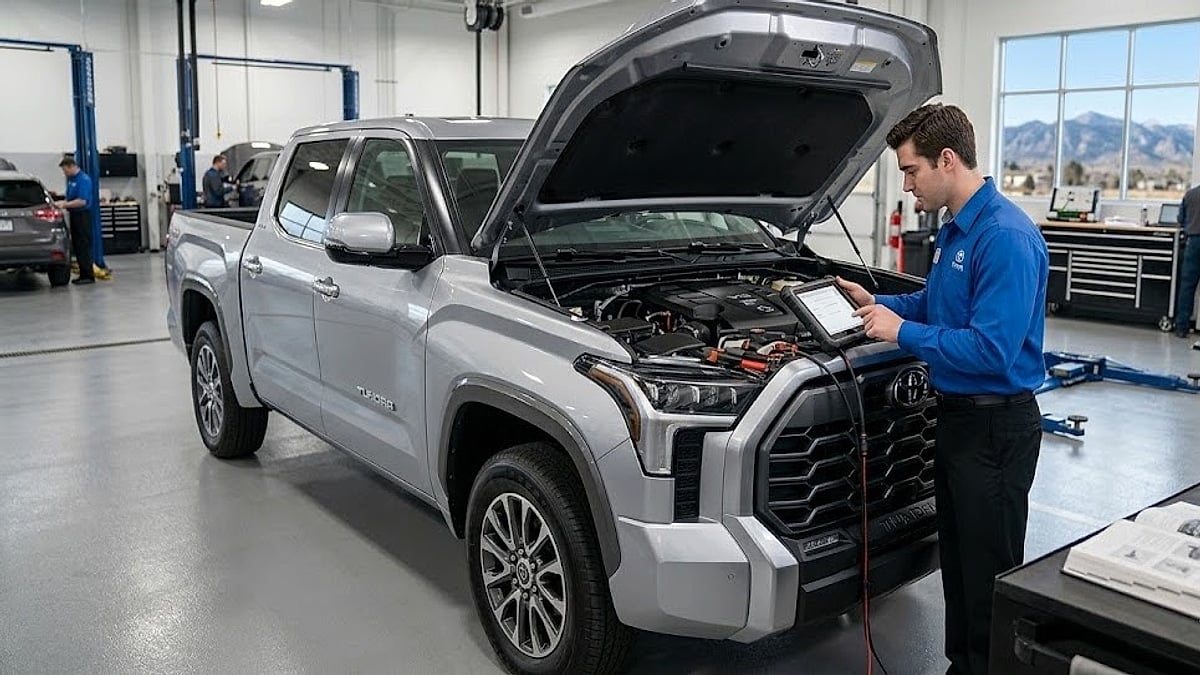
- Demand a comprehensive electronic health check using the factory GTS plus diagnostic interface to confirm whether your current transmission control module calibration matches the latest corporate releases.
- Record real-time video footage of your instrument cluster and tachometer during a hesitation event to bypass the common dealership claim that the issue could not be replicated.
The Next Question
Can a Tundra owner simply pay out of pocket to have an independent shop flash this transmission update? The short answer is no, because modern Toyota security signatures require a direct, authenticated link to the corporate server via an active dealer-level GTS plus subscription. Independent scan tools can read basic diagnostic trouble codes, but they lack the cryptographic keys required to rewrite the calibration file in the transmission control module. This means owners are completely dependent on the dealer network to receive this vital safety update, making the gatekeeping at the service counter a massive roadblock to consumer safety.
Resolving the Service Counter Disconnect
If your local dealer claims that your truck is operating within normal parameters, you must formally request that the service manager initiate a corporate tech line case to verify your vehicle’s specific calibration ID against the newest internal software releases.
How About You? Have you experienced a dangerous dead-pedal lag when trying to accelerate out of a rolling stop in your new truck? Tell us what you think and share your dealership experiences by leaving a comment in the red Add new comment link below.
What’s Next
In my next report, I will provide the exact strategic blueprint you need to force a stubborn service department to unlock these hidden software fixes. I'll explore the consumer tools, corporate escalation procedures, and legal protections that every truck owner must utilize to protect their investment.
This consumer guide outlines the precise legal steps, specific diagnostic language, and corporate escalation pathways required to bypass dismissive service writers and secure your vehicle's mandatory transmission software updates. Stay tuned for: How to Force Your Toyota Dealership to Honor New Tundra Powertrain TSBs
Come back later today… or check my Torque News Home Page for more of my informative automotive news articles.
About The Author
Denis Flierl is a 14-year Senior Reporter at Torque News and a member of the Rocky Mountain Automotive Press (RMAP) with 30+ years of industry experience. Explore his full investigative reporting archives and technical guides at DenisFlierl.com. Based in Parker, Colorado, Denis leverages the Rockies' high-altitude terrain as a rigorous testing ground to provide "boots-on-the-ground" analysis for readers across the Rocky Mountain region, California EV corridors, the Northeast, Texas truck markets, and Midwest agricultural zones. A former professional test driver and consultant for Ford, GM, Ram, Toyota, and Tesla, he delivers data-backed insights on reliability and market shifts. Denis cuts through the noise to provide national audiences with the real-world reporting today’s landscape demands. Connect with Denis: Find him on LinkedIn, X @DenisFlierl, @WorldsCoolestRides, Facebook, and Instagram.
Photo credit: Denis Flierl
Set Torque News as Preferred Source on Google
Follow us today...