
A small gray kitten crawled into a Limestone Rivian R1T and accidentally wrote the best advertisement Rivian never paid for.
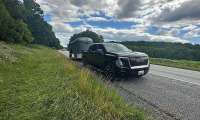
CJ Baker found the kitten two years ago at a busy intersection in the rain. He stopped traffic, tried to grab it, watched it run under his truck, checked the wheel wells and suspension, then drove away thinking the little thing had escaped to grass nearby.
Five days later, he was in his garage and heard screaming from the back of the truck.
That is a sentence no owner wants to live.
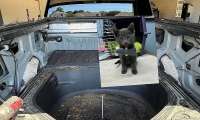
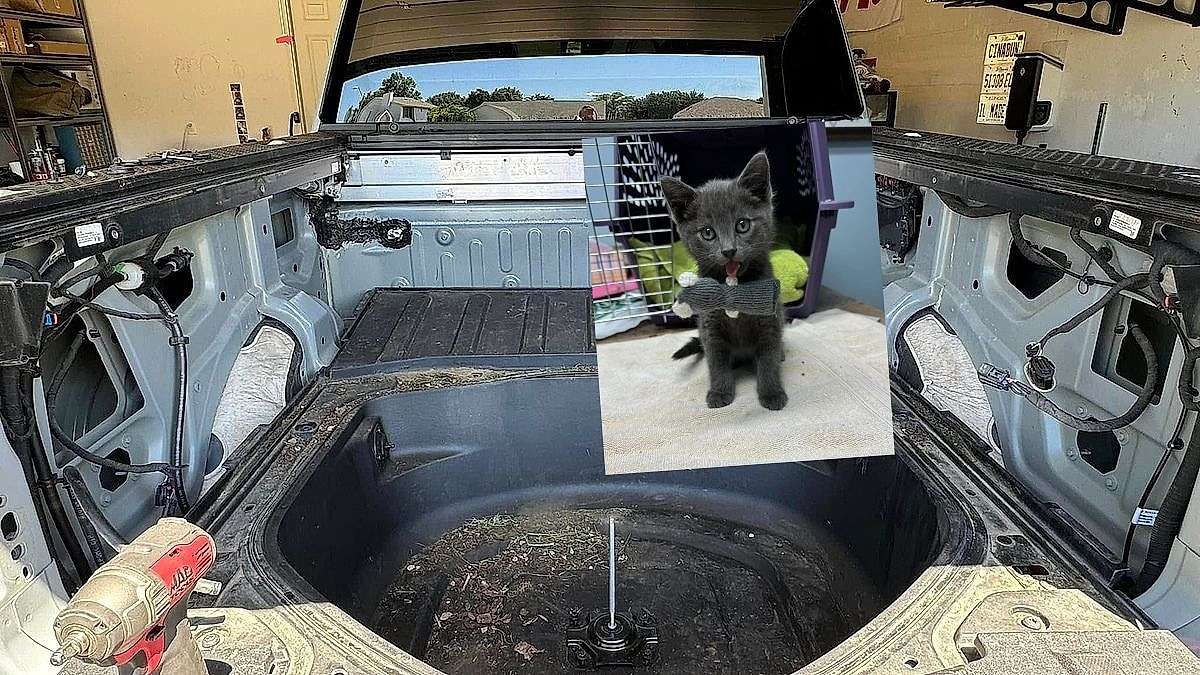
The same kitten was still inside the R1T. Somewhere in the rear structure. Hidden behind panels. Alive after five days. Baker started removing rear underbody pieces, found the animal, then hit the awful part of modern vehicle ownership: he could see the problem and could not reach it.
So he called Rivian.
Somebody at Rivian found a way to connect him with a service tech on that tech’s day off. The employee talked him through disassembling the truck bed floor, including the bed-side pieces and connectors for the air compressor and outlets. After hours of searching, removing parts, brainstorming, and trying not to make one wrong move with a terrified animal trapped in a very expensive electric pickup, Baker reached the kitten.
He named him Rivy.
Two years later, Rivy is healthy, beautiful, and famous enough in the Rivian community that owners still ask for updates.
The truck became a problem that needed people
Modern EVs love to present themselves as sealed objects.
Glass. Software. Skateboard chassis. Hidden fasteners. Battery armor. Touchscreens. Over-the-air updates. The whole pitch carries a sense of controlled complexity. You are allowed to drive the machine, admire the machine, maybe wash the machine. Anything beyond that belongs to trained hands, diagnostic laptops, special tools, and corporate procedure.
Then a cat gets behind the wrong panel and the fantasy evaporates.
Baker did not need a software patch. He needed access. He needed someone who knew what could be removed, what should be left alone, where the harnesses ran, how the bed floor came apart, and how to avoid turning a rescue into a service claim.
Vehicle design has a hidden moral dimension. When something goes wrong outside the normal owner’s manual, the machine either allows human intervention or traps the owner behind its own cleverness.
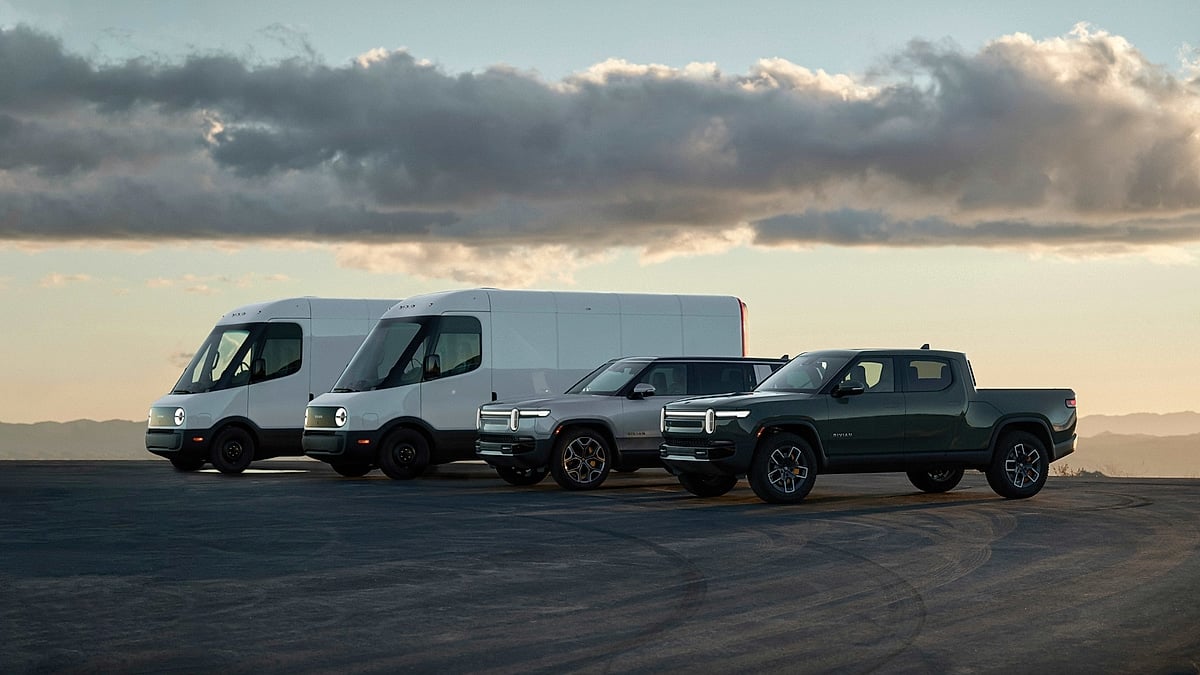
The R1T is packed with cleverness. Gear tunnel. Onboard air compressor. Bed outlets. Underbed storage. Security features. Power compartments. Sealed panels. All of that sells adventure when you are hauling bikes, inflating tires, camping, tailgating, or charging devices in the middle of nowhere.
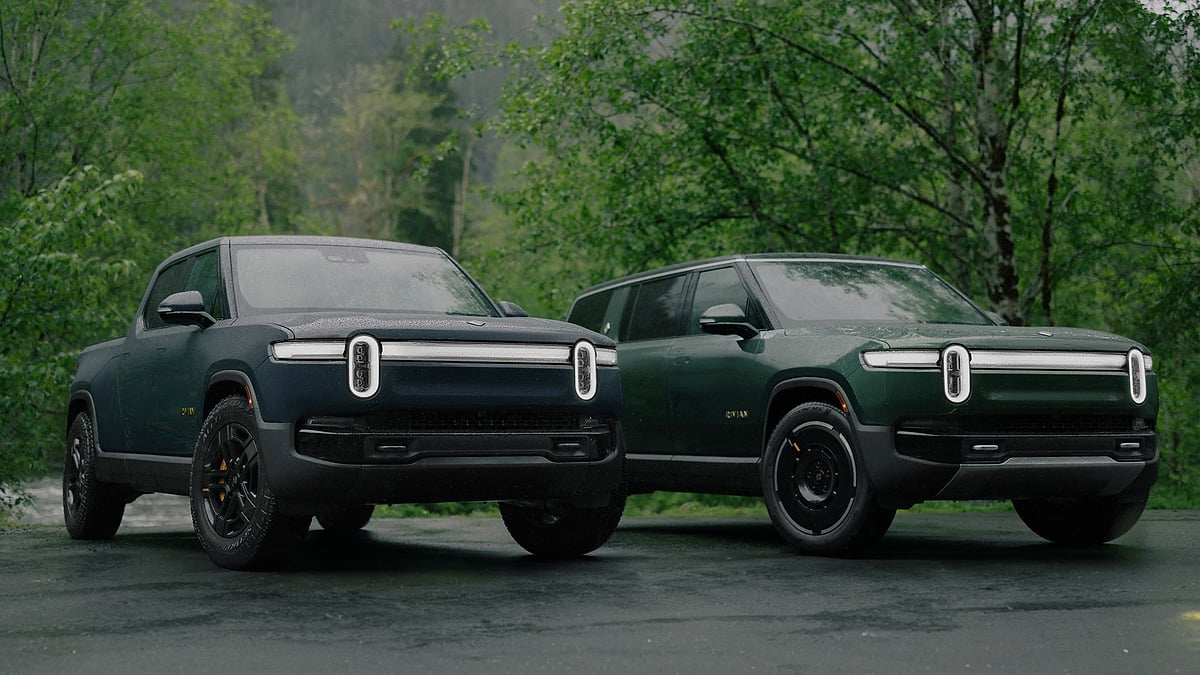
A kitten in the rear structure tests a different kind of adventure.
It tests whether the company’s human support can match the machine’s complexity.
In this case, it did.
The day-off tech is the whole story
Brands spend insane money trying to manufacture warmth.
They pay agencies to write words like community, adventure, stewardship, belonging, purpose, mission, connection, and care. They shoot golden-hour commercials with dogs in the back seat and coffee steaming on a tailgate. They build owner clubs, app badges, social campaigns, and lifestyle gear around the idea that the vehicle is more than transportation.
Most of it smells like expensive cardboard.
Then one service tech answers a call on a day off and walks an owner through taking apart a truck bed to save a screaming kitten.
That is the real thing.
Rivian could not have scripted that moment without ruining it. The power comes from the lack of polish. An employee who had every normal excuse to stay out of it chose not to.
I do not know that tech’s name. I wish I did.
That person understood something too many companies forget: service is where brand mythology either hardens or collapses. The R1T can have clever storage, strong acceleration, and a handsome stance. None of that earns loyalty like a human being stepping in when the owner’s problem falls outside the neat boxes.
A brand promise is easy when the truck is clean, and the trail is scenic.
A brand promise gets proved when there is a half-starved kitten somewhere behind the bed floor.
Rivy picked the right truck, and the right owner
There is a strange poetry in the kitten matching the truck.
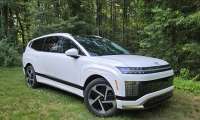
Baker’s R1T was Limestone. Rivy was gray. The community noticed immediately, because of course it did. Car people pretend to be rational, then name machines, photograph them at sunsets, argue over paint codes, and decide fate has a sense of humor when a gray cat emerges from a gray electric pickup after five days of terror.
I am fine with that.
Cars and trucks become part of the household because they collect stories. A dent from a camping trip. A stain from a toddler. A scratch from a dog. A long drive after bad news. A tow home. A road trip. A rescue. Eventually the machine stops being a spec sheet and becomes a witness.
Rivy turned Baker’s R1T into a witness.
That truck is now the one that hid the cat, saved the cat, and gave the cat a name. You cannot buy that in a trim package.
You also cannot separate the owner from the story. Baker stopped in the rain at a busy intersection. He blocked traffic. He checked the truck before leaving. Five days later, he heard the screams and started pulling panels instead of pretending the problem would solve itself. He called the company. He kept going for hours.
People love animal rescue stories because they cut through the cynicism we usually carry around like a spare tire. This one works because every participant did the slightly inconvenient thing.
The owner stopped.
The Rivian employee helped.
The kitten survived.
That is enough.
The R1T’s complexity gave the story stakes
There is an uncomfortable angle here too.
A conventional old pickup may have made the rescue easier. Maybe not, but maybe. A body-on-frame truck with less sealed aero work and fewer integrated systems can sometimes be attacked with a flashlight, a socket set, and language unsuitable for children. An electric truck brings different packaging. Battery protection, sealed panels, wiring, compressors, outlets, sensors, and storage architecture can create spaces that are hard to understand from the outside.
That does not make the Rivian bad.
It makes the rescue more modern.
The R1T was built around the idea that an electric truck can be useful in new ways. Power in the bed. Air in the bed. Storage where engines used to leave space unused. Software wrapped around hardware. Every new solution creates new little places where real life can intrude.
Sometimes real life has whiskers.
If I owned an R1T and heard animal sounds inside the rear body, I would not start ripping parts off like a man trying to win a demolition derby. I would call service, document where the sound is coming from, use food and water to lure if possible, and get professional guidance before touching anything near wiring, outlets, compressor hardware, or high-voltage-adjacent structures. Saving the animal and not damaging the truck are compatible goals if you slow down long enough to think.
Baker slowed down just enough.
Then he worked fast.
This is the kind of story Rivian needs
Rivian has had plenty of serious business to handle. Production ramps. Service coverage. Software changes. Charging network buildout. R2 expectations. The Volkswagen partnership. repairs. Delivery logistics. Owner frustrations. The usual bruise collection that comes with building a car company from scratch.
The Rivy story does not erase any of that.
It gives the brand a pulse.
That is important because Rivian sells more than EV transportation. It sells a theory of American adventure with less smoke and more electricity. The trouble with that kind of branding is that it can turn soft fast. The gear, the colors, the lifestyle photos, the camp language, the trailhead posture. If the ownership experience behind it feels corporate or brittle, the whole thing becomes costume jewelry.
A tech helping save a kitten on a day off does more for the Rivian idea than a hundred lifestyle reels.
It shows a company still small enough, or at least human enough, for one owner’s weird emergency to reach the right person. That will get harder as Rivian grows. Scale is excellent for production and dangerous for soul. Every brand wants a passionate community. Few brands want the messy obligations that come with one.
Rivian should protect this instinct like expensive tooling.
The lesson under the fur
Two years later, the happiest part of Baker’s update is ordinary: Rivy is doing well.
That is the ending everyone wanted. The kitten who survived five days inside an electric truck became a house cat with a backstory better than most rescue movies. The owner got a pet. The community got a legend. Rivian got the kind of owner-service story that cannot be purchased.
The small practical lesson is simple: if you see an animal run under your vehicle, take the extra time. Check the wheel wells, suspension, underbody, engine bay if applicable, cargo spaces, and any openings near liners or panels. Wait. Listen. Use a flashlight. Ask for help before driving if there is any doubt. Modern vehicles have more hiding places than people think.
The larger lesson belongs to Rivian.
Build machines people can love. Then answer the phone when life gets strange.
That sounds sentimental until it happens to you.
A truck can earn loyalty through range, torque, storage, charging speed, and clever features. It can also earn loyalty when a frightened 1.8-pound animal turns the bed floor into a rescue puzzle, and somebody from the company decides the problem is worth solving.
Rivy proved the owner community had a heart, and that at least one service tech knew the badge meant something after hours.
That is the kind of story a young car company should be lucky enough to deserve.
Rivian owners, what is your strangest service story?
If you own an R1T or R1S, what is the most unusual thing Rivian service helped you solve: a trail fix, animal rescue, charging issue, gear-tunnel problem, mobile-service save, or something no owner’s manual could have predicted?
Let us know in the comments.
First image by CJ Baker.
About The Author
Noah Washington is an automotive journalist based in Atlanta, Georgia, covering sports cars, luxury vehicles, and performance culture. His reporting focuses on explaining the engineering, design philosophy, and real-world ownership experience behind modern vehicles.
Noah has been immersed in the automotive world since his early teens, attending industry events and following the enthusiast communities that shape how cars are built and driven today. His work blends industry insight with enthusiastic storytelling, helping readers understand not just what a car is, but why it matters.
Noah is also a member of the Southeast Automotive Media Association (SAMA), a professional organization for automotive journalists and industry media in the Southeast.
His coverage regularly explores sports cars, luxury vehicles, and performance-driven segments of the automotive industry, including the evolving culture surrounding Formula Drift and enthusiast builds.
Read more of Noah's work on his author profile page.
You can also follow Noah here:
Set Torque News as Preferred Source on Google
Follow us today...