
The most revealing line from the Rivian R2 AMA was only six words long.
“I got back in my R1S and was like ‘oh.’”
That came from Quinn Nelson of Snazzy Labs, posting on r/Rivian after spending a full day driving the R2. He owns an R1S, knows Rivian’s strengths, knows Rivian’s rough edges, and did not approach the R2 like a first-time EV shopper overwhelmed by a quiet cabin and instant torque. That makes his comments more useful than a normal first-drive impression.
He was not asking whether Rivian is good.
He was asking whether Rivian’s smaller, cheaper SUV has already solved some of the things that make his bigger R1S feel old.
His answer was uncomfortable for the flagship.
Cabin noise and NVH? He called them essentially nonexistent in the R2 and said his R1S felt hilariously, sadly loud by comparison. Midrange punch? He said 50-to-70 mph acceleration in the R2 was “unmatched,” with serious pull up to about 80 mph. Seats? More plush than R1 while still supportive.
Ride? Firm, controlled, and far better in the second row. Rear legroom? Much better for tall people and car seats. Rear drop glass? A genuine highlight.
That is a dangerous list for Rivian’s own showroom.
Before we move on, also see this great strategic 4 moves Rivian is doing with VW to expand globally.
The R2’s Biggest Win May Be Quietness
The first thing that stood out was not range, horsepower, charging, or screen design.
It was silence.
Nelson said the R2’s cabin noise and NVH issues were nonexistent, then compared that with his Gen 1 R1S in a way no current R1S owner wants to hear. That matters because the R1 vehicles have always carried some startup-era roughness. They are lovable, capable, distinctive machines, but a lot of owners have stories about rattles, wind noise, suspension noises, trim sounds, and cabin resonance that did not match the price.
The R2 appears to come from a different phase of Rivian.
A quieter vehicle means tighter body sealing, better glass and door execution, improved trim fastening, smarter insulation, and lessons learned from years of R1 owner complaints. You do not fix NVH with one heroic part. You fix it with hundreds of small decisions that never show up in a spec sheet.
That is why this detail matters more than a 0–60 number.
A fast SUV impresses on a test drive. A quiet SUV impresses every day. If Rivian made the R2 feel calmer than a Gen 1 R1S at normal speeds, it has done something important: it made the cheaper vehicle feel more mature.
One commenter added a fair warning: his R1S was silent on day one too, then developed cabin noise over 24 months. That caution belongs in the story. A fresh demo drive cannot prove long-term rattle resistance. The R2 still needs time, bad roads, heat cycles, winter, kids, dogs, cargo, trail dust, and 30,000 miles before anyone declares victory.
Still, first impressions count.
The R2 apparently starts from a better place.
The Acceleration That Matters Is 50 To 70 MPH
The internet loves 0–60 mph numbers.
Nelson’s most interesting performance comment was 50 to 70.
That is the speed window people actually use: passing a truck, merging onto a highway, taking advantage of an opening, climbing around slower traffic, or getting from “stuck behind someone” to “clear lane ahead.” He said the R2’s pull in that zone was absurdly strong, with serious thrust continuing toward 80 mph.
Rivian lists the R2 Performance at 656 hp and 3.6 seconds to 60 mph, so the straight-line result should not shock anyone. The surprise is how alive the vehicle apparently feels in the middle of the speedometer. That is where some EVs start to soften after the initial launch drama. If the R2 keeps pulling hard where drivers use power most, it will feel quicker than its numbers.
That could become one of the R2’s signature traits.
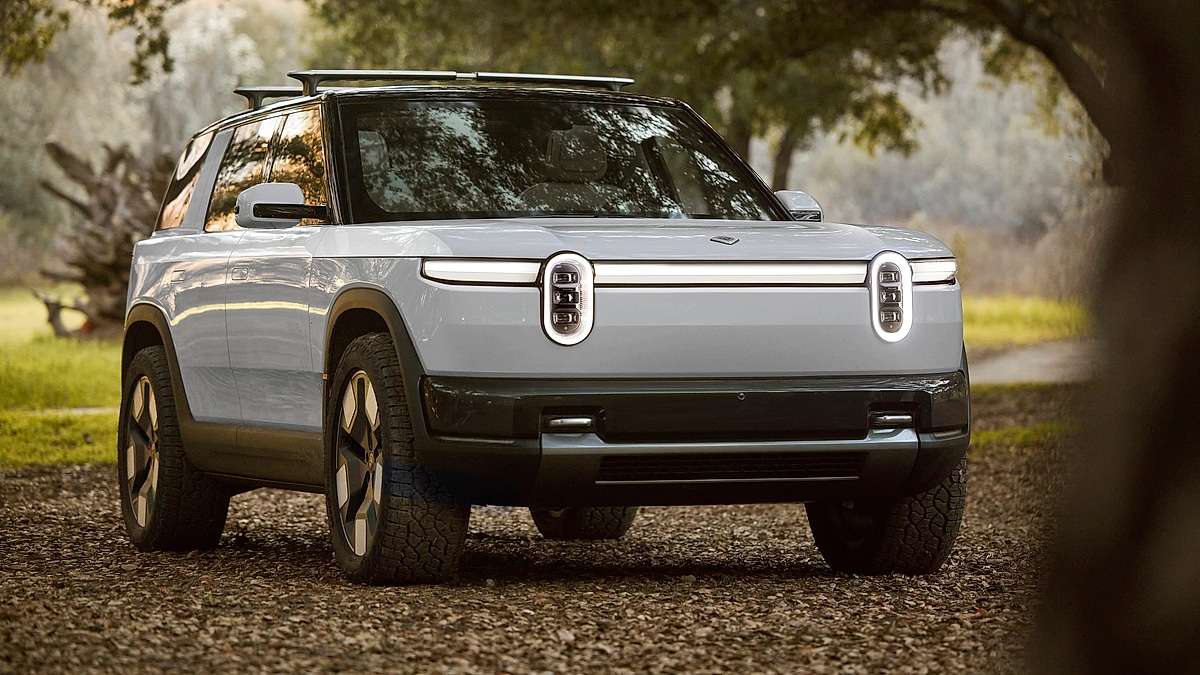
The R1S has enormous capability, but it also has size, height, mass, and a truck-like character. The R2 is shorter, lower, lighter-feeling, and tuned for a more crossover-like driving position. Nelson said it feels more Model Y than truck. Put strong midrange power into that package, and Rivian may have built the SUV that makes daily driving feel more urgent than the larger R1S.
Rivian needs that.
The R2 cannot win by being a smaller R1S with a lower price. It has to feel like the size reduction gave something back.
The Rear Glass Is A Real Feature, Not A Gimmick
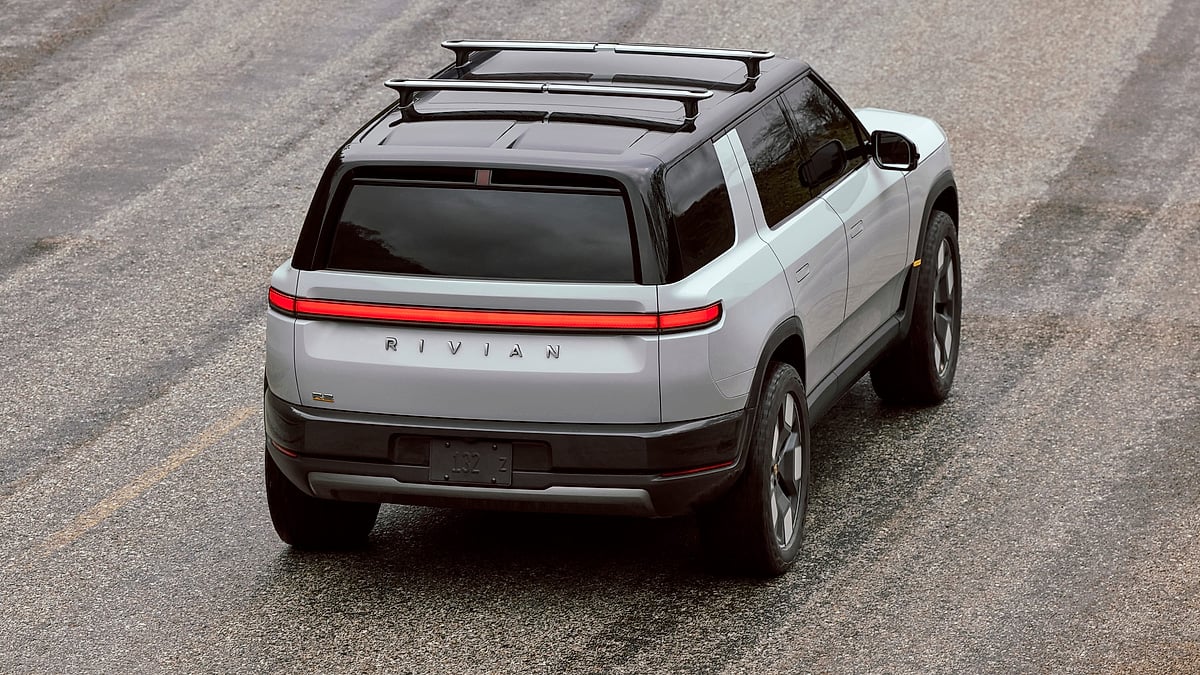
The drop-down rear glass earned one of the most enthusiastic comments in the AMA.
Nelson called it genuinely awesome. He described being able to ventilate the cabin with a lot of outside air while avoiding the wind noise and buffeting that comes from rolling down side windows.
That is classic Rivian design when it works: a feature that sounds simple, then changes how owners use the vehicle.
Rear drop glass gives the R2 a different outdoor personality. It makes the cabin feel more open on mild days. It helps carry long items. It gives dogs, surfers, campers, and road-trippers a reason to care. One commenter asked about an 8-foot surfboard with the second row upright; Nelson estimated roughly 3 feet would stick out the open rear window.
That kind of practical detail sells adventure better than another mountain-trail marketing clip.
The important piece is that Rivian lists rear drop glass as included with R2 Premium and Performance. It is not some forgotten concept-car trick buried in an options spreadsheet. It is part of the product identity. That matters because this is the kind of feature buyers remember when cross-shopping against a Model Y, Ioniq 5, EV6, Blazer EV, or used R1S.
The R2 needs to feel outdoorsy without needing to be enormous.
The rear glass helps.
The Seats May Hit A Better Middle Ground
Nelson’s seat comment was quietly important.
He said Tesla seats often feel too soft and unsupportive to him, while his R1 is supportive but hard. The R2 seats landed in the middle: more plush than R1, still supportive.
That is exactly where Rivian should be.
R1 owners often forgive a lot because the vehicles feel special, but seat comfort can decide whether someone loves the car after two hours or starts shifting around at mile 90. The R2 is aimed at a wider audience, including families, commuters, first-time Rivian buyers, and people coming from softer crossovers. It cannot demand that owners accept a hard adventure-truck seat as part of the brand experience.
Comfort has to arrive earlier in the relationship.
The second row sounds even more important. Nelson said ride comfort is much better back there, and second-row legroom is way better for tall passengers and car seats. Rivian officially lists 40.4 inches of second-row legroom in the R2, which is strong for a vehicle much shorter than the R1S.
That could make the R2 a family vehicle in a way the dimensions alone do not explain.
A smaller SUV with a better second row can beat a bigger SUV that wastes space or rides poorly in back. Parents notice. Tall passengers notice. People installing rear-facing car seats notice. The R2 sounds like Rivian paid attention to the part of the vehicle where people complain after the test drive is over.
Three R2 Impressions That Should Worry R1S Owners
- The R2 sounded much quieter and more refined than a Gen 1 R1S in Nelson’s day-long drive.
- Second-row comfort and legroom appear to be better for tall passengers and car-seat duty.
- The R2’s midrange acceleration seems strong enough to make the smaller SUV feel more exciting in normal driving than the larger R1S.
The Ride Sounds Firm, But Better Controlled
A user asked whether the R2 rides smoothly, pointing to complaints that the R1S can feel bumpy on imperfect roads.
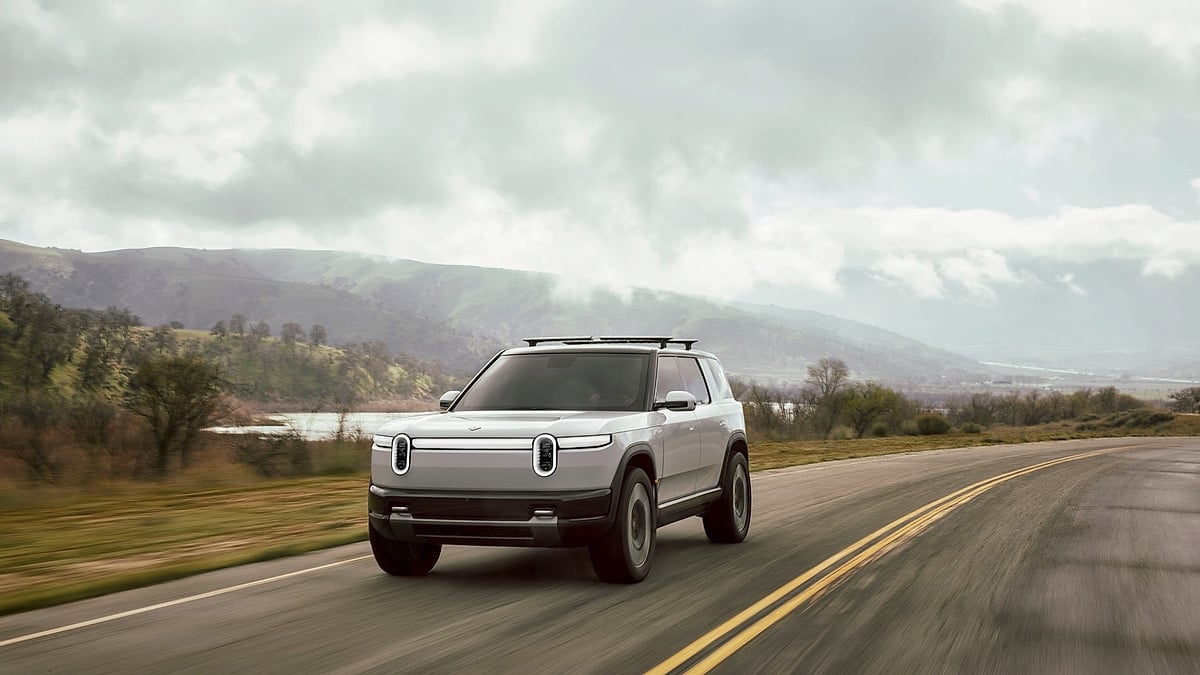
Nelson’s answer was nuanced. He called the ride medium firm, very controlled, and neither floaty nor bumpy like the R1S. He also said the second-row comfort is far better and that the R2 does not feel like a truck because it is not one.
That last phrase explains a lot.
The R1S carries real off-road hardware, serious height, complex suspension, and a body that has to reconcile luxury SUV expectations with adventure-truck capability. The R2 has a simpler mission. It still has Rivian ground clearance and outdoor utility, but it can behave more like a modern crossover because its proportions and suspension setup allow it.
Rivian says the R2 Performance uses semi-active suspension, while the lower trims use a different setup. Nelson’s test impressions may not apply equally across every R2 version. That matters. The Performance trim may be the one that best delivers the firm-but-controlled character he described.
Even so, the direction is encouraging.
A smaller Rivian that rides more consistently than the R1S could become the better daily driver, especially for families who love the R1 idea but do not need the R1’s mass or third row.
It Has More Body Roll Than R1S, And That May Be Fine
One user asked about body roll at higher speeds, especially compared with the R1S and its highway composure.
Nelson said the R2 has a little more body roll, but surprisingly little for its suspension setup. He said it really kneels into corners.
That sounds like a vehicle tuned with a bit of natural movement rather than trying to feel artificially flat. For some drivers, a little roll can actually improve confidence because the vehicle communicates load transfer instead of pretending physics went away. The R2 does not need to behave like a track SUV. It needs to feel controlled, predictable, and fun.
A lower seating position helps.
Nelson said the R2 seating position feels lower than R1 and more Model Y than truck. That will matter for buyers who found the R1S too tall, too bulky, or too truck-like. Rivian’s design language still gives the R2 the square-shouldered adventure look, but the driving position may pull it closer to the mainstream EV crossover segment.
That combination could be powerful.
Adventure image from the outside. Crossover ease from the driver’s seat.
The Sound System Sounds Good Enough, With An Asterisk
One user asked how the R2 sound system compares with a Model Y.
Nelson said it is better than the base Model Y system, worse than the premium one, and generally good rather than great. He also said Rivian’s default preset has never impressed him, and that EQ adjustments could probably make him happy. Height channels remain for Atmos content, which he liked.
Another R1T owner in the thread had a stronger reaction, saying the R2 system “slapped” and felt every bit as capable as the Meridian system in his R1T after playing Kendrick Lamar’s “Humble.”
That difference is useful.
Audio impressions are subjective, and a demo drive is not a lab test. The cabin, source quality, EQ, volume, content type, road surface, and listener preference all change the verdict. The key takeaway is that the R2 audio does not sound like a disaster. It may not shame premium systems, but it seems good enough for many owners, especially if Rivian’s EQ improves the default tuning.
That is probably fine.
The R2 does not need to win every audiophile argument. It needs to avoid feeling cheap in a vehicle that can approach $60,000 in early trims.
Software Is The Part Rivian Owners Should Watch Closely
The AMA got more complicated when software came up.
Nelson said Rivian told him the R2 is still working toward feature parity with R1 over the next several months. He clarified later that he meant R2 lacks some things R1 already has, including video/casting, Dog Mode, and Sirius. Rivian’s first priority, according to what he was told, is making R2 feature complete, then visually unifying the lineup later.
His suspicion was sharper: Rivian may be about to enter an “ignore everything that isn’t R2” phase.
That is the sentence R1 owners will remember.
It may be unfair. It may also be how product launches work. The R2 is Rivian’s volume vehicle, its broader-market test, its investor story, and its chance to move beyond the expensive early-adopter pool. The company has every incentive to focus software, service, manufacturing, and messaging around the R2.
R1 owners have reason to be sensitive here because Gen 1 versus Gen 2 hardware differences already raised questions about future features. Add R2, RAP, lidar timing, Autonomy+, and visual interface changes, and the owner base starts worrying about fragmentation.
The R2 may be Rivian’s future.
Existing customers want proof they are not being left in the past.
Autonomy Still Sounds Like A Wait-And-See Story
One user asked whether to wait for 2026 hardware or buy now, especially around RAP, lidar, and future autonomy.
Nelson said Rivian assured him current vehicles would not be left behind, but he still had doubts, mainly because of RAP. He also said he has trouble believing point-to-point autonomy will arrive this year, even though he hopes to be proven wrong. Then he made the most honest comparison possible: he bought a Tesla eight years ago with point-to-point driving supposedly around the corner, and it still cannot truly do it.
That is the right skepticism.
Rivian is now talking about Autonomy+ and hands-free features in a market full of overpromised driver-assistance timelines. Buyers should separate what the R2 does at delivery from what software might do later. Rivian’s site says R2 includes a 60-day Autonomy+ trial and Universal Hands-Free on many mapped roads, with driver attention still required. That is useful. It is not a guarantee that the vehicle will soon drive itself point-to-point like science fiction.
If autonomy matters to you, waiting may be rational.
If the driving experience, packaging, rear glass, quiet cabin, and daily usability matter more, the R2 already sounds compelling enough without future promises.
The Missing Features Matter Less Than The Fundamentals
The R2 does not sound perfect.
Door-closing feel is very Gen 2 R1S, and Nelson wished Rivian had gone full manual. Regen remains aggressive even in low mode, which some drivers will love and others will hate. Three car seats across the back may be doable but tight. Three adults across the rear bench may work, but the middle seat is narrow. Treehouse tent timing and pricing remain unknown. V2H reverse-powering news remains vague. The audio may need EQ. Some R1 software features are missing for now.
That list is real.
It also does not erase the larger impression.
The R2 apparently nails the fundamentals: quietness, ride control, second-row space, seating comfort, midrange power, and daily livability. Those are the things owners feel constantly. A missing software feature can be added later. A noisy body, cramped back seat, uncomfortable ride, or poorly tuned throttle is much harder to repair after launch.
This is where Rivian appears to have learned.
The R2 seems less like a cost-cut R1S and more like the product of five years of R1 owner feedback.
Used R1S Or New R2 May Become A Real Dilemma
One user asked about used Gen 1 R1S versus R2.
That may become one of the best Rivian buying questions of the next two years.
A used R1S gives you the big body, third row, more imposing stance, serious capability, and the flagship experience. It may also bring more cabin noise, higher running costs, aging hardware questions, and the sheer size that makes some people tired in daily use.
The R2 gives up the third row and some R1 grandeur. In exchange, it may offer better refinement, better second-row comfort, a lower seating position, a more modern software direction, and a price that reaches buyers who could never justify an R1S.
For a family that needs three rows, the R1S still wins.
For a family that wants two rows, a quieter cabin, easier size, better daily comfort, and a new-vehicle warranty, the R2 may be the smarter Rivian. Nelson’s “oh” moment after returning to his R1S is exactly the kind of reaction that can move buyers away from used flagship logic.
Bigger will not always feel better.
The R2 Sounds Like Rivian’s First Truly Mainstream Product
The R1T and R1S made Rivian desirable.
The R2 may make Rivian normal.
That is not an insult. Normal is what lets people buy a vehicle without explaining themselves. Normal means a family can compare it against a Model Y, EV9, Ioniq 5, Blazer EV, Grand Cherokee, 4Runner, or used luxury SUV and still see the logic. Normal means the cabin is quiet, the second row works, the ride does not need excuses, the charging port fits the network people actually use, and the price at least begins in the same universe as mainstream buyers.
The R2 still carries enough Rivian character to matter.
Rear drop glass. Boxy proportions. Good clearance. Strong storage. Adventure lighting. Tow capability. NACS access. Fast charging. A real outdoor personality. The R2 does not need to be a little R1S. It needs to be the Rivian that people can live with every day.
Nelson’s AMA suggests Rivian may have pulled that off.
The Best Sign Is That The R2 Made An R1S Owner Jealous
That is the part I keep returning to.
Marketing can make any new vehicle sound impressive. A current owner comparing it with the expensive Rivian already in his driveway is a tougher audience. Nelson did not merely say the R2 is good for the money. He pointed to areas where it feels better than his R1S: NVH, seats, rear legroom, ride comfort, midrange pull, and cabin ventilation.
Those are not minor wins.
They are the exact categories that shape daily satisfaction.
The R2 still needs long-term proof. It needs owners, miles, winters, service visits, software updates, warranty claims, rattles or lack of rattles, real charging trips, real kids, real dogs, real potholes, and real resale values. A day in a demo car cannot answer all of that.
It can answer one thing.
Rivian’s smaller SUV no longer sounds like a compromise people accept because the R1S is too expensive. It sounds like the Rivian some R1S owners may prefer after driving both.
That is a very big deal.
Would You Trade An R1S For An R2?
If you own an R1S or R1T and have driven the R2, what felt better and what felt worse? Include whether your R1 is Gen 1 or Gen 2, what trim you drove, how the cabin noise compared, whether the second row worked for your family, and whether the R2 made your current Rivian feel older than you expected.
Please, return tomorrow, or check our Torque News Home Page for more interesting automotive news articles.
About The Author
Noah Washington is an automotive journalist based in Atlanta, Georgia, covering sports cars, luxury vehicles, and performance culture. His reporting focuses on explaining the engineering, design philosophy, and real-world ownership experience behind modern vehicles.
Noah has been immersed in the automotive world since his early teens, attending industry events and following the enthusiast communities that shape how cars are built and driven today. His work blends industry insight with enthusiastic storytelling, helping readers understand not just what a car is, but why it matters.
Noah is also a member of the Southeast Automotive Media Association (SAMA), a professional organization for automotive journalists and industry media in the Southeast.
His coverage regularly explores sports cars, luxury vehicles, and performance-driven segments of the automotive industry, including the evolving culture surrounding Formula Drift and enthusiast builds.
Read more of Noah's work on his author profile page.
You can also follow Noah here:
Set Torque News as Preferred Source on Google
Follow us today...