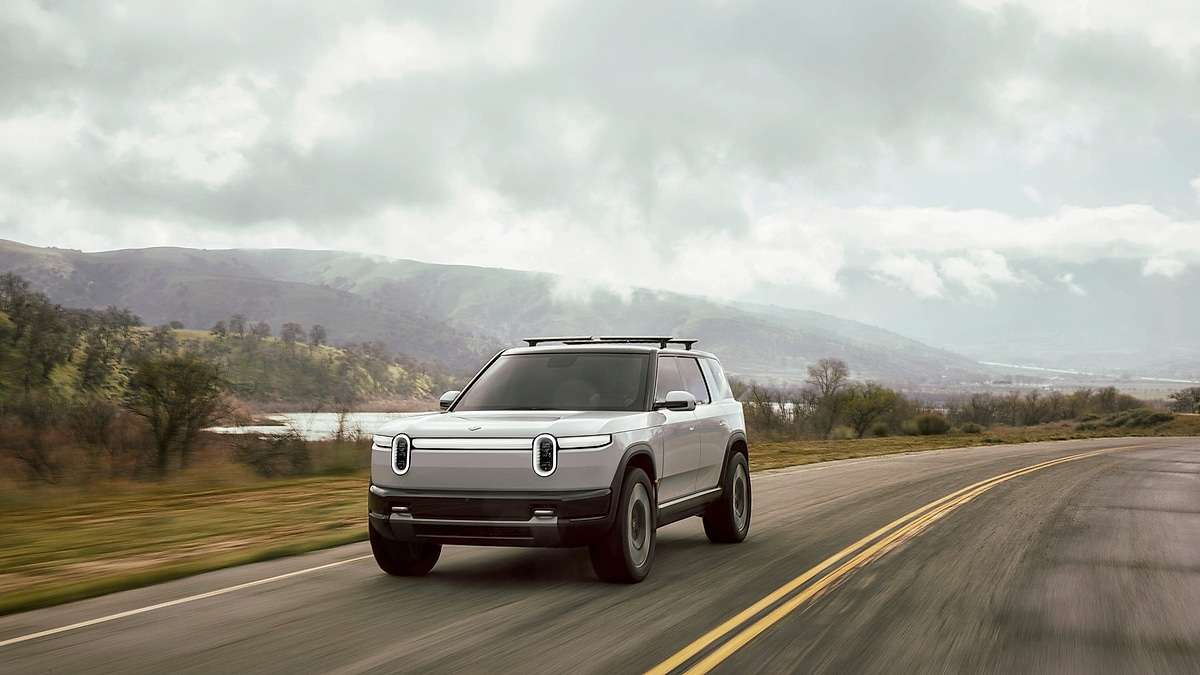

A new-car delivery should not feel like a service intake.
Chi-Ping Lin arrived to pick up a new Rivian R2 after a short delay. Rivian had already caught a seatbelt buckle casing issue, and payment clearance from the lender took extra time. Those are understandable delays. Safety and financing paperwork should stop a delivery when something is unresolved.
Then the handoff went sideways according to a Facebook post.
Lin says Rivian had him sign paperwork before he saw the vehicle. Excitement took over. I get that. Anyone who has waited months for a new EV knows the feeling: phone out, key card ready, family group chat waiting for photos, all judgment briefly softened by the idea that the car is finally yours.
- Bring a simple inspection checklist and treat delivery like a pre-purchase exam, walk every panel, check reflections for paint defects, and run your hand along edges where scratches hide in plain sight
- Test every moving part before leaving the lot, gloveboxes, doors, windows, seats, and latches, because small mechanical issues often reveal larger alignment or assembly problems
- Take timestamped photos and short videos of anything questionable on-site, even if it seems minor, so there’s no ambiguity later about when the issue first appeared
Once he reached the R2 and inspected it, the defects started stacking up.
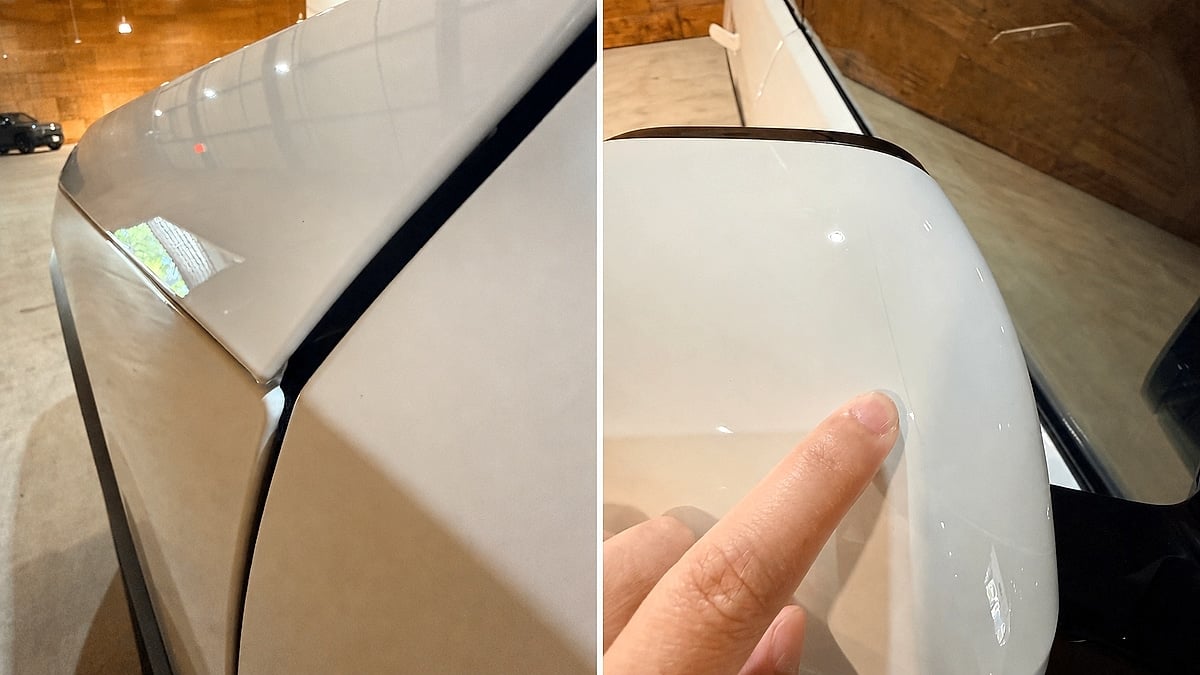
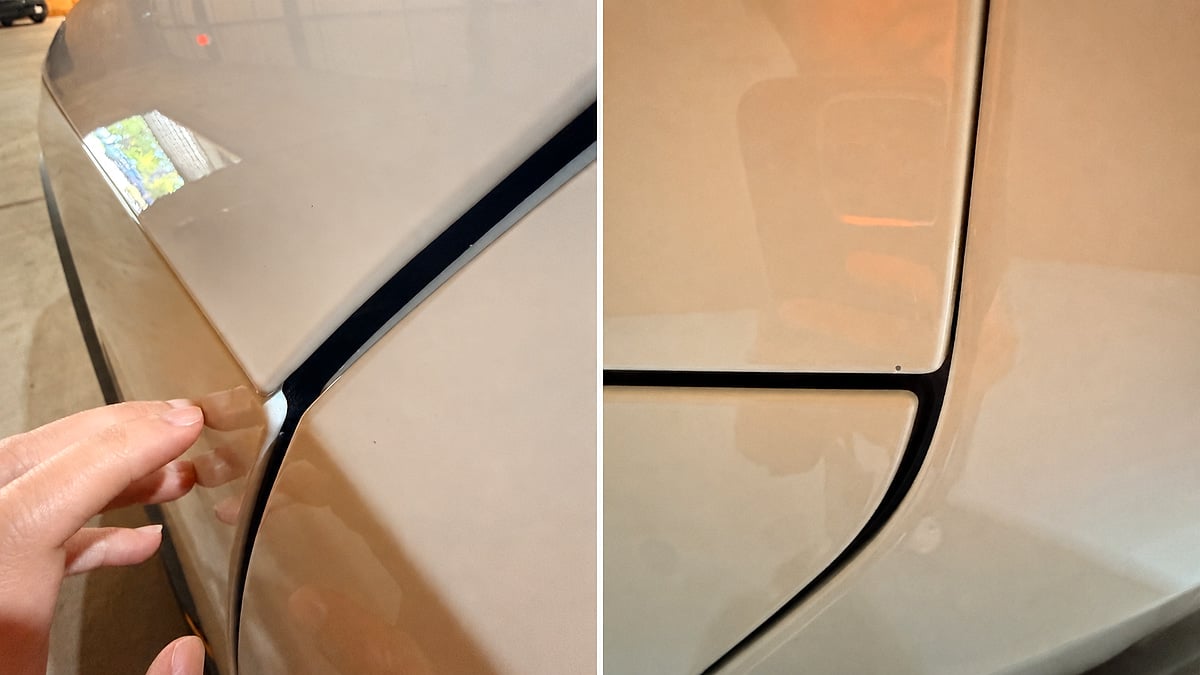
Three noticeable exterior scratches. A large scratch around the rear bumper area. Uneven hood-to-fender alignment on the driver side. A clicking sound while driving from the driver's side. Later that night, after the vehicle had left the lot, the center glovebox was stuck shut, and the passenger-side glovebox would not close.
The sales rep photographed the exterior damage and told him the issues would be covered.
That helps.
It does not restore the first day.
R2 Buyers Will Not Grade Rivian On A Startup Curve Forever
The R2 is Rivian’s most consequential vehicle so far.
R1T and R1S buyers were early adopters. Many were enthusiasts, tech people, outdoor-gear obsessives, or buyers willing to tolerate some rough edges from a new manufacturer. That does not excuse bad deliveries, but it explains why many R1 owners treated service follow-up as part of the experience. R2 enters a harsher world.
This SUV is meant to compete closer to the Tesla Model Y, Hyundai Ioniq 5, Kia EV6, Ford Mustang Mach-E, Honda Prologue, Chevrolet Equinox EV, and the next wave of compact electric crossovers. Those buyers are less romantic about being part of a company’s growth story. They want a clean car, a clean handoff, and defects handled before the vehicle becomes their problem.
Rivian’s challenge is no longer proving it can build fascinating EVs. It has already done that. R2 has to prove Rivian can deliver them with ordinary consumer polish, repeatedly, at higher volume, to people who do not want to become part-time quality inspectors.
Signing Before Inspection Creates The Wrong Power Dynamic
The most troubling part of Lin’s post is not the scratch count.
It is the order of operations.
If a customer must sign before inspecting the vehicle, the delivery process tilts away from the buyer at the exact moment trust should be highest. Once paperwork is complete, the customer is no longer deciding whether to accept a new vehicle. They are requesting repairs on a vehicle they just accepted.
That shift feels small inside an office. It feels enormous in the parking lot when someone notices damage.
Some Rivian owners in the comments said this is how their deliveries worked too: sign first, inspect second, service later. Others said issues were fixed quickly. Both can be true. Fast repair does not make the process elegant.
A better delivery flow would be simple:
Walk around first.
Document defects before acceptance.
Open a service ticket before the customer leaves.
Put every issue in writing, with photos attached and service responsibility assigned.
Then finish the final paperwork.
If state law, financing rules, or Rivian’s internal system requires signatures before a physical handoff, Rivian should still create a formal delivery-exception document. The customer should leave with an itemized list that says, in writing, that specific scratches, panel gaps, noises, and interior hardware problems were present at delivery.
A verbal promise is too light for a brand-new vehicle.
A Seatbelt Delay Means QC Was Working Somewhere
Rivian delayed the delivery because of a seatbelt buckle casing issue.
That part actually gives me confidence. A company that catches a restraint-related problem before delivery is doing something right. No owner should want a vehicle released quickly if a safety component is questionable.
The problem is the gap between the safety inspection and the final delivery inspection.
Paint scratches, bumper damage, panel alignment, interior compartment operation, and road noises live in a different part of the handoff. They are not the same kind of defect as a seatbelt buckle concern, but they shape the entire ownership relationship.
A final inspection should catch them because the customer certainly will.
Deep scratches around a bumper are not subtle in daylight. A hood sitting unevenly against a fender belongs on a pre-delivery checklist. Two glovebox failures inside the first night suggest either an alignment issue, latch issue, adjustment issue, or component tolerance problem that should have shown up during a functional check.
The clicking sound needs a separate diagnostic path. A cosmetic repair cannot bury a noise complaint. The owner should request a technician ride-along or at least a documented road test with the sound reproduced, location noted, and repair plan opened.
One scratch can be transportation damage.
Several exterior defects, a panel alignment problem, a driving noise, and two glovebox failures feel like a weak final gate.
Warranty Coverage Is Helpful, Documentation Is Better
Rivian’s adjustment warranty gives owners a short window for items like alignments, fit concerns, squeaks, and cosmetic imperfections visible at delivery. That window matters because delivery-day defects age badly once mileage accumulates.
Lin should not rely on “covered under warranty” as a broad assurance.
He should request a service appointment and a written service ticket listing every defect:
- Rear bumper scratch
- Three additional exterior scratches
- Hood/fender misalignment on the driver's side
- Driver-side clicking noise while driving
- Center glovebox stuck closed
- The passenger-side glovebox will not latch closed
- Seatbelt buckle casing issue that delayed delivery, marked as corrected
Each item needs photos, mileage, delivery date, and a note that the defect was found at or within 24 hours of delivery.
That record protects the owner if the repair window stretches, parts are delayed, or a later advisor treats the issue as normal wear. Paint and trim concerns become harder to argue after several weeks of driving. Start the paper trail immediately.
I would also photograph the odometer, every panel gap, every wheel, the roof glass, the lower bumpers, door edges, hatch area, interior trim, and cargo plastics before the first wash.
That sounds excessive until someone asks whether a scratch happened after delivery.
This Is The Dealer Buffer Rivian Chose To Replace
Traditional dealerships create plenty of misery.
They also absorb some ugly delivery work before customers see it. Cars arrive with transit damage, scratches, dead batteries, trim problems, and missing parts. A good dealer fixes those during pre-delivery inspection. A customer sees the polished version and assumes the factory nailed it.
Direct-to-consumer delivery removes much of the dealer theater.
It also removes that buffer.
Rivian owns the entire handoff. That should be an advantage. Fewer middlemen. Better accountability. A direct line between customer and manufacturer. No dealer is blaming the factory, while the factory blames the dealer.
The price of that model is simple: Rivian cannot let the customer become the final quality-control station.
R2 volume will magnify every weakness in that chain. If a few thousand early buyers start posting delivery scratches, stuck compartments, alignment issues, and “they made me sign first” stories, the damage spreads faster than any service appointment can clean up.
The vehicle can be excellent and still arrive wrong.
That is what Rivian has to prevent.
What This Owner Should Do Now
Lin should keep the R2 if he loves it and Rivian gives him a clear repair path. A frustrating delivery does not automatically mean the vehicle is doomed. Several owners in the comments said Rivian fixed R1 issues quickly.
I would push for three things before relaxing.
First, a written service order was created from the delivery photos and the new glovebox complaints.
Second, a repair timeline with transportation support if the R2 has to stay at service.
Third, confirmation that paint and body repairs will meet new-vehicle standards, not quick touch-up standards.
The clicking noise deserves priority because noises can be dismissed as “normal” if they are not reproduced early. Record it on video if possible. Note speed, road surface, steering angle, braking, acceleration, and whether it happens over bumps or during steady cruising.
For anyone still waiting on an R2 delivery, make a checklist before pickup. Bring a flashlight. Inspect paint at multiple angles. Open and close every compartment. Test the doors, frunk, hatch, gloveboxes, charge door, windows, seats, seatbelts, cameras, lights, wipers, HVAC, audio, and driver assistance basics. Drive it before leaving if the delivery center allows it.
If signing must happen first, write “delivery inspection pending” wherever possible and photograph all defects on site.
Excitement is part of delivery.
So is leverage.
Do not give away the second because of the first.
R2 Owners, How Was Your Delivery?
If you picked up a Rivian R2, did you inspect it before signing, and what defects did you find in the first 24 hours? Share the delivery center, trim, mileage at pickup, and whether Rivian opened a service ticket before you left.
Comment on what happened below.
Two images by Chi-Ping Lin
About The Author
Noah Washington is an automotive journalist based in Atlanta, Georgia, covering sports cars, luxury vehicles, and performance culture. His reporting focuses on explaining the engineering, design philosophy, and real-world ownership experience behind modern vehicles.
Noah has been immersed in the automotive world since his early teens, attending industry events and following the enthusiast communities that shape how cars are built and driven today. His work blends industry insight with enthusiastic storytelling, helping readers understand not just what a car is, but why it matters.
Noah is also a member of the Southeast Automotive Media Association (SAMA), a professional organization for automotive journalists and industry media in the Southeast.
His coverage regularly explores sports cars, luxury vehicles, and performance-driven segments of the automotive industry, including the evolving culture surrounding Formula Drift and enthusiast builds.
Read more of Noah's work on his author profile page.
You can also follow Noah here:
Set Torque News as Preferred Source on Google
Follow us today...