
Mazda’s May sales report looked, at first glance, like another crossover-led month.
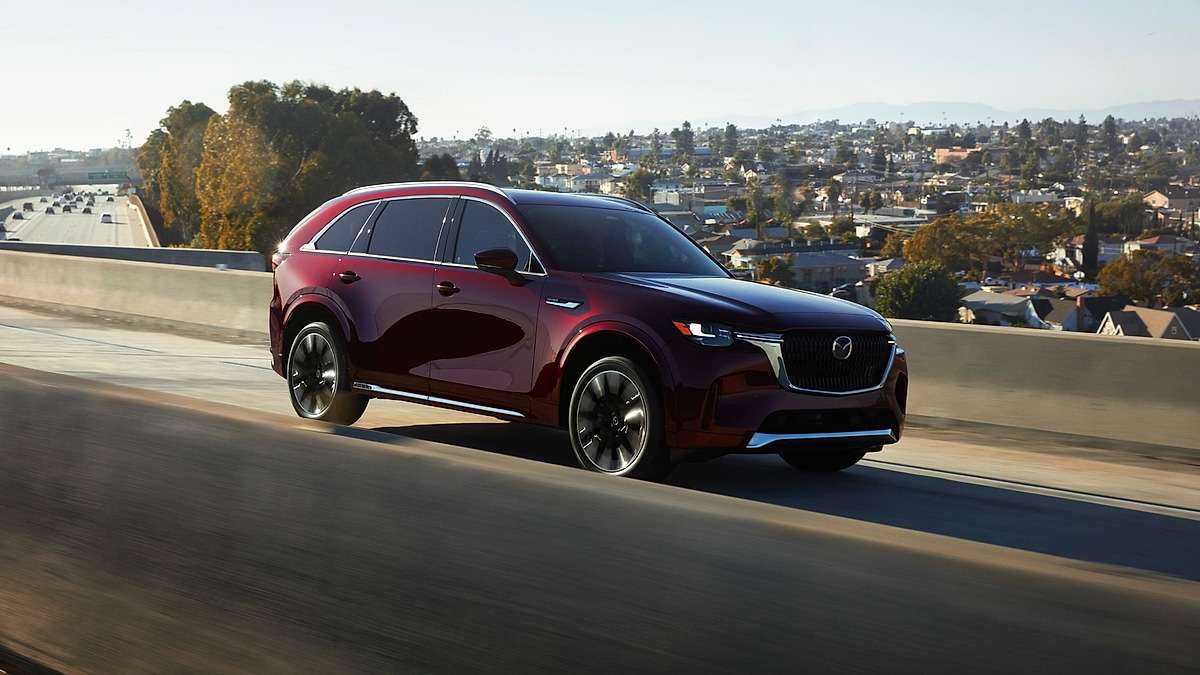
The CX-50 more than doubled, rising 107.2 percent year over year to 14,897 units. CX-50 Hybrid delivered its best month yet. CX-90 gained 16.9 percent. Mazda finished May with 39,066 U.S. sales, up 35 percent from a year earlier and good for the company’s best total sales month since July 2025.
The car side of the report made the month more interesting.
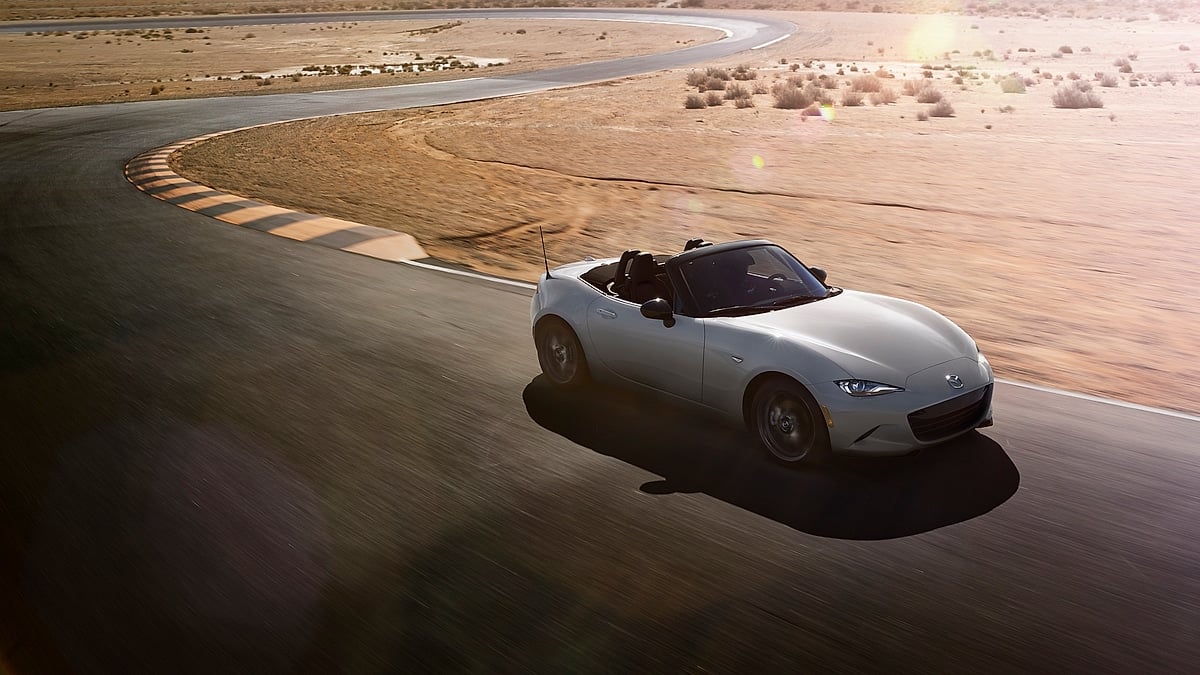
Mazda3 sales reached 4,121 units, up 68 percent from May 2025. Mazda3 sedan rose 66.5 percent, Mazda3 hatchback rose 71.1 percent, and the combined Mazda3 line posted its best month since May 2021. MX-5 Miata rose 196.6 percent, from 355 units last May to 1,053 this May.
- Mazda3’s 68% year-over-year jump stands out because it comes during a period when most automakers have reduced sedan investment, suggesting Mazda is capturing demand others have left behind
- MX-5’s nearly 200% surge, while smaller in volume, reinforces that enthusiast-oriented products still resonate when priced within reach, especially among younger buyers entering the market
- The combined strength of Mazda3 and CX-50 indicates Mazda is one of the few brands successfully balancing sedan revival with crossover growth, rather than relying on a single segment for momentum
Those numbers landed shortly after Mazda published new Gen Z ownership research, so Torque News asked Mazda whether the two developments should be read together.
Mazda drew a careful boundary.
“Regarding the Gen Z research, we view the findings as complementary to broader consumer trends rather than a direct explanation for specific sales results,” Mazda told Torque News. “The survey found that Gen Z places a high value on vehicle ownership and prioritizes advanced safety features, intuitive technology, and the overall in-cabin experience when evaluating a vehicle. These are areas Mazda continues to emphasize across its vehicle lineup.”
Mazda added that the survey was “not designed to measure purchasing behavior or attribute sales performance to a particular demographic,” while still offering a view into what younger consumers value as they consider buying a vehicle.
That distinction matters. The Gen Z study does not prove who bought the Mazda3 in May. It does explain why the Mazda3 still has a credible opening in a market that spent the last decade burying compact cars under crossovers.
Mazda then gave Torque News the stronger product read.
“For younger shoppers, the industry has seen a steady shift from sedans to CUVs over the last decade,” Mazda said.
“Over the past year, however, we’ve observed a modest reversal of that trend across the industry, with a more pronounced reversal at Mazda. In fact, the shift back toward sedans has been nearly twice as strong for Mazda, driven by renewed interest in the Mazda3, with younger buyers responding positively to its compelling value, distinctive styling, and engaging driving dynamics.”
Mazda is seeing younger shoppers reconsider sedans, and the rebound is showing up more strongly around the Mazda3 than in the broader market.
Mazda3 Is Hitting The Right Nerve
The compact sedan did not fall out of favor because it stopped making sense.
It lost showroom oxygen because crossovers gave buyers height, cargo flexibility, and a stronger feeling of security, while giving automakers better margins. Sedans thinned out because companies followed the money. Many of the cars left behind were treated like obligations.
Mazda never let the Mazda3 become that kind of obligation.
The sedan still carries clean proportions. The hatchback still looks like a designer won an internal argument. The cabin still feels above the class average. The steering still has enough information in it to remind the driver that a car can be inexpensive without feeling disposable.
Mazda’s comment to Torque News points to three reasons younger buyers are responding: value, styling, and driving dynamics.
That combination is more potent in 2026 than it may have been a few years ago. Insurance costs are high. Interest rates are still punishing. Rent is expensive. New-vehicle transaction prices have made many small crossovers feel less like practical choices and more like expensive habits.
A Mazda3 gives a younger buyer a way around some of that bloat without accepting a joyless car.
It also fits the priorities Mazda found in its Gen Z study.
Mazda’s release said 69 percent of Gen Z respondents would choose buying a new vehicle over buying a home. Nearly 94 percent cited advanced safety features as important, 93 percent cited intuitive technology, and 82 percent said a premium sound system mattered when evaluating a vehicle. Mazda also said 64 percent of Gen Z respondents judge a vehicle by its sound system, and 85 percent agreed that high-quality sound signals overall vehicle quality.
Mazda later confirmed to Torque News that Burson-Insights, Data & Intelligence fielded the Mazda Sounding Board survey among 1,000 U.S. vehicle owners who purchased a vehicle within the past five years, including a Gen Z subset. The survey was conducted online February 6-10, 2026, using the PureSpectrum panel, and Mazda said the Gen Z findings in the release reflect responses from that Gen Z subset.
For a generation staring at delayed homeownership, the car becomes more than transportation. It becomes a private room, a sound system, a design object, a commute tool, a weekend escape, and a place where technology either fades into the background or becomes a daily irritation.
The Mazda3 has always been strongest when judged that way.
The Miata’s May Jump Was Small In Volume, Large In Meaning
The MX-5 Miata does not have to carry Mazda’s U.S. sales plan. Its value is different.
Mazda sold 1,053 MX-5s in May, up 196.6 percent from a year earlier. Soft-top sales rose 224.9 percent; RF sales rose 163 percent.
The Miata’s surge gives Mazda’s May report another layer. CX-50 supplied the big volume. Mazda3 supplied the compact-car surprise. MX-5 supplied the brand reminder.
Mazda’s strongest identity has never come from being the biggest or the loudest. It has come from preserving road feel, proportions, control layout, and lightness of touch in vehicles that still have to serve ordinary buyers.
The Miata keeps that belief visible.
Mazda3 makes it accessible.
CX-50 pays the bills at scale.
When all three move in the same month, Mazda gets growth with a pulse.
CX-50 Still Owns The Volume Story
Mazda’s car momentum should not be inflated beyond its size.
CX-50 alone outsold Mazda3 more than three to one in May. Mazda’s truck category totaled 33,892 units, while cars totaled 5,174. Crossovers remain the center of Mazda’s American business.
The Mazda3 result still matters because it gives the company a second lane.
Mazda does not need sedans to overtake crossovers. It needs the Mazda3 to attract buyers who are tired of tall vehicles, high payments, and anonymous design. It needs the car to bring younger shoppers into the brand before they graduate into CX-50, CX-70, CX-90, or whatever Mazda builds next.
A healthy Mazda3 also makes Mazda’s crossover growth more valuable. It keeps the showroom from flattening into the same SUV-only shape everyone else is chasing.
Pricing Did Not Knock Mazda3 Off Course
Mazda adjusted pricing on select 2026 models effective May 4. The affected vehicles included Mazda3 sedan, Mazda3 hatchback, CX-30 2.5 S models, CX-70, and CX-90. Mazda said the changes would not affect existing dealer inventory or port vehicles that already had window labels. CX-5, CX-30 Turbo, CX-50, select CX-70 and CX-90 trims, and all MX-5 Miata models were not affected.
Mazda3 still had its best month since May 2021.
Torque News asked Mazda whether the May pricing actions changed lead volume, showroom traffic, or buyer urgency around affected models. Mazda did not provide model-level lead data, but it did describe its approach.
“On pricing, Mazda periodically reviews and adjusts pricing as market conditions evolve,” Mazda told Torque News.
“We take a thoughtful and disciplined approach to any pricing actions, carefully evaluating timing, competitiveness, customer value, and dealer impact to help minimize disruption and support a consistent customer experience.”
Mazda is walking a narrow line with Mazda3.
The car cannot be priced like a stripped-down economy sedan because the brand has built its appeal around design, cabin quality, and driving feel. It also cannot drift so high that a buyer looks at the payment and simply moves into a crossover.
May suggests the balance held.
Mazda’s Sedan Rebound Is Still A Narrow Opening
Mazda used the word “modest” for the broader industry reversal toward sedans.
America has not suddenly rediscovered compact cars at scale. Crossovers still dominate the lot, the sales chart, and the financing conversation. Families still like the seating height and cargo flexibility. Dealers still like the volume.
Mazda’s opportunity is smaller and more interesting.
A portion of younger buyers appears willing to look back toward sedans when the car offers value, styling, safety, cabin quality, and enough driving character to feel chosen rather than settled for. Mazda says that shift is nearly twice as strong for its brand as it is across the industry, and Mazda3 is driving it.
That gives Mazda a reason to keep investing in a car most automakers would rather quietly delete.
The Mazda3’s May result was not a nostalgia act. It was a live sales signal.
Younger buyers are not rejecting vehicle ownership. They are raising the standard for what makes a vehicle worth owning. Mazda’s compact car is benefiting because it gives them a sharper answer than another small crossover with a taller roof and a duller pulse.
Mazda Owners, Why Did You Pick The Smaller Car?
If you recently bought or shopped for a Mazda3, CX-30, CX-50 Hybrid, or MX-5, what mattered most: price, styling, cabin quality, driving feel, safety tech, audio, all-wheel drive, or avoiding another oversized crossover?
Let us know with a comment below.
About The Author
Noah Washington is an automotive journalist based in Atlanta, Georgia, covering sports cars, luxury vehicles, and performance culture. His reporting focuses on explaining the engineering, design philosophy, and real-world ownership experience behind modern vehicles.
Noah has been immersed in the automotive world since his early teens, attending industry events and following the enthusiast communities that shape how cars are built and driven today. His work blends industry insight with enthusiastic storytelling, helping readers understand not just what a car is, but why it matters.
Noah is also a member of the Southeast Automotive Media Association (SAMA), a professional organization for automotive journalists and industry media in the Southeast.
His coverage regularly explores sports cars, luxury vehicles, and performance-driven segments of the automotive industry, including the evolving culture surrounding Formula Drift and enthusiast builds.
Read more of Noah's work on his author profile page.
You can also follow Noah here:
Set Torque News as Preferred Source on Google
Follow us today...