
This investigative report identifies a significant 2026 consumer trend: the conflict between compact SUV reliability and three-row utility. We examine a case study of a "zero issues" 2024 Honda CR-V traded for a Mazda CX-90. The investigation reveals that while Mazda offers a premium longitudinal inline-six powertrain, it sacrifices the third row and cargo volume found in the Honda Pilot, creating immediate buyer's remorse about family logistics.
The Shocking Reality of Trading Perfection for Uncertainty
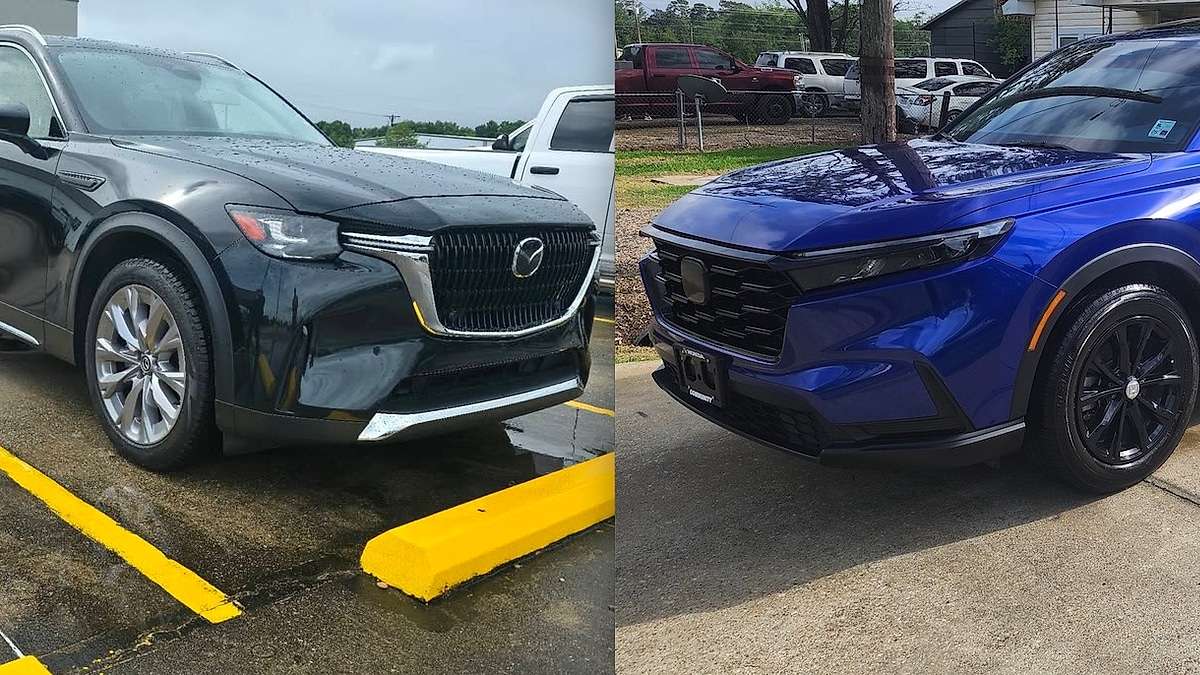
In 30 years of covering the automotive industry, I have rarely seen a driver walk away from a vehicle with a perfect repair record. Usually, owners ditch cars because of transmission stutters, electrical ghosts, or rising maintenance costs. However, John Leger Jr. from Church Point, Louisiana, just made a move that has the 6th Generation Honda CR-V community buzzing. He traded his faultless 2024 Honda CR-V, a vehicle that gave him zero issues and absolute peace of mind, for a Mazda CX-90 Turbo Premium. The shocking discovery here isn't a mechanical failure; it is the realization that in the 2026 SUV market, reliability is no longer the sole king. Utility and "room to grow" are forcing loyal Honda fans into the arms of competitors, even when their current vehicle is performing flawlessly.
I have investigated hundreds of these trades, and the answer is usually found in the second and third rows. For John, the kids grew faster than the CR-V’s compact footprint could accommodate. But the immediate "information gain" for any buyer today is that jumping from a compact SUV to a three-row model involves more than just adding seats. It involves a massive shift in driving character and, as John is now hearing from everyone around him, a potential misstep in not sticking with the Honda family via the Pilot.
"It's been real, guys. Our 2024 Honda CR-V had zero issues, and I would recommend it to anyone looking for a decent SUV at a very affordable price. Unfortunately, with the kids getting bigger, we needed to upgrade to a bigger SUV, the Mazda CX-90 Turbo Premium. Now, everyone is telling me I should have gone with the Honda Pilot. Hope I didn’t make a mistake." - John Leger Jr., via Honda CR-V 2023-2026 Discussion Club (Facebook)

When It's Time To Move Up
The 2024 Honda CR-V has cemented itself as a benchmark for the segment. In my previous coverage of the compact SUV field, I noted that the CR-V wins on cargo space and interior quality, even when compared to heavy hitters like the Subaru Forester. You can read my full deep dive into that comparison in my article, Head To Head 2024 Subaru Forester Vs. 2024 Honda CR-V, where I highlighted how the CR-V offers reliably good performance with plenty of usable space. For John to walk away from that consistency is a testament to how desperate family life can become when the rear seats start feeling like a sardine can.
However, entering the Mazda showroom introduces a different kind of allure. The CX-90 is built on a rear-biased AWD platform with a longitudinal turbo straight-six. It is a driver’s car dressed in SUV sheet metal. Expert data from Driving.ca confirms this performance-utility split, stating that the Mazda CX-90 earns high marks for its premium feel, though it struggles to match the cargo-hauling efficiency of its rivals. You can find their full technical comparison at Driving.ca. This source notes that while the Mazda delivers high safety and tech ratings, its physical dimensions tell a story of "style over space."
Why the Honda Pilot Shadow Looms Over Louisiana
The "mistake" John fears is rooted in the vehicles' architecture. The Honda Pilot is a front-wheel-drive-based box. It is designed from the inside out to maximize every cubic inch of air. The Mazda CX-90 is designed from the outside in, with a long hood to accommodate that beautiful engine, which pushes the cabin rearward. According to a 2026 report from Capo Mazda, the comparison between the two reveals that the Pilot offers 18.6 cubic feet of cargo space behind the third row, while the CX-90 offers only 14.9 cubic feet. Their analysis found that "The Pilot delivers dependable, straightforward capability," which you can read in full here: 2026 Mazda CX-90 vs. Honda Pilot. This sentence from their report perfectly encapsulates the friction John is feeling: the Pilot sticks to practical reliability and generous space while the Mazda takes a premium, performance-oriented route.

In my 30 years in this industry, I’ve learned that when you have three kids, "performance-oriented" usually takes a backseat to "Where do I put the strollers?" The Honda Pilot’s removable middle seat in the second row is a game-changer that the Mazda simply cannot match. As John’s kids get bigger, the ease of access to the third row becomes the single most important metric for daily happiness. We are looking at a classic case of a "Win" for driving dynamics being a "Loss" for family logistics.
Field Observations from Owner Communities
I spent some time digging through the trenches of Reddit to see if other owners shared John's anxiety. The consensus is messy and deeply personal. One owner on r/hondapilot shared a sentiment that echoes my professional findings: "I prefer the CX-90's performance, but it fails as a family 3 row SUV. It's simply too cramped in the third row, and the prop shaft tunnel doesn't help either," which you can see in the full discussion here. From my perspective, this perfectly illustrates the compromise of a RWD-based platform: the mechanical components literally eat into the passengers' feet.
Another user brought up a technical point that I often stress to my readers: "The Pilot is smoother and roomier and has a body structure that feels a lot stronger and more solid," found in this Reddit thread. Here is why the user feels this way: the Pilot utilizes a reinforced unibody shared with the Odyssey minivan, optimized for vibration damping and interior volume. When you move from a CR-V to a Pilot, the ergonomics feel like a natural "upsizing" of what you already know. When you move to a Mazda, you are learning a new, and sometimes more cramped, language.

An Investigator’s Verdict on the "Mistake"
Is John’s new Mazda a mistake? Not necessarily. If he values the way a car handles on the winding backroads of Louisiana, he just bought the best-driving SUV in its class. The 3.3L Turbo I-6 is a masterpiece. But, and this is a big "but" from decades of testing, if the goal was purely "extra room," the Honda Pilot would have provided a more seamless transition from his perfect CR-V experience. We have to look at the math: the Pilot provides nearly 13 cubic feet more total cargo volume than the CX-90. In the world of family hauling, that is the difference between leaving a suitcase at home and bringing it along.
I recommend that owners in this position perform a "Stroller and Car Seat Stress Test" before signing the paperwork. Take your largest pieces of gear to the dealership. If you find yourself struggling to fit them in the Mazda, no amount of horsepower will make up for that daily frustration. John’s recommendation of the CR-V was spot on, but his leap to Mazda might have prioritized his "want" for a premium feel over his "need" for maximum volume.
Key Takeaways for SUV Shoppers
- Analyze the third-row floor height; rear-drive platforms like the Mazdas often have higher floors, forcing passengers into a "knees-up" position.
- Measure the cargo volume behind the third row if you plan to use all seats regularly, as the difference between 14 and 18 cubic feet is substantial.
- Evaluate the brand loyalty benefits, such as Honda’s unified infotainment and safety suites, which make the jump from CR-V to Pilot virtually seamless.
- Prioritize utility over performance if your primary reason for upgrading is family growth, as "sporty" handling often comes at the expense of interior space.
Will the Mazda Reliability Hold Up?
The very next logical question the reader will have is whether Mazda's mechanical longevity can match the "Zero Issue" experience John had with his Honda. First, we must answer this: While the Mazda CX-90’s inline-six is a brilliant piece of engineering, it is a complex mild-hybrid system in its early production years. In contrast, the Honda Pilot uses a refined version of the J35 V6 that has powered millions of vehicles for decades. If long-term, trouble-free ownership beyond 100,000 miles is the priority, the Pilot remains the safer bet, whereas the Mazda is a calculated risk for those who want a premium European-style driving experience without the European repair bills.
Navigating the 2026 Family SUV Transition
John's journey reflects the "Goldilocks" struggle of the modern parent. The CR-V was "just right" for reliability but "too small" for the kids. The Mazda is "premium and fast" but potentially "too tight" for the long haul. My 30 years of experience tells me that while John might miss the sheer volume of a Pilot, he will certainly enjoy the commute in the Mazda at least until the kids start complaining about their legroom.
How About You? Have you ever traded a perfectly reliable car for more space and regretted the switch? Or did the upgrade in power make it all worth it? Tell us what you think in the Add new comment link below.
About The Author
Denis Flierl is a 14-year Senior Reporter at Torque News and a member of the Rocky Mountain Automotive Press (RMAP) with 30+ years of industry experience. Based in Parker, Colorado, Denis leverages the Rockies' high-altitude terrain as a rigorous testing ground to provide "boots-on-the-ground" analysis for readers across the Rocky Mountain region, California EV corridors, the Northeast, Texas truck markets, and Midwest agricultural zones. A former professional test driver and consultant for Ford, GM, Ram, Toyota, and Tesla, he delivers data-backed insights on reliability and market shifts. Denis cuts through the noise to provide national audiences with the real-world reporting today’s landscape demands. Connect with Denis: Find him on LinkedIn, X @DenisFlierl, @WorldsCoolestRides, Facebook, and Instagram.
Photo credit: Denis Flierl via John Leger Jr
Set Torque News as Preferred Source on Google
Follow us today...