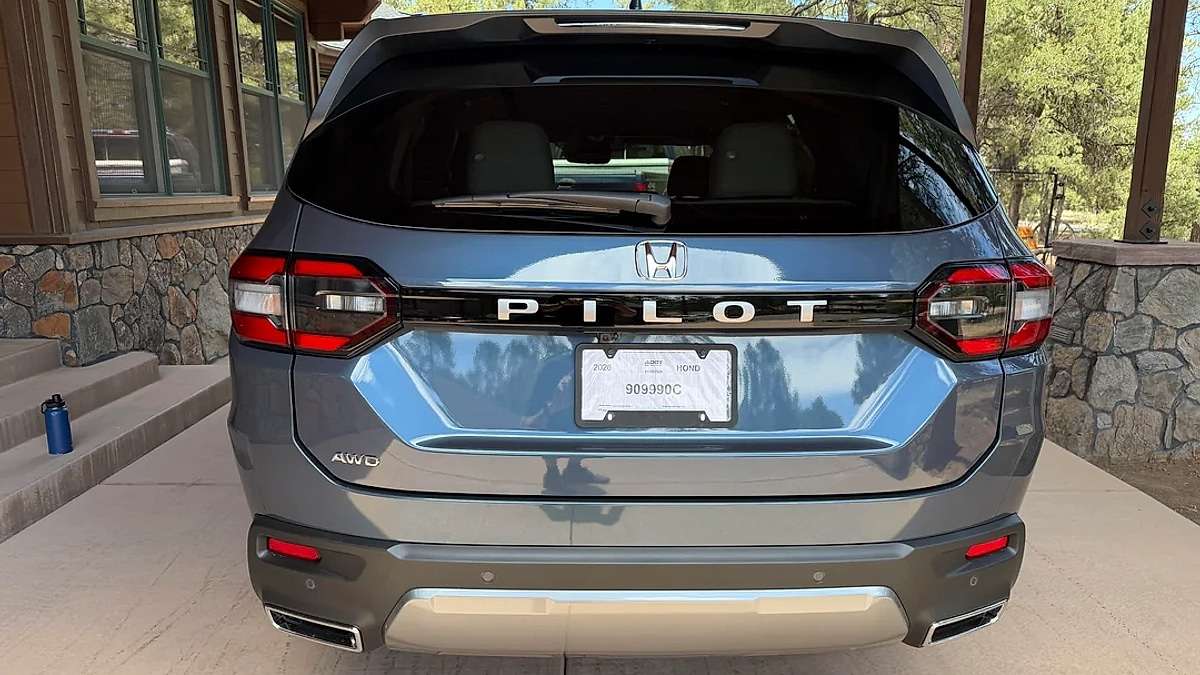

A man buying a brand-new family SUV without telling his wife sounds like the setup for sleeping on the couch.
In this case, the gamble worked.
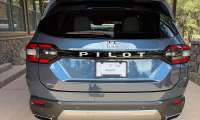
A Honda Pilot owner on r/hondapilot says he surprised his wife with a 2026 Honda Pilot EX-L AWD after putting 104,000 miles on their 2021 Pilot EX-L. Same trim. Same basic mission. Three rows, V6 power, school-run manners, road-trip duty, Honda expectations. He waited for Smoke Blue Pearl with the light gray interior, had the dealer swap on Honda Ridgeline HPD wheels he already owned, and drove away with the sort of family vehicle people buy when they want the drama outside the garage, not inside it.
For buyers trying to decode where the EX-L sits in the lineup, here are some things to make note of:
- The 2026 Pilot EX-L AWD still uses Honda's naturally aspirated 3.5-liter V6, producing 285 horsepower and 262 lb-ft of torque, paired with a 10-speed automatic and rated to tow up to 5,000 pounds when properly equipped.
- Unlike the TrailSport, the EX-L retains the stowable second-row center seat, allowing owners to switch between an eight-passenger layout and captain's-chair practicality without changing trims.
- The EX-L now gets a 12.3-inch touchscreen and 10.2-inch digital instrument display as standard equipment, but loses HomeLink integration that many 2021 EX-L owners took for granted.
His verdict arrived without the usual new-car euphoria that colors first impressions. After 104,000 miles in a 2021 Pilot, he noticed the absence of things he'd grown used to tolerating. The slight hesitation before the transmission answered. The extra road noise that made long interstate stretches more tiring than they needed to be. The vague brake pedal that never quite inspired confidence. The sense that the old Pilot's greatest strength was staying out of your way rather than doing anything particularly well.
The 2026 changed that equation.
He described it as quieter, more solid, more predictable, with firmer brakes and a transmission that responds like it's paying attention. More importantly, he said he no longer feels like he's driving a version of a minivan.
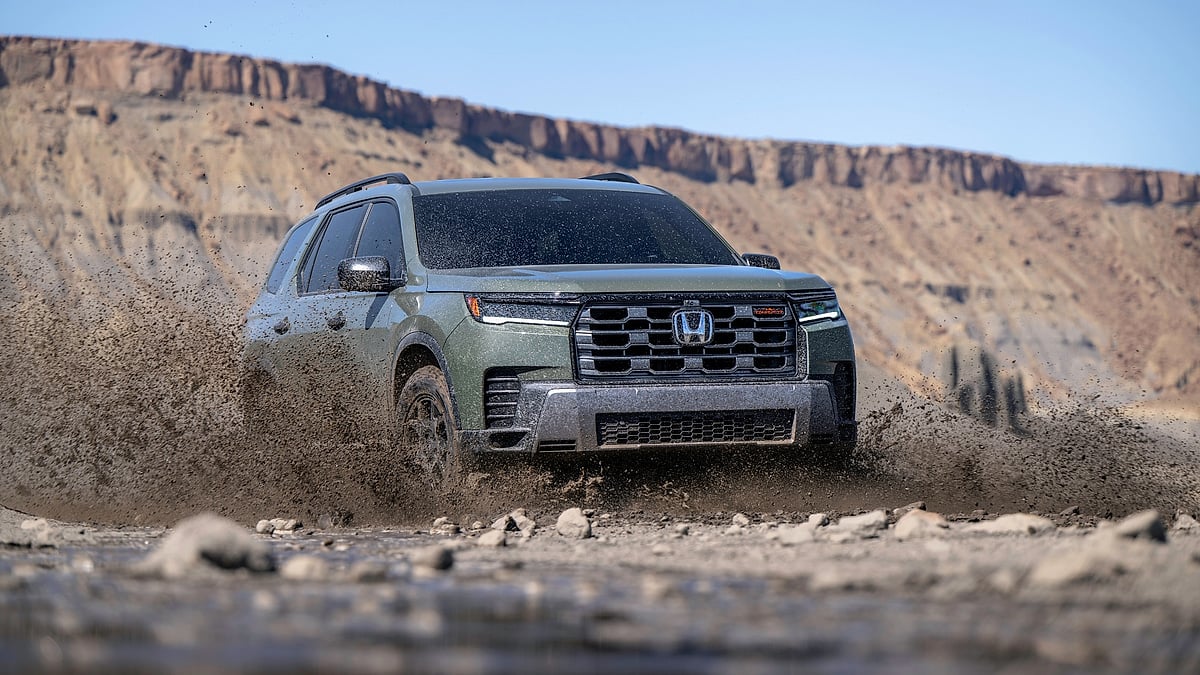
Honda built one of the most sensible family vehicles on the market, then wrapped it in an experience that often felt like an obligation rather than a reward. People bought Pilots because they trusted them, not because they looked forward to driving them.
The same trim name hides a much different machine
A 2021 Pilot EX-L and a 2026 Pilot EX-L share a badge, but the owner’s notes read like a generational correction.
The old Pilot came from Honda’s softer, rounder era. Useful, reliable, easy to live with, and visually about as thrilling as a beige refrigerator with a strong resale value. That old formula sold because families trust Hondas, but anyone honest about the third-generation Pilot knows the thing leaned hard into minivan-adjacent comfort. Fine for errands. Less convincing when the road got rough, crowded, wet, or fast.
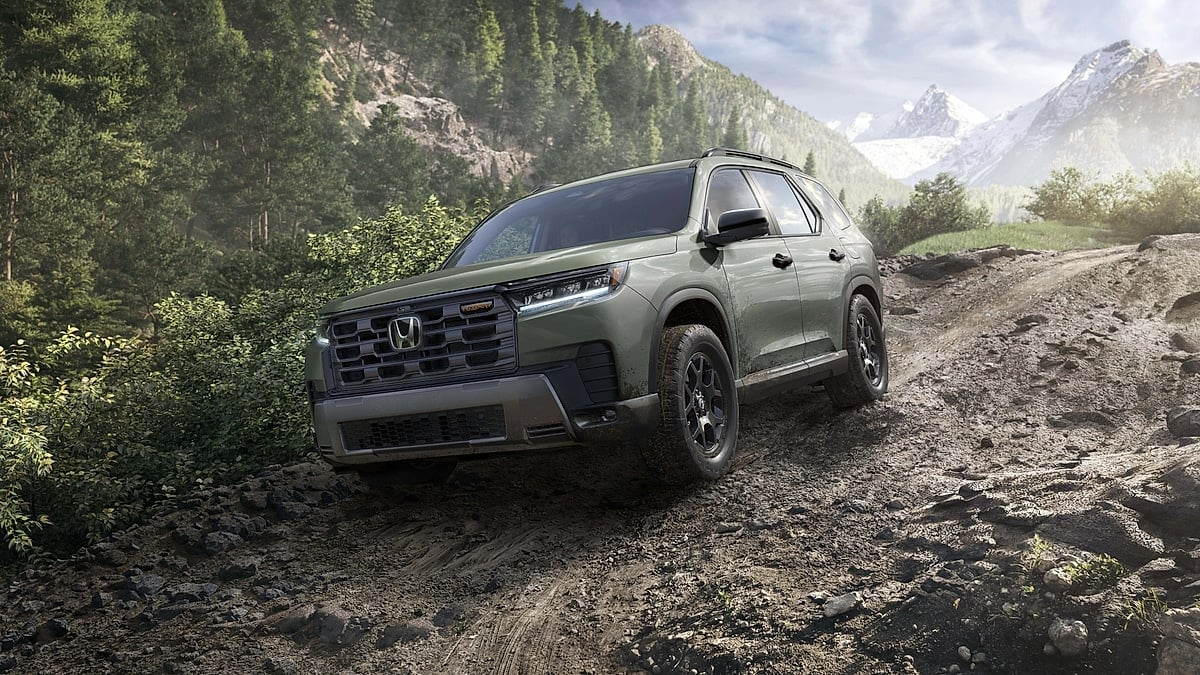
The 2026 EX-L comes from the fourth-generation Pilot, now refreshed with bigger screens, retuned steering, extra sound insulation, and a tougher face. The owner noticed the right things first: ride quality, cabin noise, brake feel, and the way the body settles into the road.
That is where family SUVs earn loyalty.
A three-row SUV can have 40 cup holders and a touchscreen the size of a diner menu. If it wanders on the highway, thumps over expansion joints, groans through a parking-lot turn, or makes every stoplight feel like stepping on a wet sponge, the buyer starts counting down to trade-in day. The owner says the 2026 feels solid and predictable. That is a better compliment than “sporty” in this class.
Solid means your spouse trusts it.
Predictable means your kids do not get tossed around because the chassis takes half a beat to decide what it wants to be.
The 10-speed fixes a small irritation that owners never forget
The owner’s praise for the 10-speed automatic is one of those details a press launch can miss.
He says the new transmission shifts from reverse to drive in about one second instead of the roughly three-second delay he felt in the old 9-speed ZF. That sounds tiny until you live with it. Backing out of a driveway. Adjusting in a tight parking spot. Doing the three-point shuffle outside a crowded school. A lazy reverse-to-drive handoff makes a vehicle feel dim even when the engine has plenty of power.
The 2026 Pilot keeps the naturally aspirated 3.5-liter V6, now rated at 285 horsepower and 262 pound-feet of torque, and pairs it with Honda’s 10-speed automatic. I like that decision more than I probably should. The market has become drunk on small turbo engines and hybrid promises, and yes, the Pilot badly needs a hybrid option. A naturally aspirated V6 still has value in a family hauler if the transmission behaves.
This owner says it behaves.
That is the kind of improvement that never shows up properly on a spec chart. Nobody buys a car because reverse-to-drive engagement improves by two seconds. Plenty of owners grow tired of the old delay after the thousandth driveway maneuver.
The HPD wheel swap quietly creates the best version of the EX-L
The owner’s wheel choice may be the sharpest part of the whole post.
He had the dealer install Honda Ridgeline HPD wheels, then confirmed in the comments that he is running 265/60R18 BFGoodrich Trail-Terrain T/A tires, the same size as the Pilot TrailSport. He said the fit was tight on the 2021 Pilot and caused no issues on the 2026.
Honda’s 2026 EX-L normally wears 255/60R18 tires. The TrailSport uses 265/60R18 rugged-terrain rubber and carries more of the outdoor costume from the factory. By putting the TrailSport-size tire on the EX-L, this owner built a better everyday Pilot for a lot of families: more sidewall, tougher visual stance, some extra tire confidence, and no forced move into the TrailSport’s seven-seat layout.
The EX-L with the right 18-inch wheel and tire package may be the sweet spot for buyers who like the TrailSport’s look but still want the stowable middle seat. The TrailSport’s full-size spare comes with a shallower rear underfloor storage setup and second-row captain’s chairs. The EX-L keeps eight-passenger flexibility and deeper cargo tricks. For a family buyer, that trade can beat skid-plate theater.
I would take the owner’s build seriously: EX-L AWD, Smoke Blue Pearl, light gray interior, HPD wheels, 265/60R18 all-terrain-ish tires.
That sounds like a Pilot Honda should sell from the factory.
Honda fixed the cabin and forgot two cheap-feeling details
The owner liked the non-Bose stereo, the more responsive infotainment, the less fingerprint-prone screen, the firmer brakes, the removable second-row middle seat, and the cup holders large enough for his Hydro Flask.
Those are daily-use wins. Not magazine-cover stuff. Better than magazine-cover stuff.
Then Honda steps on the rake.
The backup camera disappointed him. He says the EX-L camera appears worse than his 2021. Another owner in the thread piled on, saying a 2014 Lexus has a better camera. That is brutal, and believable. Automakers keep adding display acreage while feeding those displays mediocre camera images. A 12.3-inch screen makes a weak camera look weaker. Big screens do not flatter cheap lenses.
Honda also removed HomeLink from the 2026 EX-L, according to the owner. Honda’s own trim guide backs up the basic complaint: the 2021 EX-L listed HomeLink, while the 2026 EX-L lists an automatic-dimming mirror, with HomeLink appearing on TrailSport and Touring.
This is penny-pinching with a megaphone.
A built-in garage-door opener is not exotic. It is not a massage seat, air suspension, night vision, or a refrigerator in the console. It is the small button a family uses every day. When a buyer replaces a 2021 EX-L with a 2026 EX-L and loses it, the trim name starts to feel slippery.
Yes, the owner says proper wiring appears to be present, and a new mirror can be purchased. That helps. It also makes the deletion feel sillier.
The spare tire choice splits real buyers
The owner also noticed he can no longer fit a full-size spare underneath the EX-L. He accepts the compromise because the rear storage is better.
That is the correct framing.
Some buyers should choose the TrailSport because a full-size spare carries real value, especially for road trips, dirt roads, and remote travel. A compact spare can get you home, but it does not give the same peace of mind when the family is three hours from the driveway, and the tire sidewall has surrendered.
Other buyers should keep the EX-L because the stowable second-row middle seat and rear storage solve problems every week.
A full-size spare saves one bad day. The removable center seat can help every time you carry kids, grandparents, sports bags, coolers, and the kind of cargo that appears only after everyone swears they packed light.
I like full-size spares. I also understand why this owner likes the cargo setup.
The Honda tech warning belongs in the glovebox
A Honda tech in the comments added the useful cold water. He called the 2021 9-speed push-button Pilot one of the most reliable models Honda made, while noting the newer dual-cam V6 design is more difficult to work on and may carry higher service costs for jobs like timing-belt work.
That comment belongs in the article because it stops the piece from becoming owner honeymoon prose.
The 2026 Pilot feels better now. That does not automatically make it cheaper to own at 150,000 miles. The older Pilot had a proven reputation by the time this owner traded his at 104,000 miles. The new engine family and fourth-generation platform still need years of family abuse, deferred maintenance, winter salt, bad fuel, cheap tires, and bored teenagers to earn the same standing.
I would buy the newer Pilot for how it drives. I would keep a maintenance folder like a librarian with a mortgage.
Timing belt. Transmission service. Differential fluid. Transfer case fluid on AWD models. Tire rotations, especially with larger all-terrain tires. Keep records. The person who buys this Pilot used at 100,000 miles will pay for proof.
What buyers can take away from this
The 2026 Pilot EX-L AWD rides quieter, feels sturdier, shifts faster between reverse and drive, brakes with more confidence, carries a better interior layout, and accepts the TrailSport-size tire package without the old tight-fit drama. That is enough to make the jump from a high-mile 2021 feel worthwhile.
Honda’s mistakes are just as clear. The EX-L backup camera needs to be better. HomeLink should not disappear from a mid-$40,000 family SUV. A hybrid powertrain remains the absent player in the room, especially when owners are staring at 19 city, 25 highway, and 21 combined for AWD models.
The best move for shoppers is simple. Drive the EX-L and Touring back to back before signing. If the camera quality and missing HomeLink annoy you, price the mirror upgrade or move up the trim ladder. If the full-size spare and factory rugged gear count more than the stowable middle seat, look at the TrailSport. If you want the owner’s apparent sweet spot, build the EX-L AWD with 18-inch wheels, real tire sidewall, and the interior color your spouse actually likes.
The old Pilot was the safe answer.
The 2026 Pilot EX-L finally has enough polish to feel like a choice.
Tell me about your Pilot experience
If you moved from a 2016 to 2022 Pilot into a 2023 to 2026 Pilot, what changed most in daily driving: steering, ride noise, transmission response, camera quality, brake feel, or storage? Include trim, mileage, and tire size.
One image by Medical_Tip_6375
About The Author
Noah Washington is an automotive journalist based in Atlanta, Georgia, covering sports cars, luxury vehicles, and performance culture. His reporting focuses on explaining the engineering, design philosophy, and real-world ownership experience behind modern vehicles.
Noah has been immersed in the automotive world since his early teens, attending industry events and following the enthusiast communities that shape how cars are built and driven today. His work blends industry insight with enthusiastic storytelling, helping readers understand not just what a car is, but why it matters.
Noah is also a member of the Southeast Automotive Media Association (SAMA), a professional organization for automotive journalists and industry media in the Southeast.
His coverage regularly explores sports cars, luxury vehicles, and performance-driven segments of the automotive industry, including the evolving culture surrounding Formula Drift and enthusiast builds.
Read more of Noah's work on his author profile page.
You can also follow Noah here:
Set Torque News as Preferred Source on Google
Follow us today...