
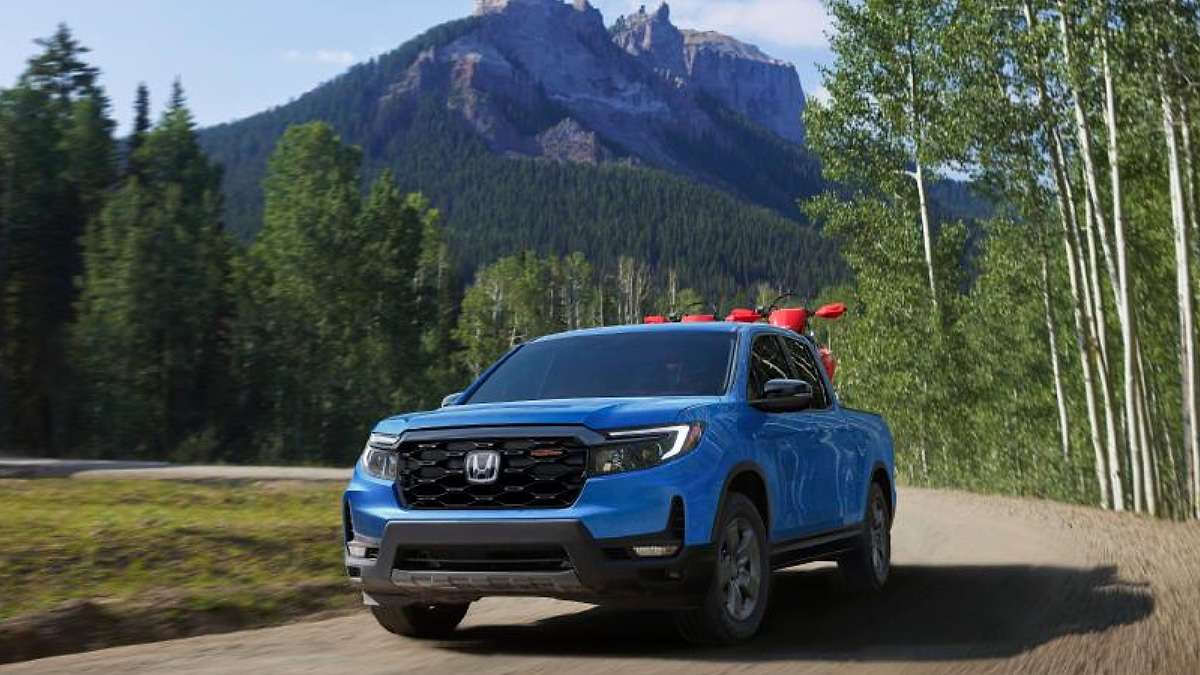

For years, the Honda Ridgeline has occupied a unique corner of the pickup market, built not to be the toughest truck on a job site but to deliver practicality, comfort, and everyday reliability that loyal owners swear by. Our coverage of the 2026 Honda Ridgeline TrailSport as one of the most usable and civilized midsize trucks on sale showed just how compelling this truck remains for suburban and semi-rural buyers who have no interest in hauling pallets of cinder blocks but want genuine capability when the weekend demands it. At the same time, Torque News has also tracked Honda's growing pains on the electrification front, and our reporting on Honda's $15.7 billion EV write-off and the company's high-stakes pivot away from its original battery-electric ambitions makes the Ridgeline situation far less surprising than the headlines suggest.
Before you continue reading, here's a question to keep in mind and answer in the comments below after reading the article: If Honda temporarily pauses the Ridgeline to develop a hybrid replacement, would you consider that a smart long-term move or a risky decision that could send buyers elsewhere?
The answer may reveal how truck buyers feel about where the market is headed.
Is Honda Discontinuing The Ridgeline?
Not exactly. According to reporting from CarBuzz, the Ridgeline appears headed for a temporary pause rather than a permanent cancellation. Honda is reassessing its product strategy amid changing market conditions, shifting regulations, and evolving powertrain priorities. That is an important distinction. This isn't a story about Honda abandoning the pickup market. It is potentially a story about Honda deciding what kind of truck it wants to build next.
According to Autoblog, "Honda is said to be planning a production pause for the Ridgeline starting in late 2026, lasting about a year and a half," with the break giving "Honda time to update the Ridgeline to meet upcoming emissions standards." Production is expected to resume at the Alabama plant in the second half of 2028, with a refreshed truck that could feature new styling, updated interior elements, and the most significant change of all: an electrified powertrain.
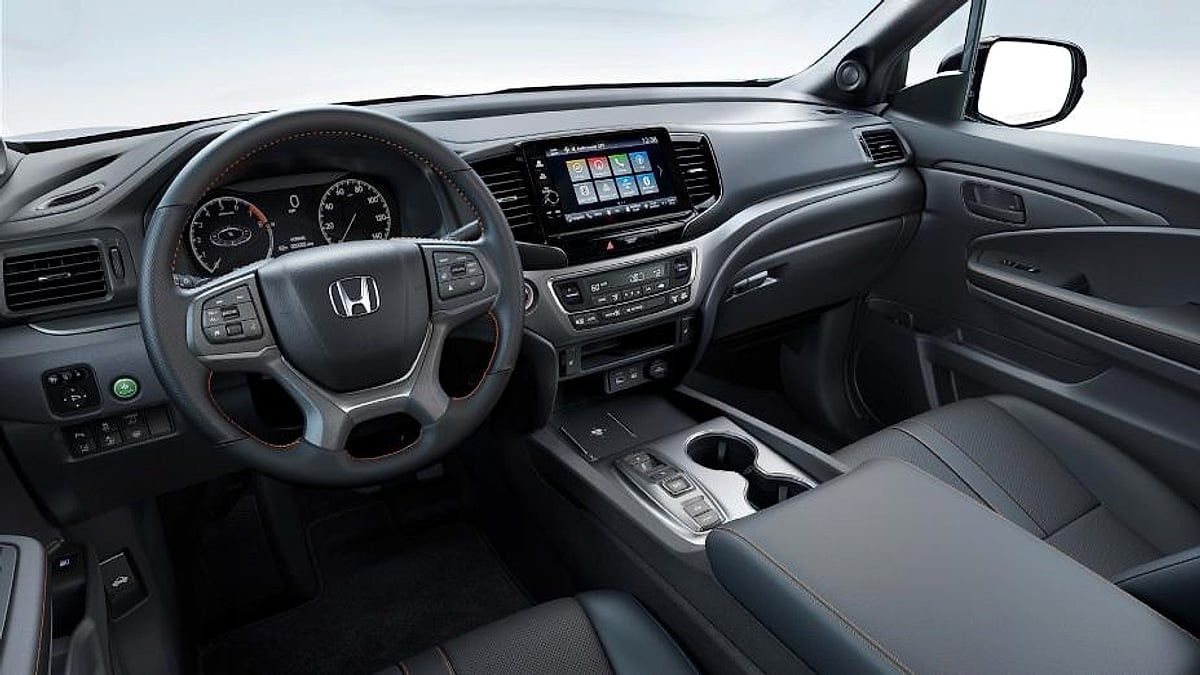
Issue No. 1: Honda's EV Strategy Has Changed
The first factor has little to do with the Ridgeline itself. For several years, Honda aggressively discussed long-term electric vehicle ambitions and outlined plans pointing toward an all-electric future. However, the market has not evolved as many automakers expected. Consumer demand for hybrids has remained strong, while full battery electric adoption has grown more slowly than some forecasts predicted. Torque News reporter Rob Enderle has covered how Honda's EV reset, including the arrival of the 0-Series Alpha SUV, represents the company's attempt to prove it isn't falling permanently behind in the electrification race, but the cost of earlier commitments has been severe, and the company is now recalibrating every vehicle program as a result.
That shift creates a ripple effect throughout the company's product lineup. When an automaker changes its future powertrain plans, every major vehicle program gets affected, including trucks. The Honda Civic Hybrid quietly illustrates where Honda's real momentum lies right now. Our reporting on why the Honda Civic Hybrid is becoming the smartest non-EV choice for buyers who want near-50 mpg without the charging anxiety of a full battery electric vehicle shows that Honda's hybrid credibility is genuinely strong in smaller vehicles, even as the brand scrambles to extend that same capability into its larger lineup.
Issue No. 2: Honda May Be Using The Pause To Prepare A New Hybrid Ridgeline
This is where the Ridgeline itself enters the conversation. A temporary hiatus could provide Honda with valuable time to rethink the truck's powertrain strategy. The current Ridgeline relies on a naturally aspirated 3.5-liter V6 that has served the truck well over the years, but the industry is changing rapidly. In fact, we previously highlighted what the next-generation Honda Ridgeline pickup desperately needs, including better fuel efficiency and a genuine hybrid option, years before this development became an industry-wide discussion point.
More truck buyers are now prioritizing fuel economy alongside capability, and hybrid technology has matured significantly. The competitive pressure is real. Torque News reporter John Goreham, who has tested the 2026 Ridgeline extensively, made the case directly in our coverage of how Honda took our advice seriously and will move to a hybrid engine in the Ridgeline pickup: a simple hybrid system would add low-end torque, recapture braking energy, and meaningfully improve fuel economy without requiring a radical overhaul of what makes the Ridgeline appealing to its loyal owners.
Toyota is already expanding hybrid offerings aggressively across its truck lineup. Regarding this, we covered in depth why 30-year Tacoma owners are passing on rivals and choosing the 2026 Tacoma Hybrid's 465 pound-feet of torque, which demonstrates exactly the kind of market pressure Honda now faces. The Toyota i-FORCE MAX hybrid has become a benchmark in the midsize segment, and Honda cannot afford to answer that benchmark with a twenty-year-old V6 that returns only around 20 mpg.
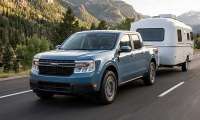
Ford has found success with hybrid versions of the F-150 and its smaller pickup as well. In fact, we have documented extensively how the Ford Maverick Hybrid AWD towed a Polaris RZR for 212 miles through Idaho and returned 17.8 mpg under real-world load conditions, which illustrates that hybrid truck technology has already proven itself in demanding real-world scenarios. If Honda gets the formula right, the next Ridgeline could emerge from its hiatus stronger and more relevant than the truck buyers know today.
Issue No. 3: New Emissions Rules Are Creating A Difficult Decision
The third issue may be the most significant. According to the CarBuzz report, upcoming emissions regulations would require dramatic reductions in particulate and nitrogen oxide emissions from internal combustion engines, and Honda's current J35 V6 in the Ridgeline simply cannot meet those standards without a fundamental powertrain overhaul. The engine's lineage dates to 1996, and the specific variant in the Ridgeline was already dropped from the Pilot in 2022 and from the Passport last year, leaving the Ridgeline as the last vehicle carrying that older calibration.
Even as political debates continue regarding future emissions policies, automakers must make product decisions years in advance. That means Honda cannot afford to wait until the last minute. Torque News reported years ago on Honda's long history of standing behind zero-emissions commitments and the company's ongoing dedication to low-particulate powertrain development, which makes this current moment all the more ironic. Honda built its reputation on clean-running engines and efficiency leadership, and a truck that fails modern emissions standards is fundamentally inconsistent with that brand identity.
The company reportedly has little interest in heavily re-engineering its current V6 to meet the upcoming requirements when it is already developing a new dual-motor hybrid V6 system intended for the Pilot, Passport, Odyssey, and Ridgeline platforms. Developing an entirely new powertrain solution simply makes more sense than patching an aging engine.
The Hidden Story Isn't The Ridgeline
Most headlines will focus on the possibility of the Ridgeline disappearing for a period of time. But that may not be the most important takeaway. The bigger story is that Honda appears to be reassessing its entire strategy for the next decade, and the Ridgeline simply happens to be caught at the intersection of three major industry shifts: a changing EV strategy, a growing emphasis on hybrids, and new emissions requirements. Only one of those factors is specifically about the truck. The other two are reshaping the automotive industry as a whole.
Honda is not alone in this recalibration. TorqueNews has covered how Ram's decision to cancel its full battery-electric pickup program reflects a broader industry reckoning about where electrification actually makes economic and consumer sense right now, with hybrids and plug-in hybrids emerging as the more defensible middle ground for truck buyers who want efficiency without sacrificing range or towing confidence.
What Could A Future Honda Ridgeline Hybrid Look Like?
That is now one of the most interesting questions facing Honda truck fans. Honda's new dual-motor hybrid V6 system is expected to improve fuel economy by over 30 percent compared to the current gas-only model while also improving acceleration. A hybrid Ridgeline could deliver better fuel economy, increased low-speed torque, improved towing performance, and far greater compliance with future regulations, all without losing the unibody ride quality and in-bed trunk that have made the Ridgeline a genuinely beloved truck for owners who never needed a body-on-frame workhorse.
By the way, we have also noted how the midsize pickup truck segment is increasingly competitive, with Kia now confirmed to be developing a hybrid pickup for the U.S. market that could arrive by the end of the decade, which means Honda will not be entering a friendly market when the Ridgeline returns. The midsize truck space by 2028 may look very different from today, with electrified options from Toyota, Ford, and potentially Kia all competing for the same practical-minded buyer the Ridgeline has always targeted. The moral lesson for Honda here is straightforward: standing behind the long-term vision of doing something right is always better than rushing a product to market before it is truly ready.
The challenge will be accomplishing all of that without losing the qualities that have made the Ridgeline popular among loyal owners. Because if Honda gets the formula right, the truck could emerge from its hiatus stronger than before. If it gets it wrong, competitors will not hesitate to welcome displaced buyers with open arms.
Do you think Honda is making the right decision by potentially pausing the Ridgeline while it develops a new strategy, or should it keep the truck on sale without interruption? And if the next-generation Ridgeline arrives with a hybrid powertrain, would that make you more interested in the truck or less interested? Share your thoughts in the comments below.
Come back tomorrow, or check our Torque News Home Page for more interesting automotive news articles.
Images of Honda Ridgline are by Honda Pressroom.
About The Author
Armen Hareyan is the founder and Editor-in-Chief of Torque News and an automotive journalist with over 15 years of experience writing car reviews and industry news. Now based in the Charlotte region (Indian Land, SC, he founded Torque News in 2010, which since then has been publishing expert news and analysis about the automotive industry. He can be reached at Torque News on X, Linkedin, Facebook, and Youtube. Armen holds three Masters Degrees, including an MBA, and has become one of the known voices in the industry, specializing in the landscape of electric vehicles and real-world stories of actual car owners. Armen focuses on providing readers with transparent, data-backed analysis bridging the gap of complex engineering and car buyer practicality. Armen frequently participates in automotive events throughout the United States, national and local car reveals and personally test-drives new vehicles every week. Armen has also been published as an automotive expert in publications like the Transit Tomorrow, discussing how will autonomous vehicles reshape the supply chain, and emerging technologies in vehicle maintenance.
Set Torque News as Preferred Source on Google
Follow us today...


Comments
Look up the definition of …
Permalink
Look up the definition of "Truck". The Honda Ridgeline does not match much of the definition. I don't consider any unibody/noframe vehicle a truck. If it has awd/4wd without low range, again not a truck.
I agree with Big on the…
Permalink
In reply to Look up the definition of … by Big (not verified)
I agree with Big on the ladder frame vs unibody.
My concerns are MPG, so a hybrid at this point in my decision making process is important.
The ever changing electrification law is a joke. We installed 16 solar panels and are still on EM2.0. We are producing more power than we use. PGE can’t stand that idea. Especially when the cfo and other higher ups are getting way too much in bonuses, considering pge is almost a monopoly.
The Ford Lightning was ahead of its time. But now with production stopping, why would I purchase one?
Parts available in 15 years?
What happened to fuel cells? No infrastructure. The American public are getting screwed.
If I purchase a new truck it had better be a plug in hybrid, good mpg for now and a large enough battery capacity to rein 100 miles.
I will happily wait for a…
Permalink
I will happily wait for a Hybrid Ridgeline over today's V6 ICE. I hope Honda takes the opportunity to upgrade the Ridgeline with more current technology as well, such as a a rear camera mirror, overhead drone view and a GM Super Cruise autonomous driving equivalent for extended travel capability..
I have been waiting for a…
Permalink
I have been waiting for a Ridgeline that has a hybrid power train for years. I have an Accord hybrid touring and love it. Hybrid is the way to go. Better mileage and a better ride is what I'm looking for.
Pausing the Ridgeline is…
Permalink
Pausing the Ridgeline is only good if it is required to retool the production line for the next generation. If that isn't the case, then I feel it is a mistake.
Changing to a hybrid only drive train would place the Ridgeline into the mix with everyone else and would decrease the chances that I would buy a new one. I probably would look to a used ICE Ridgeline instead.
I currently have 2025…
Permalink
I currently have 2025 Ridgeline black edition. I love it. It’s a very comfortable ride and enough cargo space for me. I would like to get better than 20 miles per gallon. I’m interested to see what Honda does with a hybrid truck. I do think that holding off is a good idea.
Discontinuing the Ridgeline…
Permalink
Discontinuing the Ridgeline will be a great gift for Ford. While the Ridgeline and the Maverick are not identical products, they both appeal to the same group of buyers. Maverick sales will get even stronger than they are with no Ridgeline competition. Honda will regret leaving the market even if it's only for one year. Hard to get sales momentum back once you put a knife in it.
I drove my 2006 Ridgeline…
Permalink
I drove my 2006 Ridgeline for 17 years and it was still solid. But I wanted newer technology. I miss it though, and started checking to see if there was a hybrid available yet. This is exciting news and I would not hesitate to go back to a Ridgeline, if they get it right. The underbed trunk and the fold up back seats are requirements. The ride also needs to remain excellent but gas mileage need to significantly improve. Looking forward to it!
Honda needs to man up and…
Permalink
Honda needs to man up and make a really tough and functional, body on frame , midsize PU . Keep the V-6 engine and have an optional manual transmission with 4 wheel drive. There is so much demand for this in the US !! Honda would sell these like crazy. I know that I would be 1st in line to buy one.
Honda needs to man up and…
Permalink
Honda needs to man up and make a really tough and functional, body on frame , midsize PU . Keep the V-6 engine and have an optional manual transmission with 4 wheel drive. There is so much demand for this in the US !! Honda would sell these like crazy. I know that I would be 1st in line to buy one.
I just traded in my…
Permalink
I just traded in my Ridgeline and I was going to replace it with the new Passport but I wanted something better on fuel. I ended up getting a Mazda CX-70 Plug-in Hybrid. If the Passport had a Hybrid (especially a plug-in) I would have gotten that. In the Mazda I have not been to a gas station in over a month.
I would like Honda to start making a great V6 Hybrid plug-in and test it in the Ridgeline I would buy it once it moves the new power platform over to the Passport.
Question: If Honda is…
Permalink
Question: If Honda is already developing a hybrid engine for its other similar platforms, why only is the Ridgeline being put on hiatus? Is it because of the small number of annual sales and Honda wants the production space on the assembly line for the other platforms that generate more revenue? I purchased a 2025 Ridgeline TrailSport to replace my Chevrolet Silverado because my needs changed and I wanted a smaller more comfortable pickup that offered a V6 engine, not a 4cyl. Turbo. My Ridgeline has become my go to vehicle now and if I ever decide to replace it, I will certainly look first to Honda and their engine. The idea of a hybrid V6 is better than a 4 cyl. Turbo making excessive noise under the hood like the current Toyota Tacoma. Just my thoughts.
I'm a big fan of the…
Permalink
I'm a big fan of the Ridgeline . I'm on my third and ready to buy the 2025 but read the 2026 would have a hybrid model. This wait has left me very disappointed. By the time a hybrid comes I'll be to old to enjoy it .
Not to mention this IS THE…
Permalink
Not to mention this IS THE UGLIEST “truck”on market, I will stick with my bullet proof good looking practical off road Tacoma! Thank you!
I wonder if Honda would have…
Permalink
I wonder if Honda would have merged with Nissan it things would be different. We have our second Pilot in a row and love it. In mid 2024 I sold my Toyota Tundra and bought a Nissan Frontier. I have been driving Tundra's since 2002. My Frontier has been every thing I hoped it would be. The Frontier is the only mid size truck with a V6. (I don't consider Honda Ridgeline a truck, it's a Pilot with a bed) If Honda would of merged with Nissan it could of moved into the pickup marketplace. I feel that it would of hurt Toyota bad, they are having reliability problems!
I have a 2019 Honda…
Permalink
I have a 2019 Honda Ridgeline and love it. I think Honda should take its time, redesign the Ridgeline with a hybrid engine and inside update. Then I would consider buying one.
I would LOVE a hybrid…
Permalink
I would LOVE a hybrid Ridgeline and have been following all news about it for some time now. However, I am not at all thrilled at the idea of having to wait another two years to get it. If that is, indeed, the plan, I may be forced to look elsewhere in the meantime. I love Honda and all their products, but while I appreciate their dedication and thoughtful preparation before making major changes, you have to stay ahead of the curve in this market or else risk losing your buyers. Considering the Ford Maverick's availability right now, as well as the other potential competitors on the horizon, I'm not sure I am willing to wait another two years to get a Ridgeline. Life moves ahead, with or without you, and I won't wait forever.